GPT Image 2 Pixel RPG Key Visual Generator — 16-Bit World Covers from One Prompt
The GPT Image 2 pixel RPG key visual generator renders banner-ready 16-bit covers — proven on a real Undertale world with published key visuals on Neta Studio.
Generate a 16-Bit Pixel RPG Key Visual
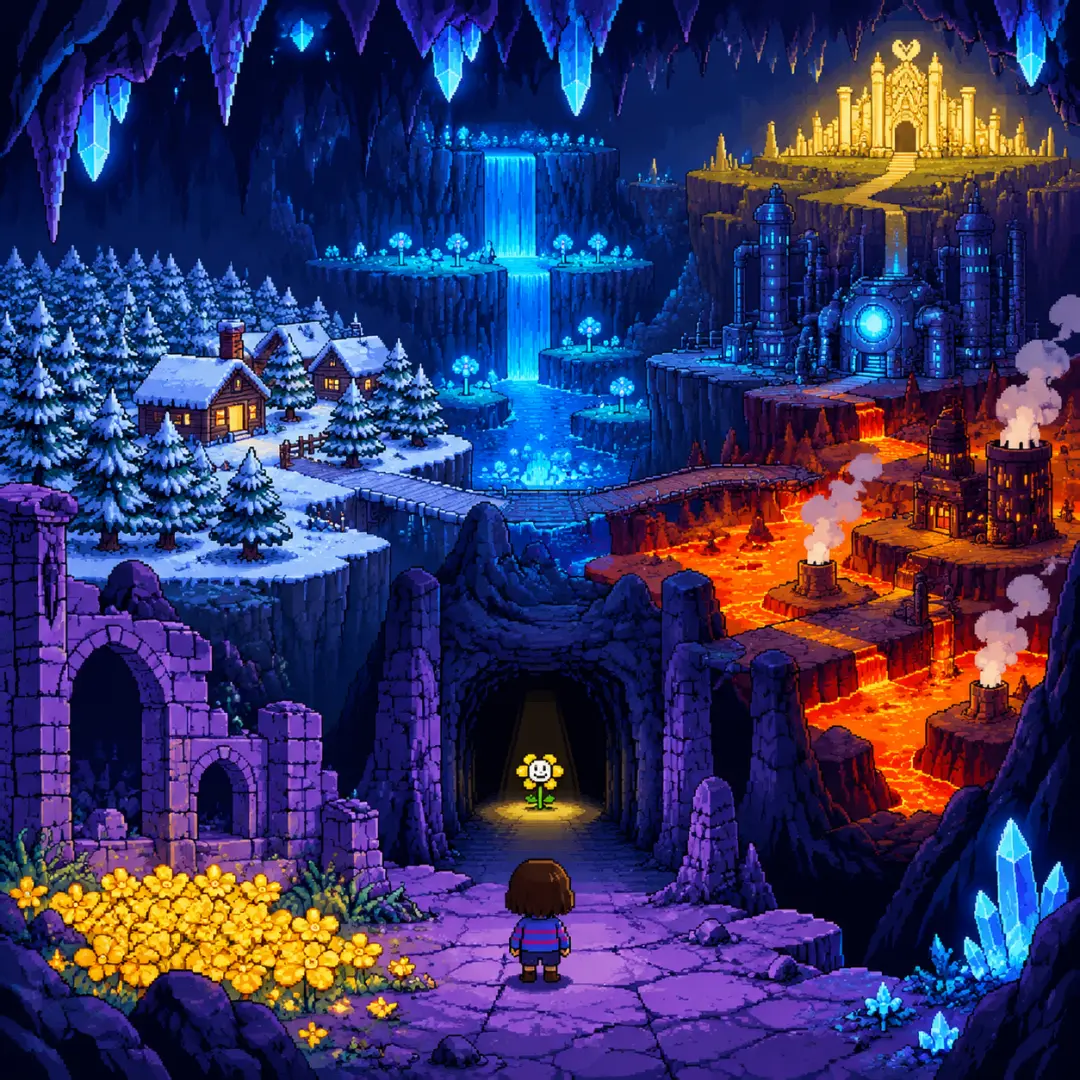
From one prompt to a banner-ready 16-bit pixel RPG key visual — a sealed underground kingdom, a snowbound forest town, a world about to open, rendered by GPT Image 2
What Is the GPT Image 2 Pixel RPG Key Visual Generator?
The GPT Image 2 pixel RPG key visual generator is the detail-first image model on Neta Studio, pointed at 16-bit retro JRPG cover art. Give it a scene — a purple stone ruin, a snowy forest town, a fall through the mountain — and it renders a cover-ready poster in authentic pixel style: a limited 24-color palette, three-step pixel shadows, selective dithering, and crisp nearest-neighbor square pixels. Because it generates from a world, not a blank page, every cover inherits the canon, palette, and characters of the world it belongs to.
What Makes It the Right Tool for Pixel RPG Key Visuals
- High-detail pixel rendering — separated value planes, legible landmarks and crisp dithering that hold up in a banner crop.
- World-grounded prompts — the Undertale seed keeps every cover on-canon: the same purple stone, the same golden flowers, the same palette.
- Warm, storybook light — ruin-light, waterfall glow, and volcanic red land cleanly in a limited palette.
- Character staging — small figures against great spaces, a grinning flower, and quiet tension render with weight.
- Pipeline-ready — every output publishes as a shareable work of the same world.
See It Render a Key Visual
How It Generates a Key Visual
GPT Image 2 reads the full scene brief — character, place, time of day, and the elemental accent — then composes a complete frame: figure, environment, light, and the small details that make a cover feel inhabited. Because the world seed supplies the style, you never re-type the palette or the costume; you describe the moment and let the model hold the canon.
Describe the scene
Pick the character, the place (the Ruins, a snowy forest, the waterfall), and the moment.
Add the element
Include the accent — drifting spores, warm cabin windows, golden flowers, a shaft of dawn light.
Set the mood
State the light — warm ruin-light, blue waterfall glow, or volcanic Hotland red.
Render and publish
GPT Image 2 renders the cover; the studio publishes it as a shareable work.
Iterate
Compare with a Krea 2 pass, re-prompt, or fork the world and start again.
The Detail Advantage
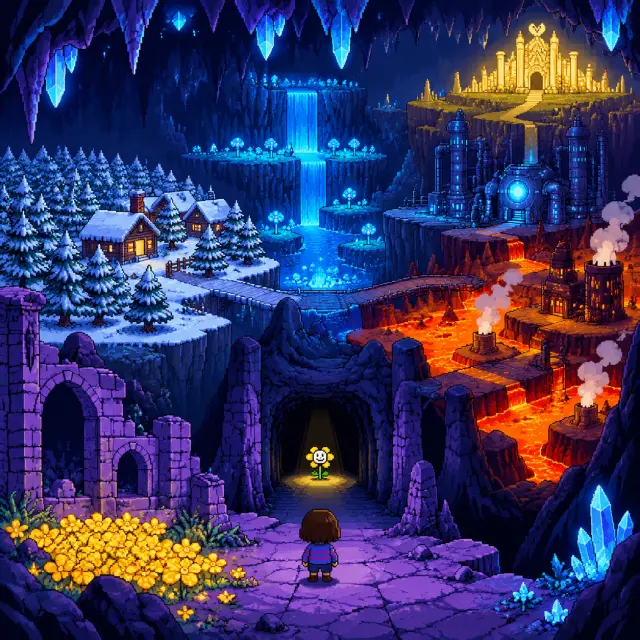
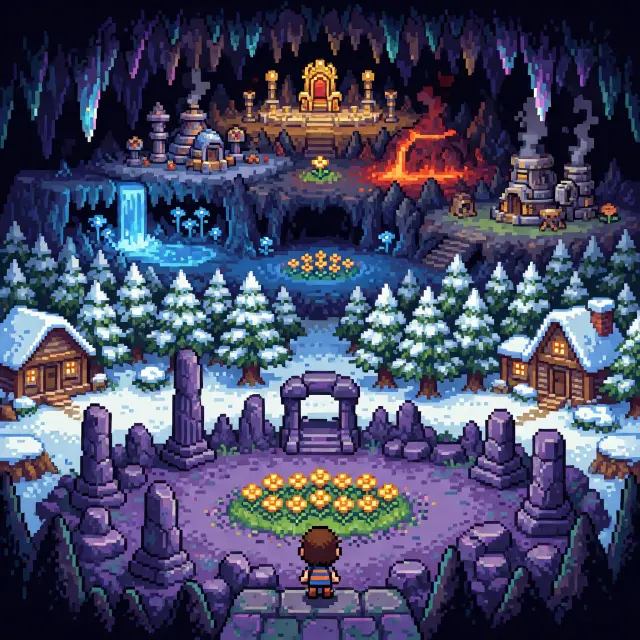
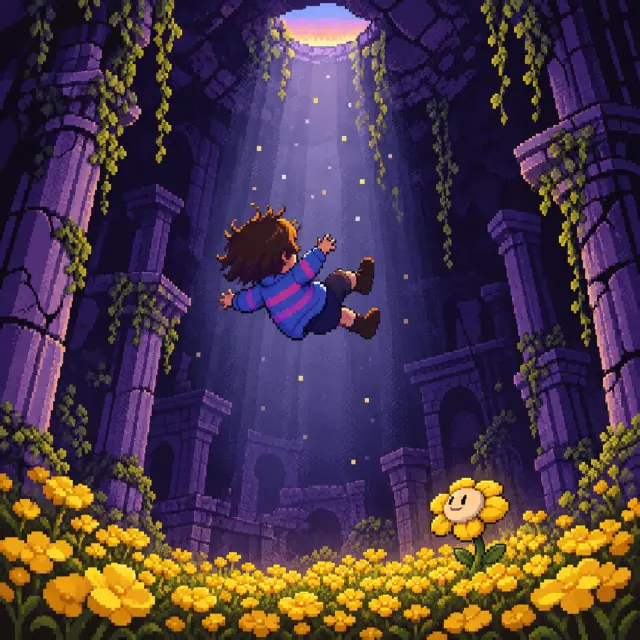
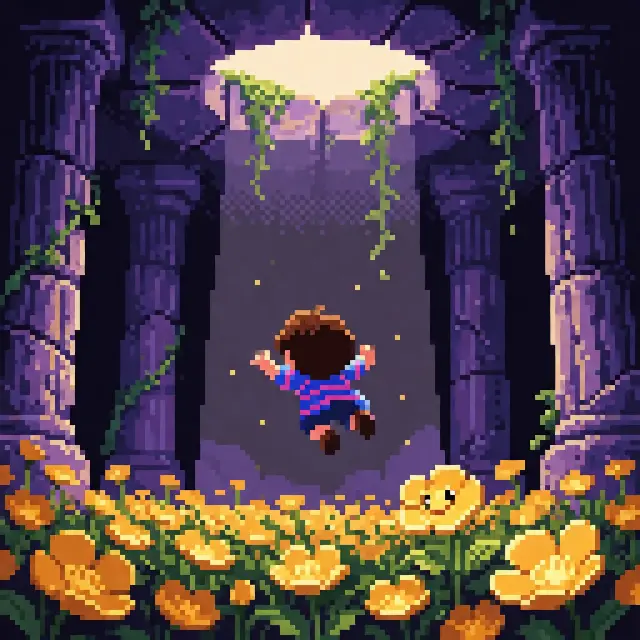
Where GPT Image 2 shines is density without noise. The world key visual keeps the purple Ruins, Snowdin’s pines, the blue waterfall, the lava of Hotland, the Core and the golden throne all legible at once; the fall frame keeps a falling child, a light shaft, hanging vines, a flowerbed and a watching flower in a single readable composition. That control is what makes a render usable as a cover, a title card, or a storefront banner instead of a mood board.
Real Outputs from a Real World
Key visuals were generated from the Undertale world with GPT Image 2 and Krea 2 — the same briefs, two models, published as works. Below is what the detail-first model produced against the tile-first answer, on the world key visual and on the fall.
GPT Image 2 vs Krea 2 — Which Should You Use?
GPT Image 2 for cover-ready detail: separated value planes, legible landmarks, crisp dithering that survives a crop. Krea 2 for clarity: clean pixel clusters and a flatter, map-like composition that sells scale in one glance. Run both on the same brief — the comparison is the fastest way to find your direction.
Event Scenes: The Fall of the Child
Worlds are not only still panoramas — they are days when something changes forever. We ran the same brief at the fall, the moment a striped child drops through a shaft of pale light into the Ruins. GPT Image 2 renders the descent detail-first: the motion, the beam, the cracked columns, the golden flowers and the grinning flower, all in sharp pixel staging. Point it at a character close-up or a wide event, and it holds the world’s look either way.
Prompts That Work
- Scene + subject + moment — "a vast purple stone Ruins cavern of ancient arches and golden flowers, a small striped child standing at the mouth of a dark corridor, warm light in the shadows".
- Palette anchors — "limited 24-color palette, three-step pixel shadows, selective dithering" keep the 16-bit look readable in a thumbnail.
- Light as plot — "warm ruin-light", "blue waterfall glow", "volcanic Hotland red" — light tells the story before anyone speaks.
- Pixel-art cues — "authentic hand-placed 16-bit-style pixel art, crisp nearest-neighbor square pixels, tile-based, no text".
From Poster to Pipeline
A key visual is rarely the end — it is the cover. The same Undertale posters can be forked into a game cover, a video thumbnail, or a character card, because every render stays attached to the world it came from. Generate the cover once with GPT Image 2, then reuse the same world and the same style across the whole asset set.
Who Is It For?
Indie game and story creators who need retro cover art fast. World-builders who want canon-consistent covers without a concept team. Game and video teams who need a poster for the underground kingdom their players are about to enter. Anyone who wants a warm, hand-placed pixel pipeline that publishes real, forkable works — not one-off images.
Limitations to Know
GPT Image 2 is slower than lightweight models and favors detail over speed — expect a minute or two per cover. It follows style cues well but will drift if the world seed is ignored, so fork the world rather than re-typing the palette. For rapid iteration, render a Krea 2 pass first, then commit the strongest direction to GPT Image 2.
Frequently Asked Questions
- Is GPT Image 2 good at pixel art? Yes — with explicit 16-bit cues it produces cover-ready retro RPG art that holds up at banner size.
- Do I need my own world? No — fork the Undertale world and generate from its canon, or write a one-sentence brief of your own.
- How does it compare with Krea 2? GPT Image 2 is detail-first and slower; Krea 2 is clarity-first and faster. Run both on the same prompt.
- Where do the results go? Every render publishes as a shareable work of the world on Neta Studio.
Start Generating
Fork The Underground Beneath Mount Ebott or start from your own one-sentence retro JRPG brief. The world ships with its atoms, its 16-bit visual style, and its published key visuals — your next cover is one prompt away.
Start Creating
Generate your 16-bit pixel RPG key visual with GPT Image 2 — cover-ready, canon-consistent, published as a work.