RPG Sprite Maker — Generate RPG Characters, Sprites & Tilesets Free

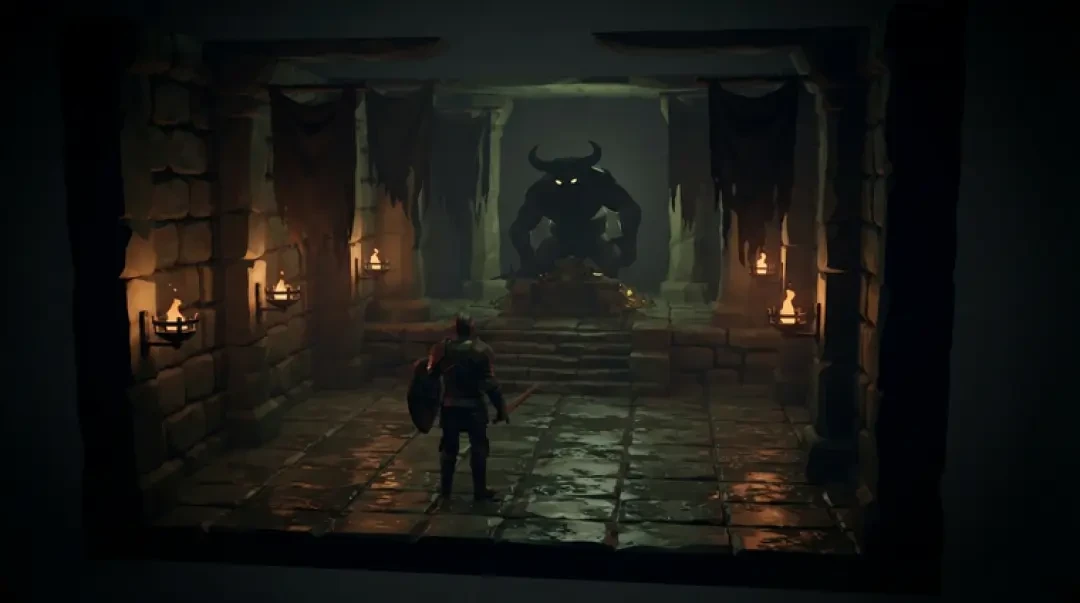
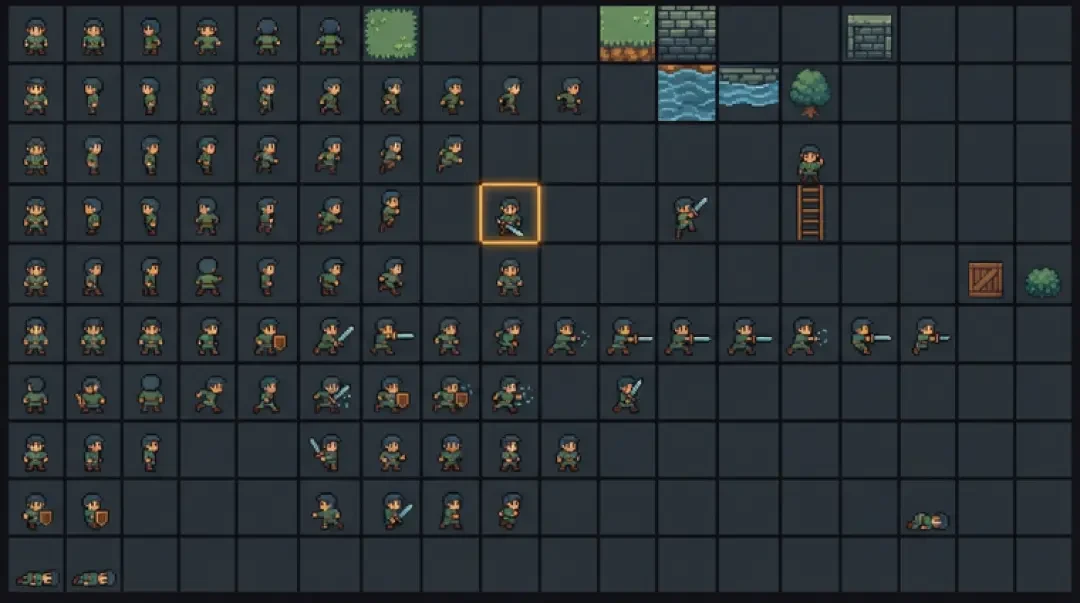
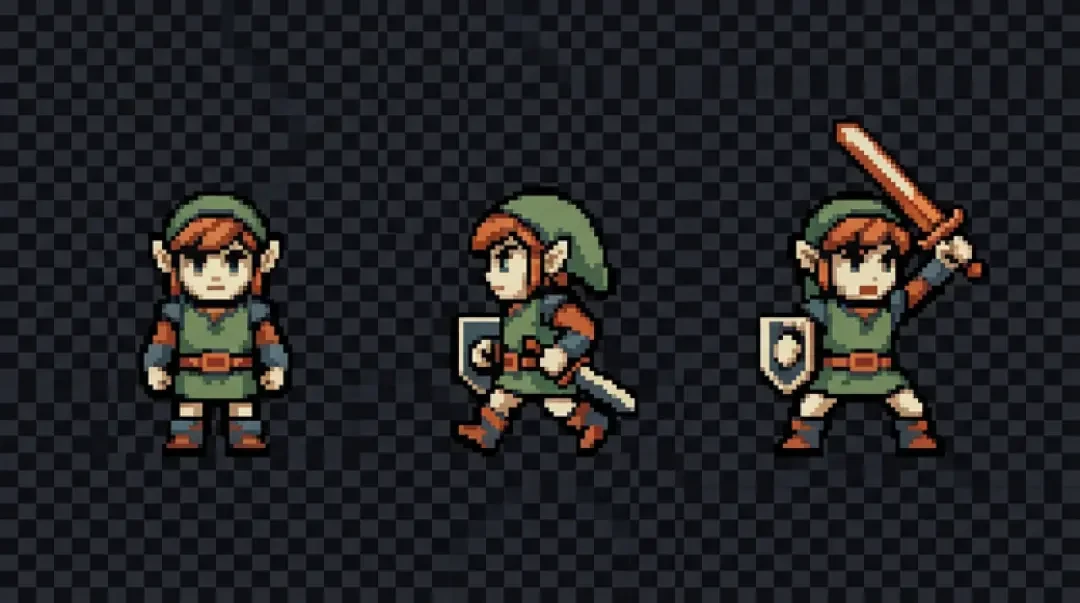
Make your own rpg sprite maker
Generate RPG character sprites, sprite sheets and tilesets from a sentence. Free, online, no drawing skills needed — then drop them into a playable world.
An RPG sprite maker turns a written description into usable game art. You type something like "old fisherman, blue coat, straw hat, top-down, 32 by 32, four-frame walk", and the generator returns a character sprite, a sprite sheet, or a tileset as a PNG with a transparent background. The tool behind this is Agent Sprite Forge, and it runs in the browser inside Neta Studio. Nothing to install, no drawing tablet, no pixel editor open in a second window.
The hard part of RPG art is not quality. It is count. A small game needs a player, eight NPCs, four shopkeepers, and twenty enemy variants, most of them in at least two directions. That is roughly forty characters before you have drawn a single tree. Most people building an RPG can draw none of them. A generator that produces a consistent, slightly plain 32x32 sprite in seconds is worth more to a finished project than one beautiful illustration that took a weekend.
Generate the Cast You Cannot Draw
Start with the cast, not the hero. The hero is the one character you will actually enjoy drawing or iterating on. The cast is where projects die: the blacksmith, the blacksmith's apprentice, three guards in slightly different armor, a merchant, a child, a dog, six slimes and a wolf. Each one is a small art task, and forty small art tasks is a wall. Agent Sprite Forge exists to get you past the wall, so the world has people in it before you run out of momentum.
The input is a description, and the description is the whole interface. A good one names four things: who the character is, what they are wearing, the palette, and the viewpoint. "Guard, dark blue tabard over chainmail, spear, top-down, 32x32, two directions" is workable. "Cool warrior" is not, and the failure is predictable: the generator picks generic details, you get a knight in grey, and you regenerate five times trying to fix a description problem with a reroll button.
The second failure mode is over-description. At 32 pixels wide, a character is roughly a head, a torso, and two legs. A cape, a backpack, a scarf, a shoulder pauldron and a glowing amulet all compete for the same twelve pixels of silhouette. Props do not add detail at small sizes, they add noise. If your first generation comes back as an unreadable clump, remove items from the sentence before you change anything else. The 3D game builder and worlds like Mini World and The Cyclops' Island use this same principle: readable shapes first, ornament second.
Generated Examples
Three output shapes cover almost everything an RPG needs. Each one exports as a PNG with an alpha channel, and each one has a different place it lands. The differences matter more than the art style does, because a sheet with the wrong grid is unusable no matter how good the sprite looks.
A single pose
One character, one frame, one file. A 32x32 PNG with transparency is the smallest useful unit. This is what you generate for a standing NPC, a shopkeeper behind a counter, a signpost, a chest, or an enemy that never moves. It exports as a single-cell PNG.
It drops in as a texture on a flat plane or a camera-facing billboard. In the 3D game builder, a single-pose sprite on a billboard is enough for a whole village of static NPCs, and because there is no animation state, there is nothing to break. If your character list is large and your time is short, this is the format to default to.
A walk cycle sheet
Four frames laid out left to right, exported as a strip or a grid. Four frames at 32x32 in a single row is a 128x32 PNG. Four directions becomes a 4x4 grid at 128x128, or two directions in a 4x2 grid at 128x64. The walk cycle loops by advancing a frame index over time; at eight frames per second, a four-frame walk covers half a second per step cycle and reads correctly at normal movement speed.
It exports as one PNG plus an optional JSON sidecar listing frame size, frame count, columns and directions. The sidecar is plain metadata, not a proprietary format. If you would rather not use it, the numbers are visible in the PNG dimensions: 128 divided by 32 is four frames.
A tileset atlas
A grid of terrain tiles in one image: grass, grass edges, dirt paths, water and water borders, wall tops, floor transitions. At 16x16 cells, an 8x8 atlas is a 128x128 PNG holding 64 tiles. At 32x32, the same 64 tiles need 256x256.
It exports as a single atlas PNG. It drops into a Tiled map layer, a Godot TileSet, or a Three.js tile mesh. The important property is that the cell size matches the map grid exactly. If you generate 32x32 tiles and place them on a 16-unit grid, every second tile lands on a half-offset and the seams are visible from orbit.
Character Sprites vs Sprite Sheets vs Tilesets
These three get used interchangeably in conversation and they are not interchangeable in a project. A character sprite is one frame and carries no timing information. A sprite sheet is a grid of frames from one character and carries frame order. A tileset is a grid of different terrain pieces and carries adjacency information instead. Pick the wrong one and you will be slicing a tileset into animation frames or placing walk-cycle frames as floor.
The consumer decides the format, not the generator. Ask what reads the file: a character sheet slot wants a fixed grid starting at the top-left cell with no padding and no margin, a tile layer wants uniform cells with a known origin, and a UI image node wants a single frame. Padding is the most common export mistake. A one-pixel margin added for safety shifts every frame index by one and offsets the entire animation.
Frame counts and directions in practice
Two directions (left and right, with the sprite mirrored for the other side) halves your sheet and is the standard shortcut for side-view games. Four directions (down, left, right, up) is the top-down default and needs a square grid, so a four-frame walk in four directions is 16 frames. Eight directions is where most small teams should stop and reconsider; the sheet grows to 32 frames per character and the diagonal poses are the ones that read worst at 32 pixels.
Frame counts that work: 2 for a stiff idle bob, 4 for a walk, 6 for a smoother walk, 8 for a run. Below 4, a walk looks like a limp. Above 8, you are paying for frames the player will not consciously see.
| Format | What it is for | Grid and layout | Engine side that consumes it |
|---|---|---|---|
| Character sprite | Static NPCs, props, signs, single-pose enemies, dialogue art when scaled up | One frame, no grid. Common cells: 32x32 or 48x48 | Texture on a plane or billboard in the 3D game builder; any 2D engine texture slot |
| Sprite sheet | Walk cycles, idle, attack, hurt and death animations, one sheet per character | Fixed grid, e.g. 4 columns by 1 row of 32x32 = 128x32; 4x4 for four directions = 128x128 | Three.js animated UV offset; Unity sprite mode Multiple sliced by cell size; Godot AnimatedSprite2D |
| Tileset / autotile atlas | Ground, paths, water and water edges, walls, floor transitions | Uniform atlas, e.g. 8x8 cells of 16x16 = 128x128; isometric diamonds at 32x16 | Tiled map layer; Three.js instanced tile meshes; Godot TileSet with cell size set to match |
| Portrait / bust | Dialogue boxes, party menu, shop screens | One frame, larger cells from 64x64 up to 144x144 | UI image node inside the 3D game builder or any HUD layer |
How It Works
Five steps, in this order. Skipping the silhouette check in step four is the reason people generate twenty times and still end up with nothing usable.
01
Describe the character in one sentence. Name the role, the clothing, the palette and the viewpoint, in that order. Check before you generate: read the sentence to someone else. If they would picture a different character than you, the description is too vague and the output will be too.
02
Pick a frame count and a frame size. One frame for props and static NPCs, four for a walk. Check the arithmetic before you commit: frame size multiplied by column count must equal the sheet width exactly. 32 x 4 = 128, good. 48 into 256 is 5.33, which means a bleeding frame.
03
Generate. The sheet comes back as a PNG with an alpha channel, plus the JSON sidecar with the frame size and column count. Check the file dimensions against the numbers you asked for; if the width is not frame size times columns, stop here and regenerate rather than fixing it downstream.
04
Check the silhouette at 100 percent zoom. Shrink the image until the character is roughly the size it will be on screen and look at the outline. Fill it in solid black mentally. If you cannot tell the arms from the torso, or the hat from the head, the sprite is not usable at that size. Fix it by removing props or moving to a larger frame size, not by regenerating repeatedly.
05
Export and check the alpha on a checkerboard background. Two things to verify: no white or grey halo on the edges, and no pixel from the next frame visible in the last column of the current frame. If the halo is there, the file was flattened onto a light background somewhere in the pipeline.
Drop It Into a World
A PNG in a downloads folder is not a product. This is the step most sprite generators stop at, and it is the step that decides whether you actually finished something. The sheet only becomes a game when it is placed on a grid, given a collision volume, and driven by an animation timer.
In the 3D game builder, the same browser session that generated the sheet can place it. The tileset's cell size sets the world grid, so a 32x32 tile means all collision boxes snap to 32-unit increments. That single decision removes an entire category of bugs: no half-tile gaps at corners, no player wedged between two floor tiles. The sprite sheet becomes an animated billboard on a quad, with the camera set to a 2:1 isometric angle (about 26.57 degrees) so a 32x16 diamond tile reads as a square floor.
Worlds built this way run in the browser with no engine runtime to install and no build step. Mini World and The Cyclops' Island are both examples of a written description becoming a playable Three.js scene, which is the same path your generated cast takes. The order that works: generate the tileset first, generate the cast second, place the player third, then add the NPCs. If you build the cast first you will not know what size the ground is.
- Tile-based collisionCollision boxes are derived from the tile grid, so they stay aligned with the tileset you generated.
- Animated sprite billboardsSheet frames advance on a timer against a UV offset, so a four-frame walk plays from the same PNG you exported.
- Isometric camera presetA 2:1 camera angle pairs with diamond tiles, so a 32x16 tile occupies a square footprint on screen.
- No engine installThe world runs on Three.js in the browser tab. There is no editor to download and no export-build step before you can walk around.
Free, Online, No Install: The RPG Sprite Maker Runs in the Browser
The sprite maker is free and it runs online. There is no installer, no desktop application, no plugin, and no drawing software to buy. You open the page, type a description, and get a PNG. It uses the browser's canvas and WebGL2, so the machine you already have is enough.
What you get out is deliberately boring. Exports are standard PNG files with an alpha channel, at the frame size and sheet dimensions you selected, plus an optional JSON file describing frame size, frame count, columns and directions. No proprietary container. Nothing locks the art to Neta Studio. If you take the PNG to a different tool tomorrow, it opens.
What is not included, so you can plan around it: there is no skeletal rigging, no bone animation, and no automatic in-betweening. Every frame is a flat image. A four-frame walk is four images. That is a limitation, and it is also why the files stay portable, because flat frames work in every 2D pipeline that exists.
Sprite Sizes for RPGs — Picking a Grid in the RPG Sprite Maker
Three sizes cover most RPG work: 16, 32 and 48 pixels per frame. 16x16 gives you dense maps and a retro look, and a 640x360 viewport shows a large area of world at once, but faces become unreadable. 32x32 is the safe default; it leaves enough room for a readable head, torso and legs and it divides cleanly into every common sheet size. 48x48 is for characters that need visible facial detail, for mobile or touch targets that must be large enough to tap, and for games with a smaller visible tile count.
The rule that matters more than the size you pick: the frame size must divide the sheet width evenly. A 256-pixel-wide sheet holds eight 32-pixel frames exactly. It does not hold 48-pixel frames; 256 divided by 48 is 5.33, so the sixth column is cut in half and the sampler reads into the neighbouring frame. In practice you see a one-pixel column of the next pose on the left edge of the current pose, and it looks like a rendering bug when it is actually a maths error. Also set texture filtering to nearest-neighbour (NearestFilter in Three.js, filter off in Godot, filter Point in Unity). Linear filtering blends adjacent pixels across frame boundaries and turns a crisp sprite into a smear.
The sprite size guide on this site lists the full set with the sheet arithmetic for each one, including the isometric diamond sizes where the cell is 32x16 or 64x32 rather than square.
| Frame size | Where it fits | Sheet maths | Failure mode to watch |
|---|---|---|---|
| 16x16 | Dense maps, retro look, large visible area, many tiles on screen | 256x256 sheet = 16 columns by 16 rows | Faces and small props merge into a single blob; a hat and a beard become one shape |
| 32x32 | The default for 2D RPGs and the safest first choice for a new project | 256x256 sheet = 8 columns by 8 rows; 128x32 strip = 4 frames | Props read as noise; adding a cape or backpack makes the silhouette unreadable |
| 48x48 | Higher-detail NPCs, larger on-screen characters, touch-friendly targets | 288x288 sheet = 6 columns by 6 rows. 256 is not divisible by 48 | Non-divisible sheet width bleeds the next frame into the current one at the column edge |
Walk into the world it belongs to
A sprite on its own is a character with nowhere to stand. The step that matters is the one an editor cannot give you: take the sheet you just made and put it in a world someone can walk through. The isometric worlds on this site were all built and published that way.
FAQ
Is the RPG sprite maker free? +
Yes. Generating sprites, sheets and tilesets in the browser is free, and there is no installer. The export is a standard PNG, so you keep the files regardless of what you do next.
Can it make a full tileset, not just one tile? +
Yes. It generates a uniform atlas, for example 64 tiles in an 8x8 grid of 32x32 cells. Check two things after export: that the cell size matches the map grid you will place them on, and that water and path edges line up across tile boundaries where they meet.
What sprite sizes are supported? +
16x16, 32x32 and 48x48 cover essentially all RPG work, plus isometric diamonds at 32x16 and 64x32. Pick the size first, then choose a sheet width that is an exact multiple of it, because 48 does not divide evenly into 256.
Can I use the generated sprites in Unity or Godot? +
Yes, they are plain PNGs with an alpha channel. In Unity, set sprite mode to Multiple, slice by cell size, set pixels per unit to your frame size, and turn compression off. In Godot, import as a texture with filter off, then set the TileSet or AnimatedSprite2D cell size to match the frame size exactly.
Do I need to know how to draw? +
No. You need to be able to describe a character in one sentence and judge whether an outline reads at small size. That second skill is trainable in an afternoon: shrink the sprite to its on-screen size and check whether you can still tell the arms from the torso.
Does it export transparency properly? +
Yes, exports include an 8-bit alpha channel and no background. Verify it by opening the PNG over a checkerboard rather than a white background; a white halo on the edges means the file was flattened somewhere in your pipeline, not that the export was wrong.
Can I animate a walk cycle with it? +
Yes. Four frames is the practical minimum for a walk and eight frames per second reads correctly at normal movement speed. Export as a strip (128x32 for four 32-pixel frames) or a grid, then advance the frame index on a timer against a UV offset if you are driving it in the 3D game builder.
What is the best free RPG sprite maker? +
We build one, so treat this as a bias warning. The useful test is not features, it is whether the export grid matches the engine that will consume it, and whether the tool stops at a PNG or continues into something playable. If you need pixel-level manual editing of the result, pair any generator with a pixel editor; if you need the sprite walking around in a world in the same browser tab, that is what ours does.
Back to the 3D Game Builder
All 31 finished 3D worlds, games and scenes live on one page — every one of them playable.