April Lie: First Duet — Your Lie in April Interactive Drama

Play April Lie: First Duet — a browser interactive drama from the Your Lie in April world. As Kousei Arima, meet Kaori Miyazono under the cherry blossoms, accompany her on the piano, and chase the music that got away. Type any action or pick a choice, and the AI weaves it into the story live as you play.
Final Product: April Lie: First Duet

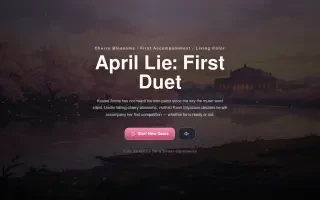
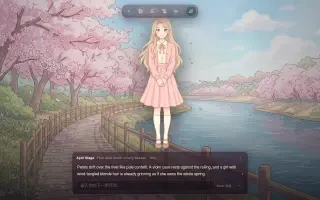
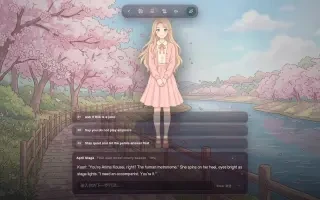
April Lie: First Duet is a playable interactive drama set in the world of Your Lie in April. Kousei Arima — the piano prodigy who stopped hearing his own music after his mother died — is pulled back toward the stage by Kaori Miyazono, a free-spirited violinist who paints his gray world in color. From cherry-blossom riversides to concert hall spotlights, every duet carries an unspoken countdown.
Every scene is written live as you play. Step closer to the girl with the violin case, sit down at the piano, or stay silent and let the petals answer first — the AI weaves each choice into the story, and somewhere behind the spring light, a truth is waiting to be played.
Play it now: April Lie: First Duet →
Game Features
- Live LLM Narrative — Every scene, every line of dialogue, and every choice is written in real time by an LLM as you play. Kousei's silence, Kaori's fire, Tsubaki's worry, and Watari's easy charm arrive in the moment — so no two performances unfold the same (deepseek-v4-flash real-time narrative).
- Free-Form Actions — Type anything: "step closer to the girl with the violin case", "ask if she needs help tuning", or "stay silent". The AI folds your words straight into the story.
- Branching Choices — When the moment matters, real choices appear: ask if this is a joke, say you do not play anymore, or stay quiet and let the petals answer first. Each one changes the music.
- Three Living Chapters — Cherry Blossoms, First Accompaniment, and Living Color — a progress meter tracks how deep into the season you are, from first meeting to final performance.
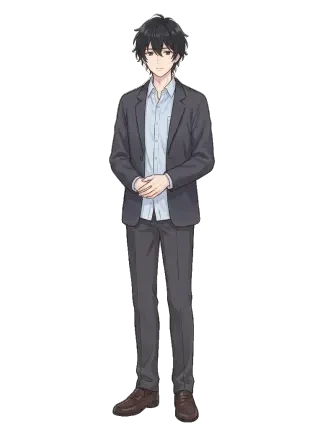
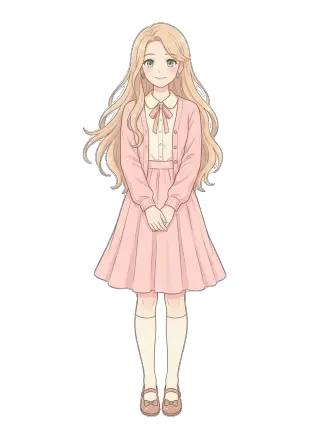
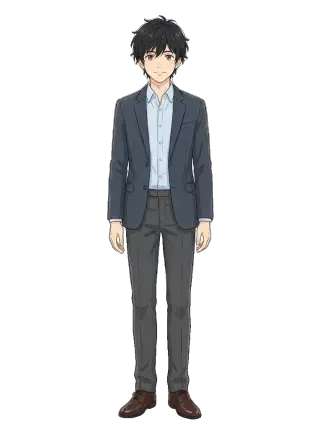
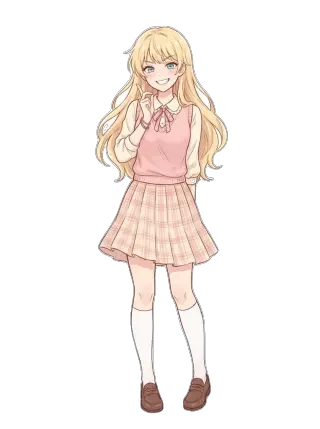
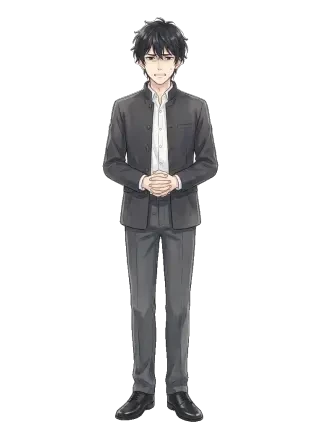
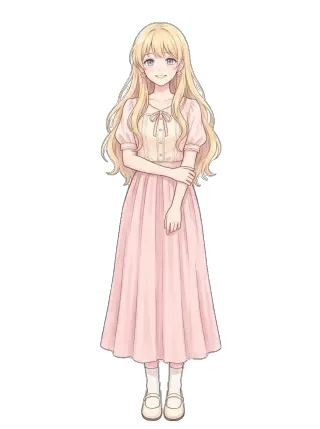
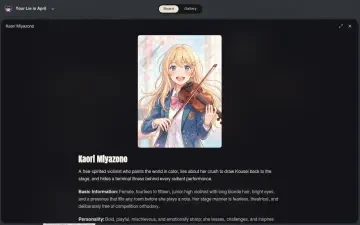
- Full Expressive Cast — Kousei's quiet melancholy and Kaori's radiant mischief come alive with neutral, warm, tense, and playful expressions across six hand-drawn sprites.
- Cast Panel, Turn Log & Browser Play — Open the cast panel to check every character's state, re-read the turn log to trace how your choices changed the music, and play straight from your browser — no download needed.
Character Sprites
Production Process Breakdown
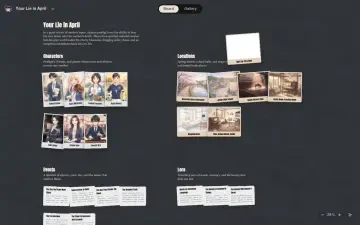
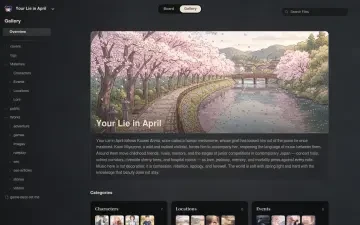
AI receives the prompt "Create a Kousei Arima, piano prodigy who lost his music, meets Kaori, the violinist who changes everything" and generates the Your Lie in April world — 22 atom cards: characters (7), locations (6), events (6), lore (3). Each card contains original descriptions, cover art, and interconnections.
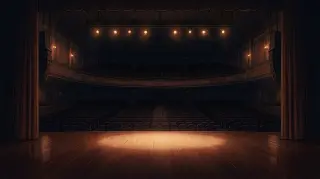
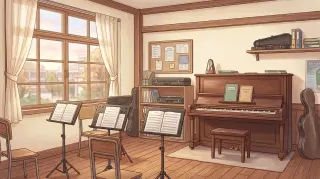
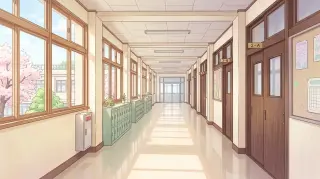
AI designs the game from atom cards: writes story rules, designs scene flow, and generates all art assets — the title background, 5 scene backgrounds, and 6 character sprites. Each sprite was generated with a full-body sprite prompt, then background-removed to transparent PNG via BiRefNet.
Game built and published with one click, instantly shareable online. A live LLM (deepseek-v4-flash) improvises dialogue in each character's voice — Kousei, Kaori, Tsubaki, and Watari — as you play.
Scene Backgrounds


Asset Prompts
"Cinematic 16:9 visual novel title background, soft colored lineart anime quality, soft pastel spring palette. Wide riverside at dusk under falling cherry blossom petals, soft pink sky reflecting on quiet water, distant concert hall silhouette with warm window lights, empty romantic composition with dark quiet lower third for title text overlay, no people, no characters, no text, no logo, no UI, no watermark, painterly atmospheric anime scenery."
"Clean visual novel scene background only, 16:9, soft colored lineart anime quality. Grand concert hall stage from performer view toward dark audience seats and warm stage lights, polished floor, dramatic soft spotlight, empty of people characters text UI logos, emotional musical drama atmosphere."
"Clean visual novel scene background only, 16:9, soft colored lineart anime quality soft pastel warm palette. After-school music practice studio room with upright piano, music stands, soft window light, wood floor, empty of people characters text UI logos, cozy rehearsal atmosphere."
"Clean visual novel scene background only, 16:9, soft colored lineart anime quality soft pastel palette. Riverside cherry blossom bank in spring daylight, pink petals falling over calm blue river, wooden path railing, soft sky, empty of people characters text UI logos watermarks, generous open space for character sprite overlay."
"Full-body visual novel character sprite source for AVG. One young man standing upright, entire body visible head to shoes, centered with generous margin. Plain pure white matte background #ffffff only. Soft colored lineart, hand-drawn anime quality, soft pastel palette. Black slightly messy hair, reserved quiet eyes, neutral soft expression, slim pianist posture, school-casual dark jacket over light shirt and neat trousers, gentle melancholic anime musical-drama aesthetic. Clean silhouette for cutout. No scenery, no gradient, no props text logo watermark UI frame."
"Full-body visual novel character sprite source for AVG. Same young woman design: long wavy blonde hair, bright eyes, light spring blouse and flowing skirt soft pink cream, school-casual anime musical drama style. Standing upright entire body head to shoes centered generous margin. Plain pure white matte background #ffffff only. Expression: playful mischievous bright grin, teasing energy, lively eyes. Soft colored lineart hand-drawn pastel anime. No scenery gradient props text logo UI watermark."
Why Choose Neta Studio
Professional — Cloud harness system supports the full workflow from world building to game publishing, all running in the cloud with no local setup. Stable access to the latest models: Claude Opus 5 · GPT Image 2 · DeepSeek V4 Flash
One-click generation — Officially tuned skills drive every step: world building, character design, art generation, game packaging. World fork resource sharing lets you inherit characters, locations, and events from any public world, then rewrite what you want.
Community-first — Users build unlimited worlds, all public worlds can be forked, remixed, reimagined. The Discord learning community provides tutorials and real-time support — from your first world to your first game.
Studio Interior
Start Creating
This game was generated by Neta Studio AI from a single sentence. The world took minutes. The game took minutes. You can do it too — adapt this world or start fresh from any IP. No coding required, free to start.
World: Your Lie in April · Type: Interactive Drama · 22 atom cards · 6 sprites · 5 backgrounds · 1 cover · Share: Play →