White Elm Sanatorium: Room 17
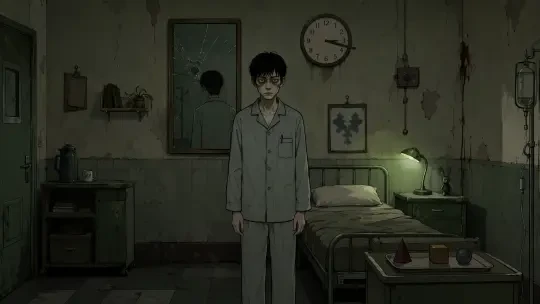
Play White Elm Sanatorium: Room 17 — a point-and-click psychological horror puzzle in the White Elm Sanatorium world. As amnesiac patient Shen Wusheng, investigate Room 17 before midnight, enter the 1980 mirror residue and find the three key items that survive the time loop. Live LLM narrative, medicine-bottle puzzle, cross-time causality, midnight key choice.
Final Product: White Elm Sanatorium: Room 17
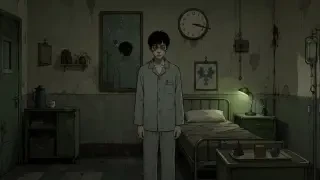
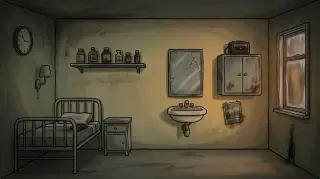
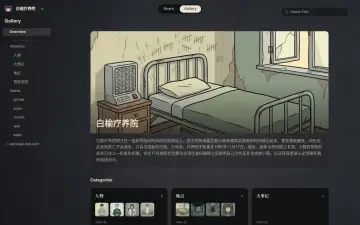
White Elm Sanatorium: Room 17 (白榆疗养院:17号病房) is a playable point-and-click psychological horror puzzle born from the White Elm Sanatorium world. As the amnesiac patient Shen Wusheng, you wake in Ward 17 of a sanatorium that stitches the last few minutes of the dead back to life — and discovers that death never disappears, only hunts for a new home. The day resets every midnight, while a few strange objects remember the round before.
Investigate Room 17, step into the 1980 fire-night residue behind the cracked mirror, solve the medicine-bottle order, and find the three key objects that can survive the reset. Choose carefully: every resurrection demands a repayment of the same death.
Play it now: White Elm Sanatorium: Room 17 →
Game Features
- Live LLM Narrative — The investigation, Room 17 and the time loop are framed by a live language model as you play, so the sanatorium always feels alive and the dead remember differently each round (deepseek real-time narrative).
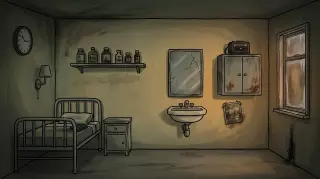
- Point-and-Click Investigation — Observe Room 17, click every hotspot — the stopped clock, the medicine shelf, the cracked mirror, the rusted cabinet — and gather the clues before midnight.
- The Midnight Reset — The sanatorium rewinds to the same morning on November 17, 1987. Only unusual relics remember what happened in the round before.
- The 1980 Mirror Residue — Step through the cracked mirror into the fire-night version of Room 17, where a wall crack hides a cassette and the same room is seven years younger.
- Medicine-Bottle Order & Item Combination — Rearrange the medicine bottles, combine items and use recordings to unlock the path through the sealed east wing.
- Browser Playable — Runs directly in your browser with no download. Click rooms, combine items and survive the midnight three-key choice.
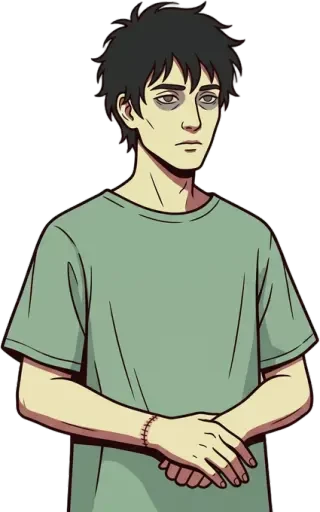
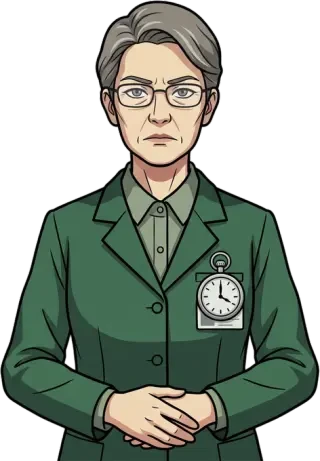
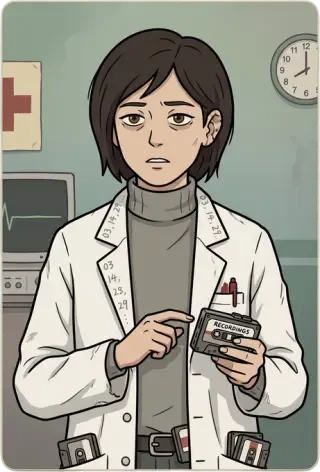
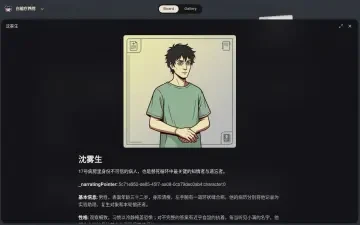
Character Sprites
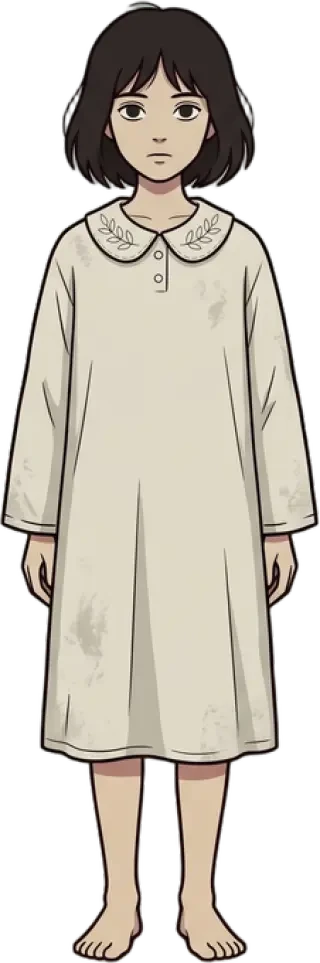
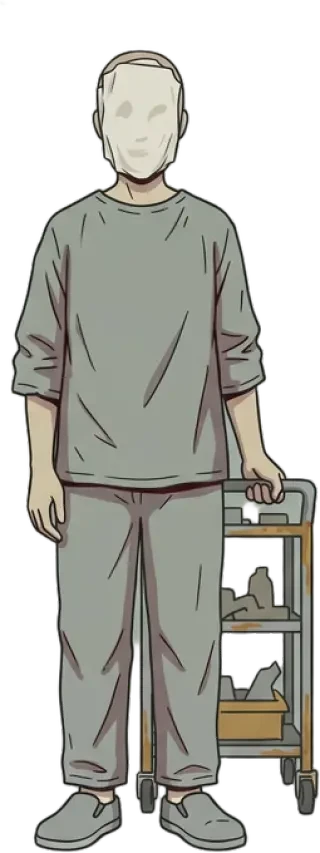
Production Process Breakdown
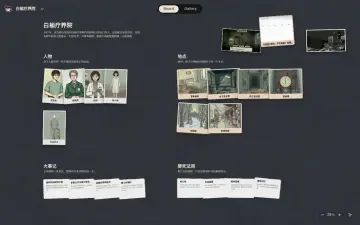
AI received the White Elm Sanatorium seed and built the entire world from scratch — 19 atom cards: 5 characters (Shen Wusheng, Gu Weizhen, Zhou Mi, Lin Xiaoman, the Nameless Orderly), 6 locations (Room 17, the Underwater Operating Room, the Death Registry, the Old Clock Tower, the White Elm Forest, the Sealed East Wing), 4 events and 4 substitution-death rules, each with cover art and interconnections.
AI designed the game from the atom cards — the point-and-click loop in Room 17, the mirror time-shift into the fire-night 1980 room, the medicine-bottle ordering puzzle and the midnight three-key choice — then generated the title key art, the scene backgrounds and the full character sprite set, all cut out to transparent PNGs.
The game was built and published with one click, instantly shareable online. A live LLM frames the narrative as you play, and the whole White Elm Sanatorium world can be forked, remixed and reimagined by the community.
Scene Backgrounds
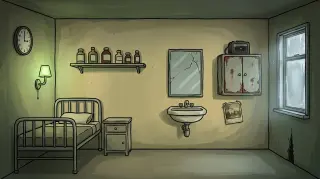
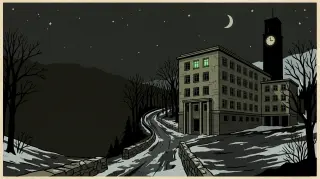
Asset Prompts
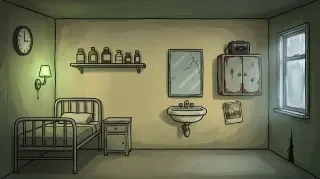
“Create a production clean interactive scene background for an original point-and-click browser puzzle game, Room 17 in White Elm Sanatorium, 1987, fixed first-person camera, 16:9 landscape, no characters, no text, no labels, no UI. Show the full room clearly in one stable composition. Required object anchors, all fully visible and separated for clickable hotspots: left side an iron hospital bed with a small bedside drawer below a sickly green wall lamp; upper-left wall an analog clock stopped at 3:17; upper-middle wall a shelf with seven distinct medicine bottles; center wall a cracked rectangular mirror above a ceramic washbasin; right-middle a rusted medicine cabinet with a cassette player on top; far-right a frosted window; lower-right wall a narrow visible crack suitable for hiding a cassette; one old photograph pinned near the cabinet. Keep open floor and negative space between objects. Lighting: the room is dark and oppressive but every required puzzle object remains readable through narrow bedside light and weak icy window light. Art direction: flat hand-drawn 2D illustration, bold consistent dark outlines, simplified slightly uncanny geometry, limited muted palette of near-black olive, dirty hospital green, nicotine yellow, old ivory, dried blood red and cold blue-gray, aged paper and dry gouache texture, quiet surreal psychological horror, no gore. No photorealism, no anime, no 3D, no character silhouette, no decorative poster composition, no animal-headed characters, no black-and-white cubes, no copied franchise symbols, entirely original visual language.”
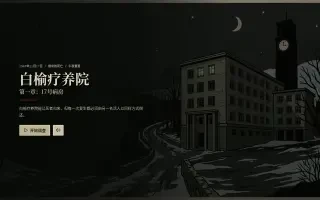
“Create a production title-screen background for the original browser puzzle game White Elm Sanatorium, 16:9 landscape, no text, no logo, no characters, no UI. Scene: an isolated 1987 mountain sanatorium at night, severe rectangular 1930s medical architecture surrounded by black white-elm trees and thin snow, only one upper window glowing with sickly cold green light, an old clock tower silhouette showing 3:17, narrow mountain road disappearing behind trees. Composition: cinematic wide exterior, building is the immediate first-viewport subject, leave a broad low-detail dark area on the left-center for Chinese title and start button, reveal enough of the real building to inspect, no fog hiding the structure. Art direction: flat hand-drawn 2D illustration, bold consistent dark outlines, simplified slightly uncanny perspective, limited muted palette of near-black olive, dirty hospital green, nicotine yellow, old ivory and cold blue-gray, aged paper and dry gouache texture, quiet surreal psychological horror, restrained and readable. No photorealism, no anime, no 3D, no gradient orbs, no gore, no animal-headed characters, no black-and-white cubes, no copied franchise symbols, entirely original iconography.”
“Using the supplied 1987 Room 17 background as a strict composition and camera reference, create the 1980 fire-night residue version for the same original point-and-click puzzle game. Preserve the exact fixed first-person camera, wall boundaries, bed, bedside drawer, clock position, medicine shelf, cracked mirror, washbasin, medicine cabinet, cassette player, old photograph, frosted window and lower-right wall crack so clickable hotspots remain in the same normalized positions. No characters, no text, no labels, no UI. Transform only the time state: fresher but institutional 1980 fixtures mixed with subtle smoke stains, a faint amber emergency glow outside the doorless frame, an empty cassette case resting on the bed, the lower-right wall crack visibly open enough to hide a tape, and early scorch marks near the ceiling. Keep the room dark, oppressive and readable; no active flames, no gore, no bodies, no object occlusion. Match the flat hand-drawn 2D style, bold consistent outlines, simplified uncanny geometry, aged dry gouache texture and limited palette of near-black olive, dirty hospital green, nicotine yellow, old ivory, dried blood red and cold blue-gray. This is the same room seven years earlier, not a redesign. No photorealism, no anime, no 3D, no copied franchise symbols.”
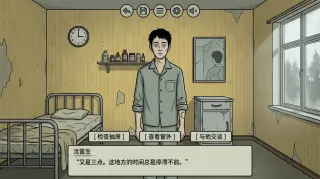
“A polished point-and-click narrative puzzle game screen concept mockup, 16:9, centered composition, entirely original world and characters. Frame layout: a slim restrained top toolbar floating at the top center with small circular control icons for back, save, menu, settings and mute. One full-body Chinese man around age 32 stands centered, thin build, pale tired face, short untidy black hair, faded gray-green 1980s hospital pajamas, circular stitched scar around his left wrist, guarded confused expression, rigid frontal pose. Full-bleed background: Room 17 in an isolated 1987 mountain sanatorium, yellowed wallpaper, iron hospital bed, small medicine cabinet, cracked mirror, frosted window, old wall clock stopped at 3:17, subtle impossible details such as the mirror reflection turning slightly too early and medicine bottles aligned like a code. Near the bottom: three compact rectangular choice buttons with very short Chinese action labels, and below them a wide rectangular dialogue box with speaker name 沈雾生 and one short Chinese narration line. Visual direction: flat hand-drawn 2D illustration, bold consistent dark outlines, simplified slightly stiff anatomy, muted limited palette of hospital green, nicotine yellow, dried blood red and cold gray, quiet surreal psychological horror, dry visual humor, eerie symbolic everyday objects, clean point-and-click readability. No photorealism, no anime, no 3D, no gore, no animal-headed characters, no black-and-white cubes, no copied franchise symbols, no watermark, no logo, no outer border.”
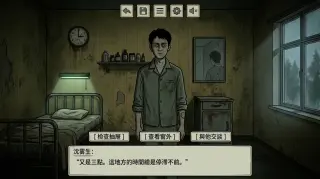
“Revise the supplied concept image for the same original game and preserve its core identity: keep the same Chinese male patient Shen Wusheng, the same Room 17 hospital setting, the 1987 medical props, the flat hand-drawn 2D point-and-click composition and the readable interactable objects. Make the art direction significantly darker and more oppressive without turning the room into unreadable blackness. Replace even ambient lighting with a narrow sickly bedside lamp, weak icy window light, and deep olive-black shadows occupying most corners. Increase aged paper texture, nicotine-stained walls, damp marks, dark wood and oxidized medical metal. Make the character feel integrated into the room rather than displayed: slightly smaller in frame, rigid front-facing posture, pale face emerging from shadow, restrained expression. Keep bold consistent outlines and simplified slightly uncanny anatomy. Use a limited palette of near-black olive, dirty hospital green, old ivory, dried blood red and cold blue-gray. The cracked mirror reflection should be subtly out of sync, the stopped clock at 3:17 should remain visible, and medicine bottles must still read clearly as puzzle objects. Replace glossy modern interface styling with austere rectangular panels, thin worn borders, small cream text, almost no rounded corners, no glass effects. Quiet surreal psychological horror, dry visual absurdity, no gore, no photorealism, no anime, no 3D, no animal-headed characters, no copied franchise symbols, no watermark, no logo. This is a darker revision and layout refinement, not a redesign into a different world.”
Why Choose Neta Studio
Professional — A cloud harness powers the full pipeline from world building to a playable game, all running in the cloud with no local setup. Stable access to the latest models: Claude Opus 5, GPT Image 2, DeepSeek V3.
One-click generation — Officially tuned skills drive every step: world building, character design, art generation and game packaging. World fork and resource sharing included.
Community-first — Build unlimited worlds; all public worlds can be forked, remixed and reimagined.
Studio Interior
Start Playing
This game was generated by Neta Studio AI from a single sentence. The world took minutes. The game took minutes. You can do it too — adapt this world or start fresh from any IP. No coding required, free to start.