Road Trip: Victory Is Ours — Family Guy AI Visual Novel | Play Online

Play Road Trip: Victory Is Ours — a free browser AI visual novel set in the world of Family Guy. Live LLM narrative as Brian and Stewie hit the highway, real cel-shaded sprites and Quahog scene backgrounds, and an ending built from every choice you make. No download needed.
Final Product: Road Trip: Victory Is Ours — Family Guy AVG


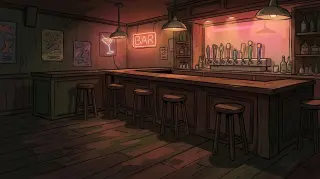
Road Trip: Victory Is Ours is a playable AI visual novel set in the world of Family Guy. You are Brian Griffin on a chaotic Quahog → boardwalk road trip with Stewie — after another novel rejection and a public roasting at the Drunken Clam. Stewie wants a prototype toy from a boardwalk museum. Brian wants dignity, material, and not to admit he needs the company. One car, two egos, zero adult supervision.
Everything you say is written live by an AI storyteller. Every choice shifts two meters — Friendship and Dignity — and every shift bends the trip toward a different ending: a warm buddy finale, mutual destruction, or the soft-reset couch where nothing sticks.
Play it now: Road Trip: Victory Is Ours — Family Guy AVG →
Game Features
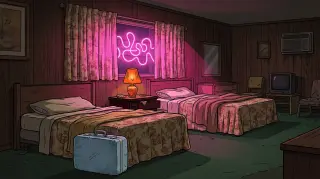
- Live LLM Narrative — Every beat — Stewie's taunts, Brian's dignity spirals, the motel neon confessions — is written in real time by an LLM as you play. No two road trips end the same (deepseek-chat real-time narrative).
- Friendship & Dignity Meters — Two meters, one station wagon. Friendship and Dignity tick up and down with every line you speak. The ending is built from the bond you keep — or the ego you refuse to drop.
- Free-Form Dialogue — Type anything: argue about the playlist, ask Stewie about the prototype toy, or just drive in silence. The AI reads your intent and answers in character.
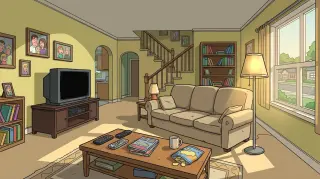
- The Griffin Cast — Brian and Stewie appear with original cel-shaded sprites — neutral, smug, hurt, angry — plus scene backgrounds from the Griffin living room to the Atlantic boardwalk.
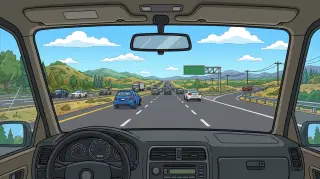
- Milestone Story Beats — The trip advances through real milestones: the rejection letter, the send-off at the Clam, the open highway, rest-stop diplomacy, neon confessions, and the boardwalk victory conditions.
- Browser Playable — Runs directly in your browser, no download needed. Live LLM dialogue on every turn.
Character Sprites


Production Process Breakdown
AI receives the prompt "Create a Family Guy world with cutaway gags, status quo chaos, and the Griffin household" and generates the Family Guy world — 21 atom cards: 8 characters, 5 locations, 4 events, 2 rules, 2 lore. Each card carries original descriptions, cover art, and interconnections.
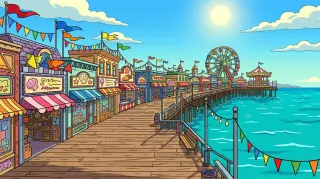
AI designs the game from the atom cards: writes the story rules, designs the scene flow around a Quahog → boardwalk road trip, and generates all art — the title background, six scene backgrounds, and Brian and Stewie sprites. Each sprite was generated with a full-body sprite prompt on a pure white background, then background-removed to a transparent PNG via BiRefNet.
Game built and published with one click, instantly shareable online. A live LLM (deepseek-chat) improvises every line of dialogue in character — Brian and Stewie — as you play.
Scene Backgrounds

Asset Prompts
"Wide landscape night highway outside a small New England coastal town, empty road, streetlights, distant suburban houses glow, soft moonlight clouds, American adult cartoon sitcom style, cel shading, sharp shadows, flat color, bold outlines, visual novel title background, no people, no text, no watermark, no logo"
"Interior of a suburban American family living room, two-story house aesthetic, beige couch facing a TV, cluttered coffee table, warm lamps, afternoon light through windows, American adult animated sitcom, Family Guy inspired, cel shading, sharp shadows, flat color, bold outlines, clean cartoon shapes, no photorealism, no live-action likeness, no text, no watermark, no logo, clean scene background for visual novel, no people, no text"
"Full-body visual novel character sprite source image. Anthropomorphic white dog standing upright on two legs, human-like posture, calm neutral expression, slight smile, red collar, casual suburban sitcom look, entire body visible head to feet, centered with generous margin, plain pure white matte background (#ffffff), no scenery, American adult cartoon sitcom style, cel shading, sharp shadows, flat color, bold outlines, no text, no watermark, no frame"
"Full-body visual novel character sprite of a very short cartoon kid sidekick, oversized round football-shaped head, large oval eyes, confident calm face, yellow shirt, red overalls, stubby limbs, standing upright, entire figure visible head to shoes, centered with margin, plain pure white matte background (#ffffff), American adult animated sitcom style, cel shading, sharp shadows, flat color, bold black outlines, no scenery, no props, no text, no watermark, no frame"
Why Choose Neta Studio
Professional — Cloud harness system supports the full workflow from world building to game publishing, all running in the cloud with no local setup. Stable access to the latest models: Claude Opus 5 GPT Image 2 DeepSeek V3
One-click generation — Officially tuned skills drive every step: world building, character design, art generation, game packaging. World fork resource sharing lets you inherit characters, locations, and events from any public world, then rewrite what you want.
Community-first — Users build unlimited worlds, all public worlds can be forked, remixed, reimagined. The Discord learning community provides tutorials and real-time support — from your first world to your first game.
Studio Interior


Start Creating
This game was generated by Neta Studio AI from a single sentence. The world took minutes. The game took minutes. You can do it too — adapt this world or start fresh from any IP. No coding required, free to start.