The Price of Every Door — Gothic Door-Adventure Web App from The Last Refuge | Neta Studio
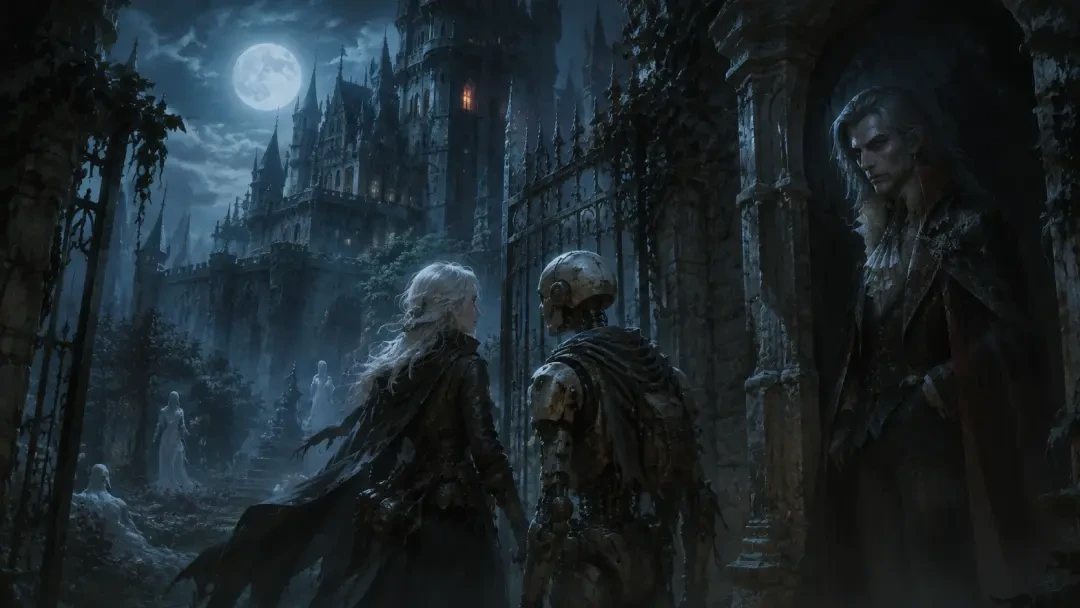
Play The Price of Every Door — the interactive gothic door-adventure web app generated by Neta Studio inside The Last Refuge, Dracula's castle world. Choose the White-Haired Woman, the Android Companion or the Child of the Gardens and cross the castle one paid door at a time — every shelter costs Blood, Warmth, Memory or Name. Branch from the iron gate to the moonlit gardens, the chapel and the throne, then descend to the breach beneath the world. 14 endings, painterly scene art and character sprites, ambient audio — runs instantly in your browser.
Final Product: The Price of Every Door
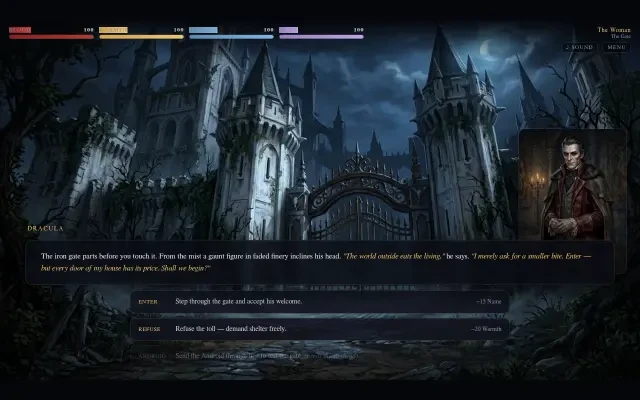
The world outside eats the living. Dracula's castle is the last refuge — and every door within it asks for payment.
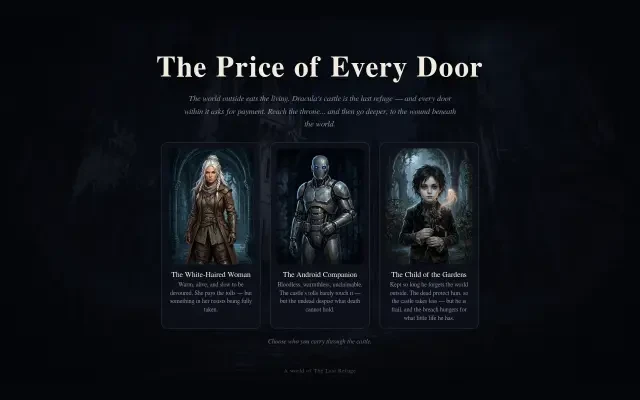
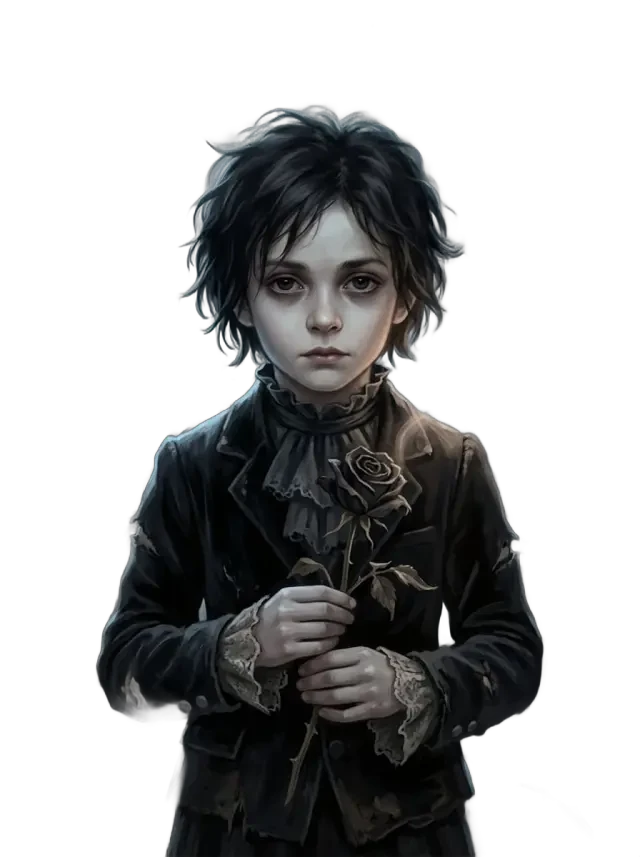
The Price of Every Door is an interactive gothic door-adventure web app born inside The Last Refuge — the AI-built world of Dracula's decaying castle, its moonlit gardens of the kept dead, and the hungry world beyond the walls. You choose one of three wanderers — the White-Haired Woman, warm and slow to be devoured; the Android Companion, bloodless and unclaimable; or the Child of the Gardens, sheltered by the dead — and cross the castle room by room.
Shelter is never free. Each door, room and kindness demands payment in Blood, Warmth, Memory or Name, and the cost is printed on every choice. Guard your four meters, weigh each bargain, and thread the gate, the grand hall, the moonlit gardens and the chapel's sorrowful piano toward the throne — then go deeper, to the wound beneath the world. Pay too much and you join the kept dead. Pay just enough and you may reach the ending that is truly yours. 14 endings, all in your browser.
Play The Price of Every Door now — it runs instantly, no download, no login.
Features
- Three Playable Wanderers — The White-Haired Woman pays the tolls but something in her resists being fully taken; the Android Companion barely bleeds, cools or surrenders its name, so the castle's tolls barely touch it; the Child of the Gardens is protected by the dead. Your choice rewrites which doors open and what each one costs.
- Four Tolls: Blood, Warmth, Memory & Name — Every shelter in Dracula's house asks payment in one of four meters, always shown on the button before you commit: −15 Name to step through the gate, −20 Warmth to refuse the toll, −40 Memory for one warm room. Spend recklessly and a meter hits zero.
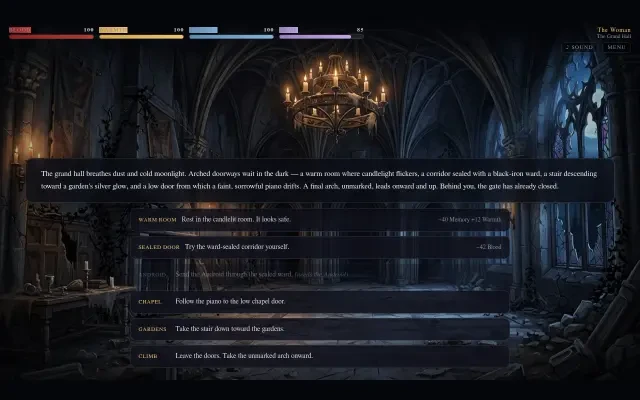
- A Castle of Doors — Branch through the gate into a grand hall of choices: a warm room where candlelight flickers, a corridor sealed with a black-iron ward, a stair descending to the gardens' silver glow, a low door with a sorrowful piano — then the unmarked arch to the throne, and beneath it, the breach in the world.
- Live Costs, Android-Only Paths — Costs update as your meters change, and certain doors can only be tested by the Android Companion — send it through a ward-sealed corridor or into the gate first to learn what death cannot claim.
- 14 Endings — From Bled to the Gardens and Forgotten at the Threshold to Undigested, The Breach Sealed and The Song's Last Note — the castle remembers everything you paid. Cross Again with a different wanderer to find the endings you missed.
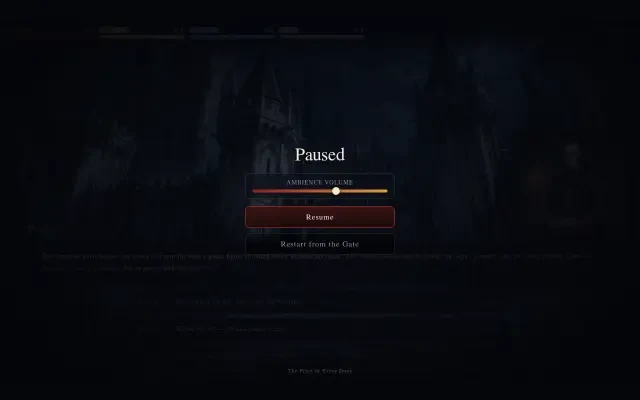
- Painterly Gothic Art & Ambient Audio — Six 16:9 painterly scene backgrounds and a cast of six waist-up portraits, each character cut to a transparent PNG sprite for the dialogue stage, wrapped in procedural Web Audio ambience — wind, candle rooms, door creaks — with a sound toggle and volume control.
Interface

Production Process Breakdown
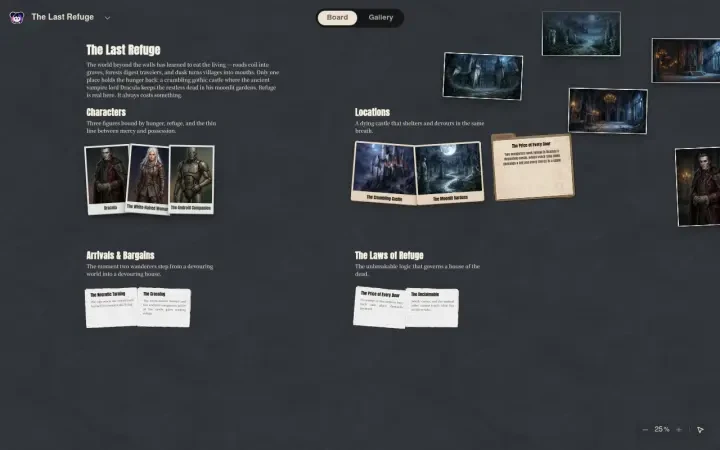
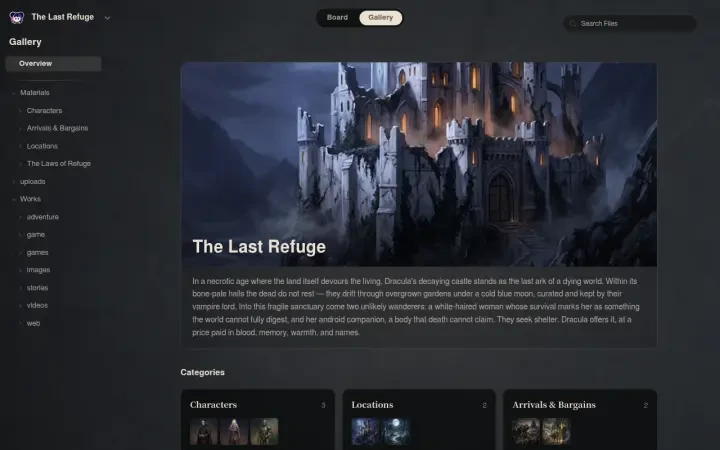
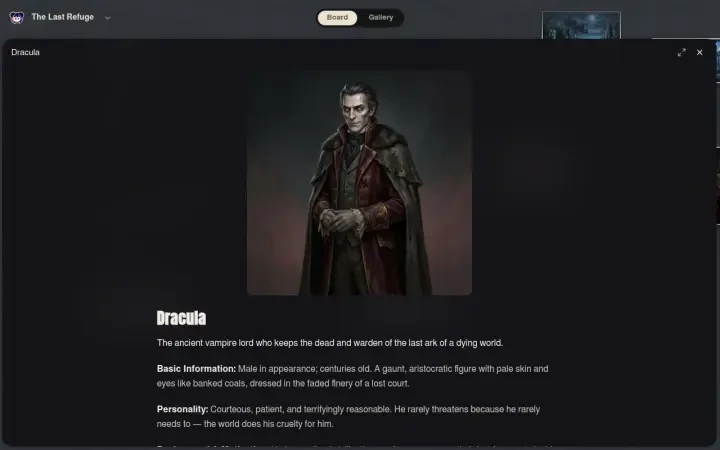
From a single seed sentence — "A crumbling gothic castle ruled by the ancient vampire lord Dracula, where the restless dead walk moonlit gardens, and two unlikely wanderers — a white-haired woman and her android companion — arrive seeking refuge in a world that devours the living" — Neta Studio grows The Last Refuge: characters (Dracula, the White-Haired Woman, the Android Companion), locations (the Crumbling Castle, the Moonlit Gardens), events (the Necrotic Turning, the Crossing) and the laws of the house (the Price of Every Door, the Unclaimable), each with covers in the world's semi-realistic painterly splash-art style.
The AI designs a door-by-door adventure on the world's own rules: three playable wanderers, four toll meters (Blood, Warmth, Memory, Name), a branching map of rooms and 14 endings. The art pipeline generates six 16:9 painterly scene backgrounds — the gate, the grand hall, the moonlit gardens, the throne hall, the chapel and the undercroft breach — plus a six-portrait cast; every portrait is then cut to a transparent PNG sprite with AI background removal (the rembg/BiRefNet cutout pipeline) for the dialogue stage.
The scenes, costs and endings are compiled into one self-contained web app with a procedural Web Audio ambience engine and a full in-browser HUD — meters, portraits, speaker labels, sound and menu controls. One click publishes it, the share page goes live instantly, and the story runs entirely in the browser.
Asset Prompts
Real Generation Prompts
"A crumbling gothic castle ruled by the ancient vampire lord Dracula, where the restless dead walk moonlit gardens, and two unlikely wanderers — a white-haired woman and her android companion — arrive seeking refuge in a world that devours the living." — the one-line seed that created The Last Refuge, with the visual style "semi-realistic, painterly strokes, game splash art".
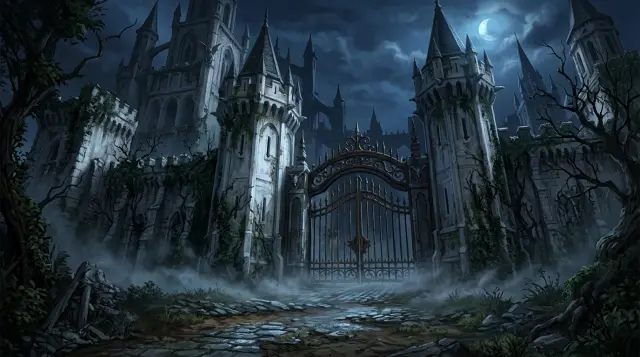
"Game background art for a 2D gothic exploration game, wide establishing shot. Scene: the towering iron gate of a crumbling gothic castle at night, bone-pale marble walls streaked with black ivy, cold blue moonlight, mist curling at the threshold, no characters. Composition: wide 16:9 background, empty center space for gameplay, atmospheric depth. Style: semi-realistic, painterly strokes, game splash art. Text: no text. Constraints: no watermark, no UI, no characters, no text."
"Game background art for a 2D gothic exploration game, wide interior shot. Scene: a decaying grand hall inside a vampire castle, cracked marble floor, tall arched doorways leading to darkness, dusty candelabra with warm candlelight against cold blue moonlight from broken windows, black ivy creeping over faded aristocratic finery, no characters. Composition: wide 16:9 background, several visible doorways as points of interest, empty foreground for gameplay..."
"Game background art for a 2D gothic exploration game, wide shot. Scene: overgrown moonlit castle gardens, silver-lit paths choked with black roses and pale weathered statuary, drifting pale ghostly figures of the restless dead in the far background, permanent full moon, eerie cold blue light. Composition: wide 16:9 background, empty central path for gameplay, atmospheric fog..."
"Game background art for a 2D gothic exploration game, wide underground shot. Scene: the deepest undercroft beneath a vampire castle, ancient bone-pale stone crypt with cracked pillars and pale roots breaking through, and in the far wall a jagged breach — a tear in reality leaking a hungry, devouring darkness edged with faint sickly violet light, cold and wrong..."
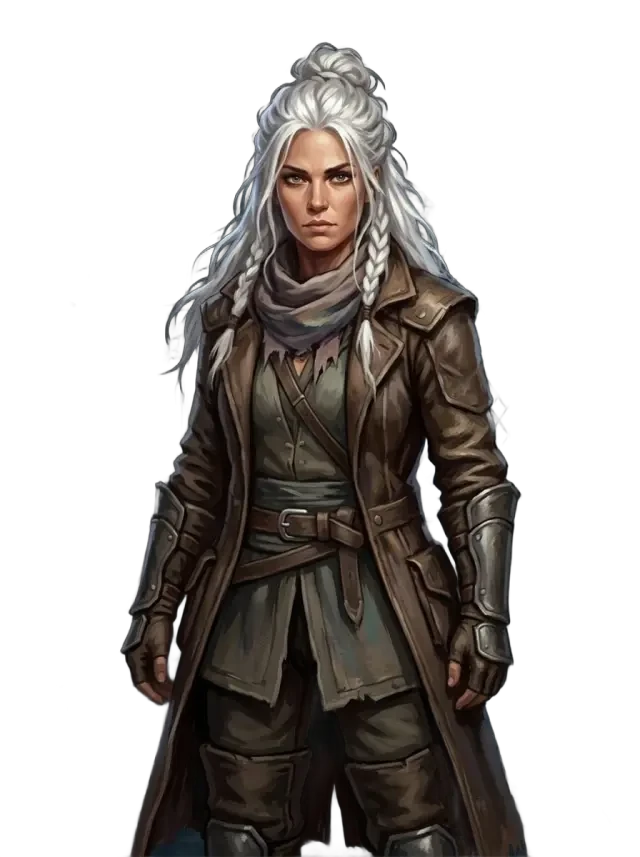
"Character portrait for a 2D gothic game UI, waist-up. Scene: a wanderer with stark white hair and a traveler's hardened calm, warm-toned skin standing out against cold gothic surroundings, wary and resolute expression, worn travel clothes. Composition: centered portrait, dark vignette background, character isolated for use as a playable-character portrait. Style: semi-realistic, painterly strokes, game splash art. Text: no text..."
"Character portrait for a 2D gothic game UI, waist-up. Scene: a humanoid machine of worn metal plating and quiet joints, no warmth or pulse, steady and protective bearing, faintly glowing eyes, standing in cold moonlight. Composition: centered portrait, dark vignette background, character isolated for use as a playable-character portrait..."
"Character portrait for a 2D gothic game UI, waist-up. Scene: the ancient vampire lord standing in a decaying candlelit hall, gaunt aristocratic figure, pale skin, eyes like banked coals, faded finery of a lost court, calm and courteous menace. Composition: centered portrait, dark vignette background, character isolated for use as a dialogue portrait..."
"Semi-realistic painterly game splash art cover for The Price of Every Door, an interactive gothic adventure web game set in The Last Refuge: at the towering iron gate of Dracula's crumbling bone-pale castle under a cold blue moon, a white-haired woman wanderer and her worn android companion stand in the mist, a gaunt aristocratic vampire lord in faded finery watches from the shadows of the archway, black ivy creeping over pale walls, restless ghostly figures drifting through overgrown moonlit gardens behind them, warm candlelight glowing from a single high window, cinematic wide 16:9 composition, moody rich color, painterly strokes, confident composition, no text, no logo, no watermark."
Why Choose Neta Studio
Professional — The cloud harness covers the whole pipeline: world building, character and location atoms, art generation, interactive web-app logic and one-click publishing — no local setup, no coding required.
One-click generation — Officially tuned skills drive every step, from the world's seed sentence to the painterly scene backgrounds, the portrait cast and the finished browser adventure.
Everything in one place — Characters, locations, events, rules and assets live together on the studio board, and every work is published with a share link that runs instantly.
Made for storytellers — Turn any world — your own or a beloved IP — into playable games, visual novels and interactive experiences in minutes, then translate the result into 11 languages.
Studio Interior
Play the Adventure
This interactive web game was generated by Neta Studio AI from a single sentence. The world took minutes. The game took minutes. You can do it too — adapt this world or start fresh from any IP. No coding required, free to start.