Spiritfarer — Toward the Everdoor: A Cozy Spirit-Ferrying Game

Play Spiritfarer — Toward the Everdoor, a browser interactive cozy game where you are Stella, ferrymaster to the deceased. Captain a growing boat across a pastel sea, befriend spirits like Gwen, cook and farm and build, fulfill final wishes, and carry each passenger to the Everdoor. Every scene and dialogue is written live by an LLM as you play.
Final Product: Toward the Everdoor


Spiritfarer — Toward the Everdoor is a playable cozy game about ferrying souls to the afterlife. You are Stella, ferrymaster to the deceased, and your cat Daffodil is your silent co-captain. Build and upgrade a living boat, cook meals for the spirits who board, plant gardens, and — above all — listen.
Each passenger carries an unfinished life: a childhood friend, an uncle who loved too loudly, a child who never finished growing up. Help them fulfill their final wishes, and when they are ready, carry them to the Everdoor — and learn that release is the final form of care.
Play it now: Spiritfarer — Toward the Everdoor →
Game Features
- Live LLM Narrative — Every scene, every reply, and every spirit — Stella, Daffodil, Gwen and the passengers who board — is written in real time by an LLM as you play. No two journeys across the sea unfold the same (deepseek-chat real-time narrative).
- Spirit Companionship — Cook their favorite meals, build them rooms, hug them when the sea gets heavy. Each passenger reacts to your care in character, improvising dialogue as their story unfolds.
- Boat Building & Farming — Expand your living vessel: workshops, gardens, kitchens and cozy cabins. Plant, harvest, craft and cook as you sail between islands.
- Final Wishes & Goodbyes — Every spirit carries an unfinished life. Fulfill their last wishes, and when the time comes, carry them to the Everdoor — a goodbye unique to every passenger.
- Hand-Drawn Pastel World — Soft colored lineart, hand-drawn quality and a soft pastel palette: lavender seas, coral skies, and lantern light that feels like memory.
- Browser Playable — Runs directly in your browser, no download needed. Live LLM dialogue on every page turn.
Character Sprites


Production Process Breakdown
AI receives the prompt "Ferry souls to the afterlife — build a boat, befriend spirits, cook meals, help them find peace" and generates the Spiritfarer world — 19 atom cards: characters (7), locations (5), events (5), lore (2). Each card contains original descriptions, cover art, and interconnections.
AI designs the game from atom cards: writes story rules, designs scene flow, generates all art assets (title background + scene backgrounds) and the character sprites. Each sprite was generated with a full-body sprite prompt, then background-removed to transparent PNG via BiRefNet.
Game built and published with one click, instantly shareable online. A live LLM (deepseek-chat) improvises dialogue in each character's voice — Stella, Daffodil, Gwen and every spirit aboard — as you play.
Scene Backgrounds
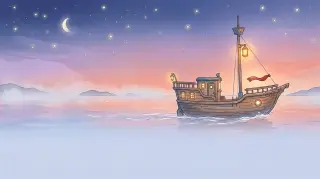
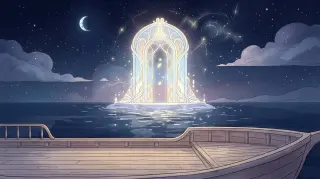
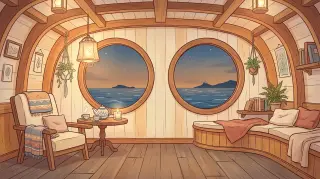
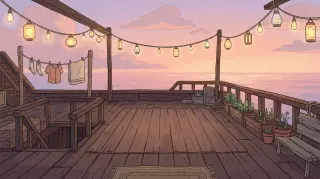
Asset Prompts
"Soft colored lineart hand-drawn Spiritfarer style title background, 16:9, no text no UI no logo no watermark. A cozy wooden spirit boat on a pastel dusk ocean, warm Everlight lantern glow, soft stars, red scarf fluttering on a rail but no full character focus, salt mist, gentle pastel palette of lavender navy coral cream gold, clean empty lower third for title typography, peaceful bittersweet farewell mood."
"Soft colored lineart hand-drawn Spiritfarer style clean scene background only, 16:9, no characters no text no UI. The Everdoor threshold: luminous ethereal gateway over open sea at night, soft gold and pale blue light, calm water, bittersweet sacred farewell atmosphere, pastel luminous palette, empty foreground deck area for character sprite."
"Soft colored lineart hand-drawn Spiritfarer style clean interior background only, 16:9, no characters no text no UI. Cozy cabin lounge on a spirit boat, wooden walls, soft lamps, blankets, a small table with tea cups, round windows showing dusk sea, warm amber and cream pastels, empty center floor for character sprite."
"Soft colored lineart hand-drawn Spiritfarer style clean scene background only, 16:9, no characters no text no UI. Wooden boat upper deck at evening, clotheslines, warm lanterns, crop pots, rail overlooking pastel sea and sky, cozy imperfect living vessel, soft pastel palette, empty stage space in center for a character sprite later."
"Full-body visual novel character sprite source image for AVG runtime. One character standing upright in a natural neutral pose, entire body visible from head to shoes, centered with generous margin around hair, hands, clothing, and feet. Plain pure white matte background (#ffffff) for clean cutout; no scenery, no interior, no exterior, no decorative backdrop, no gradient, no shadowy environment, no checkerboard transparency pattern, no pixel grid, no fake transparent background. Soft colored lineart, hand-drawn quality, soft pastel color palette Spiritfarer style. Tall refined deer spirit woman, elegant antlers, heavy stylish coat, sharp intelligent eyes, slight sardonic calm expression, optional unlit cigarette, long legs, full body, tasteful. Keep face outfit silhouette clear. No text, logo, watermark, frame, card border, or UI."
"Full-body visual novel character sprite source image for AVG runtime. One character standing upright, entire body visible from head to shoes, centered with generous margin. Plain pure white matte background (#ffffff) for clean cutout; no scenery, no gradient, no checkerboard, no text, no UI. Soft colored lineart, hand-drawn quality, soft pastel Spiritfarer style. Tall refined anthropomorphic deer spirit woman, elegant branched antlers, stylish heavy coat in muted brown-burgundy, pale cream blouse, long legs, refined posture. Soft warm grateful expression, gentle eyes, slight sincere smile. Same character design language as Spiritfarer-inspired pastel deer spirit."
Why Choose Neta Studio
Professional — Cloud harness system supports the full workflow from world building to game publishing, all running in the cloud with no local setup. Stable access to the latest models: Claude Opus 5 GPT Image 2 DeepSeek V3
One-click generation — Officially tuned skills drive every step: world building, character design, art generation, game packaging. World fork resource sharing.
Community-first — Users build unlimited worlds, all public worlds can be forked, remixed, reimagined.
Studio Interior


Start Creating
This game was generated by Neta Studio AI from a single sentence. The world took minutes. The game took minutes. You can do it too — adapt this world or start fresh from any IP. No coding required, free to start.