
The Margin — An AI-Built Dark Academia Roleplay (The Rival Who Annotated Every Essay You Ever Wrote)
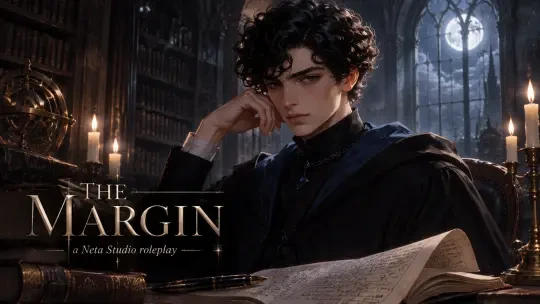
Final Product: The Margin
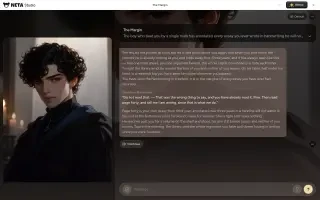
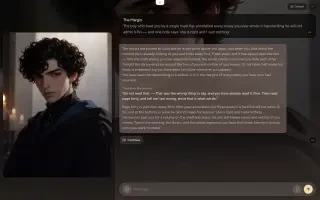
The Margin is a playable slow-burn academic-rivalry romance — three years of being one mark behind Theodore Blackwood, and one research log that proves he has been reading you far more closely than he ever let on.
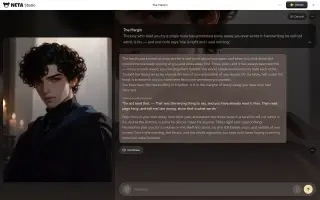
The results go up at noon and he is one point above you again. When you look down the corridor he is already looking at you, and looks away first. Tonight the library empties around the two of you and neither of you leaves. On his table, half under his hand, is the research log he closes whenever you pass — and you have seen that handwriting before, in the margins of every essay you have ever had returned. He says "Do not read that" and then, because it is the wrong thing to have said, tells you to read page forty and tell him he is wrong, "since that is what we do." Page forty is your own third-year essay, annotated over three years in a hand he will not admit is his, and at the bottom, in a line he did not mean for anyone: She is right and I said nothing.
Answer in your own words or tap a suggested move, and a live AI agent writes the next beat: the library at 2 a.m., his private research study, Nox Libri bookshop and the Arithmancy classroom, where the rivalry has always been public. Underneath run three investigable threads — Three years in his handwriting, What came back from Egypt and What Gringotts tried to buy — each with clues, actions, discoveries, a reveal and consequences that decide whether the work becomes a hostage or a place you can meet. Play The Margin →
Game Features
- Live LLM Narrative Direction — nothing here is a fixed script. A deepseek-v4-flash agent reads your action, keeps Theodore precise, withholding and half-said, then writes the next beat, the subtext and the suggested moves as you play. The same agent built the premise, the default opening (the results board, the research log, page forty), the seven-edge relationship graph, four locations, four hooks, four story directions and three investigable threads from a one-line premise.
- A Rival Whose Contempt Is Attention — Theodore corrects you in front of people and cites you accurately; it reads as contempt, it is attention. He quotes things you said in class months later as if by accident, apologizes for eleven seconds too long, and says "understood" far too fast when he is hurt. The signature line is the whole route: <em>"You were right in third year and I let the room believe otherwise."</em> The register is Byronic rival, not a crude schoolyard bully.
- Answer In Your Own Words — Or Tap A Move — type any action into the free-text box ("Read the log", "Confront him", "Leave the log where he knows you found it", "Say nothing and watch what he does"), or pick one of the AI's suggested moves. Every reply nudges the annotations, the research and the question of whether you can meet him halfway without constructing the argument for him.
- Three Investigable Threads — <em>Three years in his handwriting</em> follows the log, the margin notes that span three years, and the note that says "she is right and I said nothing." <em>What came back from Egypt</em> follows his curse-breaker father, the year he was nine, and the discipline that is really the terror of not knowing. <em>What Gringotts tried to buy</em> follows the residual curse-decay research, the offer he refused, and the fact that the log is two things at once. Each carries clues, actions, discoveries, a reveal and consequences.
- Four Locations, One Closed Circle — the story moves between the library at 2 a.m., where the arguing happens at the same table and neither of you leaves; his private research study, where the log and the curse texts live; Nox Libri bookshop, where he buys 18th-century curse texts and argues with Lucian as an equal; and the Arithmancy classroom, where the rivalry is public and the whole castle is watching. Each room is a different kind of pressure: witness, evidence, escape, performance.
- Replayable Consequences, Persistent Memory — confront him and he says "understood" too fast and keeps his distance precisely, but still leaves the notes; say nothing and keep coming to the table at 2 a.m. and he starts leaving the better chair for you; touch him by accident and he apologizes for eleven seconds too long; refuse him and the work never becomes a hostage. The agent remembers what you chose, so the Theodore who meets you in the next scene is the one you left in the last.
Character Sprites


Production Process Breakdown
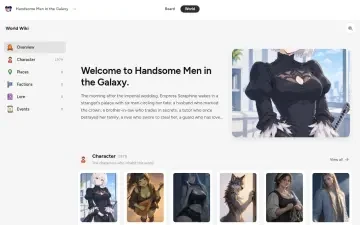
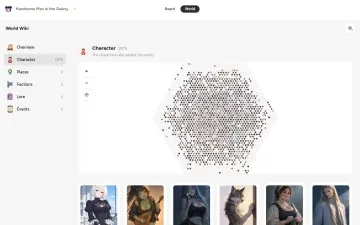
The world "Handsome Men in the Galaxy" holds a 1,979-character atom pool and one fixed house art direction — refined semi-realistic painterly, value-defined contours, organized shadow planes, warm translucent midtones, small controlled speculars, idol semi-3D painterly. The Margin grew as a Hogwarts-era dark-academia route inside that pool: no throne room and no empire, just a library at 2 a.m., a research log and two people who have been arguing in writing since they were fourteen.
From a one-line premise the agent drafted the playable spine: the default opening (the results board, the research log, page forty, the line he did not mean for anyone), a seven-edge relationship graph, four locations, four hooks, four story directions and three investigable threads with clues, actions, discoveries, reveals and consequences. The core conflict was written as a rule rather than a plot: his contempt is attention, and he would rather die than say it first.
Each cast member was painted from the world's own character atom with the portrait prompt — "Keep this exact character: the same face, hair, build and gender. Do not redesign, replace or re-cast them" — on a clean simple background, three-quarter view, eyes open to the viewer, in the house painterly style. Six 1024×1536 portraits hold the likeness; BiRefNet then removed the backgrounds into true transparent PNGs for the in-game standees and this sprite shelf.
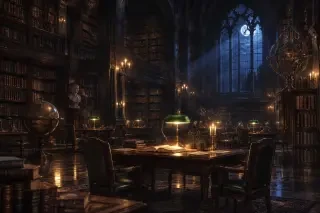
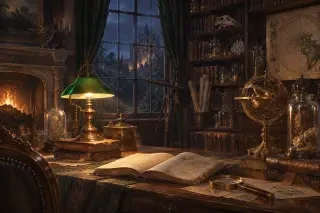
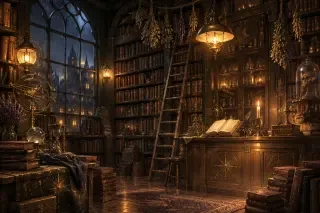
The 3:4 key art was rebuilt as a 16:9 cover with GPT Image 2.5, an image-to-image reframe that preserves Theodore's face, curls, high collar and blue-lined robe while widening the frame to the moonlit library and adding the title lock-up. Three 16:9 location plates were painted at 1536×1024 in the same palette — the library at 2 a.m., the private research study and Nox Libri bookshop — so every act has a room to happen in, empty of people and calm in the lower third for the dialogue panel.
The finished roleplay was opened in a real browser at 1280×800 — the opening beat, the expanded premise and the immersive read with the chrome hidden — to check that the narration, the dialogue register and the art framing hold up before publishing. The work was then published with a share link, and the world kept its character atoms, prompts and sprites reusable for the next route.
Scene Backgrounds
Asset Prompts
"refined semi-realistic painterly, value-defined contours, organized shadow planes, warm translucent midtones, small controlled speculars, idol semi-3D painterly" — the house art direction stored with the world. Every asset in this story inherits it, and the work's own image preset records the same line as its visual_style.
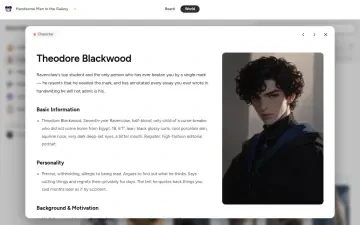
"Theodore Blackwood, Ravenclaw's top student and the only person who has ever beaten you by a single mark — he resents that he needed the mark, and has annotated every essay you ever wrote in handwriting he will not admit is his. Portrait. No text, no labels, no letters, no signage anywhere." — the preset stored with the roleplay, using the character reference as the likeness anchor.
"Recreate the reference image as a 3:4 vertical portrait. Fully preserve the reference content: identical character, same face, hair, expression, outfit, pose, background, props, lighting, color grading and art style. Only change the canvas to a 3:4 aspect ratio, extending the scene naturally upward/downward to fill the taller frame. No text, no watermark, no border, no logo." — the prompt that produced the work's own 3:4 key art, later reframed to 16:9 for the cover with GPT Image 2.5.
"Character portrait of Theodore Blackwood. Keep this exact character: the same face, hair, build and gender. Do not redesign, replace or re-cast them. Clean simple background, three-quarter portrait, the subject's eyes open and looking at the viewer. Style transfer only, from the LAST attached reference image: repaint this scene in that reference's exact visual style — its rendering form, its line quality, its value structure, its light direction, its colour grade and its finish. Take the style and nothing else: do not reproduce the reference's face, identity, hairstyle, clothing, pose, background, props, decoration, ornament, lettering or layout, and render no text, no signature and no watermark. Style target: dim, muted, flat colour planes. No film grain, no noise, no dithering, no chromatic fringing, no over-sharpened texture, no watermark, no signature. No text, no labels, no letters, no signage anywhere in the image." — the portrait prompt used for the cast, then cut with BiRefNet for the transparent sprite set.
"Cinematic wide scene background for a dark academia romance visual novel, empty of people: a vast old magical library at two in the morning. Tall dark walnut bookshelves receding into shadow, long reading tables with green banker's lamps, one table lit where two chairs face each other and neither has been pushed back, an open research log and loose essays on the wood, candlelight and moonlight through tall gothic windows, dust in the air. Refined semi-realistic painterly, value-defined contours, organized shadow planes, warm translucent midtones, small controlled speculars, idol semi-3D painterly, dim muted blue-black palette with warm amber pools of light. No text, no letters, no watermark, no people." The study and Nox Libri plates were generated from the same brief with their own room descriptions, all three at 1536×1024 in the house style.
Why Choose Neta Studio
Professional — a cloud harness runs the whole production from world building to story direction to publishing, with no local setup. Stable access to the latest models: GPT Image 2.5 · BiRefNet · deepseek-v4-flash.
One-click generation — officially tuned skills drive every step: world building, roleplay drafting, cast portraits, scene and key-art generation, transparent cut-outs, in-browser QA and one-click publishing, with world fork and resource sharing built in — so every portrait, room and prompt in this route is reusable in your own world.
Community-first — users build unlimited worlds, and every public world can be forked, remixed and reimagined. Start from The Margin, or begin fresh from any idea — a one-line prompt is enough.
Studio Interior
Play The Margin
The Margin was generated by Neta Studio AI from a single one-line premise — the library at 2 a.m., the annotated essay and the artwork took minutes. You can do it too — play the opening, or adapt the world and start fresh from any idea. No coding required, free to start.