
Rough Night — Episode One: Snowfall — 15s Photoreal Winter AI Video — Neta Studio
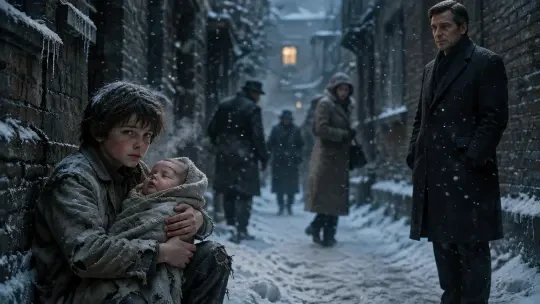
Final Video: Rough Night — Episode One: Snowfall
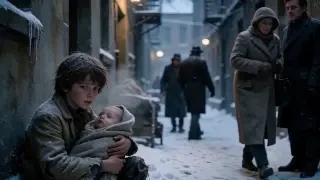
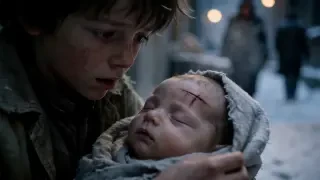
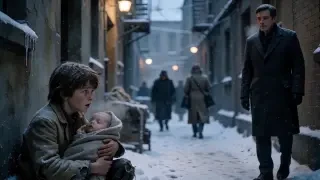
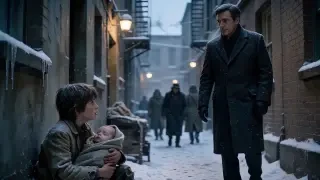
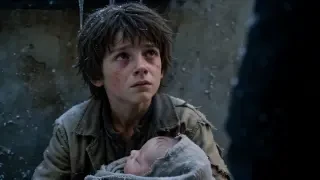
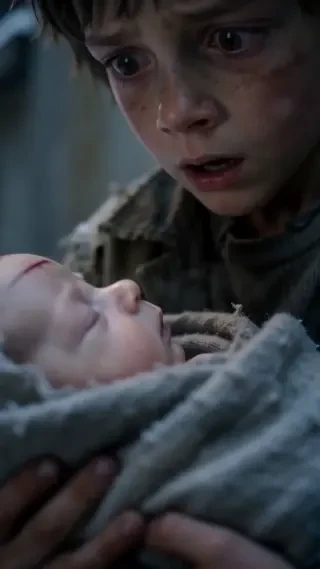
Rough Night — Episode One: Snowfall is a 15-second photoreal winter short about a boy with nothing left to protect. In a narrow run-down alley in deep winter, a ragged nine-year-old kneels in the snow cradling his baby sister in a torn grey blanket while the city walks past him. He peels the blanket back and sees a fresh horizontal scar across her forehead — and the memory of how it got there breaks over him in a hard desaturated cut. When he surfaces, a well-dressed stranger is standing in the falling snow, watching him. The man takes one step closer and asks, quietly: “Rough night?”
It is five hard-cut beats of the same alley, the same two children and the same stranger, held together by one visual system — photoreal cinema, cold blue-grey dusk, real film grain, true depth of field. Dialogue is a single line; everything else is wind, snow, breath and silence. No beauty filter, no stylisation.
Watch it now: Rough Night — Episode One: Snowfall →
The Video
16:9 widescreen · 15 seconds — rendered with Seedance 2.0 Fast (image-to-video) in a single continuous pass from the world’s own four reference frames: the boy’s three-view sheet, the stranger’s three-view sheet, the alley scene plate and the scar detail.
How It Was Made
Production Process Breakdown
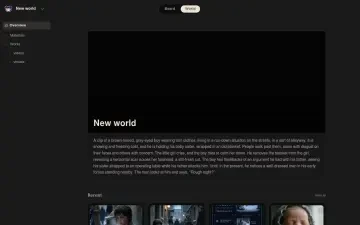
The world begins as one sentence: a brown-haired, grey-eyed boy living rough in a snowbound alley, holding his baby sister, a fresh scar on her forehead, a flashback to an operating table, and a well-dressed stranger who asks, “Rough night?” Neta Studio expands that into a locked world — a narrow winter alley, blue-grey dusk, heavy snowfall and one consistent photoreal visual system — before a single frame is generated.
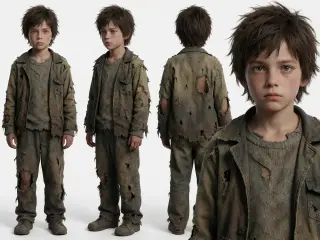
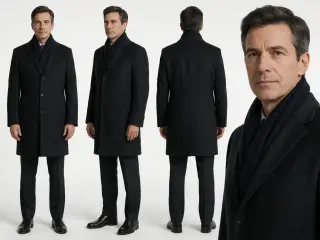
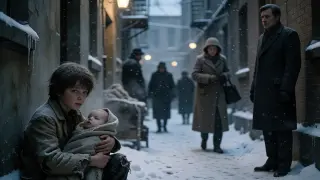
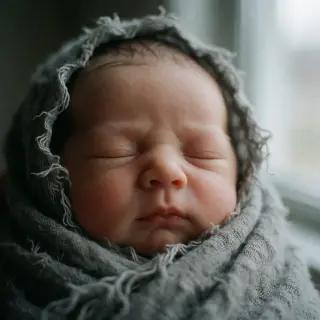
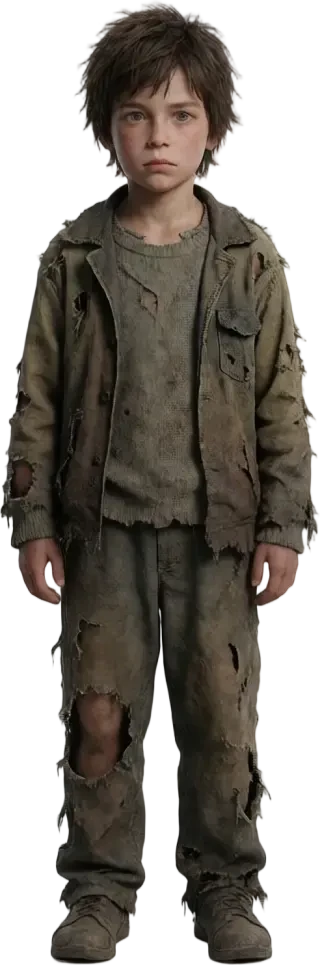
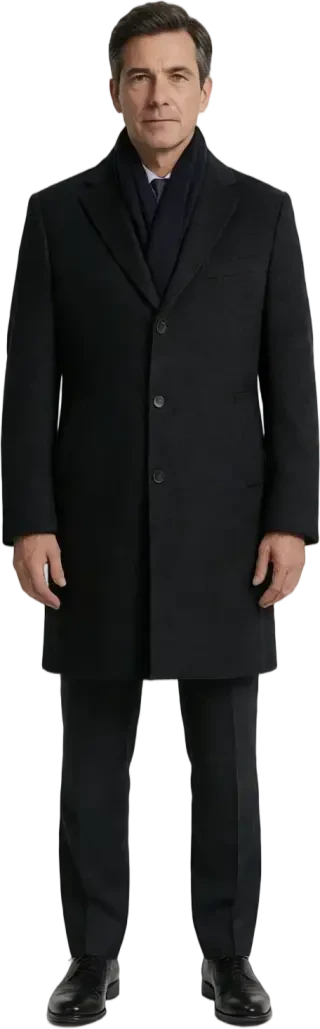
Four photoreal references lock the film’s continuity: a three-view turnaround sheet for the boy, a three-view turnaround sheet for the well-dressed stranger, a 16:9 establishing plate of the snowy alley, and an extreme close-up of the fresh scar on the baby’s forehead. These are the exact images the video model is conditioned on, so faces, clothing, scale and location hold across every beat.
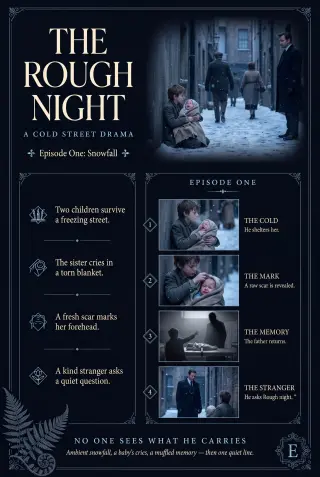
A dark, ornate series-bible page is designed for the short — “THE ROUGH NIGHT / A COLD STREET DRAMA / Episode One: Snowfall” — with the alley wide shot dissolving into the black page and two bordered photographic panels beneath it. The board doubles as the art-direction bible for the whole episode.
The film is generated as one continuous 15-second image-to-video pass from all four references, with an explicit five-beat timeline: 0–4s push-in on the boy and his sister, 4–7s the scar reveal, 7–9s the hard memory cut, 9–12s the stranger appearing in the snow, 12–15s the line landing on Eli’s face. The prompt re-states the hard constraints — the same boy, the same baby, the same alley, no extra characters, no beauty filter.
Rather than patch the master, the same prompt and the same four reference images are re-versioned as a 9:16 portrait cut for social — tight medium-close framing, the same dialogue line, the same beat order. Both cuts stay in the world’s library side by side, so the 16:9 master remains the hero and the vertical cut works as the trailer.
Generation Prompt
Photorealistic cinematic film, cold blue-dusk winter palette, heavy falling snow, real film grain, true depth of field, 16:9 widescreen. The reference image "The Alley" sets the location and tone: a narrow run-down city alley in deep winter, grimy brick walls, dripping icicles, dusk. The ragged nine-year-old boy from the boy three-view sheet, the well-dressed man from the man three-view sheet, and the fresh horizontal scar on the baby's forehead from the scar detail reference all appear here as shown.
0-4 seconds. Medium shot: Eli, the ragged nine-year-old boy from the reference, kneels against the brick wall cradling his baby sister wrapped in a ragged grey blanket, gently rocking her. His breath fogs in the freezing air, his face weary and desperate. In the soft-focus background, blurred passersby walk past in the snow, one turning away with distaste, another slowing with concern. The camera slowly pushes in on him.
4-7 seconds. Close shot: he lifts the edge of the grey blanket and peels it back, revealing the fresh horizontal scar across the baby's forehead. He freezes, eyes widening, breath held. The camera tilts down to the scar, then back up to his face.
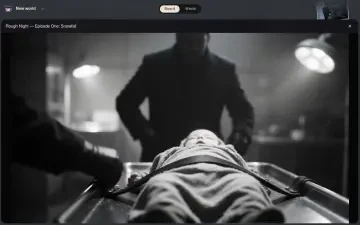
7-9 seconds. A hard, desaturated memory cut: the same baby strapped down on a cold metal table, a looming shadowed figure over her, Eli's arm reaching out, a flicker of his own shout. Blurred and quick, then a hard snap back to the snowy street.
9-12 seconds. Back in the alley: Eli looks up from the scar, catching his breath, and at the right of frame the well-dressed man in a dark charcoal overcoat from the reference stands still in the falling snow watching him. He takes one unhurried step closer. The camera pulls back to a two-shot.
12-15 seconds. Two-shot, then close on Eli: the man looks down at Eli and says quietly, calmly, "Rough night?" Eli holds his gaze, eyes glistening, lips tight; the baby quiets against his chest. The snow falls between them. Hold on Eli's face as the line lands.
Asset Prompts
“Photorealistic character turnaround sheet on a plain seamless white background, real film grain and true skin texture, soft neutral studio lighting, no text, no labels, no borders, no watermark. A ragged nine-year-old boy with messy brown hair and grey eyes, a pale pinched face, cold-reddened cheeks and nose, thin chapped lips. He wears torn, dirty, oversized clothing: a thin ripped jacket, a stained grey sweater, worn-out pants. Four panels arranged left to right: full-body front view, full-body three-quarter view, full-body back view, and a close-up head-and-shoulders portrait showing his grey eyes and weary expression. The exact same boy in every panel, consistent face, hair and clothing.”
“Photorealistic character turnaround sheet on a plain seamless white background, real film grain and true skin texture, soft neutral studio lighting, no text, no labels, no borders, no watermark. A composed man in his early forties, short dark brown hair greying at the temples, clean-shaven, calm observant eyes, wearing a well-tailored dark charcoal wool overcoat over a dress shirt and a dark scarf, clean trousers. Four panels arranged left to right: full-body front view, full-body three-quarter view, full-body back view, and a close-up head-and-shoulders portrait. The exact same man in every panel, consistent face, hair and clothing.”
“Photorealistic cinematic film still in 16:9 widescreen, real film grain, true depth of field, physically based realistic lighting. A narrow run-down city alley in deep winter, heavy falling snow, grimy brick walls with dripping icicles, a cold blue-grey dusk palette, moody and lonely. In the foreground a ragged nine-year-old boy with messy brown hair and grey eyes, wearing a torn thin jacket, kneels against a wall cradling a tiny baby sister wrapped in a ragged grey blanket; his breath fogs in the freezing air, his face weary and desperate. A fresh thin horizontal scar is just visible across the baby's forehead at the edge of the blanket. In the soft-focus background blurred passersby walk past in the snow, some turning away with distaste, one pausing with concern. At the right edge a well-dressed man in his early forties in a dark charcoal overcoat stands a few feet away, watching. Shallow depth of field, cold, quietly dramatic mood.”
“Photorealistic cinematic extreme close-up film still, real film grain, true skin texture, soft cold window light, shallow depth of field, intimate and sad mood. A tiny newborn baby wrapped in a ragged grey blanket, only her small face visible, eyes closed, cheeks flushed cold, a single tear on her cheek. Across her forehead runs a fresh thin horizontal scar, still raw and slightly dark, with a faint fading bruise beneath it. Reflective quiet grief. No text, no watermark.”
“A vertical series pitch page for a screen story, laid out as one dark ornate printed page. The whole page is near-black deep blue-black, edged with a thin double rule and small ornamental flourishes at each corner. Body text is warm cream; headings and ornaments are pale glacier blue. The three photographic images on this page are photoreal live-action film stills in full colour — real skin texture, real fabric, film grain, true photographic depth of field. No illustration, no painting, no drawn or cartoon look inside them. The page furniture — rules, ornaments, panels, type — is flat print laid over the dark ground. The world in every image is the same: a narrow run-down city alley in deep winter, heavy snowfall, cold blue-grey dusk light. a ragged nine-year-old boy with messy brown hair and grey eyes, a torn thin jacket, a pale pinched face from the cold — the same boy, and the same bundled baby sister with a fresh scar across her forehead, in every photograph. Upper left, the title is set very large across three stacked lines in an elegant high-contrast display serif with tall capitals, reading "THE" then "ROUGH" then "NIGHT". Directly beneath it a small widely letterspaced line in pale glacier blue reads "A COLD STREET DRAMA". Beneath that, flanked by two tiny ornamental fleurons, a line reads "Episode One: Snowfall". Upper right, one large atmospheric photograph of the alley seen wide from a little way off — the boy kneeling against the wall cradling the crying baby in a ragged blanket, snow falling, blurred passersby walking past in the blue dusk, the well-dressed man standing apart at the right edge watching them. It is big: it fills the whole upper right of the page, stands as tall as the entire title block beside it, and takes up nearly half the width of the page. It has no frame and no border at all: its edges darken and dissolve softly into the black page so there is no visible boundary. The lower half of the page holds two bordered panels side by side, each edged with a thin rule and small corner ornaments. The left panel is a vertical list of four very short entries. Each entry has a small pale glacier blue line-art emblem at its left and one short line of small cream text beside it, never more than about eight words, and each entry is separated from the next by a thin horizontal rule with a tiny diamond at its centre. The four entries read, in order: "Two children survive a freezing street." / "The sister cries in a torn blanket." / "A fresh scar marks her forehead." / "A kind stranger asks a quiet question.". The right panel is headed by a small widely letterspaced line in pale glacier blue reading "EPISODE ONE", with a small ornament beneath it. Under that heading are four stacked entries. Each entry has, at its left, a small diamond-shaped badge holding a numeral, then a large rectangular photograph that takes up about half the width of the panel and is clearly the biggest thing in its row, and to the right of those a heading in small serif capitals with one very short line of small cream text beneath it. The four entries are: badge one, a photograph of the boy kneeling in the snowy alley holding the crying baby in the ragged blanket, his breath fogging, heading "THE COLD", text "He shelters her."; badge two, a photograph of the boy lifting the blanket edge to reveal a fresh raw horizontal scar across the baby's forehead, heading "THE MARK", text "A raw scar is revealed."; badge three, a photograph of a desaturated flash of a dim room, the baby strapped down on a cold table, a looming shadowy figure, the boy's outstretched arm, heading "THE MEMORY", text "The father returns."; badge four, a photograph of the well-dressed man in a dark overcoat standing in the falling snow looking down at the boy, heading "THE STRANGER", text "He asks Rough night?". Each heading and each photograph belong to the same entry and match each other exactly. Along the bottom, centred, one widely letterspaced line reads "NO ONE SEES WHAT HE CARRIES", and beneath it one short line of small italic cream text reads "Ambient snowfall, a baby's cries, a muffled memory — then one quiet line.". In the bottom left corner a large dark frost fern illustration curls into the margin, and in the bottom right corner an ornate monogram cartouche holds the single letter "E". Every piece of text listed above is spelled exactly as given and written once only. There is no other text anywhere on the page — no page numbers, no captions beyond those given, no signature, no watermark, no gibberish lettering, and no invented words.”
Reference Frames
Why Choose Neta Studio
Professional — The cloud harness supports the full workflow from world building to finished cinematic video, all running in the cloud with no local setup. Stable access to the latest models: Claude Opus 5 · GPT Image 2 · Seedance 2.0 Fast · BiRefNet.
One-click generation — Officially tuned skills drive every step: world building, character turnaround sheets, location plates, pitch boards, 15-second image-to-video, transparent sprite cutouts, and instant publishing to a shareable link.
Consistent by design — Every shot is conditioned on the world’s own reference frames, so the same face, the same scar and the same alley hold from the first beat to the last — and across aspect ratios when you re-cut for social.
Community & IP-first — Adapt any world or start fresh from a single sentence. Keep your frames, prompts and sprites, and remix them into new episodes anytime.
Studio Interior
Start Creating
This episode was generated by Neta Studio AI from a single sentence. The world took minutes. The film took minutes. You can do it too — adapt this world or start fresh from any IP. No coding required, free to start.