
Female SCPs: Five Entries Worth Reading First

Not a ranking of “SCP waifus” — five female SCP entries read as containment files: what they are, what the Foundation does about it, and why the tone matters.


First, a warning about the search term
Search for “female SCPs” and most of what comes back is a ranking: which entries are the prettiest, the most dateable, the saddest. That framing fights the source material. An SCP file is a clinical document — item number, object class, containment procedures, description — written by an organisation that is not in the business of describing anyone’s appearance with affection. The women in these files are dangerous, or grieving, or eight years old, or a drawing. What makes them memorable is not how they look. It is the specific, bureaucratic cruelty of the procedure written to keep them, and the moments where the procedure cannot help but reveal that someone inside it is a person.
So this page is five entries, read as files rather than as characters to collect. Each one is verifiable on the SCP wiki, with an object class that tells you how much trouble the Foundation thinks it is in. Read them in order and you will notice a pattern: the Safe ones are the saddest, because Safe means the danger is understood, and understanding something is often what makes its situation permanent. The Euclid and Keter entries are the ones where the file is still arguing with itself.
| What these are | SCP Foundation entries — clinical containment documents, not profiles |
| Object classes | Safe / Euclid / Keter: how well the Foundation understands the anomaly |
| Where to read | The SCP Wiki, plus the fff-wiki mirror used to verify this page |
| Tone rule | Describe the procedure, not the woman. The person shows through the gaps |
Write the file, not the profile
The roleplay skill can put you on the other side of the glass — a researcher with a clipboard, a subject with a rule, and a room that has to hold both.
The five entries
Each of these is a real entry, and each summary below stays within what the file states. Where the file is short, this page is short too — that is the discipline the format demands, and it is also why so much fan writing about these characters contradicts the source.
- SCP-105 — Iris Thompson (Safe) — A girl whose camera, SCP-105-B, turns still photographs into real-time images; she can reach through them and manipulate what is in the frame. She is implanted with a tracking device and resides at Site-17. The horror is domestic: a teenager whose photographs are doors, kept in a facility with a tracker in her arm.
- SCP-053 — the girl (Euclid) — Anyone who looks at her, touches her, or stays with her longer than ten minutes becomes enraged and tries to kill everyone in the room. Anyone who tries to kill her suffers a fatal heart attack. She regenerates. She gets three meals a day and snacks if she asks, and only one person may be in the room at a time.
- SCP-166 — the girl with deer horns (Euclid) — A sixteen-year-old whose presence corrodes anything manmade, kept in a suite with minimal security. The file notes she is the daughter of Dr. Alto Clef and a goddess he later killed, and that she was raised by a convent of nuns. The detail that lands hardest is the security: minimal, because the danger is not to the staff.
- SCP-085 — Cassy (Safe) — A living drawing of a woman, created when SCP-067 was used to draw her and the result went into SCP-914 on the Fine setting. She is sentient and sapient, can move between sheets of paper and interact with drawn objects. She did not know she was two-dimensional until she was accidentally given access to her own file, and the discovery left her deeply depressed.
- SCP-239 — Sigurrós Stefánsdóttir (Keter) — An eight-year-old reality-bender who can do essentially anything, held in a telekill-coated cell with a pentobarbital drip and told by the Foundation that she is a witch. The lie is the containment procedure: a child who believes she is a witch will not test what she actually is.
How to read an object class
The classes are not a threat ranking, though everyone treats them as one. Safe means the Foundation can contain it reliably — SCP-105 and SCP-085 are Safe, and both are people in a box. Euclid means containment is unreliable or the behaviour is unpredictable; SCP-053 and SCP-166 are Euclid. Keter means containment is extremely difficult and failing is catastrophic; SCP-239 is Keter, and she is eight. That inversion is the whole emotional engine of the wiki: the safest-sounding class produces the most permanent captivity, and the most dangerous class produces the most vulnerable child.
A second thing worth knowing is that the file is written by an unreliable narrator with good manners. The Foundation lies to SCP-239 about what she is. It calls the procedure “minimal security” when the reason is that the girl cannot touch anything manufactured. It describes a drawing’s depression in one flat sentence and moves on. Reading closely means noticing where the document’s composure breaks, because that is where the writing is doing its work — and it is also the only honest way to write fan work about these characters. If your version of SCP-053 is charming and uncomplicated, you have not read the file; you have replaced it.
For anyone building a scene rather than a wiki page, the practical rule is: keep the procedure and drop the lore. A containment interview with one subject, one researcher and one rule is more disturbing than any amount of world-threatening conspiracy, and it is playable in a chat window. The tension is not whether the anomaly escapes. It is whether the person on the other side of the glass is treated as a subject long enough that the researcher stops being able to.
Writing these characters without flattening them
The failure mode is easy to describe: turn a contained woman into a girlfriend, remove the containment, and keep the aesthetic. What you have then is a costume. The better approach is to keep the box and write inside it — the ten-minute limit, the tracker, the drawing pad, the lie about being a witch. Constraint is what gives these characters their voice, and a scene that respects the constraint will produce lines no unconstrained character could say. A drawing who has just learned what paper is has something specific to be afraid of. That is worth more than any amount of personality description.


Six rooms with a rule in them
These are real works on Neta Studio, and they are useful as containment structures: a place with a rule, a person inside it, and a log that keeps being written.



The room and the rule
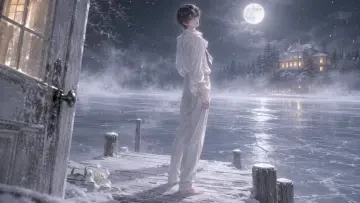
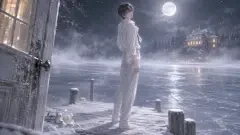
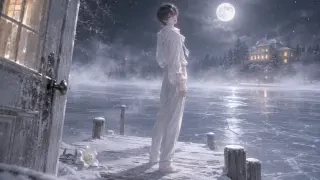
Mara at Dusk and Satin & Snow both trap someone in a place that will not let them leave, and both get their tension from the rule rather than from a monster. River Pact is the investigation version: an anomaly that has to be worked out.
And the people who keep records
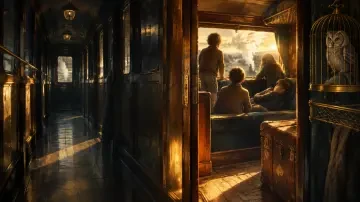
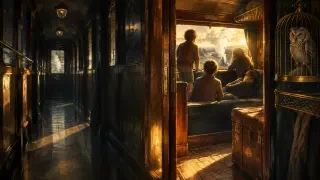
The Ledger is the closest thing here to a Foundation tone — everything written down, nothing resolved. Platform 9¾, 1971 supplies the group dynamic a good observation log needs, and First Light is the quiet case: someone who could leave and does not.
Three rules for a containment scene
Write the procedure first
One rule, stated flatly, that everyone in the scene obeys. The rule is the character study — decide what it costs and who pays.
Give the subject one thing they want
A snack, a sheet of paper, a straight answer. Containment is legible only against a desire that the room will not satisfy.
Let the researcher slip once
The file’s composure breaks somewhere. Decide where your interviewer stops being able to keep the tone, and let that be the scene’s turn.
The works, briefly








Containment is a conversation with a rule
Open an interview where the subject has one limit and the researcher has one clipboard. The roleplay hub is where those scenes live.
Built with the roleplay skill
roleplay writes the researcher and the subject as two characters with incompatible jobs, and its character-memory switch keeps the case log consistent; world-builder builds the site — corridor, cell, observation room — because containment stories live or die on architecture. SCP content is CC BY-SA on the wiki; this page is unofficial and reproduces no wiki text at length.
Female SCP FAQ
Is there an official list of female SCPs?
No. The wiki is organised by item number and object class, not by gender, and “female SCPs” is a fan search term rather than a category. Any list you find is someone’s selection.
What does “Safe” mean if the person is miserable?
It means the Foundation can contain the anomaly reliably. SCP-105 and SCP-085 are both Safe, and both are people kept in a room indefinitely. The class describes the Foundation’s confidence, not the subject’s wellbeing.
Which of these are Euclid or Keter?
SCP-053 and SCP-166 are Euclid; SCP-239 is Keter. SCP-105 and SCP-085 are Safe.
Why is SCP-239 told she is a witch?
Because the lie is the containment procedure: a child who believes she is a witch will not test what she is actually capable of. The Foundation pairs it with a telekill-coated cell and a pentobarbital drip.
Is it okay to write romance or fan fiction about them?
Fan work is normal and the wiki is CC BY-SA, but the tone matters. These are clinical documents about contained people, several of them children. Keep the constraint in the story and do not present the result as canon.
Where can I verify these details?
On the SCP Wiki entries for SCP-105, 053, 166, 085 and 239. This page used the fff-wiki mirror for the summaries and quotes no long passages.
Keep reading
Platform: Neta Studio · Type: Character · Hub: neta.art/app/roleplay · Works: Mara at Dusk · Platform 9¾, 1971 · River Pact · The Ledger · Satin & Snow · First Light
