
Xenoblade AI World Generator — Build a Titan-Scale JRPG World From One Brief
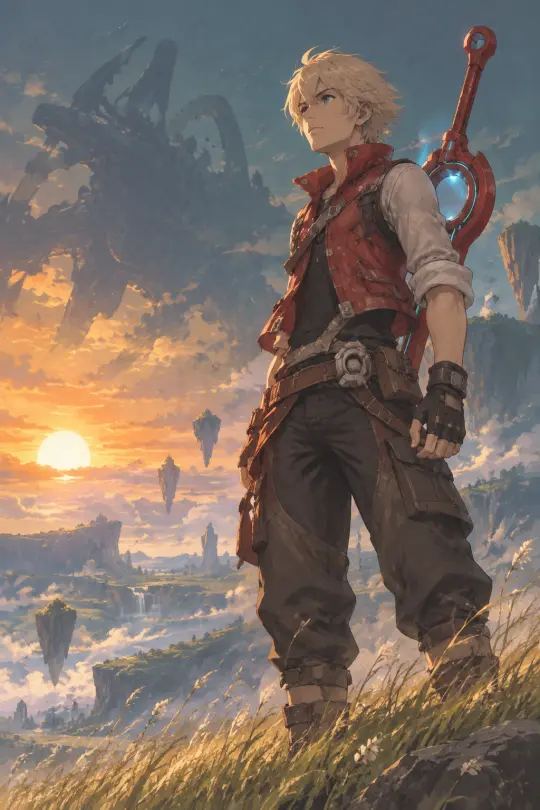
Use Neta Studio as a Xenoblade AI world generator: turn one sentence into a titan-scale JRPG world with characters, locations, events and factions, then render key visuals with GPT Image 2 and Krea 2.
Generate a Xenoblade-Style World From One Sentence
Describe a world balanced on the bodies of two gods and a person who has just been handed a weapon that shows the future, and Neta Studio builds a world with factions, geography and a timeline behind it — then renders the key visual that proves the world exists.
Build a Xenoblade-Style World, Not a Xenoblade Wiki
A world generator is not a lore dump. The useful output is a set of atoms that can produce scenes: people with wants, places with rules, a timeline with a clock, and factions whose interests collide. Xenoblade is an unusually clean worked example of that structure, which is why this page uses it.
The pattern underneath the titans and the Monado is older than the game: a world built on a dead god, a war between life and machine, an empire that has confused altitude with virtue, a party of strangers who become a team, and one person handed a weapon that shows them the future and asks them to choose it. You can build that pattern in any genre.
What Neta Studio gives you is the speed to test it. One sentence becomes twenty-four atoms in minutes; two briefs become four comparable key visuals; the whole thing becomes a world that other people can fork, remix and render again.
What Makes a World Read as Xenoblade-Shaped
- Geography as a body. Every region is an organ of a titan: shin, shoulder, wound, spine. Travel is a kind of anatomy.
- A war with a correct diagnosis. The enemy is not wrong about the problem, only about the cure.
- A weapon with a point of view. The Monado sees the future. That is not a stat; it is a moral demand.
- An empire above the sea. One faction lives physically higher than everyone else and has beautiful manners about it.
- A clock. Six events that already happened and one that is about to.
The Four Ingredients
When you brief the studio, name these four things explicitly. The generator can invent the rest, but it cannot guess which of them you care about.
Scale Is a Design System, Not a Number
The most portable idea in Xenoblade is not the titans. It is that the world is always larger than the current argument. Every cutscene ends with a blade in the sky, a capital above the clouds or a machine the size of a mountain, and every human decision looks small underneath it. That is a content architecture: one scale object per region, one human figure for comparison, one consequence that outlives the party.
When you generate a world, ask for a visible scale track. “The landscape remembers” is a stronger brief than “the game is epic”. It tells the generator to produce geography that can interrupt a scene.
Five Steps From Sentence to World
Write the living-world sentence
One sentence, three nouns: the body the world lives on, the war that is still being fought over it, and the person handed the weapon. That sentence is the seed.
Let the studio expand it
The studio proposes characters, locations, events and factions. Read the cards in order — rule first, then factions, then places, then people.
Cut to twenty-four atoms
Eight characters, six locations, six events, four factions is enough for a campaign and small enough to hold in your head. Delete anything that does not create a scene.
Write two briefs and render two models
One character brief, one location brief. Send each unchanged to GPT Image 2 and Krea 2. Publish all four as works of the world.
Compare, then fork or re-prompt
Keep the model whose strengths match your next ten images, not the one that won a single frame. Then fork the world and keep building.
The Brief Recipe That Produces Bionis
Six clauses, in this order: (1) subject and role, (2) costume and props that identify them, (3) the landscape or room they occupy, (4) the light — one cold key and one warm source, (5) the style engine, (6) the fixed negative clause. Do not describe the plot. Describe what the camera sees.
The world's two briefs are reproduced in full on the world page, and the exact settings are documented on the tool page. Copy them, change two nouns, and you have a new world's first frame.
Model Comparison: What Each One Is For
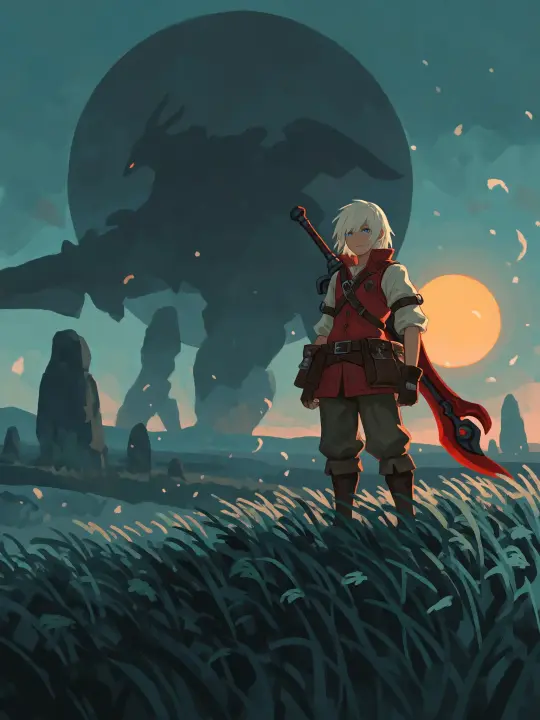
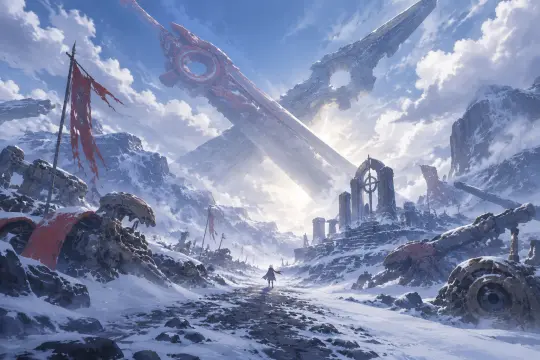
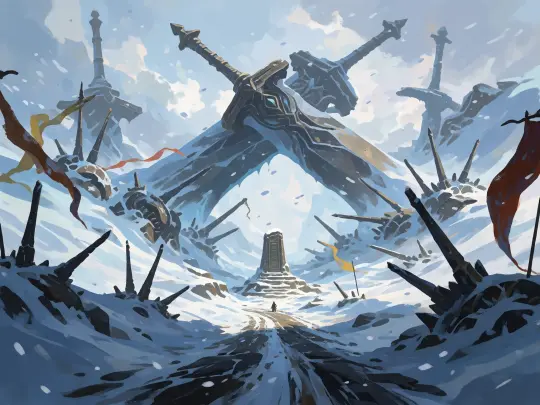
GPT Image 2 and Krea 2 are not ranked here; they are assigned. One builds materials and architecture, the other builds silhouettes and mood. A world that uses both gets a reference sheet and a poster from the same sentence.
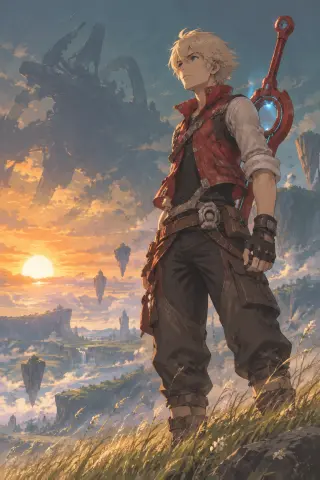
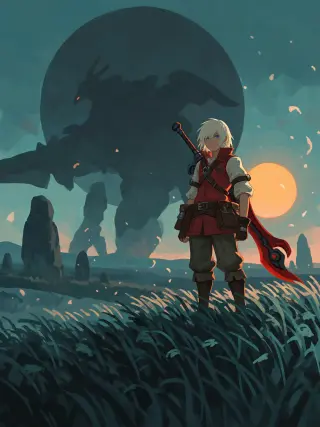
The character frame is the clearest test. GPT Image 2 gives you a red vest with grain, leather straps, a Monado you could disassemble and a Mechonis that recedes in real haze. Krea 2 gives you a shape you could stencil on a shirt. Both are correct answers to different questions.
Locations Are Arguments
A generated world lives or dies on whether its places can hold a scene. The test is simple: can two characters have an argument in this room without you adding anything? If not, the location is decoration.
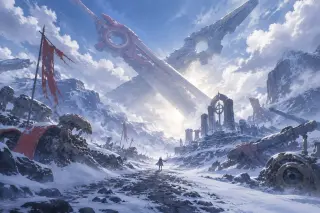
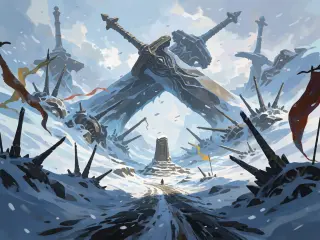
Sword Valley passes because it contains a contradiction: it is a memorial and a battlefield at the same time, and the war it commemorates is not actually over. That single fact generates scenes faster than any amount of lore.
Lock the Style Before You Scale
- One style engine. Commercial game painterly: broad visible planes, hard structural edges, warm-cool value groups.
- Two light keys. Cold teal distance, one warm amber source. No third key without a story reason.
- One palette. Grass green, ether blue, Monado red, Mechon iron, bone white.
- One negative clause. No text, no letters, no signage, no watermark, no UI — appended to every brief.
- One scale object. A human figure or a lantern so the titan can win the frame.
Which Model for Which Job
| What you need | GPT Image 2 | Krea 2 |
|---|---|---|
| A landscape that feels physically enormous | Strong: depth, haze, object count | Softer: landscapes become stages |
| A thumbnail that survives at 200px | Good, but busy | Excellent silhouette economy |
| Costume and prop accuracy | Strong: seams, buckles, grain | Suggests rather than specifies |
| Speed per iteration | Slower | Fast and inexpensive |
| Legible text or signage | Capable, but this style forbids it | Avoid — text is a known weakness |
Who Should Generate a Xenoblade-Style World
From Prompt to Published World
The workflow is deliberately short: one sentence, twenty-four atoms, two briefs, four published works, one world page. Everything on this page is public, so you can inspect the source of the claim rather than take it on faith.
One sentence → atoms → character and location briefs → two models, four works → world page → fork
Questions About the Generator
Do I need to know Xenoblade to use this? +
No. You need four nouns: a living world, a war, a party, and a price for power. Xenoblade is a very good worked example of that structure.
How many atoms should a world have? +
Twenty to thirty is the working range. Fewer and the world cannot hold a campaign; more and nobody can remember who wants what.
Why publish four images instead of one? +
Because two models on one brief is a comparison, and a comparison is reusable knowledge. A single image is only a result.
Can I use the generated art commercially? +
Check your plan and the model terms. For fan work, keep it clearly non-commercial and non-official. This page documents the workflow, not a licence.
Build a Xenoblade-Style World
Start with a living world, a war that will not end and a party whose skills only work together. Twenty-four atoms later you have a world you can render, play and fork.