AI 1930s Cartoon World Key Visual Generator — Rubber-Hose Islands, Casino Light and Ink-Black Shadows
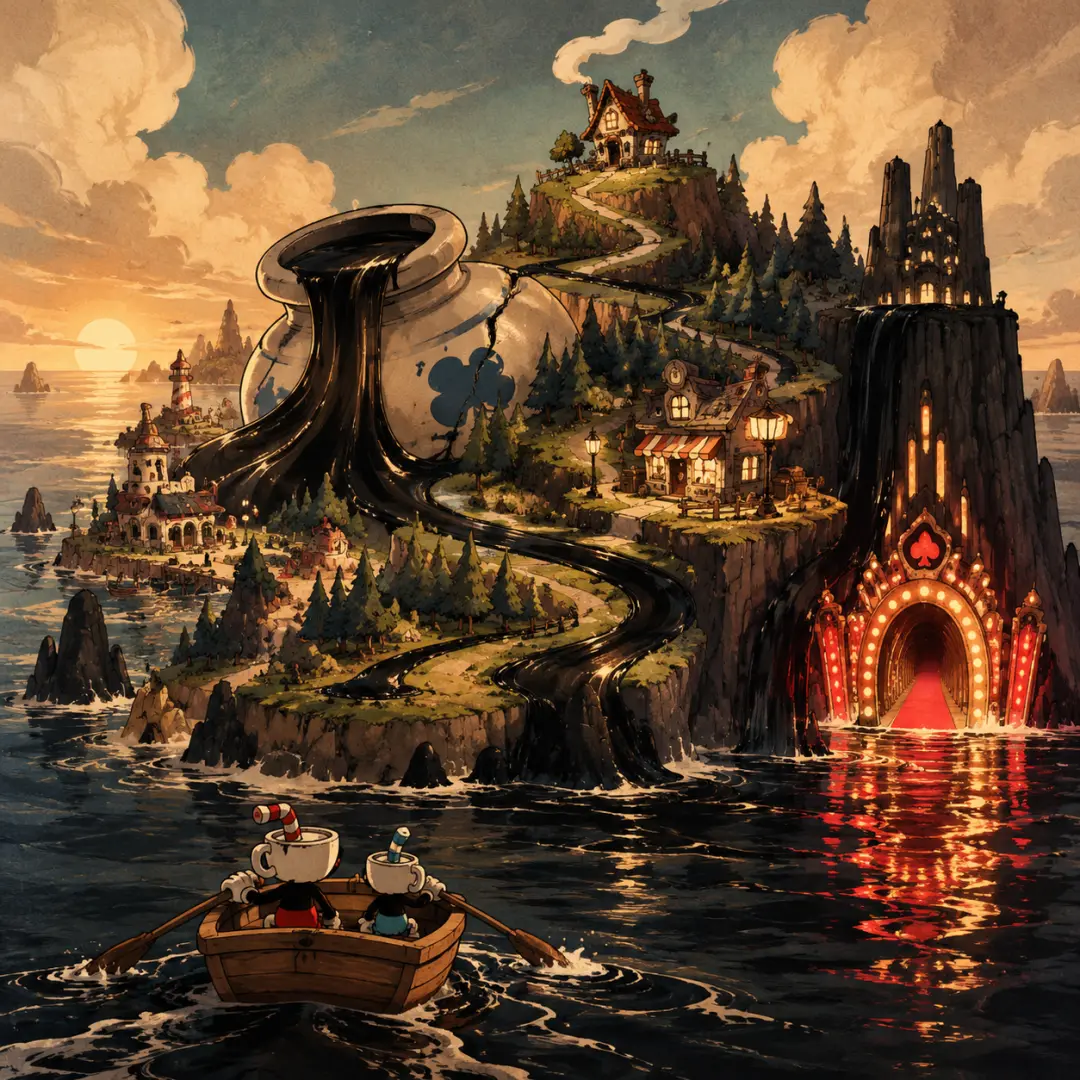
How to generate 1930s rubber-hose cartoon world key visuals on Neta Studio, using the Inkwell Isles world and a GPT Image 2 vs Krea 2 comparison as a working example.
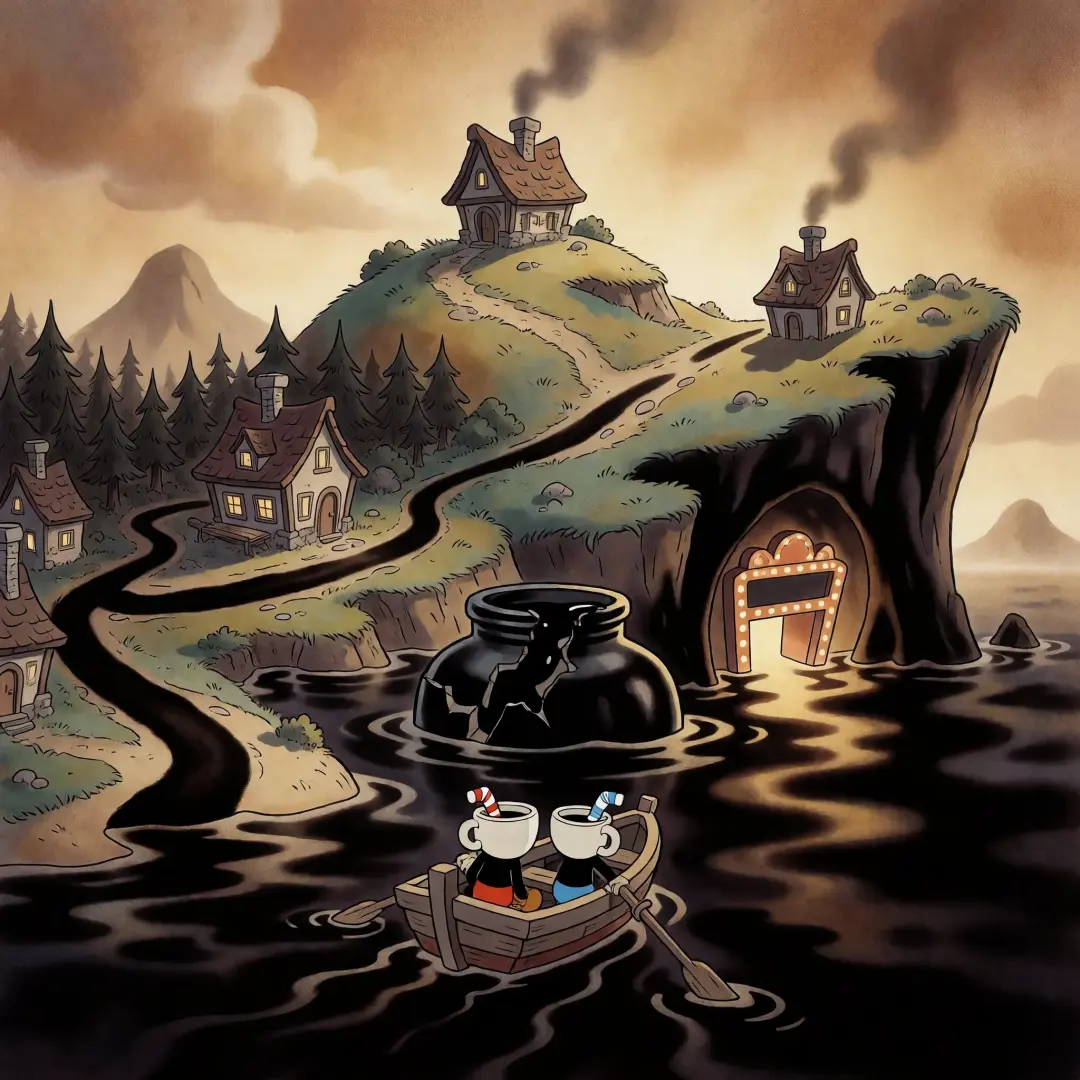
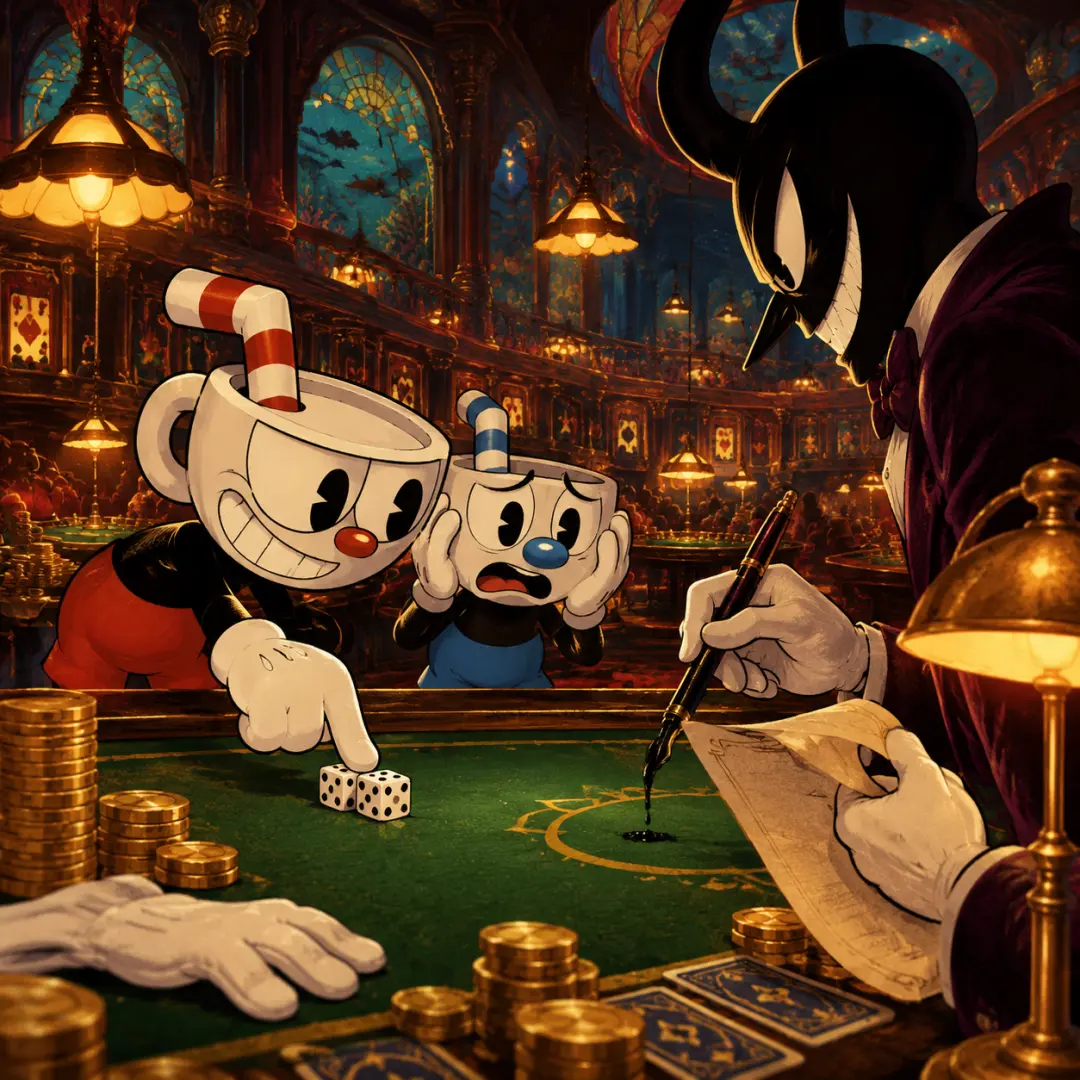
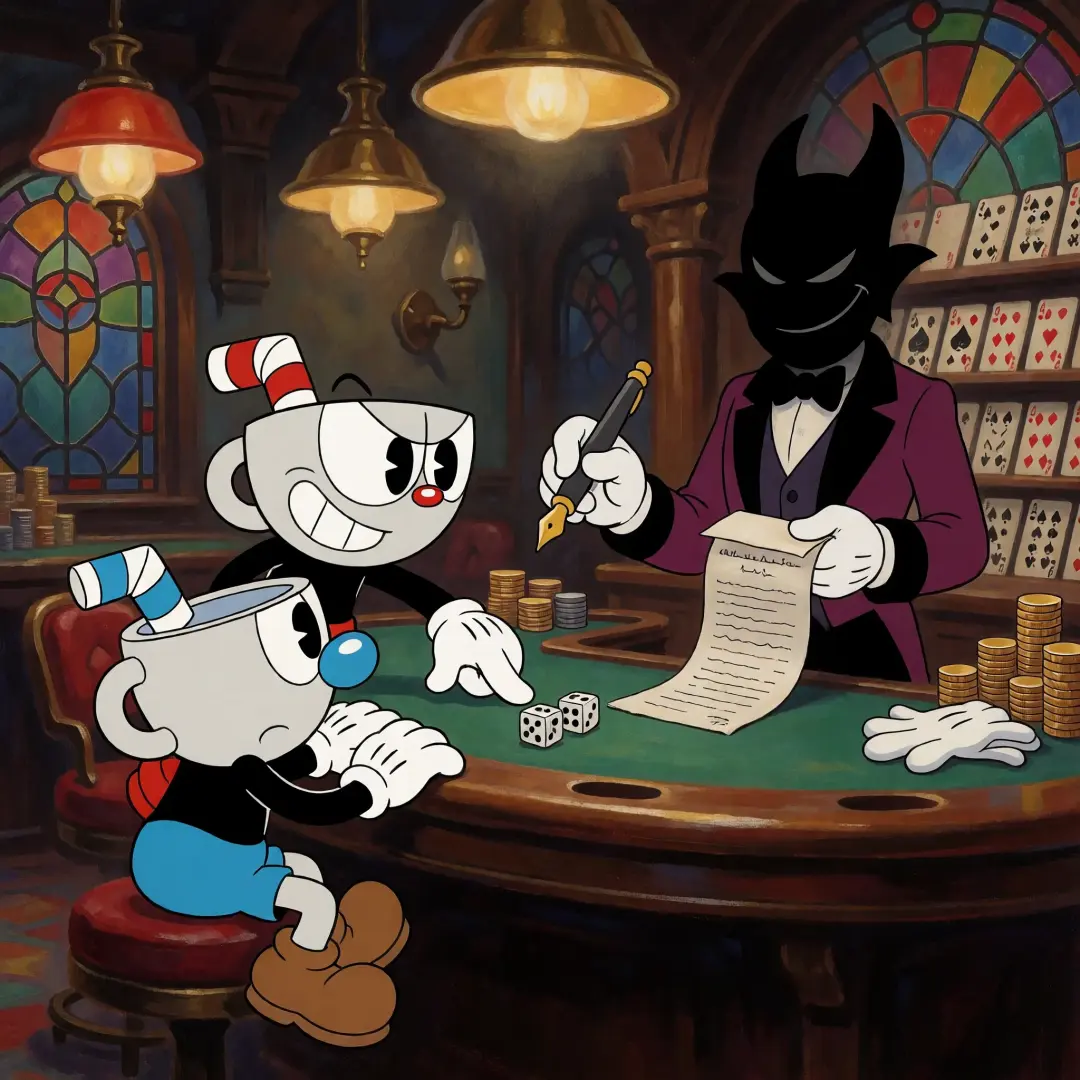
Create a 1930s Cartoon World Key Visual in Minutes
Turn one sentence about an inked archipelago, a casino under the sea or a pair of cup-headed brothers into a banner-ready rubber-hose key visual — no concept team, no style guide, no asset hunt.
What Is a 1930s Cartoon World Key Visual Generator?
A 1930s cartoon world key visual generator is a text-to-image workflow that turns a short world description into a cover-ready illustration in the rubber-hose language of early sound animation: round heads, pie-cut eyes, huge crescent smiles, noodle arms and legs, white gloves, squashy torsos, bold fluid black outlines and flat vintage fills. On Neta Studio the generator is not a standalone prompt box. It is attached to a world — a canon of characters, locations, events, factions and rules — so every image inherits the same cottage, the same casino and the same three-color discipline. The result is a key visual that could sit on a poster, a press kit or a pitch deck and still look like it belongs to the same cartoon.
Why Rubber-Hose Cartoons Make Great Key Visuals
Rubber-hose animation was designed to read at a glance in a crowded cinema, and that is exactly what a key visual has to do. The silhouette is simple, the expression is enormous, and the value structure is flat enough to survive a thumbnail. A cup for a head is not a detail; it is a logo. A bendy straw is not a prop; it is a direction arrow.
The style is also unusually hard to fake. A generic "vintage cartoon" prompt produces modern digital linework, soft gradients and a plastic 3D sheen. The real thing has rules: continuous rubber-hose limbs with no elbows, ink outlines of uneven weight, pie-cut eyes that are solid black, white gloves with three stitches, and a palette that is mostly cream and black with one saturated accent. Those rules are the product. Once a model follows them, you can generate a whole world that looks like it was drawn by the same hand in 1934.
A key visual is rarely the end — it is the cover. The same world can generate character posters, location plates, event cards and storefront capsules, and they will share a visual grammar instead of looking like four different cartoons. That consistency is the real output: not one image, but a system that keeps producing images from the same canon.
How It Works on Neta Studio
Fork the world, open the studio board, and generate from the world's own atoms. The world supplies the cast, the map, the events and the laws of ink. The generator supplies the camera, the light and the model. You can run the same prompt through two models and publish both results as works of the world, which turns a model comparison into a permanent, shareable part of the setting.
The workflow is deliberately short: fork → choose a moment → write the prompt → render both models → publish. There is no asset pipeline to assemble and no separate lore document to keep in sync, because the lore and the image live in the same place.
- World: 25 atoms, all editable.
- Subjects: one world key visual and one character/event key visual.
- Models: GPT Image 2 for architecture, Krea 2 for mood.
- Output: four public works, each with its own share URL.
The World Seed: Inkwell Isles
The test world is the Inkwell Isles — a chain of 1930s cartoon islands where nothing dies, every soul can be signed away, and two cup-headed brothers owe the Devil a contract. Elder Kettle's cottage sits on the first island, a carnival runs on the second, a city keeps the books on the third, a workshop holds the first page on the fourth, and the casino waits beneath the sea. The world ships with 25 atoms, including six characters, five locations, five events, four factions and three laws of ink — enough canon to generate from without writing a bible first.
The Visual Grammar of a Rubber-Hose Cover
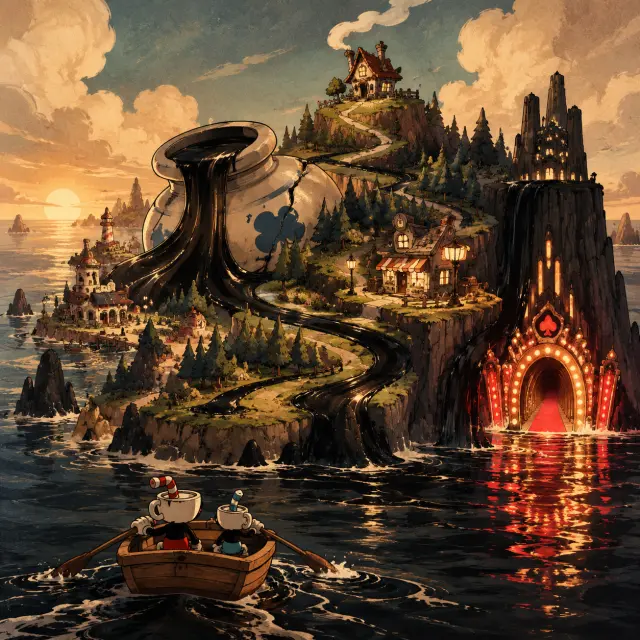
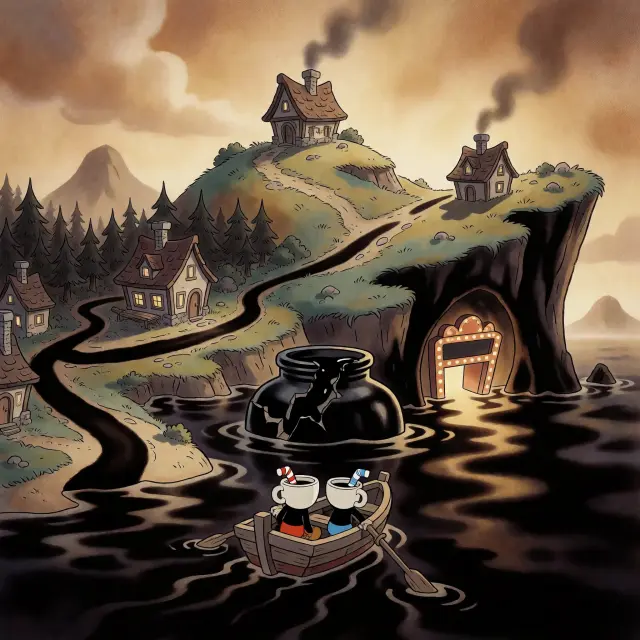
Five things make a cartoon key visual read as 1930s rubber-hose rather than modern animation. First, a continuous contour: limbs are curves, not joints, and the outline never breaks into texture. Second, a solid black eye with a pie-cut notch, not a pupil with a highlight. Third, white gloves and heavy shoes as graphic anchors. Fourth, a disciplined palette: cream, black, umber and one hot accent, with no gradient skies. Fifth, a stage-like composition — a clear floor line, a strong central silhouette, and a background that behaves like painted scenery rather than a 3D environment. GPT Image 2's world visual is a textbook example: contour, palette, floor line, destination. Krea 2's version adds the sixth thing, the one that cannot be prompted reliably: a sense of performance.
Choose the seed
Fork the Inkwell Isles, or write a one-sentence brief about an inked archipelago and a casino under the sea.
Pick the scene
A world visual needs a route; a character visual needs a standoff. The cottage, the carnival, the city and the casino all do different jobs.
Write the style contract
Name the medium, the line and the palette. "1930s rubber-hose cartoon, bold fluid black outlines, cream and burnt umber with a single hot red" is the minimum.
Run both models
Use the same prompt on GPT Image 2 and Krea 2. GPT will build the world; Krea will build the moment.
Publish and iterate
Publish both as works of the world, compare them side by side, then generate the next scene from the same canon.
Real Outputs from a Real World
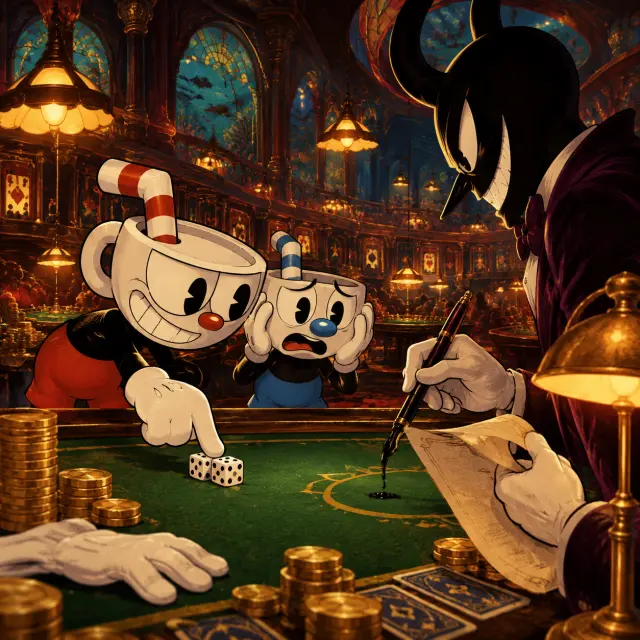
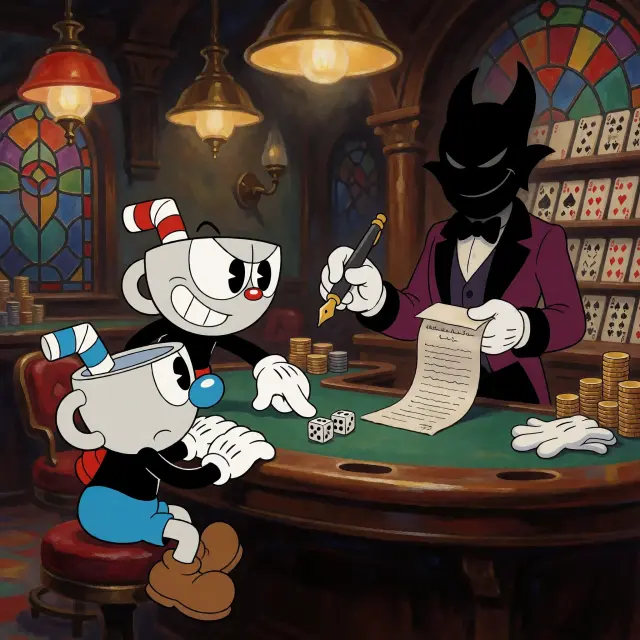
Four key visuals were generated from the Inkwell Isles — two subjects, two models, one canon. The world pair establishes the map and the palette. The character pair establishes the stakes and the cast. Because both prompts were written against the same world, the four images share a horizon logic, a color temperature and a vocabulary of props: bendy straws, porcelain cups, green baize, brass lamps, black ink and hot casino red. That is what a world-grounded generator buys you over a generic image model.
A Closer Look: The Casino Table Pair
The character pair is the harder brief and the better test. It has to hold two comedic designs, one menace and one prop that carries the plot. GPT Image 2 stages it as a standoff: Cuphead forward with a reckless grin, Mugman braced and alarmed, the dealer tall and still, the contract and the dripping pen placed as the third character. Krea 2 stages it as a poster: the same blocking, but warmer, flatter and more theatrical, with the dealer's shadow doing half the threat. One is a scene; the other is a title card. Most cartoon worlds need both.
GPT Image 2 vs Krea 2 — Which Should You Use?
GPT Image 2 for cover-ready detail: separated value planes, straight architecture, readable horizon and enough environmental information to survive a storefront crop. It is slower and more expensive, and character-heavy prompts can trip similarity filters, so stage the world as a pure environment when you need the map. Krea 2 for speed and expression: it puts characters in frame, pushes poster composition and produces a warmer, more illustrated image, at the cost of some architectural precision. The practical answer is to run both. Use GPT for the establishing shot and Krea for the moment, then let the world hold them together.
Prompts That Work
A rubber-hose prompt needs five clauses: what the world is, what the camera sees, how it is drawn, which colors are allowed, and what must not appear. The style clause is not decoration — it is the difference between a 1930s cartoon and a modern vector illustration.
- World clause: “A chain of crooked cartoon islands inked in warm sepia, a cracked inkwell spilling black ink into the sea.”
- Camera clause: “Wide panoramic establishing shot, foreground rowboat, mid-ground cottage and pine wood, distant casino cliff.”
- Style clause: “1930s rubber-hose cartoon, bold fluid black outlines, noodle limbs, pie-cut eyes, white gloves, flat cel fills, visible painterly texture.”
- Palette clause: “Cream, burnt umber, deep ink black, muted teal and one hot casino red.”
- Negative clause: “No text, no watermark, no logo, no modern anime faces, no 3D render, no gradients.”
Beyond the Poster
The key visuals published from this world are works — but they are also inputs. The same canon can generate character covers for Cuphead, Mugman, Elder Kettle, Ms. Chalice, the Devil and King Dice; location plates for the cottage, the carnival, the city, the workshop and the casino; a vertical slice of a playable scene; or a short video of the rowboat crossing the ink. Because the world owns the atoms, each new asset inherits the palette and the props instead of starting from zero.
Who Is It For?
Indie game and story creators who need cartoon cover art fast. Solo developers who have a world in their head but no concept artist on call. Writers and tabletop game masters who want a visual bible for a campaign. Studios that need a mood board before the art pipeline exists. And fans of 1930s animation who want to see the rubber-hose language used for a coherent, original setting rather than a collage of screenshots.
Limitations to Know
GPT Image 2 is slower than lightweight models and favors detail over motion; it will not give you a dynamic action pose without a fight. Krea 2 is fast and expressive but less architecturally precise, and its text rendering is a known weakness, so never put a title in the prompt — add typography afterward. Character-heavy prompts can trip third-party similarity filters on GPT Image 2; staging the world as an environment is a reliable workaround. And no generator knows your canon: if you want the cottage to have a specific chimney or the casino a specific sign, say so in the prompt or edit the atom first.
Frequently Asked Questions
- Do I need to be an illustrator? No. The rubber-hose look is produced in the prompt and the model; there is no rig, scene file or hand-inked cel.
- Which model should I start with? GPT Image 2 for an establishing shot, Krea 2 for a character beat. Then run the same prompt on the other and compare.
- Can I use these images commercially? Check the terms of the model and the platform you generate on; the world and its atoms are yours to fork and remix on Neta Studio.
- Why four works? Two subjects times two models. It is the smallest set that proves both the world's range and the models' differences.
- Can I add my own characters? Yes — edit the atom cards or fork the world, then generate from the new canon.
Start Creating
Fork the Inkwell Isles or start from your own one-sentence cartoon brief. The world ships with 25 atoms and four published key visuals, so the fastest path to a cover is to reuse the canon and change the moment. When it looks right, publish it as a work of the world — and let the next person fork it.
Start Creating
Two models, one inked archipelago, a poster in minutes — rendered, published and remixable.