
AI Coming-of-Age Visual Novel — Stories About the Year That Would Not Close
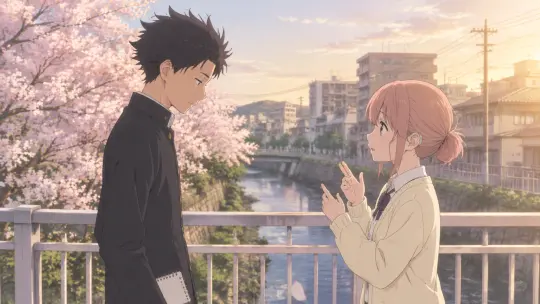
Build an AI coming-of-age visual novel: a deaf girl, a former bully, eight classmates and a town that will not let anyone forget the sixth grade. Free to play in your browser.
Build a Coming-of-Age Story That Refuses the Easy Ending
Describe one ordinary room and one thing nobody will say out loud. Neta Studio builds the town, the classmates and every difficult choice in between. Free to play in your browser.
AI Coming-of-Age Visual Novel — Stories About the Year That Would Not Close
A coming-of-age story is not a genre about growing up. It is a genre about the moment a person realises that everyone else was also guessing. That realisation is difficult to script, because it depends on a specific room, a specific lunch break, a specific group of people who did not intervene. An AI visual novel is good at exactly that: holding a small world steady while you make the choices a real teenager would have made badly.
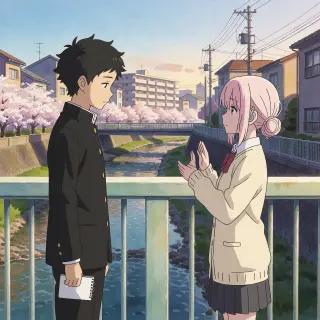
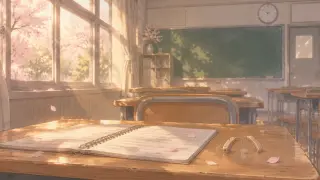
This page is a working guide to building that kind of story, using A Silent Voice as the test case — a contemporary Japanese town, a deaf girl, a former bully, and eight classmates who all tell a different version of the sixth grade. The world is already built: 27 editable materials and four published key visuals, two prompts each rendered by GPT Image 2 and Krea 2.
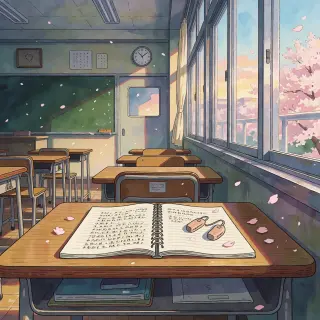
What an AI coming-of-age visual novel actually is
It is a playable story in which the emotional stakes are social rather than supernatural. Nobody has powers. The world does not end. A girl transfers into a class, a group chooses a scapegoat, a boy tries to apologise five years later, and the story has to decide what repair costs. The AI’s job is not to invent a twist; it is to keep every character consistent enough that the ordinary choices feel dangerous.
The best coming-of-age scenes are not about what happened. They are about who is willing to say what happened — and who has built a whole personality around not saying it.
Why A Silent Voice is the right test case
Because the story has no villain and no cure. Shōya bullied Shōko; then the class made him the scapegoat; then everyone grew up and rearranged the memory into something survivable. There is no monster to defeat and no operation that restores hearing. The only possible ending is a group of people learning to tell the truth about a year they would rather forget. That is the hardest kind of story to write, and the most rewarding kind to play.
It also gives you a cast with genuinely different positions. Naoka refuses to admit her part. Miki remembers herself as kind. Miyoko did one brave thing and paid for it. Satoshi names the problem out loud. Yuzuru guards her sister with contempt for anyone who arrives late. Put any two of them in a room and you have a scene, because each one is protecting a different version of the past.
The five ingredients of a coming-of-age visual novel
- A room that cannot be escapedA classroom, a bridge, a family apartment. The space has to make avoidance physically awkward. If characters can walk away easily, the scene has no pressure.
- A shared event with no agreed meaningThe same notebook, the same hearing aids, the same laughter — remembered differently by everyone. The story is the argument over what it meant.
- A protagonist who is wrong about themselvesShōya believes he is seeking forgiveness. He is often seeking relief. The gap between those two things is the engine.
- A cast with deniabilityPeople who watched and did nothing, and who have a vocabulary for why that was actually complicated. The world must let them be sympathetic and still wrong.
- An ending that costs somethingNot a cure, not a couple, not a tidy apology. A first morning that someone chooses to live through. The cost is the point.
Designing a protagonist who is guilty
Most interactive fiction protects the player. A coming-of-age story about bullying cannot afford to. Shōya should begin with a desire that is partly vanity: he wants to apologise so that he can stop feeling like the person who did it. The player should be allowed to make that worse. Let him over-explain, let him ask for reassurance, let him make Shōko’s pain about his own redemption. The story earns its eventual sincerity by letting him be insincere first.
The practical trick is to give him a concrete task that is not about his feelings. He is learning sign language. He is carrying a notebook he does not open. He is trying to finish a film for the school festival. The task keeps the scene physical while the emotional work happens underneath it.
Making silence playable
Sound is usually the easiest atmosphere tool in a visual novel: rain, cicadas, a train, a piano cue. This world asks you to treat its absence as information. When Shōko is in the room, the player should notice what they cannot hear — a door opening behind her, a name called across the class, a joke that lands before she turns around. The interface can carry that: a subtitle line that only appears when someone bothers to face her, a dialogue box that stays empty while a character waits.
Name what is audible
List the sounds in the room before anyone speaks: the fan, the river, the distant brass band. These are the player’s ears.
Choose one sound to remove
Take away the sound that would have warned Shōko. The scene changes from atmospheric to tense without a single line of dialogue.
Make someone repeat themselves
A hearing character says the important thing while facing the blackboard. The player sees the mouth move and the hands stay still.
End on a visual answer
Let the reply be a hand, a notebook page or a door. Do not translate it into a voice-over. The player can read it or miss it.
The cast is not a love-interest catalogue
A common failure of AI romance is to turn every character into a route. This world works better when the relationships are asymmetrical. Shōya and Shōko are not a reward pairing; they are two people with a history that may or may not become tenderness. Yuzuru is not a tsundere sister; she is a child who has been her sister’s guard for years. Nagatsuka is not comic relief; he is the only person who treats Shōya as ordinary. Keep the axes uneven and the scenes stay alive.
Branch, don’t punish
Bad choice design in social drama is punitive: one wrong line and the character locks you out. That teaches the player to savescum, not to understand. Better branches change the temperature of the relationship rather than switching it off. Shōko can accept the apology and still not want to see him. Naoka can tell the truth and remain unpleasant. Miki can admit she watched and still be forgiven by everyone except herself. The player should feel the consequence as an atmosphere, not a game-over.
A scene template you can steal
Place the obstruction
Put a physical object between the characters: a railing, a desk, a camera, a notebook. The object decides what they can do with their hands.
Start mid-avoidance
Open on someone talking about something else. The weather, the film, the homework. The real subject arrives late and badly.
Let one character name it
Usually Yuzuru or Satoshi. Someone says the thing the scene has been circling. The room does not recover immediately.
Refuse the clean reply
The accused does not have a good answer. Give them a bad one that is also true. That is where character lives.
Leave a physical trace
End on the object: the notebook left closed, the hearing aid on the desk, the camera lowered. The next scene can pick it up.
What the two image models add to the process
Character and location art is not decoration in a visual novel; it is continuity. If the bridge changes shape between scenes, the player loses trust. Running the same prompt through two models is a fast way to decide what kind of continuity you need. GPT Image 2 gives you spatial detail you can reuse as a background plate. Krea 2 gives you a graphic, high-contrast look that survives small UI windows and quick iteration.
- GPT Image 2 for the background plateUse it when the scene needs geography: where the river is, where the railing sits, which direction the town runs. The extra detail pays off when characters are composited in later.
- Krea 2 for the mood boardUse it to test palette, silhouette and poster read before committing. Its compression shows you what the scene looks like at thumbnail size, which is how most players first meet it.
Pacing across a five-year gap
The hardest structural problem is the time jump. The sixth grade is the wound; high school is the aftermath. If you stay in the past too long, the story becomes a trial. If you skip it entirely, the apology has no weight. The playable solution is to alternate: one scene in the classroom, one on the bridge, one in the apartment, one at the festival. Let each present-day scene reveal a different piece of the past through what a character refuses to discuss.
The ending problem
Do not write a cure. Shōko does not need to be fixed, and Shōya does not need to be forgiven. The ending that fits this world is smaller and stranger: a morning when he gets up and goes to school, a festival he survives, a notebook returned without a speech. The player should close the story unsure whether the relationship will last, but sure that the characters are less alone than they were. That is a coming-of-age ending. Anything tidier is a betrayal.
Publishing and sharing the result
A visual novel is only real when someone else can open it. Publish the world, publish the key visuals, and share the scene links. Keep the four works together as a set so a reader can see the same bridge and the same classroom through both models. The comparison is part of the story: it shows that interpretation is not fixed, which is exactly what the characters are fighting about.
Questions about building this use case
- Can I use this world without knowing the original? Yes. The world introduces the town, the school and the cast from scratch. The three rules give you everything you need to write a scene.
- How many characters do I need? Four is enough for a first chapter: Shōya, Shōko, Yuzuru and Naoka. Add Miki, Miyoko, Satoshi and Nagatsuka when the social field needs more pressure.
- Should the player be able to “win” Shōko? No. Treat the relationship as a possibility, not a prize. The strongest branch may be one in which she chooses to stay, and the player is not sure why.
- Do I need custom art? No. Start from the four published works and regenerate only when a scene needs a new angle. Consistency matters more than volume.
Start your coming-of-age story
One town, one classroom, eight people who remember it differently. Open the world and write the first scene — or study the cards before you touch the prose.