AI Fanfic: Write It Without Losing the Voice

AI fanfic that keeps the character in character: a canon brief, a voice test, and a four-step workflow from prompt to a chapter you would actually post.



What AI is good at in fanfic, and what it is terrible at
AI is genuinely good at three things in fanfiction. It will produce a first draft of a scene at two in the morning when you have the idea and not the sentences. It will hold a plot outline across ten chapters without forgetting the subplot you planted in chapter two. And it will write the boring connective tissue — the walk to the door, the fifteen minutes before the argument — that most writers stall on.
It is terrible at the one thing fanfic readers actually judge: voice. Left alone, a model drifts toward a neutral, helpful register within about three paragraphs, and a character who was written to be cold starts explaining their feelings. It is also confidently wrong about canon — a specific cousin, a specific scar, a specific rule — and a single wrong detail can lose a reader who has read the source eleven times. The whole craft of AI fanfic is putting guardrails around those two failures.
| Good at | First drafts, plot continuity, connective scenes, ten-chapter outlines |
| Bad at | Voice drift, canon detail, pacing, endings that cost something |
| The fix | A canon brief, a voice sample, and one rule about what cannot happen |
| Where to post | Anywhere — or publish it as a playable story on Neta |
Write the scene, then play it
Paste the brief, name the POV and the hour, and let the roleplay skill hold the voice while you decide what happens. It keeps the cast consistent and remembers what you already established.
The four-part brief that stops voice drift
A prompt that says “write a fanfic about these characters” produces exactly what you would expect. A brief with these four parts produces something you can edit instead of rewrite — and it takes about four minutes to write.
- The canon boundary — What must remain true: the rule set, the timeline, the relationships, the two details you refuse to get wrong. Say “do not introduce new powers” if new powers are the thing that would break it.
- A voice sample — Two or three lines of the character speaking, quoted from the source or from your own earlier chapter. This does more for voice than any adjective list.
- The scene’s job — One sentence: what changes between the first line and the last. Not “they talk” — “she admits she knew, and he decides not to use it”.
- The prohibition — One thing that must not happen in this scene. A negative constraint is the cheapest way to keep a model from resolving tension you wanted to keep.
The voice test, and why it is the only test that matters
After the first draft, delete the dialogue tags and the character names in a scene with two people talking. If you cannot tell who is speaking, the voice has drifted, and no amount of plot will save it. Fixing drift is mechanical: take the flattest paragraph, rewrite it yourself in the character’s register, then feed the model your version as the voice sample for the next scene. Two rounds of that usually holds for the rest of a chapter. The other half of the test is canon detail — pick the two facts you are least sure about and check them against a wiki before you post, not after a reader tells you.


Fan stories that solved this already
These are real stories on Neta Studio, and each one is built in the shape that survives an AI draft: a gap in canon, one scene, one decision — instead of a retelling.





Fill a gap instead of retelling
Beyond the Forbidden Door takes one forbidden door and one night, not seven books. Final Selection: Night of Wisteria does the same with the exam the source skips: a gap in canon is the safest place for a fan story, because there is nothing to contradict.
Borrow the rules, keep the cast
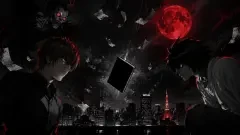
Death Note: First Judgment keeps the rule set exactly as written and changes only who is holding the pen. April Lie: First Duet shows the other route — a story carried by voice and music rather than plot, which is the hardest thing to hand to a model and the most impressive when it works.
From prompt to a chapter you would post
Write the brief before the prompt
Boundary, voice sample, the scene’s job, one prohibition. Four lines. Skipping this step is why most AI fanfic reads like a summary of itself.
Draft one scene, not one chapter
A scene has an end you can check. Ask for 600–900 words and stop; chapters assembled from scenes you have already tested hold together far better than a single 3,000-word generation.
Edit the flat paragraph by hand
Find the paragraph where the voice slips and rewrite it yourself. That paragraph becomes the reference for every later scene — and it is usually the only part a reader would have noticed.
The worlds, briefly











A fanfic can be more than a document
Once a scene works on the page, it can be published as a playable story: readers make the choice instead of reading it. That is what the roleplay hub is for, and it is one click from here.
Built with the roleplay skill
roleplay holds the character voice and the memory of what has already happened, which is exactly the two things a long fanfic needs. lorebook is where the canon boundary lives: names, rules and dates that must not drift. world-builder builds the setting around the fic if you want the story to be playable rather than only readable.
AI fanfic FAQ
Can AI write good fanfiction?
It can write a serviceable first draft and hold a long plot together. It cannot hold a character’s voice without help, and it will invent canon details confidently. Treat it as a drafting partner, not a ghostwriter.
How do I stop the character sounding generic?
Give it two or three lines of that character actually speaking, and re-feed your own corrected paragraph after each scene. Adjectives about personality do almost nothing; a voice sample does most of the work.
What about canon mistakes?
Pick the two facts you are least sure of and check them before posting. Models state wrong details with the same confidence as right ones, and readers of fanfic notice.
Is it okay to publish AI-assisted fanfic?
That depends on the fandom and the platform — many communities ask for disclosure, and some ban it. Disclose it, and check the rules of the space you are posting in.
Can I turn a fic into something playable?
Yes. Scenes published on Neta run as playable stories where readers choose instead of reading, and they can be forked so someone else continues from your setup.
Do I need to write the whole thing myself?
You need to write the parts that carry voice — the dialogue, the ending, the paragraph where the character decides something. Those are the parts readers remember, and they are also the parts a model flattens first.
Keep reading
Platform: Neta Studio · Type: AI Fanfic · Hub: neta.art/app/roleplay · Works: Beyond the Forbidden Door · Death Note: First Judgment · Jujutsu Kaisen World Portal · April Lie: First Duet · ADA Mission: Harbor Ghost · Final Selection: Night of Wisteria
