AI Hand-Drawn Animation Key Visual Generator — With the Niu Lai (牛来) World
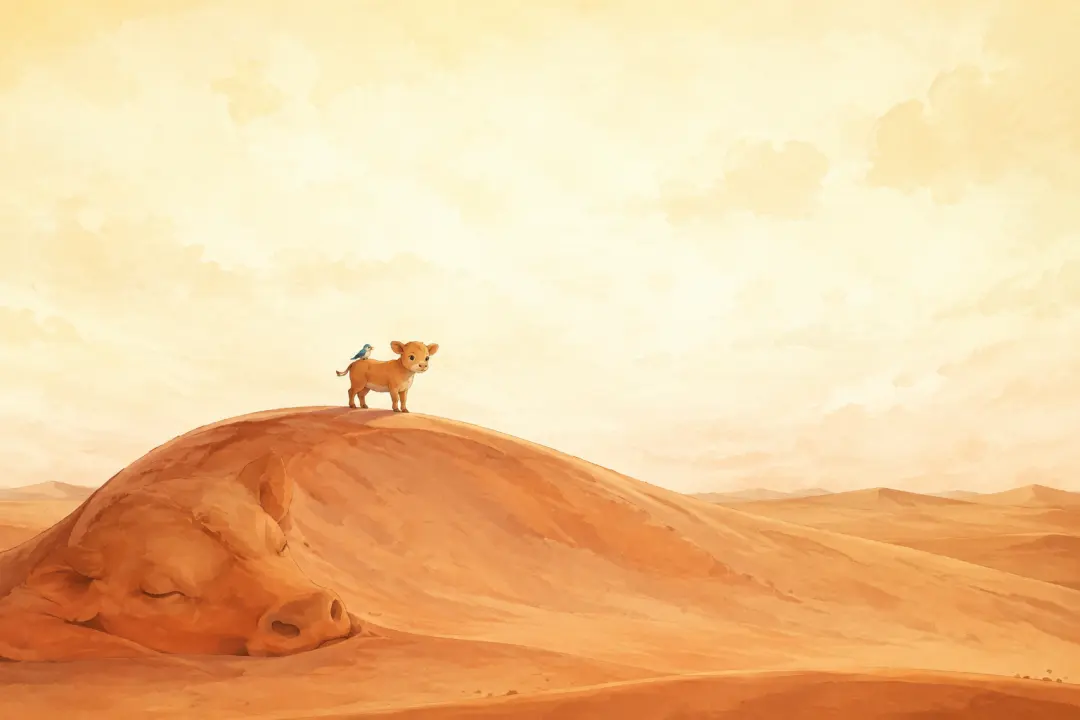
Generate hand-drawn 2D animation key visuals with AI: freeze a visual-style brief, write one sentence of scene, and compare GPT Image 2 vs Krea 2 on the same prompt — demonstrated with the Niu Lai (牛来) wasteland world.
AI Hand-Drawn Animation Key Visual Generator
A hand-drawn animation key visual generator is an AI workflow that turns a world's visual-style brief into cinematic key art for 2D animated films and series — hero images that establish a scene, a character, or a whole world in a single painterly frame. The reference world for this guide is Niu Lai (牛来), the hand-crafted 2D animated wasteland of dunes, drought, and a newborn calf who carries a wounded cloudbird into a dream.
Why does this use case exist? Key visuals are the hardest frames in animation — they must compress an entire film's mood, palette, and story into one image. Traditionally they take senior artists weeks. With a text-to-image model locked to a visual-style brief, the same key art can be iterated in minutes, and a single prompt can be run across two models to compare interpretations.
What Is a Hand-Drawn Animation Key Visual?
A key visual is the poster frame of a scene: the composition, color script, and emotional beat that the animation team builds around. In hand-drawn 2D animation it is usually painted — ink-wash textures, soft canvas grain, rounded shapes — rather than rendered. That painterly quality is exactly what makes it a great text-to-image use case: style language is everything, and the style can be frozen in a brief.
World key visual
The establishing image of the whole world — like the calf on the sleeping dune under an enormous sky. One frame that tells you where the story lives.
Sequence key visual
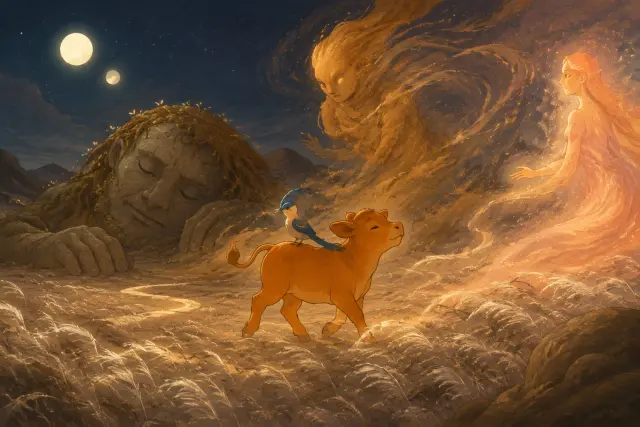
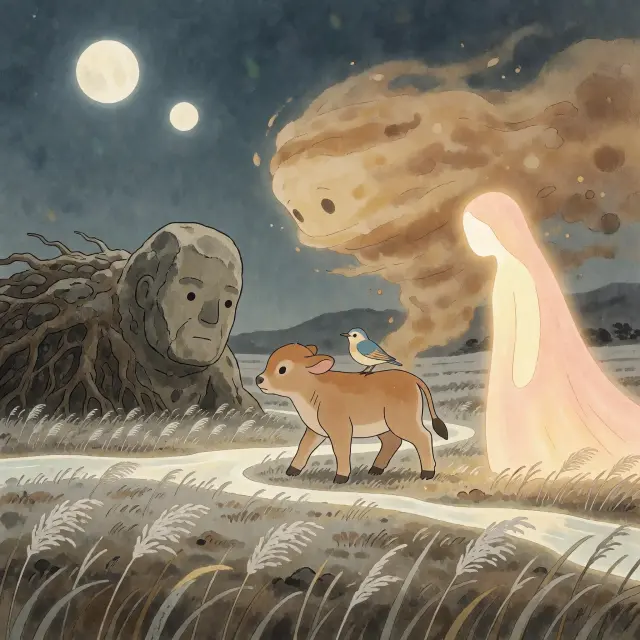
The hero frame of a scene or act — like the Dream Plain beneath two moons, where the Three Calls happen.
Character key visual
A single frame that establishes a character's design, palette, and emotional presence — the lark's broken wing, the old ox's one blind eye.
Style frame
A pure style test — palette, brushwork, grain — generated before production to lock the look of the film.
Why Use AI for Animation Key Visuals
Hand-drawn animation is slow by design: five years, two pairs of hands, one frame at a time. AI key-visual generation does not replace that craft — it accelerates the pre-visualization that happens before the first frame is drawn, and it lets a world's style be tested across models before a single brushstroke is committed.
Style lock
The visual-style brief can be reused verbatim across every prompt, so a dune, a sky, or a character stays visually consistent across scenes and models.
Speed of iteration
A director can see twenty color scripts in an afternoon instead of waiting weeks for painted maquettes.
Model comparison
The same brief run on two models — GPT Image 2 and Krea 2 — reveals two honest interpretations of the same world, useful for choosing a production look.
Shareable assets
Every generated key visual can be published as a shareable work inside the world, becoming part of the world's canon and a starting point for other creators.
Niu Lai — the Reference World
Niu Lai is a hand-crafted 2D Chinese animated world: a yellow wasteland where rain has not fallen for nine years, a newborn calf born into a storm, a cloudbird with a broken wing, and a dream where Earth, Wind, and Light each call the calf to grow. Its visual style — warm earthy palette, soft ink-wash textures, canvas grain — is the perfect stress test for a hand-drawn key-visual generator because the style language is precise and the subject is emotionally loaded: a small creature against overwhelming nature.
Lock the Style: the Visual Brief
The single most important input for a hand-drawn key-visual generator is the style brief. The Niu Lai world ships with one that any creator can reuse:
Hand-crafted 2D Chinese animation, warm earthy palette of sand, dun, ochre, terracotta, amber and dust-rose, vast desert dunes and an enormous sky, a small calf against overwhelming nature, soft ink-wash textures, painterly backgrounds, soft canvas grain, rounded gentle shapes, no text, no watermark
Note what the brief does: it names the palette (sand, dun, ochre, terracotta, amber, dust-rose), the texture language (ink-wash, canvas grain), the composition rule (a small creature against overwhelming nature), and the constraints (no text, no watermark). Every prompt inherits this block.
Two Models, One Brief
GPT Image 2
Photorealism-grade detail and strong natural-language following. Best when the key visual needs fine texture, precise staging, and faithful rendering of a complex scene like the Three Calls.
Krea 2
Expressive illustrations and fast iterative ideation. Best for painterly, stylized readings — softer grain, warmer silhouettes, and quick style exploration.
The same prompt
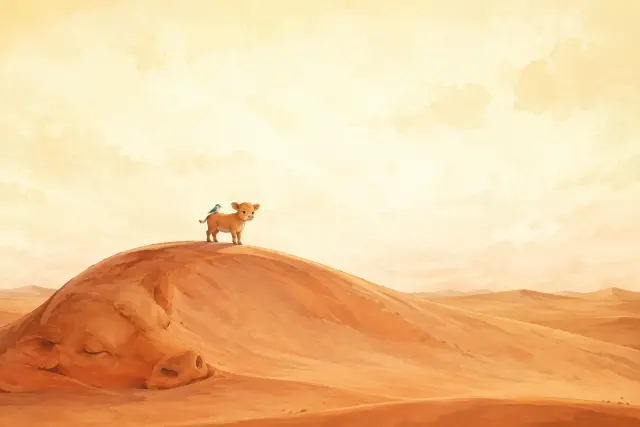
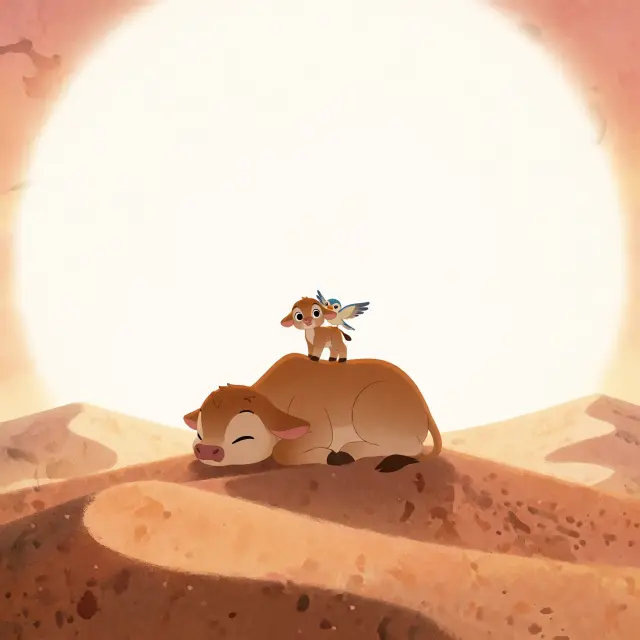
Both works in each pair come from the identical prompt: one sentence of scene plus the full visual-style brief. The difference is the model, not the instruction.
Which to choose
Run both. The comparison is the feature: two honest interpretations of one world let you pick a production look or publish both as works.
Prompt Anatomy for Hand-Drawn 2D
Style brief → One-sentence scene → Subject & scale → Model → Review against brief
A reliable hand-drawn key-visual prompt has four parts. Here is the world key visual prompt used to generate the Niu Lai works:
Key visual of the hand-crafted 2D Chinese animated world "Niu Lai" (牛来). A tiny newborn tawny calf with big gentle eyes stands atop a vast solitary sand dune shaped like a sleeping calf, carrying a small blue-and-cream lark with a broken wing on his back. Around them an enormous white-hot sky fills two-thirds of the frame, warm earthy palette of sand, dun, ochre, terracotta, amber and dust-rose, soft ink-wash textures, painterly backgrounds, soft canvas grain, rounded gentle shapes, a small creature against overwhelming nature, cinematic wide composition, no text, no watermark.
1. Subject — the calf, the dune, the lark. 2. Scale — a tiny creature against an enormous sky. 3. Style — the full visual brief, pasted verbatim. 4. Constraints — no text, no watermark.
Results From the Niu Lai Brief
All four outputs stayed true to the brief: the sleeping-cow dune, the two moons, the three forces, the warm earthy palette. GPT Image 2 delivered finer texture and a more literal reading of the Three Calls; Krea 2 delivered warmer, more stylized silhouettes. Both are valid key visuals for the same world — which is exactly what a comparison pair should be.
Common Use Cases
Best Practices
Pitfalls to Avoid
Where to Go Next
Open the Niu Lai world studio to see the full canon — 30 atoms, six rules, six events — then fork the world and generate your own key visuals from the same brief. The prompts and the style block are already in the world, so your first frame can be a comparison pair: GPT Image 2 on one canvas, Krea 2 on the other.
Make the first frame of your own animated world
Fork the Niu Lai world, reuse the visual-style brief, and publish your own key visual as a shareable work.
AI hand-drawn animation key visual generator — from visual-style brief to shareable key art, powered by the Niu Lai (牛来) world and a two-model comparison of GPT Image 2 and Krea 2.
Keep going
More from the same studio