
The Best AI Dark Fantasy Key Visual Generator | Use Case
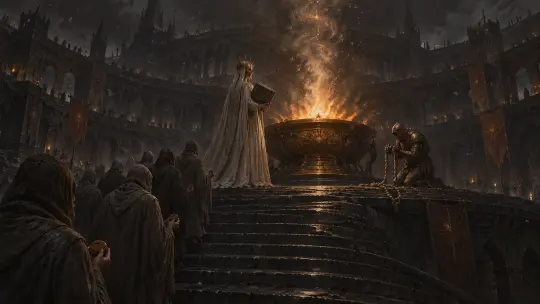
Generate dark fantasy key visuals on Neta Studio: world-driven prompts, a built-in GPT Image 2 vs Krea 2 comparison, and four published works from the Ashen Vigil world.
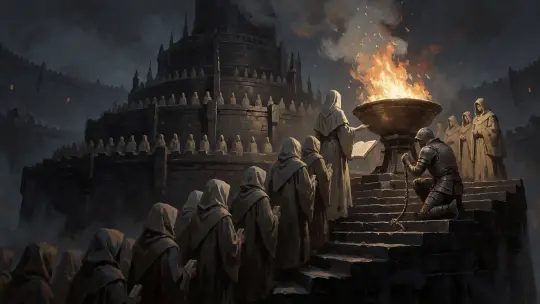
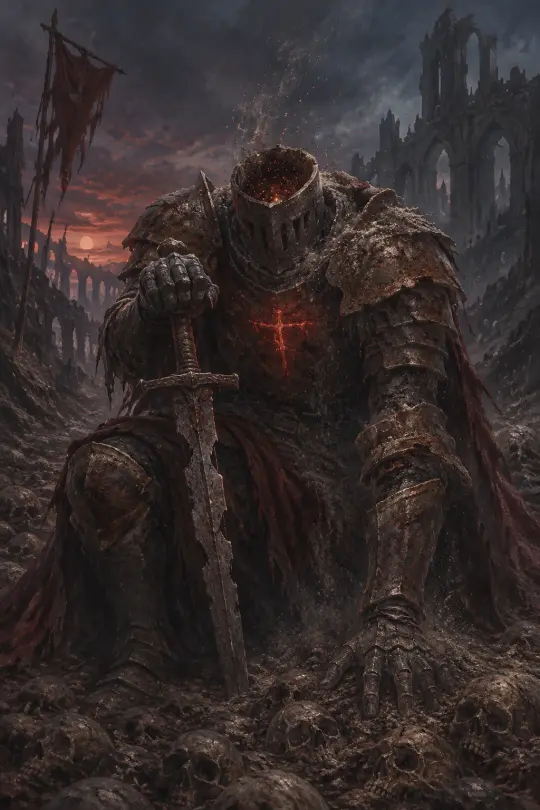
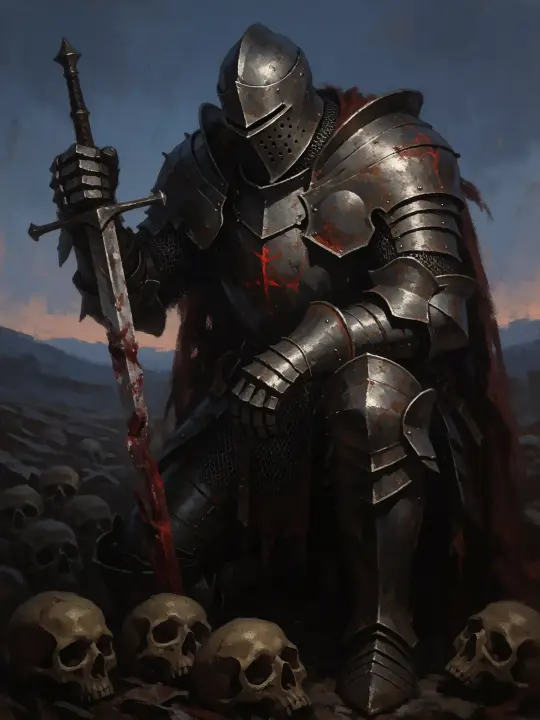
Make a Dark Fantasy Key Visual From One Sentence
Describe the debt, the price and the light — Neta Studio builds a dark fantasy key visual with a real world behind it, ready to publish, share or fork.
What Is an AI Dark Fantasy Key Visual?
A dark fantasy key visual is a single frame that sells a world: one figure, one light source, one bargain visible in the composition. It is the image that appears on a store page, a teaser, a Kickstarter header or a book cover — the one that has to communicate threat and history before anybody reads a word of copy. An AI dark fantasy key visual is the same object produced from a written world instead of a mood board: instead of typing "dark fantasy knight, dramatic lighting", you point the generator at a world that already contains the knight, the road, the faction that branded him and the event that killed him. The frame inherits the argument.
The distinction matters at the fourth revision. A prompt box gives you a hundred unrelated knights. A world gives you the same knight in five different scenes, and that is what a key visual actually needs to do: prove that the world continues past the edge of the frame.
Why Dark Fantasy Needs Its Own Pipeline
Dark fantasy is a lighting genre before it is a costume genre. The genre lives in a single restrained source — a fire, a lantern, a break in the clouds — and in large areas of deliberate darkness. Generic image generators are trained to be helpful: they fill the shadows, add a second rim light, and brighten the subject until the mood evaporates. A world-driven pipeline fixes this by making the light part of the canon. Ashen Vigil's visual style is tenebrist painterly: one direction, large dark shapes, selective clear edges, no borrowed photographic lighting. Because that style is attached to the world rather than typed into each prompt, every frame from the world keeps the same logic — even when the model changes.
- One source, not three. A fire, a dusk, a lantern. Two sources turn a rite into a product shot.
- Darkness is a shape, not an absence. The black areas have edges and internal structure; they are not empty.
- Props carry the lore. A ledger, a rope of knots, a brand. If the prop is not readable, the world is not readable.
- Silhouette before detail. Every key visual should survive being shrunk to a thumbnail on a store shelf.
Featured Key Visuals You Can Start From
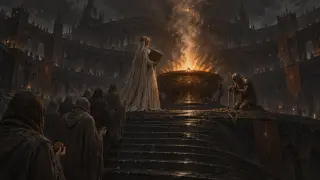
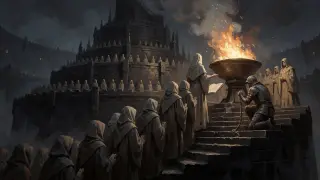
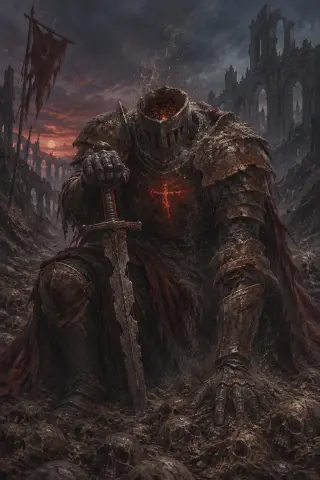
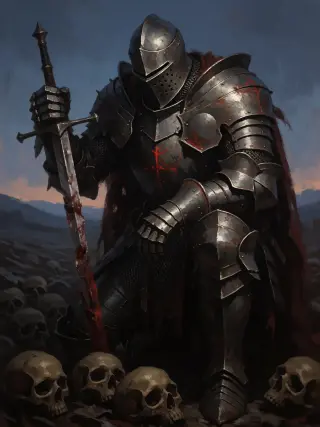
The fastest way to learn the format is to open a finished frame and fork the world behind it. Each work below was published from the Ashen Vigil world and has its own share page, so you can inspect the prompt, the model and the atom it was built from.
How to Make a Dark Fantasy Key Visual on Neta Studio
Open or fork a world
Start from Ashen Vigil, or write a one-sentence world of your own: who pays, what they pay, and what happens to the dark when they do.
Choose the transaction
A tithe, an oath, a drowning, a bell. Every strong dark fantasy frame shows an exchange in progress, not a pose.
Cast one figure
Pick the character card that carries the rule — the priestess who sets the price, the knight who cannot finish paying.
Name the light
Write the source into the prompt: one brazier, one dusk, one lantern. Ask for the ash to be doing something specific.
Render two models
Run the identical prompt through GPT Image 2 and Krea 2. Keep the frame that survives the crop and publish it as a work.
Example Prompts for Dark Fantasy Key Visuals
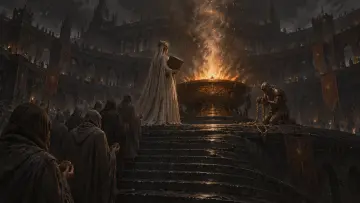
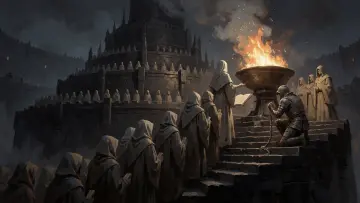
- “A masked high priestess in ash-white robes stands with her back to camera before a bronze brazier of fire, a sealed ledger under her arm; hooded pilgrims with clay name-tokens climb a black basalt spiral stair; one deaf bellringer kneels at the rail with a knotted rope; ash falls continuously; single ember-orange light source.”
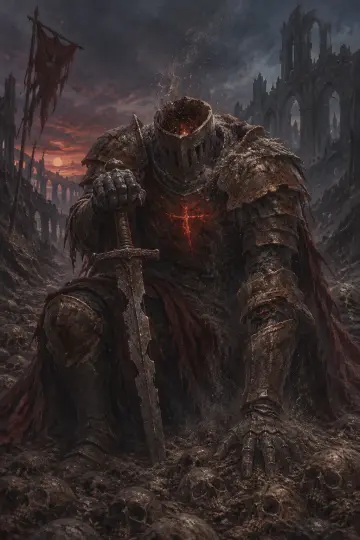
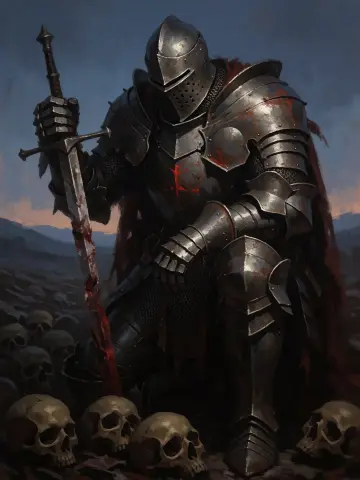
- “A faceless knight of packed grey ash inside rusted plate kneels on a road paved with nameless skulls, a broken sword planted point-down; a red oath-brand glows through the breastplate; ash sifts from the joints of his armour; cold blue dusk, one rim light.”
- “A flooded gothic nave under a lake, pews underwater, a choir of drowned singers with kelp-green hair still singing; shafts of green water-light, no other source; the only warm colour is a single candle on the altar.”
- “A leaning tower of stacked bells above a fog sea, one rope hanging to the ground; a deaf bellringer in rusted plate holds the rope with both hands; grey dawn, the bells in silhouette, no second light.”
Neta Studio vs Generic AI Image Generators
- World memory. A generic generator forgets your setting between prompts. Neta Studio keeps 21 atoms on the board, so the fifth image still knows what the first one established.
- Style as canon. The tenebrist painterly style is attached to the world, not retyped. Change the model and the lighting logic survives.
- Published works. Every frame gets a share page with its prompt and model, so a comparison is evidence rather than a claim.
- Forkable worlds. Readers can inherit the whole cast, not just one picture, which is how a single image becomes a project.
- Model comparison built in. The same brief through GPT Image 2 and Krea 2 is two clicks, not two subscriptions.
Who Uses AI Dark Fantasy Key Visuals
Indie studios use them to test whether a game's premise reads before they build a vertical slice. Novelists use them to pitch a setting to a cover designer who needs a mood, not a synopsis. Tabletop designers use them as chapter plates. Cosplay and prop makers use them as a materials reference — where the leather meets the plate, how the ash sits on the shoulders. The common thread is not the software. It is that all of them need the same thing: a frame that implies a world with rules, produced fast enough to argue about. A world with atoms gives them something to argue with.
Anatomy of a Great Dark Fantasy Key Visual
The best frames in this genre are built like a courtroom sketch: one figure who is deciding something, one object that records the decision, one light that shows both. Everything else is context. If you can remove a third of the frame and the story survives, the composition is working. Look at the Vigil Flame frame again. The priestess is not facing us, which makes the fire the protagonist and her the official. The pilgrims are arranged by rank on the stair, so the composition doubles as a social diagram. The bellringer is the only figure doing labour, and the rope in his hands is the world's calendar. Three characters, three functions, one light.
- The official — the figure who sets the price. Back to camera, holding the record.
- The queue — the people paying. Repeated silhouettes, each slightly different, arranged by status.
- The witness — the figure who counts. In frame, in shadow, holding something measurable.
- The evidence — the ledger, the brand, the rope, the skulls. Readable at thumbnail size.
A Closer Look at the Featured Frames
The Vigil Flame, rendered by GPT Image 2, is the version that behaves like a lit interior. The brazier has thickness and a rim, the steps are wet and uneven, the crowd has individual postures, and the flame throws enough bounce to describe the basalt on all four sides of the Citadel. The priestess holds a closed book — the sealed ledger the brief asked for. The same brief through Krea 2 becomes a poster. The Citadel flattens into a stack of tiers, the crowd merges into a single field of hoods, the priestess reads from an open book, and the bellringer is chained rather than kneeling at a rail. It is a stronger thumbnail and a weaker document.
Greaves, by GPT Image 2, is a material study: ash pours from the gorget, drifts above the hollow helm, and settles on the skulls at his knees. Krea 2 gives the same knight a cleaner silhouette, an upright visor and a blood-streaked blade, with the oath-brand as a graphic red cross. Both read as dark fantasy; only one reads as "the Ashless".
Single Figure or Full Rite: Choosing the Frame
Use a single figure when you need a poster that works at 300 pixels: one silhouette, one brand, one weapon, darkness all around. Use a full rite when the frame will be inspected or used as a store header: multiple figures at different depths, a queue, an official, a light source that explains the architecture.
A practical rule: if the image will be seen for less than two seconds, cast one character. If it will be seen for ten, cast the transaction. The Ashen Vigil works are deliberately one of each, so the world has both a poster and a document.
Where Generic Generators Fall Short
- Continuity. Ask for "a faceless ash knight" twice and you get two different characters. The fourth image cannot reference the first.
- Light discipline. Generic models add fill light because fill light scores well in training. The genre dies at the second source.
- Prop literacy. A ledger becomes a generic book, a rope of knots becomes a chain, a brand becomes a cross. The lore leaks out of the frame.
- No provenance. There is no share page, no prompt history, no world behind the picture — so there is nothing to hand to a collaborator.
Iterating Until the Frame Feels Canon
A first draft is rarely the final poster. The workflow that works is subtractive: render, then remove one thing. Remove the second light. Remove the second weapon. Remove the cape that hides the brand. Each pass gets closer to the single transaction the frame is about. Keep the prompt in the work record while you iterate. When the fifth draft finally reads, you will want to know which clause did the work — usually it is the one that named the material, not the one that named the mood.
A useful test: cover the figure and look at the background. If the background still tells you what happened here, the world is doing its job. If it could belong to any fantasy game, you have a render, not a key visual.
Publishing, Sharing and Forking
Once a frame feels right, publish it against the world. In Neta Studio a published work gets its own share page with the prompt, the model and the world it came from — which is what makes a comparison honest and a portfolio legible. The share page is also the fork point: a reader can inherit the twenty-one atoms and make their own version of the same argument. Publishing is not the end of the pipeline; it is the proof that the world is coherent. Four frames from one world, two models each, is a stronger portfolio than forty unrelated images, because it shows a system rather than a mood.
Dark Fantasy Key Visual FAQ
- Which model should I start with? GPT Image 2 for frames that will be inspected — props, materials, crowds. Krea 2 for posters and thumbnails. Run both on the same brief; the comparison is the point.
- Can I use these images commercially? Published works from your own world are yours to use; check the plan and the model terms attached to each generation before a paid campaign.
- How many atoms do I need? Ashen Vigil runs on 21: seven characters, five locations, five events, four factions. Enough to argue, few enough to hold in your head.
- Do I need a reference image? No. Both Vigil Flame renders and both Greaves renders were text-only, which is why they are a fair comparison.
- What makes it read as dark fantasy rather than horror? Scale and office. Horror chases a body; dark fantasy shows an institution and the price it charges.
Build a Dark Fantasy Frame With a World Behind It
Fork twenty-one atoms, choose the debt that comes due, and publish the frame that survives the crop.
Every image on this page is a published work from the Ashen Vigil world — four frames, two briefs, two models. Open the studio to edit the atoms behind them.