Best Visual Novels: 8 That Earn Their Endings

A short list of visual novels worth the hours — four landmarks, four playable in the browser — and how to tell in ten minutes whether one is for you.

What “best” means in a genre built on reading
A visual novel is not a game that happens to have text. It is a novel that has been given a stage: painted backgrounds, a small cast of faces, a box of dialogue, and a set of choices that promise your reading will matter. That promise is the whole genre, and the titles that survive it are the ones where the choices change what you understand rather than merely where you go.
So this list is not a ranking of length or production budget. It is eight works that hold up on the two things a visual novel must get right: a scene you want to stay inside, and a decision that makes you put the controller down for a second. Four are landmarks you can buy anywhere; four are browser-native pieces you can open without installing anything. Read the first ten minutes of each and you will know which one is yours.
| Form | Painted backgrounds, sprites, a dialogue box, branching choices |
| Landmark titles | Steins;Gate (2009), Umineko (2007), VA-11 Hall-A (2016), Doki Doki Literature Club! (2017) |
| Reading time | 2–3 hours for a short piece; 30+ for a long one |
| Browser-native | No install, saves the scene, remembers the last choice |
Start a scene instead of a download
Pick a world, name the person in front of you, and let the roleplay skill write the next line in their voice. The first scene is the audition: if the voice holds, keep reading.
The four landmarks, and what each one teaches
These four are old enough to have shaped the genre and specific enough to be worth reading for craft. Each one is a lesson in a different part of the machine.
- Steins;Gate (2009) — 5pb. and Nitroplus built a time-travel story out of text messages, and made the cost of undoing a mistake the actual plot. Lesson: a mechanic can be a theme.
- Umineko When They Cry (2007) — 07th Expansion put eighteen people on an island and dared the reader to solve the murders. Lesson: the reader can be a participant, not a passenger.
- VA-11 Hall-A (2016) — Sukeban Games set an entire visual novel behind a bar, where the only verb is what you pour. Lesson: listening is enough action.
- Doki Doki Literature Club! (2017) — Team Salvato dressed a metafictional horror story as a dating sim and let the interface itself become the threat. Lesson: the frame is part of the story.
How to tell in ten minutes whether a visual novel is for you
Open it, read to the first choice, and ask three questions. Does the prose have a voice of its own, or is it describing a scene you have already seen? Does the first choice cost something, even a small thing? And do you want to hear the next line more than you want the next plot point? Two yeses out of three and you should keep going. A visual novel that fails the third question is usually a film with a menu.


Eight you can open right now
The four below are browser-native: they load in a tab, keep a save, and put a painted scene behind the text. The last two are the ones to try if you want to see how far a single conversation can carry a chapter.


The four landmarks in one sentence each
If you only read one, read the survey of what the form does best first: it is the shortest route from “I have heard of visual novels” to “I know which one I want”. Then pick by appetite — time travel and dread for Steins;Gate, a locked island and a puzzle for Umineko, a bar stool and a city for VA-11 Hall-A, and a literature club that is not what it says it is for Doki Doki Literature Club!.
What changes when the novel is generated
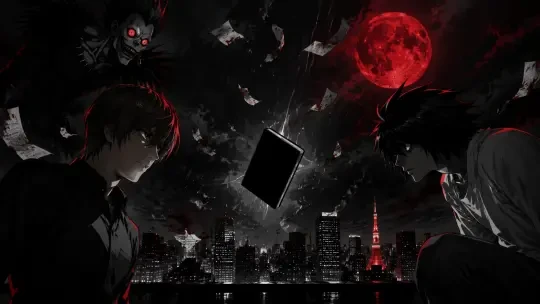
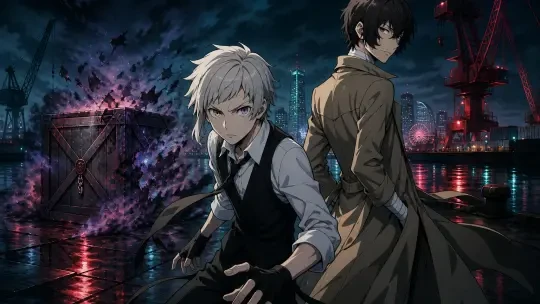
The browser-native ones above are not adaptations; they are scenes with a model behind the dialogue box. First Judgment keeps the canon premise and lets your first decision be the one the anime spends four episodes on. Beyond the Forbidden Door is a corridor you can walk twice. The gain is not prettier art — it is that the reply you type is a real move, and the character answers it in character.
Three ways to read a visual novel properly
Read the first choice twice
Save before the first branch, take both options, and read the next two minutes of each. The difference tells you whether the writer is building a story or a menu.
Keep one save per route
Long visual novels reward a save file per route. Two hours in, you will want to know which line changed and which one you only imagined changed.
Stop at the end of a chapter, not a cliff
The genre is built to keep you reading past midnight. Stop at a chapter break; the scene will still be there, and you will remember the chapter instead of the fog.
The cast you will meet first
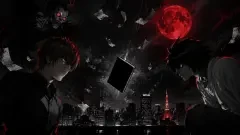
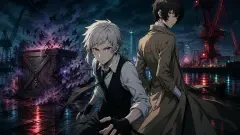




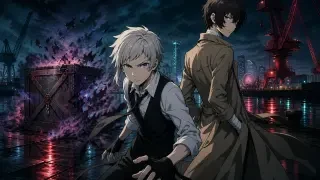





Pick a face, then a night
Every story on this page opens the same way: one character, one room, one line you have to answer. Choose the face and the room does the rest.
Made with the roleplay skill
roleplay writes the scene: it holds the character’s voice, the room, and the memory of the line you just chose. trading-card turns the same character into a profile card when you want a cast sheet instead of a chapter, and the sprite pages linked below cover the standing art a dialogue box sits against. The model does not invent a new plot each turn — it continues the one you are inside.
FAQ
Do I need to play the classics in order?
No. Each of the four landmarks stands alone. Umineko is the only one where reading the earlier When They Cry entries adds something, and even there the first episode explains itself.
How long does a visual novel take?
A short browser piece is 20–40 minutes. A commercial landmark is 20–50 hours across all routes. The honest way to choose is to decide how many evenings you have, not how many endings exist.
Are browser visual novels full games?
The ones here are scenes rather than 40-hour campaigns: a painted room, a cast, a save, and a dialogue box that accepts your own words. They are closer to a chapter you can replay than to a boxed release.
What if I write a bad reply?
The scene answers it anyway, in character, and that is the point. A reply that lands badly is still information — the character reacts to the attempt, not to how well you phrased it.
Is a visual novel the same as a text adventure?
They share a family tree. A visual novel leans on painted art and a fixed cast; a text adventure leans on rooms and inventory. The browser pieces here sit in the middle: painted scene, free text, remembered choices.
Which one should I read if I only have one evening?
Start with a short browser piece and finish it. Finishing one scene teaches you more about whether you like the form than an hour of a 40-hour epic.
Keep reading
Platform: Neta Studio · Type: Visual novel guide · Hub: neta.art/app/roleplay · Works: First Judgment · Harbor Ghost · Beyond the Forbidden Door · Night of Wisteria · First Night Under Makima · After the Nocturne