How to Make a Jeopardy Game (Step-by-Step, With a Free Online Maker)
Make your own how to make a jeopardy game
Learn how to make a Jeopardy game step by step — categories, clue values, scoring and hosting. Then build yours free in the browser in under a minute.
You can learn how to make a Jeopardy game in an afternoon, but only if you separate the two jobs: writing the clues and building the board. Most homemade games fail at the writing stage, not the board stage. A clean grid with weak clues is still a weak game. A scruffy grid with tight clues plays fine.
The manual method below produces a playable 25-clue board in roughly 90 minutes of real work. A 6-category board, the size the television show uses, runs closer to two hours. If you would rather spend that time on facts than on typing, the browser-based 3D game builder at Neta Studio takes a one-sentence topic and generates a board you can edit cell by cell.
What a Jeopardy Game Actually Needs
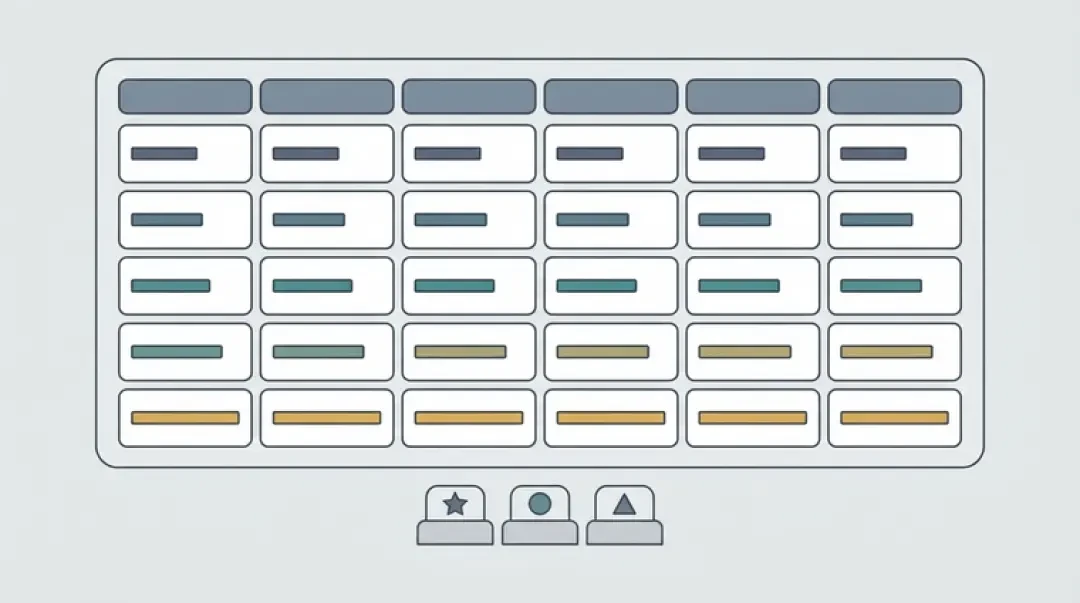
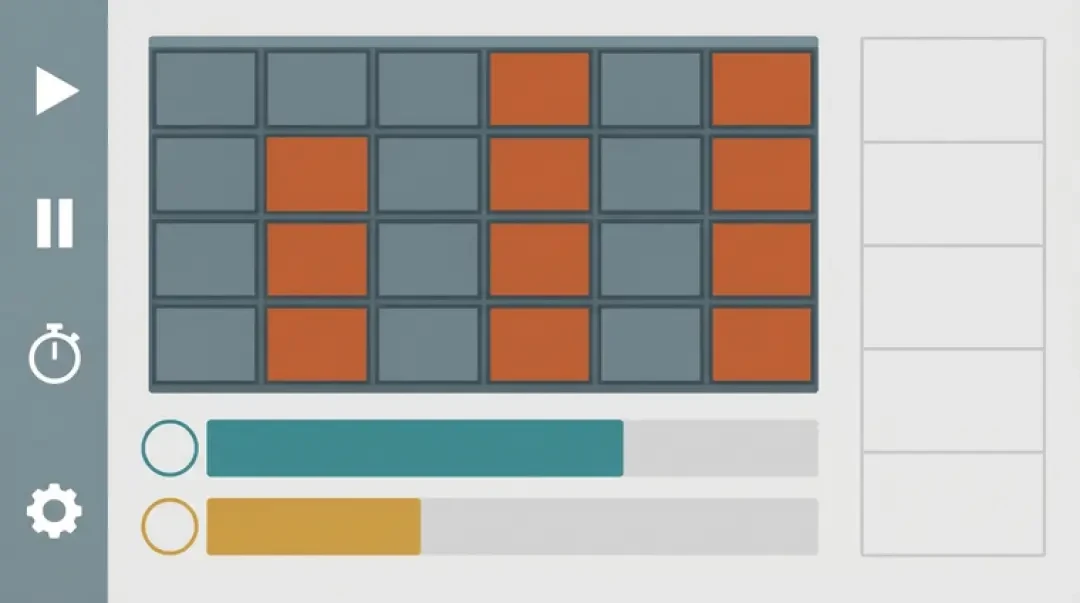
A Jeopardy board is a grid. Columns are categories, rows are clue values. Five columns and five rows gives 25 clues; six columns gives 30. Every version of the game, on television or in a classroom, reduces to four parts, and you should be able to name all four before you write a single clue.
Two parts are structural (categories and values) and take about an hour to set. Two are behavioural (clue format and scoring) and are what players actually experience. The behavioural parts are the ones people skip, and they are the ones that cause the argument at clue four.
- CategoriesFive or six column headings that share one subject and one difficulty band. Without them, players cannot judge whether they have a chance before a clue is read, so every buzz becomes a guess.
- Clue valuesThe ladder 100, 200, 300, 400, 500 running down each column. Without values, there is no reason to save a strong category for later and no arithmetic path back from a deficit.
- Clue formatOne sentence, phrased so the answer is a thing rather than a yes or no. Without a fixed format, clues drift to three lines and the host spends 20 seconds reading each one.
- ScoringA written rule covering correct answers, wrong answers, and who controls the board next. Without it, the first wrong answer produces a debate instead of a game.
Step 1: Pick Categories That Scale
A category has to be broad enough that five clues exist inside it, and narrow enough that those five clues are interesting. 'History' is too broad: five clues drawn from it have no relationship, so the column has no shape. 'Best Picture winners, 1987 to 1991' is too narrow: by the third clue, a player who knows the answer knows the entire column.
The test takes about 30 seconds per category, and it is the only test that matters. Can you name five clues at the same difficulty level inside this category, right now, before writing anything down? If you stall at three, the category is too thin. If your five clues are all the same fact approached from different angles, it is too narrow.
Working examples: 'Bones in the human body' passes, because femur, patella, scapula, mandible and cochlea sit at roughly the same level of general knowledge. 'World capitals' passes. '1970s rock' passes once you decide whether it means bands, albums or songs, and fails if you leave that undecided. 'Things that are red' fails.
Step 2: Write Clues From Hard to Easy
The value ladder is a difficulty ladder. The 500 in a column should be hard for everyone in the room. The 100 should be gettable by anyone who was paying attention for the first minute. Write from the bottom up and you produce five easy clues, then try to harden one of them, which gives you a column of near-identical difficulty and a board where every row feels the same.
Write the 500 first, before anything else. Then write the 100. Then fill 200, 300 and 400 by interpolation, so each one sits clearly between its neighbours. Working inward from both ends is faster than working in one direction, because you always know the two boundaries you are filling between.
The check at the end is a read-through: say the column out loud in order and ask whether a player who missed the 500 could plausibly get the 300. If the honest answer is no, your 500 is really a 900 and the ladder is broken. Swap rows until difficulty rises monotonically from top to bottom.
Step 3: Set Point Values (100-500)
The standard ladder is 100, 200, 300, 400, 500 because the increments are large enough that players feel the difference and small enough that sweeping a column is worth roughly one hard clue from a rival column. It also keeps end-of-round arithmetic easy when you are adding two totals under time pressure.
Double the values for a second round: 200, 400, 600, 800, 1000. Doubling does two jobs. It makes a comeback mathematically possible, and it lets you reuse the same categories without the second half feeling like a repeat, because the clues underneath them are new and harder.
To weight a category that is genuinely harder than its neighbours, shift the entire column up one step (200 through 600) rather than editing individual cells. A single uneven cell inside a visible ladder reads as a mistake, and players will start doing maths instead of answering questions. A uniformly shifted column reads as intentional design, which is what it is.
| Slot | Round 1 value | Round 2 value | What the clue should test |
|---|---|---|---|
| 1 (top) | 100 | 200 | Something anyone in the room can answer |
| 2 | 200 | 400 | A fact from the same subject, one step removed |
| 3 | 300 | 600 | Detail that requires having read the source material |
| 4 | 400 | 800 | A specific number, date, or name |
| 5 (bottom) | 500 | 1000 | The hardest fact you can fairly ask for in that subject |
Step 4: Score and Host
Two teams is the default and the easiest to run: one running total per team, written where both teams can see it. Three teams works with the same rule plus one line added: after a wrong answer, control passes to the next team in rotation rather than back to the team that already answered. With four or more teams, the gap between a player's turns gets long enough that people stop tracking the board.
One person keeps the board, and it should not be the person answering. In a small room the host writes on a whiteboard; if you build the board in a tool, the score lives on the board and nobody carries a tally in their head. State the rule in one line before the first clue: 'Correct answer adds the value, wrong answer subtracts it and the next team gets a shot.' The common alternative is no deduction and a pass to the left. Both work. Ambiguity does not.
The hosting habit that keeps a room engaged is a non-habit: read the clue once at full speed, then say nothing. No hint, no first letter, no 'come on'. Silence forces commitment. If nobody answers after roughly five seconds, read it again more slowly, then open it to the room with no penalty. Hosts who narrate every clue end up answering a good fraction of them.
The Fast Way: Generate the Board From One Sentence
Everything above still applies. You still need five categories, a value ladder, one-sentence clues and an announced scoring rule. What changes is the typing. Describe the topic in a sentence, generate the board, then spend your time on the part that genuinely needs a human: checking that every clue is true, that each answer is unambiguous, and that the difficulty ordering actually climbs.
That is what the 3D game builder at Neta Studio does. You type something like 'a Jeopardy round about the solar system for a 9th-grade class', and it returns a board you can edit cell by cell. If you want a board players can walk around instead of a projected grid, the same builder runs in the browser and places the board inside a 3D world. Mini World and The Cyclops' Island are examples of what those worlds look like when they ship, and Agent Sprite Forge covers character art if you want a host avatar standing next to the board.
The trade is real and worth stating plainly. Generation is fast; verification is still yours. Budget about ten minutes to read the whole board end to end and fix the two or three clues that are false, ambiguous, or sitting in the wrong row. That is still less time than typing 25 cells and writing 25 clues from a blank page.
01
Write the topic as one sentence: subject, audience, and any constraint you care about, for example 'no dates before 1950'.
02
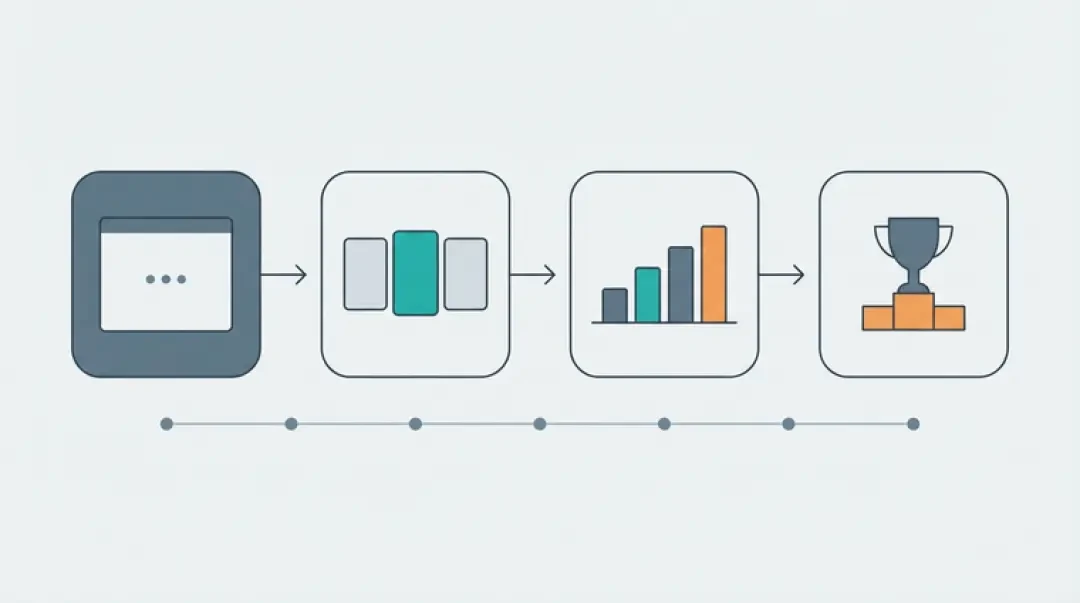
Generate the board in the browser. You get categories, values, clues and answers arranged in a grid.
03
Read every clue out loud. Fix anything that is false, anything with two defensible answers, and anything that leaks its own answer in the wording.
04
Re-order the rows so difficulty climbs from 100 to 500. Generated boards are usually close to sorted, not reliably sorted.
05
Set the scoring rule and the team list before the first clue is read, not after the first wrong answer.
06
Test one full column on someone who has not seen the board. If they take both the 100 and the 500, the ladder is too flat.
Common Mistakes
- Categories that overlapTwo columns like 'World Capitals' and 'Geography' leave players unable to decide where a clue belongs, and the host ends up accepting both. Keep each column answerable by one subject line with no shared territory.
- A 100 clue that is harder than the 500This is what writing top to bottom produces. Read each column in value order before you play; if difficulty does not rise, swap the rows rather than rewriting the clues.
- Clues with two correct responsesA clue like 'This planet is known for its rings' has one intended answer and several arguable ones. Add a qualifier, a decade, a country, a number, until exactly one answer fits.
- Values with no ladderEqual values across a column feel fair and play badly: there is no reason to pick one row over another and no way back from a deficit. Even a weak 100-to-500 ladder beats a flat board.
- An unreadable boardFont too small for the back row, category headers wrapping onto three lines, clue text in a colour close to the background. Sit in the worst seat in the room and read one full column before the game starts.
- A scoring rule nobody announcedIf wrong answers deduct and you first mention that at the first wrong answer, you have started an argument mid-round. Say the rule out loud, in one sentence, before the first clue.
Walk into the world it belongs to
A sprite is a character with nowhere to stand. The last step is the one nobody else offers: take the sheet you just built and put it in a world someone can walk around in — a small island, a planet, a rainy street corner. Every world on this site was made from one written description and published as a page you can play.
FAQ
How long does it take to make a Jeopardy game? +
About 90 minutes by hand for a 25-clue board: roughly 50 minutes on clues, 20 minutes ordering the difficulty, 20 minutes on the grid and a read-through. Generate the board first and fact-check it, and the total drops to 15 to 20 minutes.
Do I need software to make one? +
No. A whiteboard or shared document is enough. Software only changes two things: how fast the board gets built and how legible it is from the back of the room.
How many clues should the game have? +
25 clues in five categories is the right size for a 45-minute session. Use six categories and 30 clues if you are copying the television format. Above 30, games run past an hour and answers get sloppy.
What makes a good category? +
One subject that holds five clues at the same difficulty. Apply the 30-second test: name five clues in that category, right now. Stalling at three means the category is too thin; five versions of the same fact means it is too narrow.
Can I use it in class? +
Yes, but change the scoring. Do not deduct points from a student who guesses wrong — that ends participation quickly. Award points for correct answers, pass on wrong ones, and run one total per table.
Can I play it online? +
Yes. Share the board as a read-only screen, let one host click the cells, and handle buzzing however your call tool allows. In the Neta Studio builder the board can sit inside a walkable 3D world, so remote players move around it instead of watching a shared screen.
Is it free? +
The manual method costs nothing but time, and the browser builder is free to use. You can build a board and start playing without installing anything.
Back to the 3D Game Builder
All 31 finished 3D worlds, games and scenes live on one page — every one of them playable.