microStudio Alternative — A Free Browser Game Engine, Without the Code
Make your own microstudio alternative
microStudio is a free 2D online engine where you write microScript. Neta builds a 3D world you can walk through from one sentence — no code, no install, free.
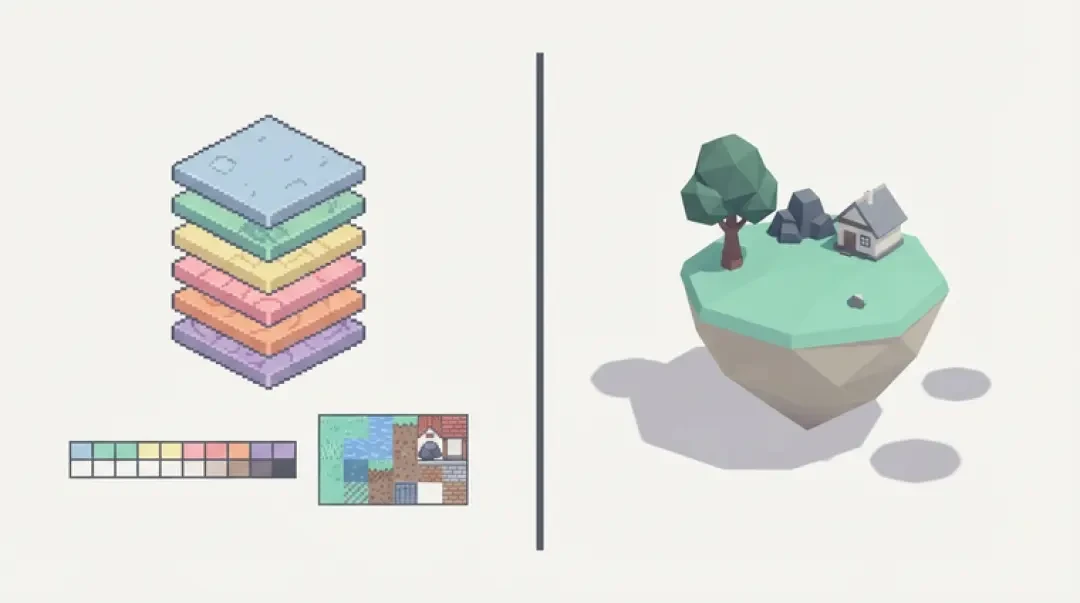
If you are looking for a microStudio alternative, two facts decide the choice before you compare anything else. microStudio is 2D: sprites, tile maps, flat x and y coordinates. And its primary interface is microScript, a real scripting language you write in an editor pane. Neta Studio's 3D game builder is the other shape entirely: the primary interface is a written sentence, and the output is a 3D place you walk through. Both run in a browser tab and both are free to start, and everything downstream of those two facts follows from them — the editor layout, what the export produces, and how long it takes to reach something that moves.
This page does not argue that one tool is better. It compares them on six things you can check yourself: where it runs, what you type, how many dimensions you get, what you are making, what the output actually is, and time to something you can interact with. Then it describes a small 3D world built from one sentence, so the difference between writing microScript and describing a place stops being abstract.
Quick Answer
microStudio is a genuinely free, genuinely in-browser game engine — and it is 2D and scripted. Two facts decide the choice. First, microScript is the interface: if a door should open when the player has the key, you write the condition and the state change yourself. Second, the world is flat: sprites on tiles, x and y, no depth, no lighting model, no camera you can put behind a character and turn. If either of those matches what you want, microStudio is the correct tool and most microStudio alternatives will feel like a downgrade, because few of them combine a browser editor, a real language, and an export path that runs without the tool. If instead you want a 3D place you can walk through and you would rather describe it than program it, the comparison is between a scripting engine and a world builder, and that comparison is the rest of this page.
What microStudio Does Well
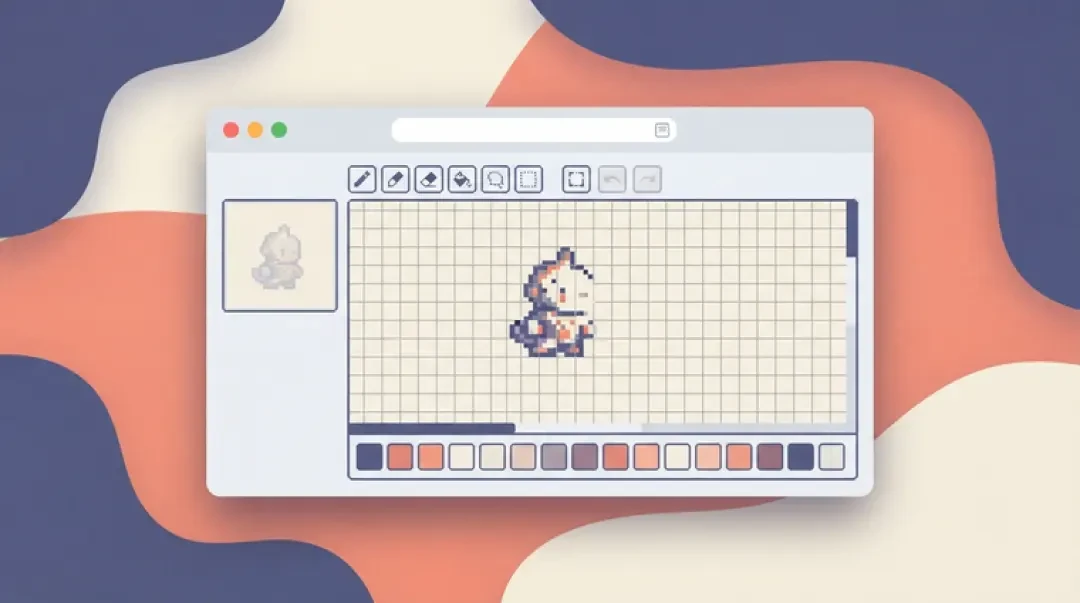
Give it a fair hearing, because a lot of what it does is done well. The first thing it removes is installation. You open a browser tab and you have the code editor, the sprite editor, the map editor, and a run button in the same window. There is no toolchain to configure, no build step to wait on, and no project file that has to stay in sync between two machines. The run button sits one click away from the edit, and that short loop is the reason the tool is pleasant to sit in for an hour.
microScript is a real language, not a drag-and-drop toy with a code-shaped costume. It has variables, conditionals, loops, and functions, plus a per-frame update path, so the concepts transfer: state you mutate over time, input events, collision checks. It ships with a written manual that lists commands rather than only walking you through a tutorial, which matters in the second hour, when the tutorial has ended and you need to know what arguments a command takes.
Export is more capable than microStudio usually gets credit for. An HTML5 export produces a build you can put on any static host and open in a browser, running the same code that ran in the editor. A desktop export produces an application you distribute as a file. Nothing in an exported build depends on microStudio being open, which is a real publishing path from a tool that is honest about being a teaching engine.
What a microStudio alternative has to match
Four things are worth checking before you leave. Does it run without installing anything? Is the core free? Can you get your work out in a format that runs without the tool? And is there a reference you can look things up in? Tools that miss the last one are the ones people abandon in week two, when the questions start and the tutorials run out.
- Free, in the browserThe engine runs in a tab. There is no licence step between opening it and running your first line of microScript.
- Export to HTML5The HTML5 build is static. Put it on a host, open the page, and the game runs. You control where it lives.
- Export to desktopA desktop build produces an application you hand over as a file, so a finished project is not trapped in a tab.
- microScript and a manualA small scripting language with a command reference. Small enough to hold in your head, documented enough to look things up.
- Asset editors beside the codeSprite and map editors sit next to the code pane, which keeps the edit-run loop short.
- Honest about being a teaching engineIt exists to teach programming by making something that moves. That is the purpose, not a limitation it apologises for.
Where microStudio Stops
The limits are structural, and they are easy to list. microStudio is a 2D engine. Everything you place is a sprite or a tile on a map, and coordinates are x and y. There is no depth buffer, no scene graph with a transform hierarchy, no lighting model, and no perspective camera you can walk behind. You can suggest depth with scale, layering, and parallax, and for a fixed view that works well — but it is a drawing technique, not a renderer, and it stops holding the moment the camera needs to turn.
The second limit is the interface. Behaviours are code. If a door should open when the player has the key, you write the condition, the variable that stores the key, and the state change that consumes it. There is no field where you describe the door and get a door that opens. The work is programming, and the loop is write, run, read the error, fix the error, run again.
State the difference as a difference in kind rather than a flaw. microStudio is a scripting engine: the artifact you author is a program that draws a world. The Neta Studio 3D game builder is a world you can walk: the artifact you author is a place, and behaviour is whatever the place needs in order to be walkable. Both are legitimate. They fail in different places — microStudio fails when you want a camera that turns, and a description-driven builder fails when you want arithmetic the builder does not model.
2D by design: sprites, tiles, flat coordinates
Depth is faked, and faking it costs you the moment the view rotates. If your project is a platformer, a top-down shooter, a puzzle grid, or anything else that reads well in one fixed plane, this is not a limit at all. It is the correct shape for the problem, and a 3D engine would add cost without adding anything you can see.
Code first: microScript is the interface, not an option
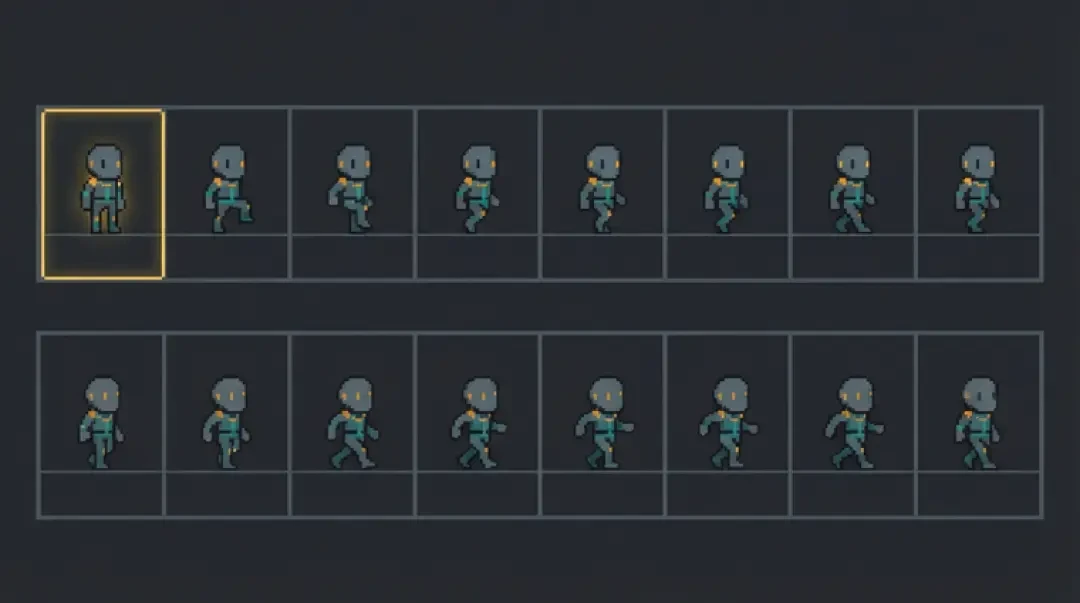
The asset editors help you make pictures and maps. They do not make anything move. Movement, collision, scoring, enemy behaviour, and menu flow all pass through microScript, from the first sprite to the last screen.
microStudio vs a Browser World Builder
The table compares the two routes on the six things that change your afternoon: where it runs, what you type, how many dimensions you get, what you are making, what comes out at the end, and how long it takes to reach something you can interact with.
Read the last row first. Both tools are fast, but they are fast at different points. microStudio is fast to the first line of code — a sprite appears and moves within minutes of opening the tab, and then the remaining work is the game itself. The 3D game builder is fast to a walkable place — the world exists before you have written anything, and the remaining work is what you want inside it. Which one feels quicker depends on whether the thing you want to see is a program running or a place standing.
| microStudio | Neta Studio 3D game builder | |
|---|---|---|
| Where it runs | A browser tab | A browser tab |
| What you write | microScript, in an in-browser code editor | A sentence describing the world, in a text field |
| Dimensions | 2D — sprites, tile maps, x and y coordinates | 3D — a Three.js scene with a camera you walk behind |
| What you produce | A game: rules, levels, and behaviour defined in code | A place: terrain, objects, a character, and a spawn point |
| What the output is | An HTML5 build or a desktop application that you host or distribute | A published page with a link you can send |
| Time to something playable | Minutes to a moving sprite; longer for a finished game | One sentence to a world you can already walk in |
Walk a Mini World
Mini World starts from one sentence: a small island with a lighthouse, a few palm trees, and a beach where you start. What comes back is a scene, not a script. There is terrain with a shoreline, a water plane, a lighthouse on the higher ground, palm trees placed around it, and a spawn point on the sand. You begin on the beach facing the lighthouse. Movement is standard first-person walking and the camera follows your character. Nothing was typed into a code pane. The sentence is the source file.
To build the same island in microStudio you would do real work in a different shape. You would open the sprite editor and draw the lighthouse, the sand tiles, the water tiles, and a palm. You would paint the map tile by tile. Then you would open microScript and write the player position, the input handling, the collision that stops you walking through the lighthouse, and the camera that follows. All of that is learnable, and doing it teaches you something the description route does not teach at all. It is simply a longer path to a picture of an island.
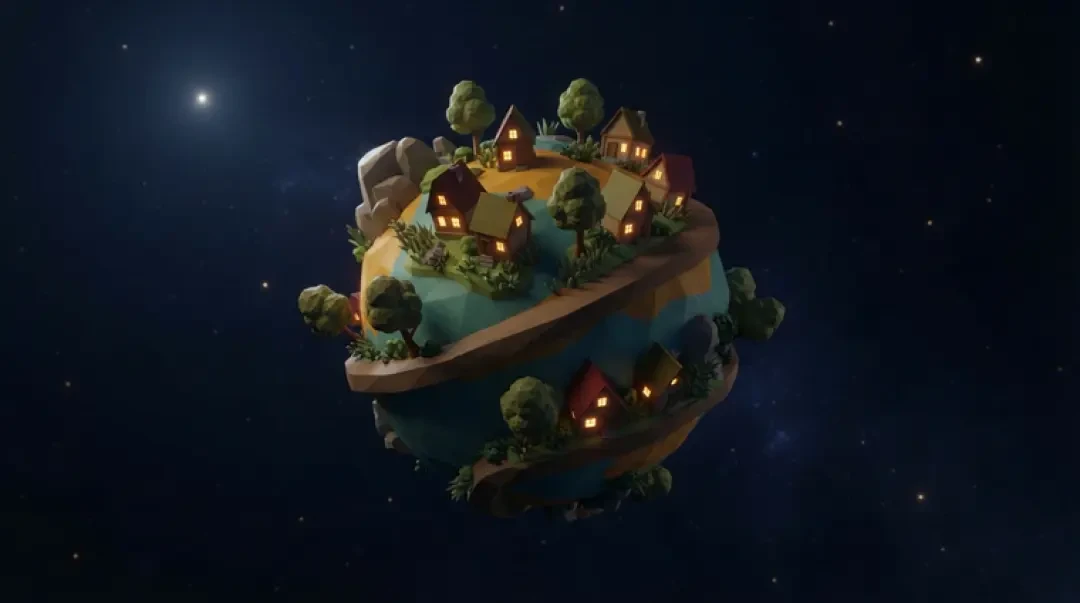
The larger example built the same way is The Cyclops' Island — a full 3D world with terrain, characters, and interactive objects, made through the 3D game builder rather than typed, with Agent Sprite Forge covering the character art. The failure modes are worth naming so you do not expect a miracle. A long sentence containing two contradictory instructions will resolve to one of them. Very large worlds run into draw distance and frame rate on integrated graphics. And mechanics that need arithmetic the builder does not model — an inventory with weight, turn-based combat resolution — are where you either work around the builder or accept what it gives you.
If You Were Learning to Code
If the goal is learning to program, microScript is the better teacher, and it is not close. You type a line, you run it, you read the error, you fix it. That loop is programming. Variables, conditionals, loops, and state that changes between frames are all present and all visible, because you wrote them. A description-driven builder hides that layer completely: the world appears, and the machinery that would have been your code is not on screen for you to inspect.
If the goal is a 3D place — something you can walk a friend through this week — the description route is faster, and pretending otherwise wastes your afternoon. You skip syntax, scope, the frame loop, and the collision maths, and you get a place. The trade runs in both directions: you learn less about programming, and you inherit the builder's limits instead of setting your own.
Neither tool is the wrong answer. They answer different questions. Pick microStudio if you want to know how the thing works. Pick the 3D game builder if you want the thing to exist. If you have time for both, the order that teaches you most is the builder first, to see the shape of the result, and microScript afterwards, to find out what it would take to build that result by hand.
Checking whether a microStudio alternative fits your goal
Two questions settle it. Do you want to write the rules, or do you want to walk around inside them? And will you still be working on this in a month — because if the answer is yes, the tool that keeps teaching you is usually worth the slower first hour.
Export and Sharing
microStudio hands you a project you host. The HTML5 export produces a build you upload to a static host; the same files work on any of them, because there is no server-side component. A desktop export produces an application you distribute yourself. You control the location, the version, and when it updates. You also carry the work: nothing is published until you publish it, and if the build breaks, the fix is on your side.
The 3D game builder hands you a page. The world is already served when you finish describing it, and sharing is a link — anyone with a browser opens it on whatever device they are holding, and the same link works on a laptop later. The trade is symmetrical to microStudio's: you skip the hosting step, and in exchange the runtime belongs to the platform rather than to you. If we change how worlds are served, your link changes with it.
- microStudio HTML5 exportA static build you upload to your own host. It runs without microStudio installed, on any machine with a browser.
- microStudio desktop exportAn application you hand over as a file rather than a link, which is sometimes what a school or an offline venue needs.
- Neta Studio share linkA published page. Send the link; the recipient opens it in a browser with nothing to install.
- Who runs the servermicroStudio: you, on your host. Neta Studio: we do. That single difference explains most of this section.
Walk into the world it belongs to
You can read a comparison or you can walk one side of it. Open a world that was described in a sentence and published as a page, with no scripting language and nothing installed. That is the whole difference in one click.
FAQ
Is microStudio free? +
Yes. The engine runs in a browser tab, and the scripting language, the asset editors, and the export features are not behind a paywall. The costs that appear later are not for the engine — they are for hosting an HTML5 build or buying a domain, and both are optional.
Do I need to code to use microStudio? +
Effectively, yes. microScript is the interface. The sprite and map editors let you draw the pictures, but movement, collision, scoring, and enemy behaviour are code you write, so the tool assumes you are willing to type.
Can microStudio make 3D games? +
Not in the sense that matters. It is a 2D engine: sprites and tiles on flat coordinates. You can fake depth with scaling, layering, and parallax, but there is no perspective camera and no lighting model, so the illusion breaks as soon as the view needs to rotate.
Which is better for learning to program? +
microStudio, if programming is the goal. You write the code, run it, and read the error, which is how the concepts stick. A description-driven 3D builder teaches you what a world needs rather than how to write the logic yourself.
Can I publish what I make? +
Yes, both ways. A microStudio project exports to an HTML5 build or a desktop application that you host or distribute yourself. A Neta Studio world is published as a page, so sharing it is sending a link.
Is the Neta Studio 3D game builder a microStudio replacement? +
Only if what you wanted was a 3D place rather than a program. If you want to write game logic in microScript and ship a 2D game, microStudio is the correct tool, and moving to a description-driven builder would take capability away.
Back to the 3D Game Builder
All 31 finished 3D worlds, games and scenes live on one page — every one of them playable.