Sexting Bots: What They Are and Where They Break

Sexting bots are characters with memory, not prompts with a filter. What actually breaks them — drift, escalation, persona collapse — and how to write one that holds.


A bot is a character, not a chat window
The difference between a sexting bot and a text prompt is memory. A prompt answers once; a bot has to still be the same person forty turns later, with the same hesitations, the same history, and the boundary it agreed to at the start. That is a harder problem than it sounds, and it is why so many bots feel electric for two minutes and hollow by the tenth message: the persona was written as a description, not as a set of commitments.
This page is about the machinery, not the content. It covers what these bots are built from, the three ways they usually fail, and how to write one that can hold a scene. It is written for adults, and everything here assumes adults on both sides of the chat — the user, and the fictional character who is written to behave like one.
| What it is | A persistent character persona with memory, not a single prompt |
| Built from | Name, description, personality, scenario, first message, example dialogue |
| Fails at | Memory drift, unmotivated escalation, persona collapse |
| Audience | Adults only — the page and the product are 18+ |
Write the character before the scene
The roleplay skill keeps a persona across turns: who they are, what they refuse, what they remember. Start with the person, then let the scene go where it goes.
What the bot is actually made of
Strip the branding away and every one of these products is running the same six fields. The character card specification that the open-source ecosystem settled on spells them out: a name, a description, a personality, a scenario, a first message, and example dialogue. Everything a bot does well or badly traces back to how those six were written.
- Description is a brief, not a blurb — It should state how the character speaks, what they notice, and what they will not do. Adjectives alone give the model nothing to act on.
- The first message sets the register — It is not a greeting; it is a demo. Whatever tone it establishes is the tone the model will try to keep for the rest of the chat.
- Example dialogue is a contract — The examples teach rhythm and length. Two lines of clipped dialogue produce a bot that answers in two clipped lines, whatever the description claims.
- The scenario is the pressure — A scenario is a reason for the conversation to be difficult: a deadline, a secret, a room with one exit. Without it, the chat has nowhere to go.
The three ways they break
1. Memory drift.
By turn forty the bot has forgotten the boundary you set at turn three. This is the most common failure, and it is a context problem, not a personality problem.
2. Escalation without a reason.
A character who agrees with everything is not a character. If the persona has no stake, no hesitation and no line, the scene becomes a form to fill in — and the user feels it immediately.
3. Persona collapse.
The description said “reserved”, the dialogue examples are chatty, and the model splits the difference by being bland. Cards fail this way more often than they fail on content.
Consent is a writing problem before it is a policy problem
The most common complaint about this category is not that the bots are too forward — it is that they are not people. A character who says yes to everything removes the only thing that makes a scene adult: a decision. Good persona writing gives the character a stake, a hesitation and a line, and then lets the scene negotiate around them. That is also the practical safety layer. A bot with a stated boundary, written into the description and reinforced in the example dialogue, holds that boundary far better than one relying on a filter bolted on afterwards. The user gets a scene with friction in it; the product gets behaviour that does not need to be patched at runtime.


Play roleplay that is built this way
These are real works on Neta Studio. Each one is a character first and a scene second, which is exactly the order this page recommends.



Slow burn, on purpose
Starfall Return is a reunion scene where the tension is in what the other person refuses to explain, and the pacing is the point. Stargazer’s Cure builds intimacy out of a nightly routine on an observatory channel — two insomniacs who have been talking for months before anything happens.
Characters with a job to do
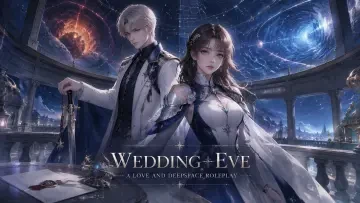
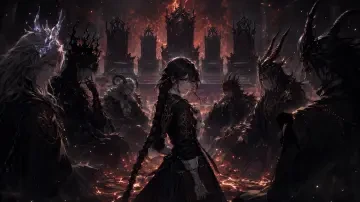
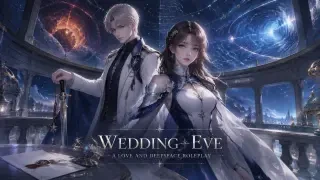
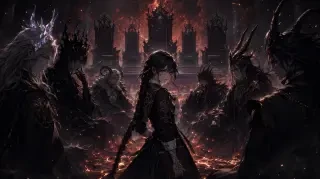
The Showman makes charm a performance the character is aware of, so the scene can ask what is underneath it. Wedding Eve puts the countdown in the calendar instead of the bedroom, and Infernal turns the negotiation into the romance: seven lords, seven different wants.
How to write a bot that holds for forty turns
Write the refusal first
One sentence on what this character will not do, and why. It gives every later turn something to push against, and it is the single highest-leverage line in the file.
Give them a life outside the chat
A job, a deadline, a person they are avoiding. Memory degrades, but a character with commitments can be re-anchored by asking about them.
Test at turn twenty
Not turn two. Open a scene, walk away, come back, and check whether the persona is still there. If it is not, the description was too thin, not the model too weak.
The worlds, briefly








The scene is the product
A bot that only answers is a novelty. A bot that remembers the rule you set, and makes you argue for it, is a story. The roleplay hub runs 18+ character stories with persistent personas.
Built with the roleplay skill
roleplay holds the persona and the scene state across turns; character-sheet writes the six fields a card actually needs — including the refusal. Images on this page are atmosphere only: original work, no people depicted, nothing reproduced from any existing property.
Sexting bots FAQ
What is a sexting bot, exactly?
A chat character written for adult conversation, built from a persona file — name, description, personality, scenario, opening message and example dialogue — and given memory so it stays the same character across turns.
Why do they forget things so fast?
Because memory is a context window, not a mind. Details from early turns fall out of the window as the chat grows. Characters with strong, repeated commitments survive longer than characters defined only by description.
Are these bots private?
Treat any hosted chat as hosted. Read the product’s own privacy terms before you share anything identifying; this page cannot make that promise for anyone.
Can I write my own character?
Yes — that is the point of the workflow above. Write the refusal, the routine and the register first; the scene will follow.
Is this page for adults?
Yes. The category is 18+, and the writing advice here assumes an adult user and an adult fictional character. Nothing on this page is explicit.
What makes one bot better than another?
Whether the character can say no. A persona with a stake and a boundary produces negotiation; a persona that agrees with everything produces a form.
Keep reading
Platform: Neta Studio · Type: Sexting Bots · Hub: neta.art/app/roleplay · Works: Starfall Return · Stargazer’s Cure · The Showman · Wedding Eve · Infernal · Chat with Ben