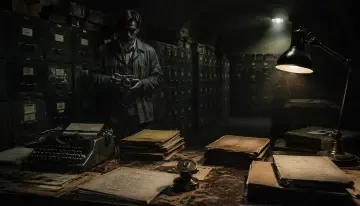
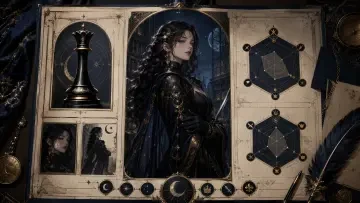
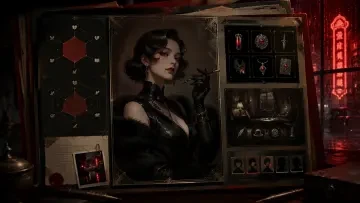
The Best AI Anime Character Dossier Generator
Compile classified character dossiers — profile, history, clearance.
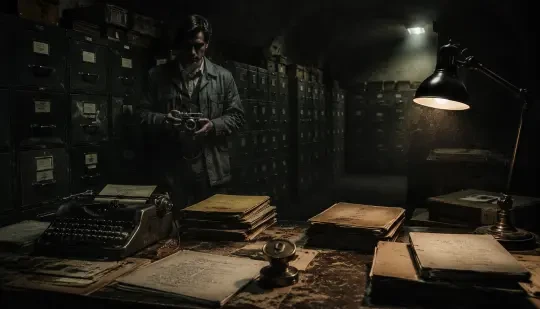
Generate Classified Character Dossiers in Seconds
Transform a single sentence into intelligence-grade character profiles with redacted histories, clearance levels, psychological assessments, and classified annotations — no design skills required.
What Is an AI Character Dossier Generator?
An AI character dossier generator builds intelligence-style character profiles that look like classified government files — complete with photos, biographical data, security clearances, mission histories, psychological evaluations, and redacted sections. Instead of generic character sheets, you get documents that feel like they were pulled from a secret agency archive. Neta Studio lets you create these from a one-sentence brief, generating the visual layout, typography, stamps, and world-consistent details automatically.
Why Character Dossiers Beat Standard Profiles
- Instant narrative tension — redacted text and clearance stamps signal secrets before the reader knows the plot.
- World-building shorthand — agency logos, classification levels, and incident reports establish setting and stakes in seconds.
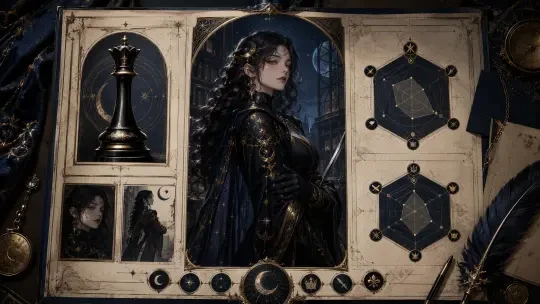
- Reusable format — fork Character Profile Card — Evelyn Nocturne, the Lunar Archivist and swap in your own operative while keeping the layout.
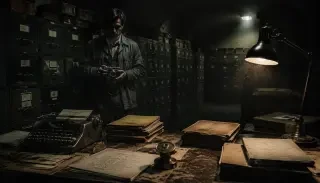
- Cross-media consistency — start from Bureau Nine Classified Intranet — Anomalous Affairs Archive Web App | Play Online and generate matching dossiers for every character in your universe.
How the Neta Studio Workflow Turns Briefs Into Dossiers
Write a one-sentence brief
Describe the character and the dossier context: "A vampire detective in 1930s Shanghai with a file from the International Occult Bureau" or "A lunar archivist with Level 5 clearance and contested loyalty."
AI generates your world board
Neta builds the character's visual, biographical sections, clearance metadata, and document styling — stamps, headers, classification markers, photo treatment.
Iterate with plain language
Refine redacted sections, add incident logs, adjust clearance levels, or change the agency branding with follow-up prompts. Every edit regenerates the dossier layout instantly.
Generate the final dossier
Export as a high-resolution character card, a multi-page PDF, or a shareable web dossier. Fork to create variants for different characters or timelines.
Publish or integrate
Share your dossier standalone, embed it in a visual novel like Bureau Nine Classified Intranet — Anomalous Affairs Archive Web App | Play Online, or use it as key art for a larger story.
Example Prompts That Generate Rich Dossiers
"A defector from a parallel Earth's intelligence service, now working as a freelance anomaly hunter — dossier includes redacted home-world location, psych eval noting trust issues, and a list of unresolved cases."
Neta generates the full dossier: file photo, parallel-Earth insignia, classification stamps, case file excerpts, and psychological profile — all styled like a cross-dimensional intelligence leak.
More examples: "A cybernetic courier with a dossier from the Solar Logistics Authority, showing augmentation specs and a delivery record with three suspicious gaps." "A fae diplomat assigned to human affairs, dossier marked Extreme Caution, with notes on glamour resistance and a list of prior infractions." Each prompt produces a complete dossier layout, not just placeholder text.
Generic AI Character Tools vs. Neta Studio
| Generic Tools | Neta Studio |
|---|---|
| Plain text bio with portrait | Full classified document with stamps, redactions, clearance levels |
| No world context or design consistency | World board ensures agency branding, typography, and lore align across all dossiers |
| Manual layout in Photoshop or Canva | One-sentence brief generates finished dossier layout automatically |
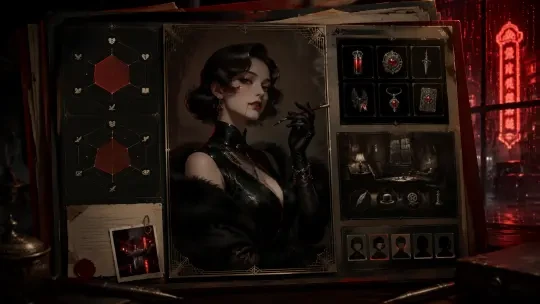
| Static output only | Fork Character Profile Card — Nyx, the Vampire Detective of 1930s Shanghai and create infinite variants |
Who Uses AI Character Dossier Generators?
Visual novel creators use dossiers to introduce operatives in spy thrillers and paranormal investigations. Tabletop RPG game masters generate dossiers for NPCs to hand to players as in-world props. Web serial authors publish dossiers as bonus content between chapters. Comic artists use them as character intro pages. Anyone building a universe with factions, agencies, or classified information uses dossiers to make the world feel lived-in and secretive without writing thousands of words of exposition.
Design Elements That Make Dossiers Feel Authentic
- Classification stamps and clearance levels — Top Secret, Eyes Only, Level 7 Access Required.
- Redacted sections — black bars over sensitive names, locations, or mission details.
- Agency headers and logos — fictional organization branding that ties to your world lore.
- File metadata — ID numbers, issue dates, authorizing officers, expiration warnings.
- Photo treatment — grainy, high-contrast, or stamped CLASSIFIED overlays.
- Incident logs and psych eval excerpts — short in-world documents that reveal character through bureaucratic language.
Iterating Dossiers Without Starting Over
Because Neta Studio interprets plain-language edits, you can refine dossiers mid-project without touching design software. Add a new classified mission to the timeline. Change the clearance level from 4 to 6 and regenerate the stamps. Redact a name that was visible in the first draft. Adjust the agency logo to match a different faction. Every change updates the entire dossier layout while keeping the overall structure intact, so you iterate on story and world details instead of fighting with layers and fonts.
From Dossier to Full Story
A dossier is often the entry point to a larger narrative. Start from Character Profile Card — Evelyn Nocturne, the Lunar Archivist and expand it into a visual novel where players uncover what the redacted sections are hiding. Use the dossier as the opening screen of an interactive web app like Bureau Nine Classified Intranet — Anomalous Affairs Archive Web App | Play Online, where clicking through classified files reveals the plot. Or publish dossiers as standalone character art to build an audience before launching the main story. Neta Studio makes it easy to move from character concept to finished world without switching tools.
Why One-Sentence Briefs Work Better Than Detailed Specs
Most character creation tools ask you to fill out forms: age, occupation, personality traits, backstory paragraphs. Neta Studio flips that model. You write one sentence describing the character and the dossier context, and the AI infers the rest — layout, classification structure, visual tone, world-appropriate details. If something is wrong, you refine it with a follow-up prompt, not by re-entering data. This approach is faster and encourages experimentation: try three different dossier concepts in the time it would take to fill out one traditional character sheet.
Real Examples: Bureau Nine, Evelyn Nocturne, and Nyx
The best way to understand dossier generation is to see it in action. Bureau Nine Classified Intranet — Anomalous Affairs Archive Web App demonstrates how classified layouts, redacted sections, and security headers transform a profile into an intelligence briefing. Character Profile Card — Evelyn Nocturne, the Lunar Archivist layers archival aesthetics with lunar iconography and personnel file formatting. Character Profile Card — Nyx, the Vampire Detective of 1930s Shanghai combines noir-era typography, case file stamps, and procedural logs. Each started with a one-sentence brief and a world board, then generated a complete dossier in minutes.
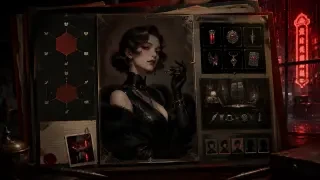
Layering Clearance Levels and Redacted Sections
When to Use Dossiers vs. Standard Character Sheets
| Standard Character Sheet | Classified Dossier |
|---|---|
| Biography, stats, inventory | Briefing, clearance, redacted history |
| Fantasy, modern, slice-of-life | Espionage, military, corporate intrigue |
| Open, complete information | Gated, conditional, mystery-driven |
| Static layout, minimal styling | Security headers, stamps, terminal UI |
Combining Portrait, Timeline, and Incident Log in One Dossier
Publishing Dossiers as Interactive Web Pages or Print PDFs
Forking and Remixing Existing Dossiers
I forked Bureau Nine and adapted it for my cyberpunk campaign. Instead of anomalous affairs, I have corporate espionage files. The AI kept the classified layout and security headers but swapped in neon accents and megacorp logos. Took five minutes to get six agent dossiers that look like they came from the same internal system.
Forking preserves design DNA while letting the AI adapt content, color, and iconography to your new setting.
Using Dossiers for NPCs, Antagonists, and Mystery Reveals
How Dossiers Scale Across Campaigns and Story Arcs
Common Questions About AI Character Dossier Generation
Can I generate dossiers for existing characters from my novel or game? +
Yes. Provide a one-sentence brief summarizing the character and their role, configure a world board with your setting's aesthetic, and the AI will generate a dossier. If you already have detailed backstory, paste key points into the brief or upload reference materials to the world board. The AI adapts existing lore into dossier format without requiring you to rewrite everything.
How do I control what gets redacted and what stays visible? +
Include clearance instructions in your world board. Specify which sections are public, restricted, or top secret, and the AI will apply redaction bars accordingly. You can also iterate after generation — click into any section and adjust visibility. Redaction is a design layer, not permanent, so you can toggle it on or off for different versions of the same dossier.
Can I use dossiers for non-espionage genres like fantasy or historical fiction? +
Absolutely. Dossier aesthetics work for any setting where information is compiled by an in-world authority — royal court records, guild registries, inquisition files, museum archives. Adjust your world board to swap security stamps for wax seals, terminal fonts for illuminated script, and clearance headers for noble titles. The structural format — portrait, timeline, notes, status — remains, but the visual language adapts to your genre.
How do I generate a dossier series with consistent design? +
Generate your first dossier, then fork it for each subsequent character. The world board, color palette, and layout tokens carry over, ensuring visual consistency. Update only the character-specific details in the brief — name, role, history — and regenerate. The AI applies the same design system to every dossier, creating a cohesive archive without manual template management.
What if I want to add incident reports or mission logs after initial generation? +
Iterate. Click into the dossier, add a section request — "Add three mission logs for covert operations in Southeast Asia, 1975–1978" — and the AI will generate styled logs that match the existing layout. Iteration preserves the dossier's design DNA, so new sections blend seamlessly with the original content.
Can I export dossiers for use outside Neta Studio? +
Yes. Export as PDF for print handouts, campaign binders, or portfolio pieces. Export as HTML for embedding in wikis, websites, or digital archives. The AI formats exports to preserve stamps, redaction bars, and layout integrity, so your dossier looks the same outside the platform as it does inside.
Start Generating Classified Character Dossiers Today
Start Creating
Generate your first classified character dossier in minutes — brief, world board, generate, publish.