The Best AI Anime Detective Map Generator
Build clue-linked detective maps — crime scenes, threads, suspects.


Map Your Case in One Sentence
Describe the body, the district and the suspects — Neta Studio builds the clue-linked detective map you can walk through, edit and publish.
What Is an AI Anime Detective Map Generator?
It is a generator that treats a mystery as a map, not a picture. You give Neta Studio a one-sentence brief — a crime, a place, a cast of suspects — and it lays out the scene as connected nodes: the body, the entry point, the missing object, the witness who was standing in the wrong spot. Every pin can hold a clue, a piece of testimony or an image, and every thread between pins is a claim the reader can follow or challenge. The anime rendering matters because mystery reads better when faces, rooms and weather carry mood: a wet alley at 2 a.m. and a bright school corridor ask the reader to suspect different things.
What You Can Build
- Crime scene floor plans — a room drawn to scale with the body, blood spatter, the latch, the open drawer and the one chair that was moved.
- Clue thread boards — red-string corkboards where each thread is a stated inference, so readers can see the logic and spot the weak link.
- Suspect dossier maps — portraits pinned around the victim, each node holding motive, alibi, and the moment the alibi breaks.
- City case atlases — six scenes across one district, linked by train lines, phone records or delivery routes.
- Timeline overlays — the same map at 21:00, 23:40 and 02:15, so the reader watches the impossible become possible.
- Playable case files — a map wired into an interactive visual novel where opening a pin unlocks the next scene of dialogue.
Example Prompts to Start From
- Harbor murder — "Anime detective map of a rain-soaked harbor district: body in Warehouse 7, five suspects, three clue threads converging on the night watchman."
- Locked room, cliffside academy — "Floor plan of the east wing dormitory with a snapped window latch, a wet umbrella in the wrong room, and a timeline that breaks two alibis."
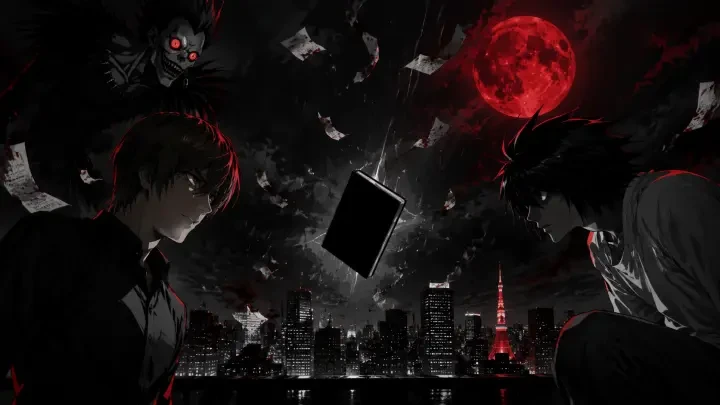
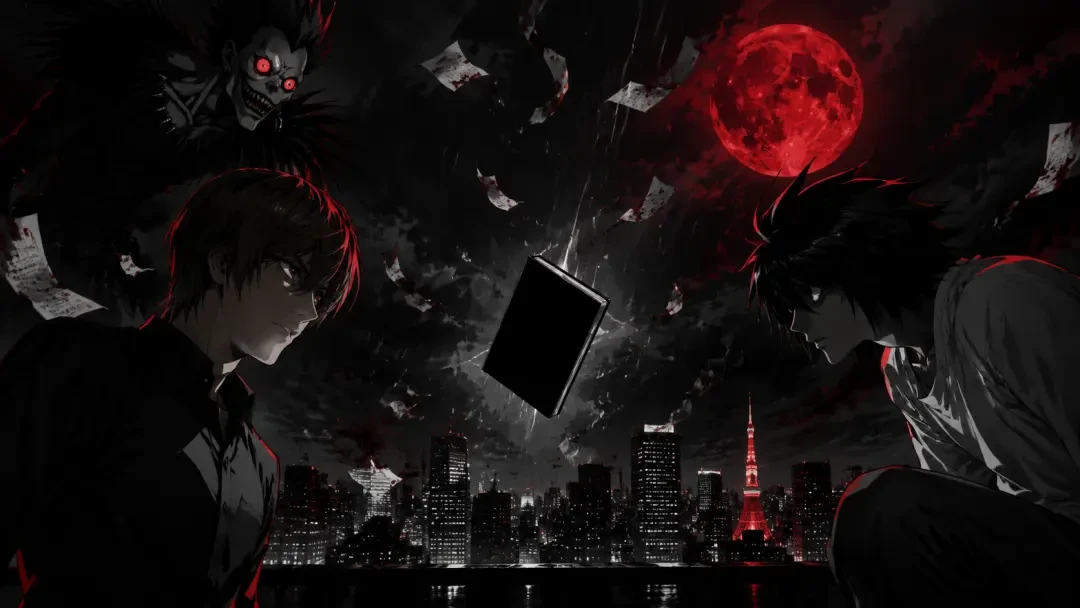
- Notebook case — "A prosecutor's board tracking deaths that share one cause: pins for each name, threads for each broadcast, one node for the pattern only the killer could know."
- Train-line serial case — "Neon downtown atlas, six scenes, victims linked by the last train they rode; each pin holds a photo, a time and a contradiction."
- Locked estate, snow — "Snowbound manor map where the only footprints lead in; nine rooms, one hidden passage, clue threads for the candle, the dog and the letter."
From One Sentence to a Published Case File
Write the one-sentence brief
Name the crime, the setting and the number of suspects. "A locked-room death in a cliffside academy, five suspects, one broken latch" is enough to start.
Open the world board
Neta Studio expands the brief into a board: locations, suspects, evidence and the threads between them. This is where you fix the case logic before any art exists — who was where, what each clue proves, which thread is the red herring.
Generate the map and key art
Turn the board into a rendered detective map: scene layouts, pinned evidence, suspect portraits and the establishing shot that sets the weather and the hour.
Iterate on the parts that matter
Regenerate a single node without touching the rest. Move the body two meters, re-time the alibi, swap a suspect's expression, redraw the east wing after you decide the passage runs under it.
Publish, share, fork
Publish the case as an interactive work with a shareable link. Readers walk the map; other creators fork it and run a different solution on the same floor plan.
Start From a Case That Already Runs
The fastest way to a good detective map is to fork a structure that already holds together. Start from "Death Note: First Judgment — Interactive Visual Novel" when you want the investigation to be playable — it already wires deduction into branching scenes, so you can swap the case and keep the pacing. Fork "Harry Potter — Wizarding World Map | Interactive Atlas of Magical Britain" when your mystery spans a whole country and each location needs to open into its own pinned detail. Take "StarCraft II — Koprulu Sector Star Map: 16 Worlds in One Living Atlas" when the case is a network problem: sixteen nodes, visible links, and one route that explains everything. In each case you keep the wiring and replace the content with your crime.
Why a Generic Image Generator Falls Short
| Generic AI image tool | Neta Studio | |
|---|---|---|
| Output | A flat picture of a map | A map whose pins open into clues and scenes |
| Clue logic | None — threads are decoration | World board tracks what each clue proves |
| Fixing one detail | Reroll everything, lose the layout | Regenerate a single node, keep the rest |
| Consistency | Suspect faces drift between images | Cast and locations stay fixed across the case |
| Sharing | Download a file | Publish a link readers can explore |
| Starting point | Blank prompt box | Fork a published work and rewrite the case |
Who This Is For
Mystery writers who need to see the floor plan before they can trust the alibi. Game masters running a one-shot investigation who want a handout players can actually search. Visual novel creators building a case file like "Death Note: First Judgment — Interactive Visual Novel" without a background artist on call. Worldbuilders and fandom archivists mapping a series' unsolved threads. And readers who just finished an episode and want to lay the evidence out themselves — a one-sentence brief is the whole barrier to entry.
Clue Logic: The Part Most Tools Skip
A detective map only works if the threads mean something. On the world board, each clue gets a job: it places a suspect, it removes one, or it lies. Write those jobs down and the map starts catching your own mistakes — two clues that prove the same thing, a suspect with no thread touching them, a solution that depends on a door you never drew. Fix it there, then generate. The art comes out better because the case underneath is sound, and readers who fork your work inherit a structure they can argue with rather than a poster they can only look at.
A detective map is not decoration. It is the argument, drawn — and the reader should be able to walk it and disagree.
That is the bar Neta Studio aims at: one sentence in, a walkable case out — clue-linked, anime-rendered, and ready to publish, share or fork.
Inside the World Board: Nodes, Threads, and Reveals
The world board is where a detective map stops being an illustration and starts being a case. Every location you name becomes a node that can hold evidence, a timestamp, and a lock condition. Every relationship you describe becomes a thread the reader can follow or fail to follow. You write the brief in plain language, and the board turns it into pieces you can move, rename, and re-link without redrawing the art.
- Clue node — a pin that carries the evidence, the hour it was found, and the state it unlocks next.
- Thread — a visible link between two clues, labelled confirms, contradicts, or leads to.
- Suspect card — portrait, alibi, motive, and the single clue that breaks the alibi.
- Fog layer — districts that stay blurred until the reader earns access to them.
- Case state — open, cold, or closed, driving what the map shows on the next visit.
- Reveal order — the sequence that decides whether a twist lands or leaks early.
Layer the Case Over a Map People Already Trust
Mysteries land harder when the geography feels lived-in before the body drops. That is why Harry Potter — Wizarding World Map | Interactive Atlas of Magical Britain is such a useful starting point: the regions, travel routes, and landmark logic are already coherent, so your clue layer inherits believability instead of arguing for it. Fork it, keep the atlas structure, and replace the discovery layer with your own evidence pins, witness statements, and locked districts. One sentence in the brief — "a disappearance in a market alley, three witnesses who contradict each other" — is enough to start placing nodes.


Scale a Case Across Many Locations
Single-room mysteries are easy. Arcs that cross a whole city, an academy, or a star system are where most tools collapse. StarCraft II — Koprulu Sector Star Map: 16 Worlds in One Living Atlas is worth studying for exactly this reason: sixteen distinct locations, one shared atlas, and connective logic that keeps every node meaningful. Start from it, rename the worlds as precincts or wards, and let each one carry its own clue set while the case-wide thread stays legible from the top view.
Interrogations That Redraw the Map
A detective map should change when someone talks. Death Note: First Judgment — Interactive Visual Novel is the reference for that half of the craft — pressure, bluffing, and reveals that shift what the reader believes. Fork it, wire its scene beats to your map nodes, and a confession in chapter three can unlock a district, invalidate a thread, or move a suspect from cleared to prime. The brief, the world board, and the generated scenes stay in sync, so you are never maintaining two versions of the same truth.
A detective map is not a picture of a place. It is a record of what the reader has proven — and a promise about what they have not reached yet.
Hold that line and the design decisions get simple. Every pin earns its place by changing what the reader knows, and every fog layer earns its place by protecting a reveal that still has work to do.
Detective Map vs. Generic AI Tools
| What the case needs | Generic AI image tool | Neta Studio |
|---|---|---|
| Clues linked to each other | Decorative pins, no relationships | Threads with confirms and contradicts labels |
| Controlled reveal order | Everything visible at once | Fog layers and unlock conditions per node |
| Suspects that stay consistent | New face on every re-roll | Suspect cards held on the world board |
| Targeted edits | Re-prompt the whole image | Change one node, keep the rest intact |
| A shareable result | A file you have to host yourself | Publish a live link others can fork |
| A running head start | Blank canvas | Fork the Wizarding World Map or the Koprulu Star Map |
Iterate Like an Editor, Not a Re-Roller
Good cases get built in passes, not in one lucky generation. Run a geography pass first so travel times and adjacency make sense, then a clue pass to check that each pin changes what the reader knows. Follow with a suspect pass — every alibi needs exactly one thing that breaks it — and finish with a pacing pass that moves reveals earlier or later. Because edits happen on the world board, you can regenerate a single district or rewrite one thread without disturbing the twelve nodes you already like.
Publish, Share, and Let Others Fork the Case
When the logic holds, publish. You get a live link that opens on any device, so playtesters, players, or readers can walk the map and tell you where they got stuck instead of where they got lost. Anyone can fork your published case the same way you forked Death Note: First Judgment — Interactive Visual Novel or the Koprulu Sector Star Map, which means a one-shot mystery can become a series, a classroom exercise, or a shared campaign file. Your original stays untouched while the branches grow.
Questions About Building Detective Maps
Do I need to write the whole mystery before I start? +
No. One sentence with a victim, a place, and a lie is enough. The world board gives you nodes and suspect cards to react to, and most writers find the real solution while moving pins around.
Can I keep the art style consistent across every location? +
Yes. Set the look once in the brief — line weight, palette, era — and it carries across nodes as you generate. Forking a work like the Wizarding World Map locks a coherent style in from the first pass.
How do I stop the twist from leaking early? +
Put the deciding clue behind an unlock condition and leave its district under a fog layer until two supporting clues are found. Reveal order is a field you control, not an accident of layout.
Can the map handle a case that spans many locations? +
That is what StarCraft II — Koprulu Sector Star Map: 16 Worlds in One Living Atlas demonstrates. Sixteen nodes stay readable in one atlas, so a citywide or multi-arc investigation has room to breathe.
What if I want dialogue and interrogation, not just pins? +
Fork Death Note: First Judgment — Interactive Visual Novel and attach its scene structure to your nodes. Conversations then update case state, so a confession actually changes the map.
Can other people build on what I publish? +
Yes. Published cases can be forked, so a friend can run their own sequel or variant while your original stays exactly as you left it.
Start Creating
Write one sentence about the crime, and walk out with a clue-linked detective map you can publish, share, and fork.