The Best AI Character Relationship Map Generator

Visualize character networks — alliances, rivalries, secret ties — as interactive graphs.


Map Your Cast In One Sentence
Describe your story once and get an interactive relationship graph — every alliance, rivalry and secret tie, clickable and shareable.
What Is An AI Character Relationship Map Generator?
A character relationship map is the diagram every writer draws on a napkin and then loses: who loves whom, who owes whom, who is secretly whose sibling. Neta Studio turns that napkin into a living artifact. You write one sentence about your story, and the platform builds a world board of characters, factions and edges — then renders it as an interactive graph you can click through, expand, and publish at a URL. Nodes carry portraits and bios. Edges carry labels like "sworn to," "betrayed," "believes dead," and can be hidden until a reader unlocks them. It is part wiki, part infographic, part playable story object.
Why A Static Chart Isn't Enough Anymore
Most relationship charts die the moment your plot changes. A spreadsheet of names cannot show that the alliance in Act I is a trap in Act III. A hand-drawn web in a notebook cannot be shared with your co-writer, your artist, or your readers. And a generic diagramming tool has no idea who your characters are — you do all the typing, all the layout, all the portrait sourcing. Neta Studio flips that: the AI already read your brief, so it proposes the cast, the factions, the tensions and the visual language, and you spend your time editing meaning rather than dragging boxes.
- Interactive, not flat — click a node to open a character dossier; click an edge to read the history behind it.
- Faction-aware — houses, bureaus, houses of magic and crews get their own color, crest and shared border.
- Secrets on a timer — mark a tie as hidden so it only reveals after a reader reaches the right chapter or clue.
- Portrait-backed — every character gets consistent key art generated alongside the graph, not sourced separately.
- Live and forkable — publish to a link, let others fork your map and build their own branch of the world.
Three Maps You Can Open, Study And Fork Today
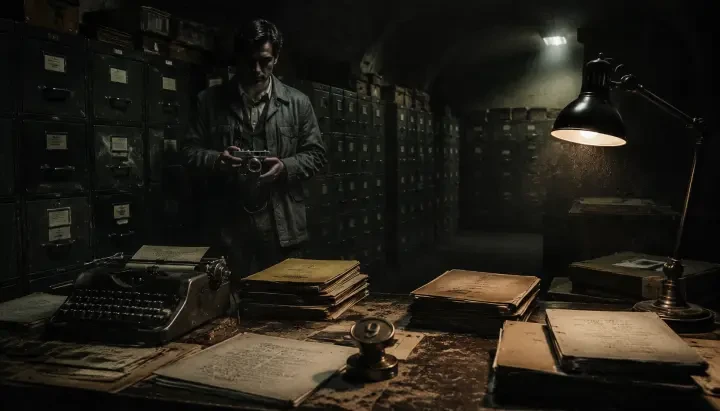
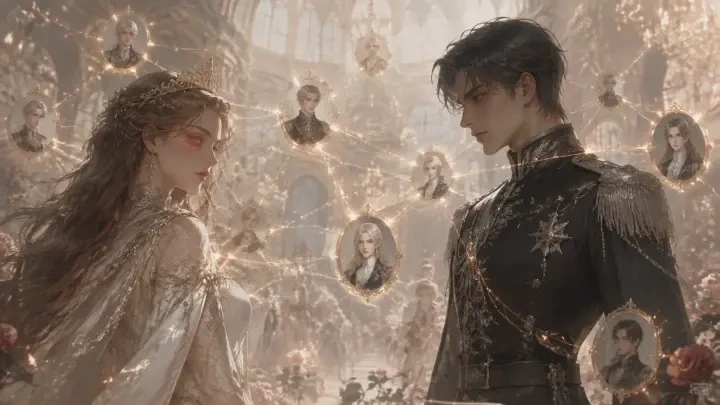
The fastest way to understand what this generator does is to walk through a finished one. Start from "Blood Oath Golden Crown — Character Relations Map: Interactive Network & Faction Web" to see a dark fantasy court rendered as a faction web — noble houses in tension, oath-lines drawn thick, betrayals dotted and dimmed until revealed. Open "Bureau Nine Archives: Restricted Case Files — An Interactive Paranormal Investigation" for the investigative variant, where the map behaves like a classified intranet: agents, informants and anomalies connected by case numbers you can click into. And "Harry Potter — The Wizarding Character Web: Explore Every Connection in the Magical World" shows what happens at scale — a huge, beloved cast organized by house, family line and allegiance without turning into spaghetti.
How It Works On Neta Studio
Write a one-sentence brief
"A dark fantasy court where three houses are bound by blood oaths and one is quietly poisoning the rest." That is genuinely all you need to begin — genre, cast shape and central tension in a single line.
Review the world board
Neta Studio expands your sentence into a structured board: characters with roles and motives, factions with crests, and a first pass at the relationship edges between them. Rename, merge, delete or add anyone before you commit.
Generate the map and the art
Hit generate and the platform lays out the graph, colors it by faction, writes edge labels, and produces matching character portraits and a cover in one consistent visual style.
Iterate on relationships
Tell it what to change in plain language — "make Ser Halden a double agent for House Vire," "hide the sibling link until Chapter 7," "split the Bureau into field and archive divisions." The graph re-renders around the change.
Publish and share
Ship the map to a public link that anyone can explore on desktop or phone. Readers pan, zoom, tap nodes and unlock hidden ties as they go.
Let others fork it
Fork "Blood Oath Golden Crown — Character Relations Map: Interactive Network & Faction Web" or any published map to inherit its structure and style, then swap in your own cast and keep building.
Example Prompts That Produce Great Maps
Good briefs name the tension, not just the setting. "A magic school" gives you a directory; "a magic school where a hidden bloodline splits two best friends into opposing houses" gives you a map with a fault line running through it. Try: "A generation ship where the engineering caste and the archive caste have not intermarried in eighty years, and one couple just did." Or: "A paranormal bureau where every agent who worked Case 09 has since gone missing." Or: "A crime family across three cities, mapped by who attended whose funeral." Each of those gives the generator a reason to draw specific, meaningful edges instead of generic "knows" lines.
AI Relationship Map vs. Generic Diagram Tools
| Task | Generic diagram / spreadsheet | Neta Studio |
|---|---|---|
| Getting the cast | You type every name and box by hand | One sentence proposes cast, factions and ties |
| Character art | Sourced separately, inconsistent styles | Portraits generated in one coherent look |
| Secrets and reveals | Not possible — everything is visible at once | Hidden edges that unlock as readers progress |
| Revisions | Manual re-layout after every plot change | Describe the change; the graph re-renders |
| Sharing | Exported image or file attachment | Live URL others can explore and fork |
Who This Is For
- Novelists and web serial authors — keep a sprawling ensemble straight across dozens of chapters, and give readers a companion map.
- Game masters — hand players a Bureau Nine-style intranet of leads, then reveal edges as they investigate.
- Screenwriters and showrunners — pitch a series bible where the ensemble's tensions are visible in one screen.
- Fandom creators — build something like "Harry Potter — The Wizarding Character Web: Explore Every Connection in the Magical World" for the universe you love.
- Game and VN studios — track affinity, betrayal and route branching before you write a line of dialogue.
- Teachers and book clubs — turn a classic novel's cast into a clickable web students can actually navigate.
The Details That Make A Map Worth Reading
The difference between a diagram and an experience is texture. Neta Studio writes edge labels with voice — "owes a life-debt," "burned the letters," "has not spoken since the siege" — instead of flat arrows. Factions get crests and palettes so a reader can parse the whole board at a glance. Nodes carry short dossiers, so clicking a minor character still rewards curiosity. And because everything is generated from the same world board, the tone of the Blood Oath court map feels nothing like the tone of the Bureau Nine archive — one reads as heraldry, the other as redacted paperwork.
A relationship map is not decoration. It is the shape of your plot, drawn early enough to fix.
Most structural problems in an ensemble story are visible on the graph before they are visible on the page — a character with no edges, a faction that never touches the protagonist, a betrayal with nothing built underneath it.
Start From A Finished Map Instead Of A Blank Page
Build Your Character Web Now
One sentence in, an interactive relationship graph out — publish it, share it, let your readers pull the threads.
Anatomy Of A Relationship Graph That Actually Explains A Story
- Typed edges — alliance, rivalry, kinship, mentorship, debt and secret ties each get their own colour and stroke, so a viewer reads the tension before reading a single label.
- Directionality — loyalty is rarely mutual. One-way arrows let you show who protects whom, and who only pretends to.
- Weight — thicker lines for defining bonds, hairlines for acquaintances, so the eye finds the spine of the story immediately.
- Faction clustering — nodes gravitate toward their house, bureau or school, and defectors visibly strain against the pull.
- Reveal state — hidden parentage or a double agent can stay dimmed until the reader clicks, preserving the twist.
- Node dossiers — click any character for a short profile, key scenes and a list of every connection in plain language.
Three Featured Maps, Three Different Problems Solved
| Featured map | Core challenge | What to steal from it |
|---|---|---|
| Blood Oath Golden Crown — Character Relations Map | Many houses, shifting loyalties, sworn oaths that outrank family | Faction webs with defector highlighting and oath-vs-blood edge types |
| Bureau Nine Archives: Restricted Case Files | Connections buried in documents, not stated outright | Evidence-first layout — nodes unlock as the reader opens case files |
| Harry Potter — The Wizarding Character Web | Huge beloved cast, dense overlapping ties | House clustering, search-by-name and focus mode to tame node clutter |


Iterating: The Second And Third Pass Matter Most
- "Split this into two acts" — generate a before-and-after view so readers can watch alliances collapse between acts.
- "Add a spoiler toggle" — one switch that reveals hidden parentage, double agents and unresolved debts.
- "Reduce to the ten characters who drive the plot" — a pitch-ready core graph you can screenshot for a deck.
- "Give every node a one-line motive" — turns a diagram into a usable writing-room reference.
- "Colour by faction, shape by survival status" — two data dimensions on one canvas without a wall of text.
Publishing, Sharing And Forking
A relationship map is not decoration. It is the argument your story is making about who owes what to whom — drawn so plainly that a stranger can see the tragedy coming.
That is why the featured works read like stories rather than org charts. Blood Oath Golden Crown makes you feel the weight of an oath. Bureau Nine makes you earn the connection. The Wizarding Character Web makes a decade of friendships legible in one glance.
Beyond Fiction: Non-Narrative Uses
Common Mistakes This Generator Prevents
- The hairball — every node connected to every node. Clustering and focus mode solve this the way the Wizarding Character Web does.
- Unlabelled lines — a line with no relationship type is a line with no information. Typed edges are required, not optional.
- Spoiling the twist — reveal states let you publish a map for chapter-one readers and chapter-thirty readers from the same source.
- Charts that rot — a published Neta Studio work is edited in place, so the link you shared last month is still correct today.
- Blank-page paralysis — fork Blood Oath Golden Crown — Character Relations Map instead of arranging boxes for an afternoon.
Frequently Asked Questions
How much detail do I need before I start? +
One sentence is enough to get a first draft. Name the world, the main tension and roughly how many characters matter. You refine everything afterwards on the world board — that is where names, factions and edge types get precise.
Can it handle a very large cast? +
Yes — that is the point of clustering, search and focus mode. Harry Potter — The Wizarding Character Web: Explore Every Connection in the Magical World is the reference build for large ensembles; open it to see how a big cast stays readable.
Can I hide spoilers from readers? +
Ask for reveal states. Hidden ties stay dimmed or locked until the reader chooses to unlock them, which is exactly the mechanic behind Bureau Nine Archives: Restricted Case Files — An Interactive Paranormal Investigation.
What if my relationships change over time? +
Generate act-by-act or season-by-season views from the same cast, then let readers switch between them. Watching an alliance edge turn into a rivalry edge is often more persuasive than any summary paragraph.
Do I have to start from scratch? +
No. Fork any published map — Blood Oath Golden Crown — Character Relations Map: Interactive Network & Faction Web is a strong starting point for political fiction — then swap the cast, edges and colour language for your own world.
How do I share the finished map? +
Publish it and send the link. It opens in any browser, works on mobile, and stays live as you keep editing — no exports to re-send every time a character changes allegiance.
One Sentence Away From A Map You Can Send To Anyone
Start Creating
Turn your cast list into a living network of alliances, rivalries and secret ties — in minutes, on a link you can share.