
The Best AI Dream-Heist Key Visual Generator — Impossible Architecture from One Sentence
The best AI dream-heist key visual generator: render folded cities, rotating corridors and frozen fortresses with GPT Image 2 and GPT Image 2.5. Proven on the Inception: Dreamshare world with four published works.
Generate a Dream-Heist Key Visual
A city that folds, a corridor with no floor and one witness who refuses to run — one brief, two models, four published key visuals.
What Is a Dream-Heist Key Visual Generator?
A dream-heist key visual generator is a text-to-image pipeline that produces poster-grade art for stories about professionals who break into minds. The subject is not a monster and not a spaceship. It is recognisable architecture under an impossible instruction: a street folded ninety degrees, a hotel corridor rotating in zero gravity, a city block dissolving into water, a fortress that exists only inside a memory. That is a different technical problem from fantasy. A fantasy prompt can hide errors in ornament — scales, runes, glowing gems. A dream-heist prompt cannot hide anything. The stone has to look like stone, the fold has to be geometrically legible, the bodies have to obey a gravity the audience can read, and the light has to come from a sky that still exists. The genre asks a model to be simultaneously surreal and structurally honest.
Why Impossible Architecture Is Hard to Prompt
Most models fail in one of two directions. Either they produce a fantasy dreamscape — floating islands, purple nebulae, glowing portals — which reads as an album cover and not as a heist. Or they produce a perfectly ordinary street with the word dream in the prompt and no visual consequence at all. The useful frame sits between them: a real city where exactly one law of physics has been politely rewritten.
Three things separate a dream-heist key visual from a generic surreal still. Legibility, because the viewer must be able to say what the impossible thing is in one glance. Material, because the fold only frightens if the stone still looks heavy. A witness, because someone has to stand there and confirm that this is not normal.
The Test World: Inception: Dreamshare
Every claim on this page was tested against a real canon: the Inception: Dreamshare world in Neta Studio. It has eight characters, six locations, five events and four factions — Cobb, Ariadne, Arthur, Eames, Mal, Fischer, Saito and Yusuf; the Atelier, the rain-soaked city, the rotating hotel, the snow fortress, the Mombasa chemist's den and Limbo. That is enough structure to brief a model precisely and enough ambiguity to keep the frames from looking like stills from one scene.
Era contemporary, oneiric · Tone architectural, restrained, procedural · Look semi-realistic painterly surrealism · Palette wet slate, brass, deep green, alpine white
What the Comparison Proves
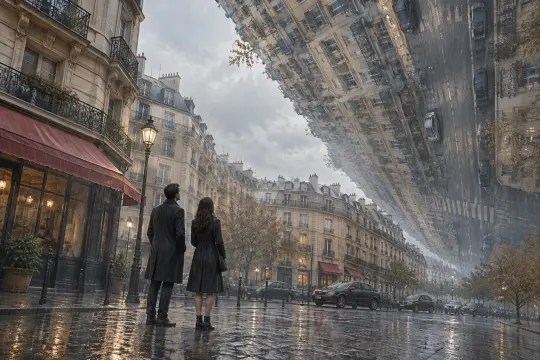
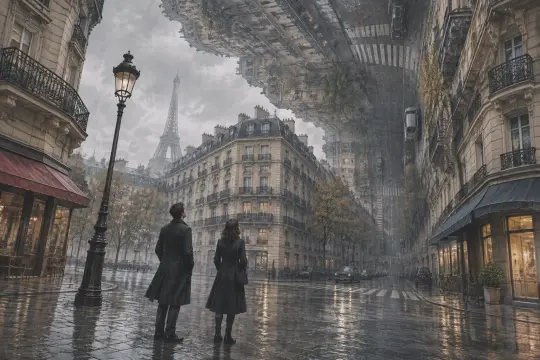
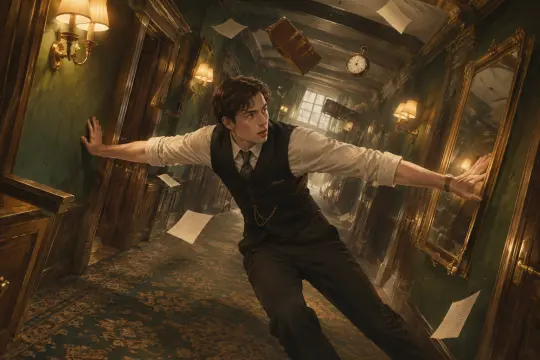
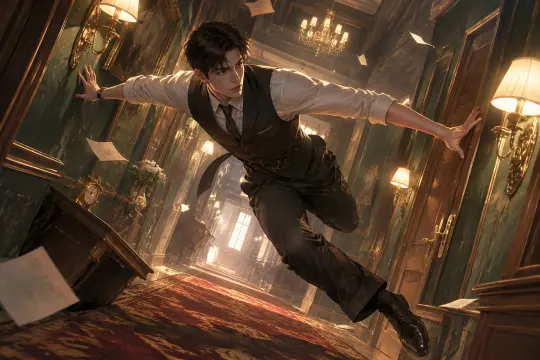
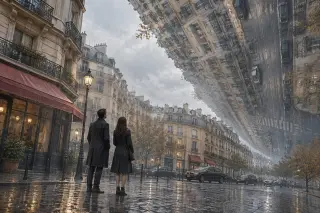
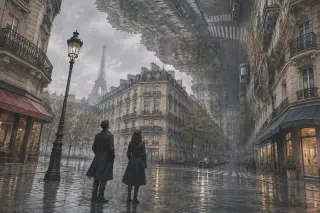
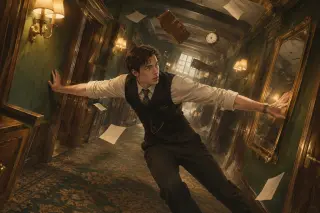
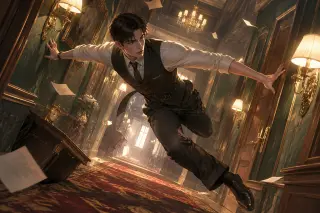
The same two briefs were run through GPT Image 2 and GPT Image 2.5. GPT Image 2 produced the document: awnings and balcony rails that survive the fold, crosswalk paint continuing across the lifted street, dust suspended like real matter in a corridor. GPT Image 2.5 produced the poster: a wider gesture, the Eiffel Tower as a scale anchor, a longer diagonal through the body, a composition that reads at two hundred pixels. The lesson is not that one model is better. It is that the genre needs both a document and a poster, and you should choose per surface.
The Six-Part Brief
Every prompt in this world is built from the same six clauses in the same order. The order is not decoration; it is how you keep a comparison honest. If the structure never changes, the differences you see belong to the model rather than to your wording.
Medium and genre
Semi-realistic painterly dream-heist key visual, cinematic wide shot. This locks the rendering system before anything else is described.
Place
Name a real city and a real street type: Haussmann boulevard, art-deco hotel corridor, alpine hospital above a frozen valley.
Operation
State the one broken law: folds over itself at a right angle, rotates in zero gravity, floods from below. One verb, no adjectives.
Witness
Two small figures in dark coats looking up. The witness gives scale and tells the audience how to feel about the geometry.
Physics and light
Wet cobblestones reflecting rooftops, floating dust, brass sconces against deep green, overcast light, thin rain.
Negative clause
No text, no logos, no glow, no particles. Removing fantasy ornament is what keeps the frame in the heist genre.
Clause by Clause: A Fold in Paris
The first test frame used a boulevard fold because it is the most legible impossible gesture in the canon. A street is a plane. Lift one end ninety degrees and the entire image becomes a statement about direction. The trick is to keep everything on that plane — awnings, balconies, cars, crosswalk paint — obeying the new orientation without turning into Escher decoration.
Working prompt. Semi-realistic painterly dream-heist key visual, cinematic wide shot: a Paris boulevard folding over itself at a right angle, a whole street of Haussmann facades, awnings and parked cars rising vertically into an overcast sky, wet cobblestones reflecting the upside-down rooftops, two small figures in dark coats standing on the pavement looking up, pale grey-blue light, thin rain, muted ochre and slate palette, restrained film grain, no text, no logos.
GPT Image 2 answered with a street you could walk on: the red awnings kept their sag, the iron balconies kept their rhythm, and the fold met the pavement at a seam that looks engineered rather than painted. GPT Image 2.5 answered with a wider composition, pulling the Eiffel Tower into the middle distance so the eye has a landmark to measure the fold against. Both are correct; they serve different surfaces.
Clause by Clause: A Corridor With No Floor
The second test frame used rotation because it tests the body rather than the city. A corridor is a container for a single direction; take that direction away and the human figure becomes the only stable object in the frame. The prompt must describe the pose precisely — braced between two walls, arms spread, weight distributed — or the model will produce a man flying, which is a different genre.
Working prompt. Semi-realistic painterly dream-heist key visual, cinematic interior: an art-deco hotel corridor rotating in zero gravity, doors and framed mirrors tilting away from the floor, a man in a dark waistcoat and rolled shirtsleeves braced between two walls, floating dust and loose sheets of paper, warm brass sconces against deep green walls, patterned carpet sliding sideways, hard one-point perspective, restrained film grain, no text, no logos.
The word braced is doing most of the work. It implies resistance, contact and muscle, which is exactly what separates a heist frame from a fantasy frame. Papers are the second signal: they hang instead of falling, and because paper is cheap and familiar, the audience instantly understands that gravity has been locally suspended.
The world runs on three palettes and each one tells the audience which level they are on. Wet slate and ochre for the city. Deep green and brass for the hotel. White, steel and cold blue for the fortress. Colour is the level indicator; the audience learns to read it within two frames, which lets later images skip exposition entirely.
Common Failures and Fixes
Most failed dream-heist prompts fail for one of four reasons, and each has a specific repair. None of them require a better model; they require a more concrete sentence.
Fantasy drift: glowing edges and floating islands — add no glow, no particles, overcast daylight. Escher wallpaper: too many impossible planes — restrict the prompt to one operation and one street. Floating bodies: no contact — use braced, gripping, shoulders pressed, weight on one foot. Pretty but empty: no witness — add two small figures in dark coats, backs to camera.
Detail or Atmosphere: Choosing a Model
Choose GPT Image 2 when the frame must survive a crop: store pages, thumbnails, UI cards, anything where architecture and material need to stay legible at small sizes. Choose GPT Image 2.5 when the frame is doing emotional work: a hero image, a share card, a poster where the gesture and the sky carry the story. For a world page, publish both. The comparison is more persuasive than either image alone, and it gives the reader a reason to trust the pipeline rather than the hype.
The End-to-End Workflow
Start from the world, not from a blank prompt box. Open the Inception: Dreamshare world, read the location entry you want to visualise, and copy its nouns into the six-clause template. Generate the same brief on both models, publish both frames as works of the world, and only then decide which one opens the page. The order matters: publishing first makes the comparison auditable, and the prompt stays attached to the image.
Open the world
Start at the Inception: Dreamshare studio and pick one location: the Atelier, the rotating hotel, the rain-soaked city or the snow fortress.
Copy the nouns
Use the location's own objects — boulevard, balcony, sconce, carpet, frozen valley — as the place and physics clauses.
Write six clauses
Medium, place, operation, witness, light, negative. Keep each clause to one sentence fragment.
Run both models
Generate the identical brief with GPT Image 2 and GPT Image 2.5 so the comparison measures the models, not the prompts.
Publish as works
Attach both frames to the world with prompt and model recorded, then compare them in public.
Explore the World
The world is public, the twenty-three atoms are editable, and the four key visuals are already published. Fork it, change the price of a mistake, move the fortress to a different mountain, or generate the frame that finally shows what Cobb sees when he looks at his own street. The comparison is live, so your version can sit next to the originals.
Build Your Own Dream-Heist Frame
Four published key visuals, one world, two models — your turn to add the next frame.