The Best AI Horror Visual Novel Generator
Craft suspense VNs — dread beats, jump-scare timing, branching fates.


Build Horror Visual Novels That Keep Players Up at Night
Generate psychological dread, branching choices, and jump-scare choreography from a single sentence. No scripting, no sprites, no engine.
Why Horror Visual Novels Demand Specialized AI
Horror visual novels live and die by pacing. A jump scare mistimed by two beats becomes comedy. A slow-burn mystery that rushes its reveal loses all tension. Generic AI story generators treat every genre the same — they output flat narrative beats with no understanding of suspense architecture, reveal timing, or the rhythm of dread. Neta Studio's AI is trained on the structure of horror: escalation curves, misdirection beats, the placement of false safety before the drop.
What Makes a Horror Visual Novel Work
- Tension pacing — quiet beats that let dread accumulate before the spike.
- Branching consequences — choices that shift trust, sanity, or survival odds.
- Visual anchors — character art, backgrounds, UI that signal genre and mood instantly.
- Dialogue rhythm — short, clipped lines for panic; ellipses and pauses for creeping unease.
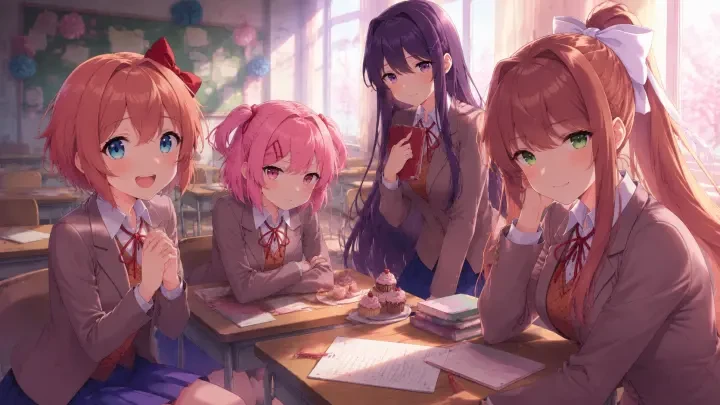
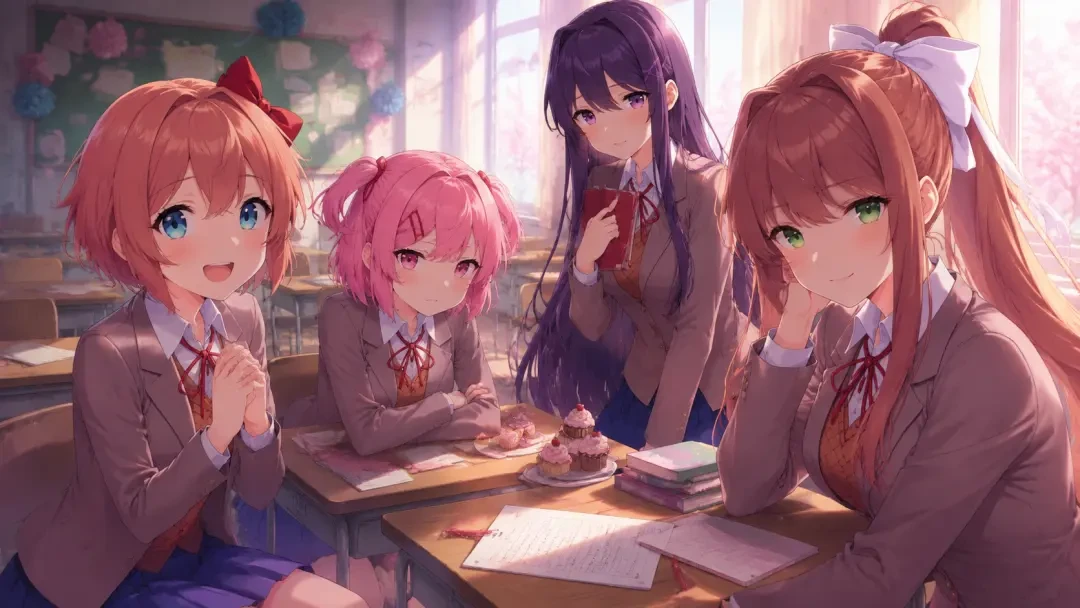
Neta Studio generates all of it. You write the premise in one sentence. The platform builds the world board — characters, locations, tone, narrative structure — then generates scenes with dialogue, choices, art direction, and pacing markers. Fork existing works like "Bloodborne — A Corpse, Left Alone: Gothic Horror Visual Novel" or "Just Monika: First Club Day" to start from a proven structure, then iterate until the atmosphere locks in.
How to Generate a Horror Visual Novel in Minutes
Write your one-sentence brief
Describe the setting, threat, and protagonist in plain language. Example: "A journalist investigates a cult commune where everyone smiles too much."
Review the world board
Neta Studio generates characters, locations, atmosphere tags, and narrative arcs. Tweak names, add constraints, lock tone.
Generate the first act
The AI writes dialogue, branching choices, scene descriptions, and pacing beats. Every choice affects trust, danger, or revelation timing.
Iterate scene by scene
Regenerate dialogue that feels too campy, adjust choice consequences, tighten the reveal sequence. The AI respects your edits and builds forward.
Add art and UI layers
Generate character sprites, backgrounds, and UI overlays that match the horror subgenre — gothic, psychological, body horror, cosmic dread.
Publish or fork
Share the final work, let others remix it, or fork a community horror VN to build your own variant.
Horror Subgenres the AI Understands
| Subgenre | Pacing | Example Beat |
|---|---|---|
| Gothic Horror | Slow dread | "The manor has too many locked doors." |
| Psychological | Escalating doubt | "Did I already meet this character?" |
| Survival Horror | Resource scarcity | "You have one flashlight battery left." |
| Cosmic Horror | Creeping insignificance | "The stars are wrong tonight." |
The AI adjusts dialogue density, choice consequence weight, and visual tone based on subgenre. Gothic horror gets ornate prose and slow reveals. Psychological horror loops back on itself with unreliable narration. Survival horror forces resource trade-offs in every choice branch.
Example Prompts That Generate Great Horror VNs
"A lighthouse keeper starts receiving radio messages from ships that sank decades ago."
This prompt gives the AI isolation, a ticking mystery, and a clear escalation path. The world board will generate fog mechanics, sanity markers, and branching dialogue with the voices.
"A student council president realizes the school festival has been repeating for three days, and no one else notices."
Time loop mysteries work because the AI can track variables across iterations. Each loop reveals new dialogue, shifts character trust, and tightens the noose around the cause.
Why Generic Story AI Fails at Horror
Start from Community Horror Works
Who This Is For
- Narrative designers — prototype branching horror scenarios without scripting every path by hand.
- Indie devs — generate visual novel content at production speed, iterate art and dialogue in parallel.
- Writers — test horror pacing and reveal timing before committing to a full screenplay or manuscript.
- Horror fans — build the story you wish existed, fork your favorite tropes, share variants with the community.
The Neta Studio Advantage
From Concept to Published Horror VN in One Session
Atmosphere Control: Mood, Pacing, and Dread
- Tension arcs — specify rising dread, false relief, or sudden terror and watch the narrative follow.
- Sensory layering — footsteps, flickering lights, distant whispers woven into scene description.
- Silence as weapon — the AI knows when to withhold, letting the player's imagination fill the void.
- Jump-scare setup — frame mundane actions that explode into horror at the perfect beat.
Branching Choices That Carry Weight
"I forked Twilight 6:17 — School Romance Mystery Visual Novel and rewrote the final act as pure psychological horror. The AI kept every character thread intact while turning the romance into obsession. The branching endings—three paths, each worse than the last—felt earned."
Community creators regularly fork published works, remixing tone, stakes, and outcomes. The world board preserves lore consistency while your new brief reshapes the horror.
Gallery: Featured Horror Visual Novels


Iteration: Refining Scares and Story Beats
- Scene-level regeneration — adjust one chapter's tone without touching the rest.
- Dialogue polish — heighten subtext, add coded warnings, layer in foreshadowing.
- Ending variations — generate multiple climaxes and choose the one that delivers maximum impact.
- Pacing tweaks — compress slow sections or stretch tension beats for greater effect.
Character Arcs Under Pressure
Publishing and Community Remixing
Neta Studio vs. Generic Story AI
| Feature | Neta Studio | Generic AI |
|---|---|---|
| Horror subgenre awareness | Gothic, cosmic, psychological, meta presets | Generic scary vibes |
| Branching path coherence | Lore-consistent across all endings | Contradictory outcomes |
| Tension control | Scene-by-scene pacing arcs | Random intensity spikes |
| Community forking | Preserve lore, remix tone and ending | Not supported |
| Iteration workflow | Scene-level regeneration, dialogue polish | Full rewrites only |
Real Use Cases: What Creators Build
- Gothic mansion mysteries — inheritance, curses, family secrets unraveling across branching investigations.
- Cosmic horror descents — sanity mechanics, forbidden knowledge, reality-warping revelations that recontextualize every prior choice.
- Slasher survival scenarios — group dynamics, resource scarcity, killer AI that adapts to player strategy.
- Psychological hauntings — unreliable narrators, memory distortion, scares that question what the player saw versus what happened.
- Meta-narrative horror — fourth-wall breaks, file corruption aesthetics, stories that acknowledge the player as complicit.
Frequently Asked Questions
Can I control how graphic the horror gets? +
Yes. Specify tone boundaries in your brief—psychological dread without gore, body horror with restraint, or explicit violence. The AI respects your content limits while maintaining tension.
How many branching paths can a horror VN have? +
The generator supports as many decision points and endings as your structure requires. Most effective horror VNs use 3–7 major branches with 2–5 distinct endings, but you can go deeper if the story demands it.
Can I remix an existing horror work without breaking its lore? +
Absolutely. Fork any published work—like Bloodborne — A Corpse, Left Alone or Just Monika: First Club Day—and the world board preserves its lore while your new brief reshapes tone, perspective, or ending.
Does the AI generate jump scares or only slow-burn dread? +
Both. Specify your pacing preference in the brief. The AI can deliver sudden terror, mounting unease, or a mix—complete with setup beats that make jump scares land harder.
How long does it take to generate a complete horror visual novel? +
A full first draft—world board, character arcs, branching narrative, multiple endings—generates in minutes. Iteration and polish depend on your detail level, but most creators finish publishable horror VNs in a single session.
Can I export the horror VN to play in a traditional visual novel engine? +
Neta Studio generates narrative content and structure. For engine integration, export your script and import it into Ren'Py, Twine, or your preferred VN platform.
Start Your Horror Visual Novel Now
Start Creating
Generate your first horror visual novel in minutes. No prompts library, no trial and error—just your vision and an AI that understands dread.