
The Best AI Interstellar Key Visual Generator — Space Opera Posters from One Brief
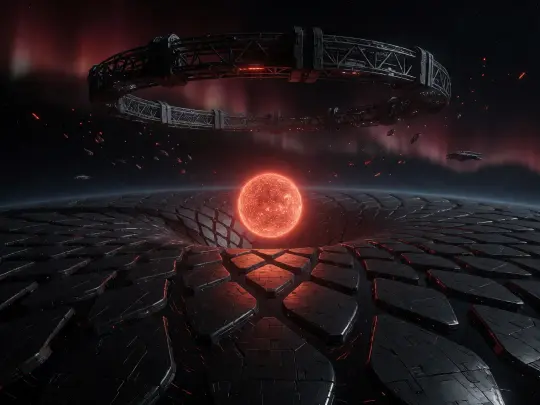
The best AI interstellar key visual generator: render space-opera posters of caged stars, ring habitats and tiny human figures with GPT Image 2 and Krea 2. Proven on The Meridian Debt with four published works.
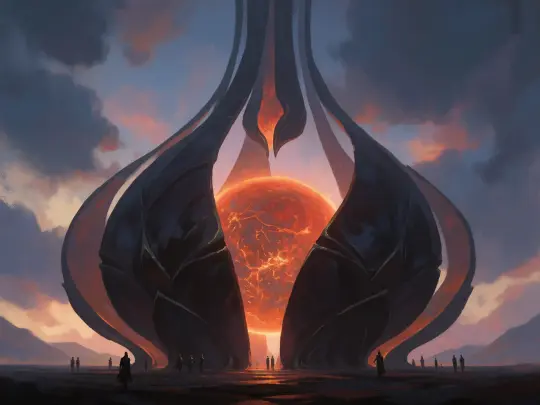
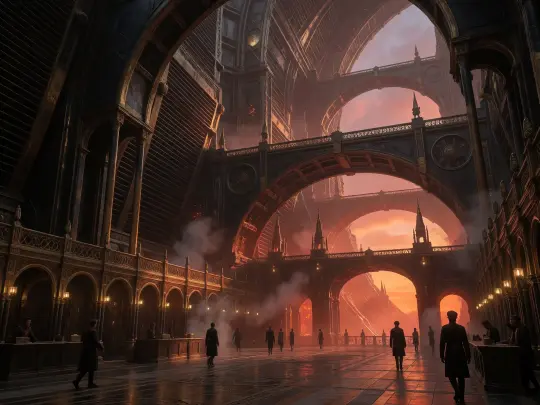
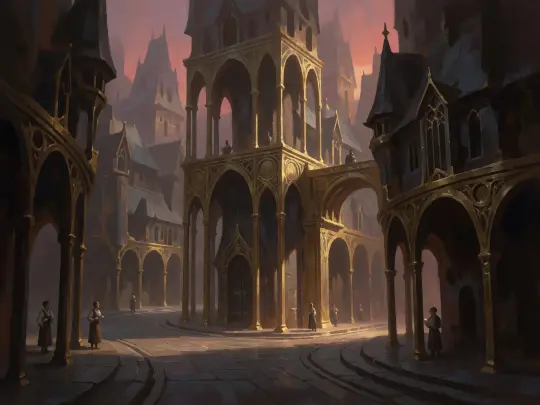
Generate an Interstellar Key Visual
A caged star, a ring habitat and a civilisation paying for light — one brief, two models, four published key visuals
What Is an Interstellar Key Visual Generator?
An interstellar key visual generator is a text-to-image pipeline that produces poster-grade science fiction art from a world brief rather than a generic prompt. You give it the scale object (a caged star, a ring habitat, a corridor through a sun), the human subject (an auditor, a pilot, a pilgrim), the location grammar (capital, station, vault, gate) and the light logic (rose-gold Core, cold blue Rim, un-light at the edge). The model returns a frame that could open a store page, a trailer or a visual novel. The difference between this and “sci-fi wallpaper” is specificity: the image has to belong to a place with rules.
Why Interstellar-Style Visuals Are Hard
Most models default to one of two failures. Either they produce clean, empty concept art — a beautiful spaceship with no society attached — or they produce moody neon chaos where nothing has a size. Interstellar-style imagery depends on a strict relationship between scale and intimacy: an enormous machine, a tiny human, and a light source that explains both. Without that relationship you get spectacle without stakes. With it, a single frame can carry four hundred years of fictional economics.
- Scale needs a witness. A star is only big if a person is small in the same frame.
- Light needs a price. The palette should imply who is paying for the brightness.
- Architecture needs a politics. A corridor is never just a corridor; it is a toll road.
- Awe needs a body. Without a human silhouette the image becomes a diagram.
The Test World: The Meridian Debt
Every claim on this page was tested against a real world: The Meridian Debt, an original interstellar-style space opera built in Neta Studio. Nine stars are held in lattice cages; nine transit corridors are bored through them; every crossing is charged against the star’s remaining life. The Core is rich in light and the Rim is permanently dim. The Sable Sun, the outermost lamp, has just lost forty years in a single night. That premise supplies everything a generator needs: a scale object, a social hierarchy, a palette and a deadline.
What the Comparison Proves
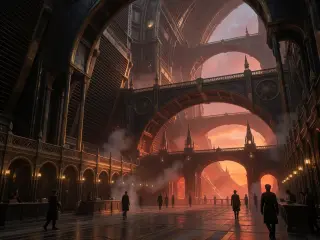
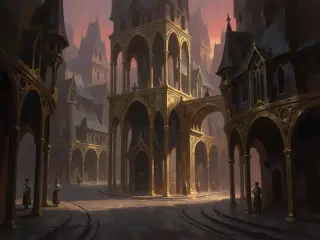
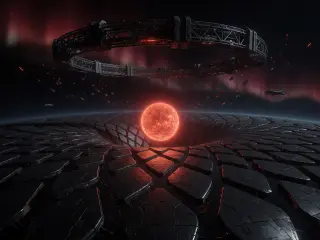
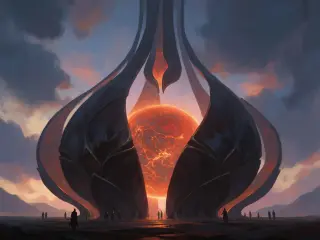
The same two briefs were run through GPT Image 2 and Krea 2. GPT Image 2 produced the structural frame: the radiator ring of Cinder Court, the stacked arches, the wet floor, the crowd reading as a crowd. Krea 2 produced the emotional frame: the black petals of the lamp cage, the molten core, the pilgrims as tiny marks in a vast rose-gold dusk. Both are legitimate key visuals. The useful conclusion is not that one model wins, but that a world set should specify which question each frame is answering before anyone presses generate.
The Six-Part Brief
An interstellar prompt works best as six ordered clauses. Order matters more than length because early clauses set the genre and the scale, while later clauses refine the subject. If you skip the scale object, the model gives you a character portrait with a space background. If you skip the human witness, you get a wallpaper. If you skip the light logic, you get generic teal-and-orange science fiction.
Genre and medium
“Interstellar-style space opera key visual, semi-realistic digital painting.” This locks the rendering system before anything else.
Scale object
The caged star, the ring habitat, the corridor through a sun. One enormous thing that explains the world.
Location grammar
Capital hall, welded station, cold archive, lamp approach. Each has its own composition and social rule.
Human witness
One figure or a small crowd, specified by role and silhouette: auditor, pilot, pilgrim, clerk.
Light logic
Rose-gold Core light, cold blue Rim light, or the un-light of the Tenth Meridian. Two sources at most.
Exclusions
No text, no watermark, no logo, no UI. Keep the frame publishable without retouching.
Subject Casting: One Human Against Scale
The human witness is not decoration; it is the measuring instrument. A lone auditor at the base of a lamp cage tells the viewer the cage is forty stories tall. A crowd of pilgrims on a black plain tells the viewer the plain is continental. Cast by silhouette and role rather than by face: a long coat, a ledger case, a pilot harness, a pilgrim’s lamp. The moment you specify a beautiful face, the model starts making a portrait and the scale collapses.
Location Grammar: Court, Station, Vault, Star
Four location types cover the genre, and each demands a different composition. The court is vertical and crowded: stacked arches, wet stone, warm light from above. The station is horizontal and improvised: welded hulls, cables, cargo, cold blue work lamps. The vault is deep and symmetrical: racks receding into darkness, one small figure, almost no colour. The star approach is wide and empty: a black horizon, a single enormous light, humans reduced to marks. Choose the grammar before you write adjectives.
Lighting a Caged Star
Interstellar-style lighting is economic, not decorative. The Core is lit by borrowed sunlight and therefore overexposed, rose-gold and slightly dirty. The Rim is lit by work lamps, emergency strips and reflected starlight, so it is cold, blue-grey and full of falloff. The lamp itself is a wound: a hot core inside a black structure, with the structure silhouetted rather than detailed. If you light everything evenly, you lose the politics. If you light only the star, you lose the humans.
- Core scenes: one warm key from above, rose-gold bounce from wet stone, cool shadow in the arcades.
- Rim scenes: cold ambient, one sodium work lamp, deep blue-black falloff, practical glints on metal.
- Lamp scenes: the star is the key, the cage is a silhouette, humans are rim-lit or pure black.
- The Tenth Meridian: no warm light at all — a seam of un-light that removes colour from everything near it.
A Reusable Prompt Template
Interstellar-style space opera key visual, semi-realistic digital painting. SCALE: [caged red dwarf / ring habitat / corridor through a star]. PLACE: [Cinder Court great hall / Rim Station Hallow dock / Quiet Archive rack / Sable Sun approach]. SUBJECT: [one auditor with a ledger case / a crowd of pilgrims / a pilot in a harness], small against the structure. LIGHT: [rose-gold Core light through arches / cold blue work lamps / molten star against black petals]. MOOD: elegiac, political, awe-struck; dust, steam, wet stone. COMPOSITION: cinematic wide, human figures in the lower third, negative space for a title. NO: text, watermark, logo, UI, cartoon shading.
Common Failure Modes
Four problems account for most failed generations. The fix is almost always a clause, not a new seed. If the image looks like a spaceship poster, add a human witness. If it looks like a character portrait, remove the face and add the scale object. If it looks like generic sci-fi, replace one colour with a social signal: rose-gold for the Core, sodium orange for the Rim. If it looks flat, name the two light sources explicitly.
- Wallpaper syndrome: no human witness. Add a silhouette in the lower third.
- Portrait drift: too much face. Describe role, coat and posture instead.
- Generic teal-orange: no economic palette. Tie colour to who pays for the light.
- Flat spectacle: no light logic. Name one key and one fill, then stop.
Detail or Atmosphere: Choosing a Model
Choose GPT Image 2 when the frame must survive a crop: store pages, thumbnails, UI cards, anything where architecture and crowd need to stay legible at 300 pixels wide. Choose Krea 2 when the frame must carry a feeling before it carries information: hero banners, title sequences, mood boards, pitch decks. For a world set, run both and publish both. The comparison is not indecision; it is a production asset that shows the range of the canon.
The End-to-End Workflow
Start from the world, not from a blank prompt box. Open The Meridian Debt, read the location entry you want to visualise, copy its nouns into the six-clause brief, generate with both models, and publish the frames back to the world as works. The world supplies consistency; the models supply variation; the published works supply proof. That loop is the whole method.
Open the world
Read the atoms: characters, locations, events, factions and rules.
Choose one beat
Not “the world”, but “the night the Sable Sun lost forty years” or “shift change at Cinder Court”.
Write the six clauses
Genre, scale, place, subject, light, exclusions. Keep it under 120 words.
Render both models
GPT Image 2 for structure, Krea 2 for atmosphere, identical brief.
Publish and compare
Attach both frames to the world as works, then let the next person fork it.
The world is public, the twenty-five atoms are editable, and the four key visuals are already published. You can fork it, change the price of a crossing, invent a tenth faction, or generate the frame that finally shows the Tenth Meridian. The fastest way to learn this genre is to inherit a world that already has rules and then break one of them on purpose.
Start Creating
Four published key visuals, one world, two models — your turn to add the next frame.