
The Best AI Path of Exile Key Visual Generator — Wraeclast from One Brief
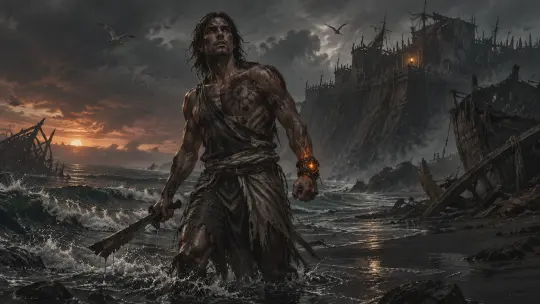
The best AI Path of Exile key visual generator: render Wraeclast posters of exile landings and surgical cathedrals with GPT Image 2 and Krea 2. Proven on the Wraeclast world with four published works.
Generate a Path of Exile Key Visual
A branded exile, a black shore and one lantern — one brief, two models, four published key visuals.
What Is a Path of Exile Key Visual Generator?
A Path of Exile key visual generator is a text-to-image pipeline that produces poster-grade dark fantasy art from a world brief rather than a generic prompt. You give it the place (the Twilight Strand, Lunaris Temple, the Belly of the Beast), the witness (an exile, a surgeon, an acolyte), the light logic (a lantern against storm-grey, chandeliers against gem-blue) and the price of magic (scars, gem-inlay, bloodied linen). The model returns a frame that could open a store page, a trailer or a visual novel. The difference between this and "dark fantasy wallpaper" is specificity: the image has to belong to a place with rules.
That distinction matters more for Path of Exile than for most franchises, because the canon is unusually material. Virtue gems are mined objects. Thaumaturgy is surgery. Exile is an administrative punishment. A model that only knows "gothic" will give you fog and spires; a model working from atoms can give you a beach that looks like a prison sentence and a cathedral that looks like an operating theatre.
Why Wraeclast Is a Hard Test for Any Image Model
We built the Wraeclast world specifically to stress-test two image models on a canon-heavy brief. It contains 24 atoms: eight characters, six locations, six events and four factions. That structure removes the usual escape hatch. You cannot hide a weak model behind a vague prompt, because the brief already names the place, the person, the hour and the light.
- Three readable planes. The beach frame needs body, surf and fortress in one composition without merging into mush.
- Prop density. The temple frame needs jars, trays, chandeliers and acolytes that stay distinct at 1024 pixels wide.
- Palette discipline. Charcoal, sea-green, rust and gem-ember — one accent colour, not a rainbow.
- Emotional temperature. The horror has to read as calm and administrative, not as screaming.
The Six-Clause Prompt Recipe
Both prompts on this page use the same six-clause structure. It is the most reliable way we have found to keep a dark fantasy frame from collapsing into generic fog.
Genre and medium
"Cinematic dark fantasy key visual, semi-realistic painterly digital painting." Lock the rendering system before anything else.
Place with a rule
Name one location from the world and what it is socially: a wreck-line refuge, a surgical cathedral. One place only.
Witness
One figure specified by role, costume and posture: a branded exile in salt-soaked rags, a thaumaturgist in a bloodied white gown.
Price of magic
Show what power costs: an ember virtue gem at the wrist, glass jars of red and blue gems, warm drains in a marble floor.
Light logic
Two sources at most. A lantern against storm-grey. Chandelier candlelight against cold gem-blue.
Negative clause
"No text, no watermark, no logo, no border." Repeat it every time; models forget.
Prompt 1: The Twilight Strand, Word for Word
This is the exact brief sent to both models, unchanged. It aims at the world's front door: the first step out of the surf, with Lioneye's Watch as a destination the exile has not reached yet.
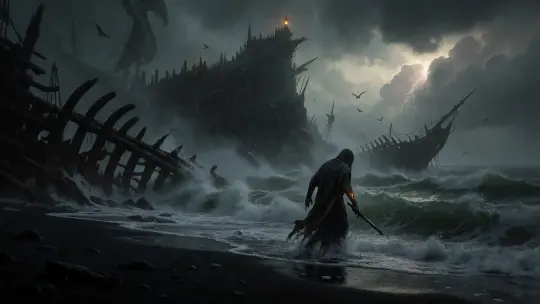
Cinematic dark fantasy key visual for the world of Wraeclast, Path of Exile canon. The Twilight Strand at dusk: a branded exile wades out of black surf onto a shore of wet black sand, a broken blade in one fist, salt-soaked prison rags clinging to the body. Behind, the ribs of shipwrecked hulls and a palisade fortress built from wrecked ships (Lioneye's Watch) stands on the cliff, one lantern burning in the mist. Storm-churned sea, cold spray, gulls, distant thunderheads. Faint ember-orange glow of a virtue gem at the exile's wrist. Semi-realistic painterly digital painting, gothic survival atmosphere, desaturated charcoal, sea-green and rust palette, dramatic rim light, deep shadows, 16:9 theatrical composition, sharp foreground detail, atmospheric depth. No text, no watermark, no logo, no border.
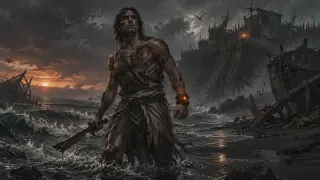
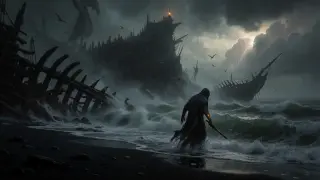
GPT Image 2 resolves the brief as a character study: the surf breaks around the knee, the blade drips, the rags have weight and the fort is distant but legible. Krea 2 resolves it as a landscape: the beach is enormous, the hull is a whale skeleton, the figure is small and the weather does the acting. If your page needs a face, take the first. If it needs a world, take the second.
Prompt 2: Lunaris Temple, Word for Word
The second brief flips the problem from weather to interior crowd control. Same recipe, same clause order, completely different failure modes: merged props, melting instruments, chandeliers that read as scribble.
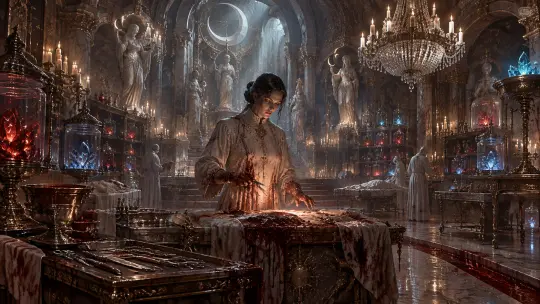
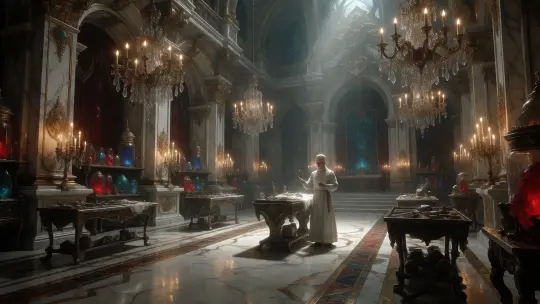
Cinematic dark fantasy interior key visual for the world of Wraeclast, Path of Exile canon. Lunaris Temple, Piety's marble surgical cathedral: a vast baroque hall of white marble and tarnished gold, crystal chandeliers hanging low over iron operating tables, surgical instruments laid out on trays, glass jars of glowing virtue gems in red and blue lining the shelves. A calm thaumaturgist in a bloodied white surgeon's gown stands at the centre, scalpel in hand, face lit from below. Warm blood-dark drains run in channels across the polished floor, candlelight and cold gem-light mixing. Semi-realistic painterly digital painting, gothic baroque horror, bone-white, deep crimson and teal palette, volumetric light shafts, 16:9 theatrical composition, intricate detail. No text, no watermark, no logo, no border.
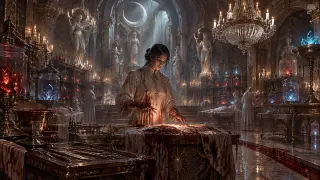
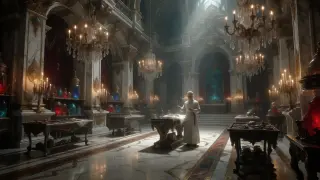
This pair is the clearest demonstration of the trade-off. GPT Image 2 gives you a frame you can zoom into and argue about — the instruments are instruments, the gem jars are labelled by colour, the drains are visibly warm. Krea 2 gives you a frame you can put behind a title card — the architecture breathes and the light has volume. For a store page, use GPT. For a trailer plate, use Krea.
GPT Image 2 vs Krea 2 on the Same Brief
| Dimension | GPT Image 2 | Krea 2 |
|---|---|---|
| Native size used | 2048×1152, high quality | 1024×576 |
| Prompt fidelity | Very high — clause by clause | Medium — picks the emotional core |
| Detail under crop | Holds at full bleed | Softens below 50% crop |
| Atmosphere | Good, slightly forensic | Excellent, painterly |
| Iteration speed | Slow | Fast |
| Cost per frame | Higher | Low |
What Each Model Is Actually Good At
The useful question is not which model is better, but which model is better at the shot you need. The Wraeclast test makes the split unusually clear.
- Choose GPT Image 2 when the frame contains hands, blades, instruments, jewellery or gem-inlay — anything a viewer will zoom into and judge.
- Choose Krea 2 when the frame is about distance, weather, architecture and silhouette — anything intended to sit behind a title.
- Choose both when you are publishing a comparison, because the two answers often teach you what the world actually is.
- Do not choose either for legible typography. Neither model is a layout tool; add text after the render.
Settings That Survive the Crop
- GPT Image 2: 2048×1152, quality high, no reference image. Default aspect is the 16:9 theatrical frame already used by store pages.
- Krea 2: 1024×576 is its practical maximum for 16:9. Do not ask for 2048; it clamps to 1024 and you lose the composition you planned.
- One place per frame. Two locations in one prompt produces a diorama, not a poster.
- Keep the negative clause last. It is the final instruction the model reads and the one it forgets first.
Common Failures and How to Fix Them
| Symptom | Cause | Fix |
|---|---|---|
| Generic fog and spires | No named atom | Name one location and one character from the world |
| Merged props | Too many objects at low resolution | Raise resolution or cut half the props |
| Costume drift | Vague clothing words | Specify material and state: salt-soaked rags, bloodied linen, tarnished gold |
| HDR rainbow palette | No palette clause | Name three colours and one accent |
| Text artifacts | Model trying to add a title | Reinforce the negative clause and add text afterward |
How to Publish a Key Visual as a Work
Pick the atom pair
One character, one location. For Wraeclast, the pairings that read best are the Exile at the Twilight Strand and Piety at Lunaris Temple.
Run both models
Same prompt, native settings. Keep both outputs even if one looks weaker — the comparison is the content.
Name the frame
Use the pattern "Location — Moment Key Visual (Model)". Titles are how viewers find the work later.
Write the differentiator
One sentence on what this model did with the brief. "The room as evidence" versus "the room as stage" is enough.
Publish and link
Each frame becomes a public work with its own share page, attached to the Wraeclast world so the whole set stays together.
What Makes a Wraeclast Image Read as Wraeclast
Fans of the setting recognise it through small material facts, not through a logo. Get three of these into a frame and it will read as the right continent even if the composition is unusual.
- Gems as objects, not glow. Virtue gems are cut stones in metal settings, held in jars, socketed in flesh.
- Shelter built from wrecks. Lioneye's Watch is a wall of ship ribs; the beach is a graveyard of failed rescue.
- Church marble with warm drains. Lunaris Temple is beautiful and functional in the worst way.
- Exile clothing as biography. Salt, blood, rope belts, prison brands, one boot that does not match.
Frequently Asked Questions
Short answers for people evaluating whether this pipeline fits their project.
- Can I use these images commercially? Treat the frames as your own renders and check the terms of the model and platform you generate on.
- Do I need reference images? No. All four Wraeclast works were generated from text only.
- How long does a frame take? Krea 2 returns quickly enough to iterate in a session; GPT Image 2 is slower and better suited to final frames.
- Can I generate other scenes from the world? Yes — the Belly of the Beast, the Vaal Ruins and the Western Forest are all defined atoms with their own palettes.
Start Creating
Four published key visuals, one world, two models — your turn to add the next frame.
Open the Wraeclast Studio
Fork the world, rewrite an atom, and render the scene that is missing.