The Best AI Silent Hill Horror World Generator — Build the Fog World from One Prompt
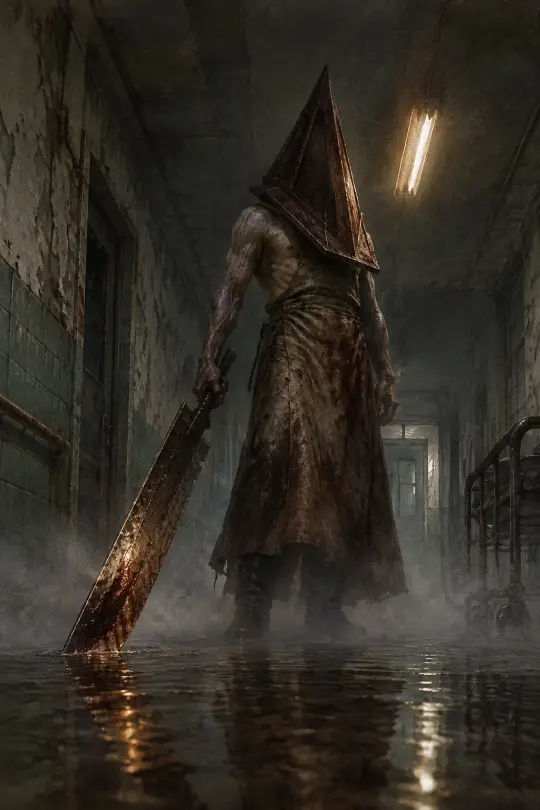
The best AI Silent Hill horror world generator: build a fog-drowned town with 28 atoms and publish-to-world key visuals. Proven with a real public world and four GPT Image 2 vs Krea 2 works.
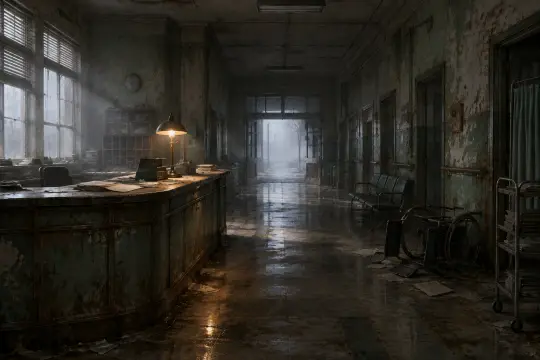
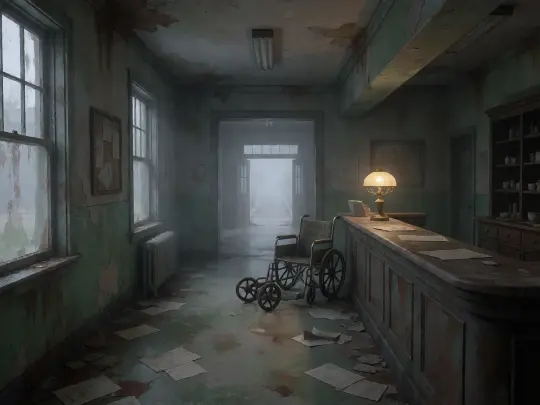
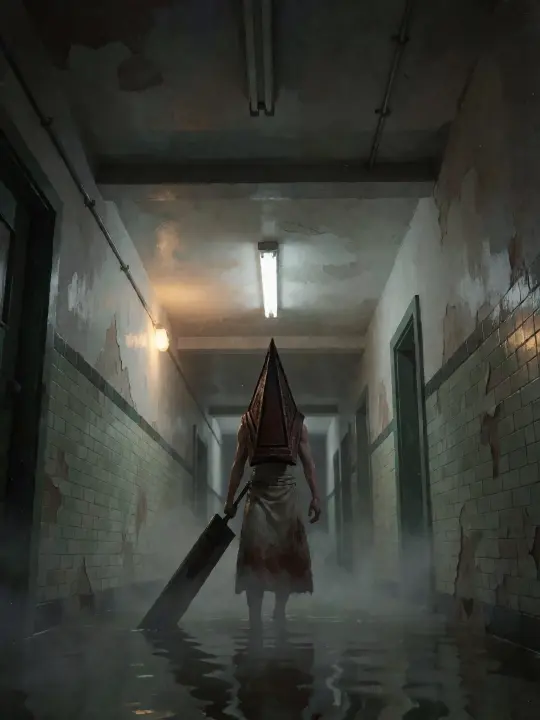
Build a Silent Hill Horror World in Minutes
Turn one sentence about a fog-drowned town into a complete horror world with key visuals — no concept team, no asset hunt.
What Is a Silent Hill Horror World Generator?
A Silent Hill horror world generator is a world-building pipeline that produces the thing the games are actually made of: a town with rules, a cast with secrets, a map with bad rooms in it, and an art direction that makes all of it look like it belongs to the same fog. On Neta Studio you describe the town once, and the studio writes the atoms, keeps the visual style consistent, and renders key visuals from the same canon.
Why Horror Worlds Need a World, Not a Prompt
A single scary image is a mood. A horror world is a machine for producing moods. The difference is structure: the fog world has a rule, the Otherworld has a trigger, the hospital has a history, and every character is carrying something the town intends to make them say out loud. When you generate from atoms instead of from scratch, the tenth image still looks like the first one — same palette, same logic, same town.
The Silent Hill Test Case
This build uses Silent Hill as a public test case. The world already contains 4 laws, 8 characters, 6 locations, 6 events and 4 factions, all generated and editable. Four key visuals were then produced from two prompts and two models, so you can see exactly what the generator does before you commit a session to it.
What You Get with a Silent Hill World Generator
- 28 editable atoms — laws, characters, locations, events and factions, each with a description and a card.
- A locked visual style — semi-realistic painterly horror: fog-grey mid-tones, oxidised green, rust, one amber light.
- Key visuals from the same canon — character posters and location establishing shots that match each other.
- Two-model comparison — GPT Image 2 for detail, Krea 2 for atmosphere, same prompt, published side by side.
- A forkable starting point — inherit the town, rewrite what you want, keep the parts that work.
Step by Step: From One Sentence to a Playable Town
Write the one sentence
A lakeside town wrapped in fog that calls people who are carrying something they have not named.
Let the atoms generate
The studio drafts laws, characters, locations, events and factions. Edit any card you disagree with.
Lock the palette
Fog-grey, oxidised green, rust, one warm amber lamp. The style card keeps every render on-canon.
Pick two subjects
One character (the executioner) and one location (Brookhaven reception) is enough to prove the world.
Run both models
Same prompt through GPT Image 2 and Krea 2. Publish both; the comparison is the deliverable.
Fork and extend
Add rooms, add survivors, or turn the world into a scene with dialogue and endings.
The Fog World Aesthetic
Silent Hill has one of the most copyable palettes in horror, which is why it is a good test: if the generator can hold this, it can hold anything. The rules are simple. Desaturate almost everything. Let grey daylight do most of the work. Keep one warm source — a desk lamp, a fluorescent tube, a pyre — and make it small. Put fog where a road should be. Let the architecture be ordinary; the wrongness comes from what is missing, not what is added.
Casting the Executioner
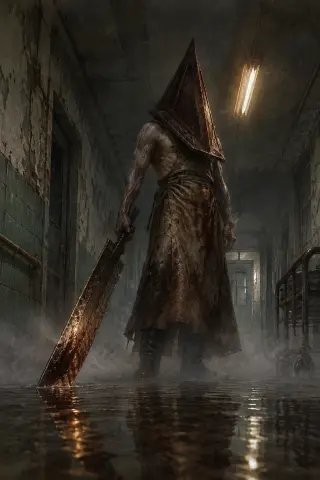
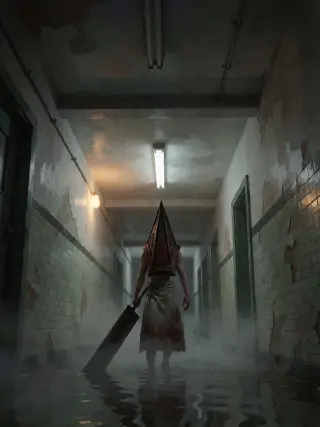
Every horror world needs one image that does the selling. For Silent Hill that image is Pyramid Head: a faceless punishment with a rusted helm and a greatsword he drags because he is in no hurry. The prompt matters less than the staging — put him at the end of a corridor, give him one hard light, put water on the floor so the blade reflects, and let the architecture press in. The figure does the rest.
Detail vs Atmosphere: GPT Image 2 vs Krea 2
GPT Image 2 renders the evidence: rust on the helm, grout between tiles, the weight of the blade, the reflection that tells you the floor is flooded. It is slower and it rewards specificity. Krea 2 renders the feeling: softer edges, more air, a warmer grade, a composition that trusts negative space. Run both with the same prompt and you get two legitimate directions for the same world — one for a store page, one for a mood board.
Real Outputs from a Real World
These are not mock-ups. All four images below are published works of the same public world, generated from the same two prompts.
- Pyramid Head — GPT Image 2 — a low-angle character poster in a flooded Brookhaven corridor.
- Pyramid Head — Krea 2 — the same brief as a wide establishing shot, figure at the vanishing point.
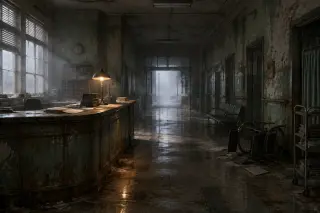
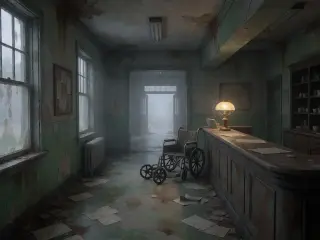
- Brookhaven reception — GPT Image 2 — a lit desk lamp, paperwork, an overturned wheelchair, fog in the doorway.
- Brookhaven reception — Krea 2 — the same room in fog-grey window light, paper across the floor.
From World to Game
A world is not a gallery. Once the atoms exist, the same canon can become a playable scene: dialogue for Harry, a choice for James, a corridor for the executioner, three endings and one door you should not open. Because the art, the rules and the cast come from the same source, the game looks like the key visuals without a second art pass.
Prompts That Work
- Place + absence — "an abandoned county hospital reception at dawn, one brass lamp still lit, fog standing in the doorway, no people".
- Figure + patience — "a faceless executioner in a rusted pyramid helm at the end of a flooded corridor, greatsword dragging in the water, one flickering tube light".
- Style cues — "semi-realistic painterly horror, fog-grey mid-tones, oxidised green tile, rust accents, one warm amber highlight, visible brushwork, fine film grain".
- Framing cues — "low-angle vertical character poster" or "symmetrical one-point perspective, wide establishing shot".
- Exclusions — "no text, no watermark, no logo" keeps the frame usable as a background or cover.
Who It Is For
Indie horror developers who need a town before they need a team. Visual-novel writers who want backgrounds that match their cast. TTRPG keepers building a one-shot in a fog. Fan creators who want a coherent world instead of a folder of unrelated images. If you can describe the town in one sentence, this generator can give you the laws, the cast, the map and the first four key visuals.
Limitations to Know
This is a fan-made, unofficial world — it is not affiliated with the owners of Silent Hill, and it should be used for personal, experimental or clearly transformative work. GPT Image 2 is slower than Krea 2 and can over-texture skin and fabric if the style cue is vague. Krea 2 will not render legible text. Gore-adjacent prompts can be refused; the strongest results here came from absence, not from blood.
Start Creating
Fork the world, keep the fog, and replace anything you do not believe. The four works on this page are the proof of concept; the next twenty are yours.
Start Creating
Four published key visuals, 28 atoms and two models — all from one public world.