
The Best AI Snake Game World Generator — Arcade Cosmologies From One Brief
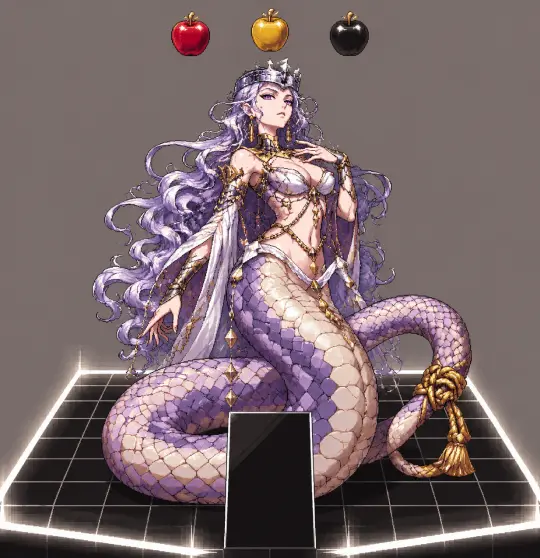
The best AI snake game world generator: turn a one-line arcade brief into a playable world of serpents, fruit and white-light walls. Tested with GPT Image 2 and Krea 2 on The Serpent Circuit, with four published key visuals.
Generate an AI Snake Game World
A wall, an apple, a serpent that cannot stop growing — one brief, two models, four published key visuals.
What Is an AI Snake Game World Generator?
An AI snake game world generator is a text-to-world pipeline that turns the oldest arcade loop — move, eat, grow, avoid yourself — into a setting with characters, factions, locations and rules. You give it the scale object (a forty-by-forty lattice, a spiral pit, a wall of white light), the human-or-serpent subject (a champion, a heretic, a herald apple), the location grammar (arena, vault, gate, scoreboard) and the light logic (black lattice, neon rim, warm dust). The generator returns a world that could open a game trailer, a visual novel or a store page. The difference between this and "neon snake wallpaper" is specificity: the image has to belong to a place with laws.
Why Snake-Game Worlds Are Hard
Most models default to one of two failures. Either they produce clean, empty arcade art — a glowing grid, a cute snake, no society attached — or they produce chaotic neon where nothing has a size. Snake-game imagery depends on a strict relationship between appetite and geometry: a small creature, an enormous board, and a fruit that explains both. Without that relationship you get a screensaver. With it, a single frame can carry an entire theology of growth.
- Scale needs a witness. A serpent is only long if something in the frame is short.
- Appetite needs a price. The palette should imply who pays for the fruit.
- Geometry needs a politics. A wall is never just a wall; it is an executioner.
- Nostalgia needs a body. Without a readable silhouette the image becomes a UI mockup.
The Test World: The Serpent Circuit
Every claim on this page was tested against a real world: The Serpent Circuit, an original arcade-cosmology epic built in Neta Studio. Serpents of light are born from a coin slot and measured in segments; the sky is a scoreboard; the weather is the drop of fruit; the horizon is four walls of white light called the Edge. The aristocracy of length, the Long Line, has held the top score for as long as anyone remembers. The Orchard blesses every apple. The Uncoiled bite off their own segments and preach that the short will inherit the Grid. That premise supplies everything a generator needs: a scale object, a social hierarchy, a palette and a deadline.
What the Comparison Proves
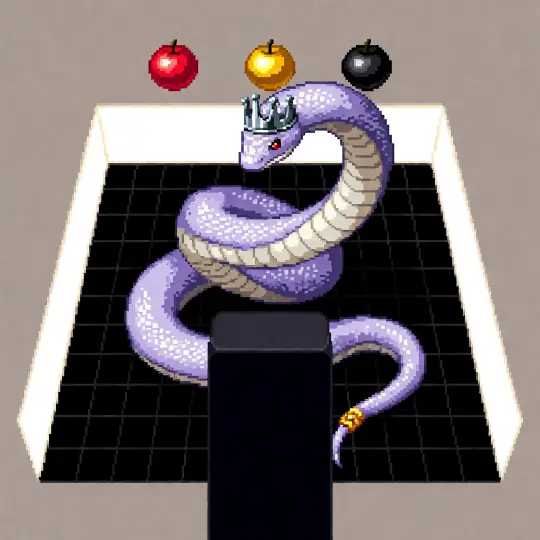
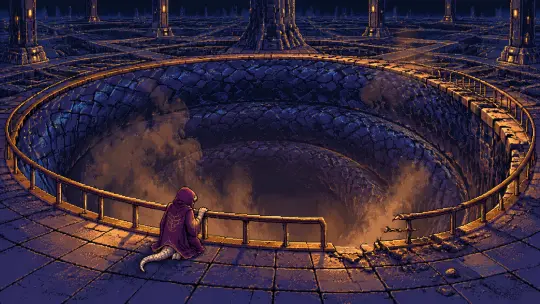
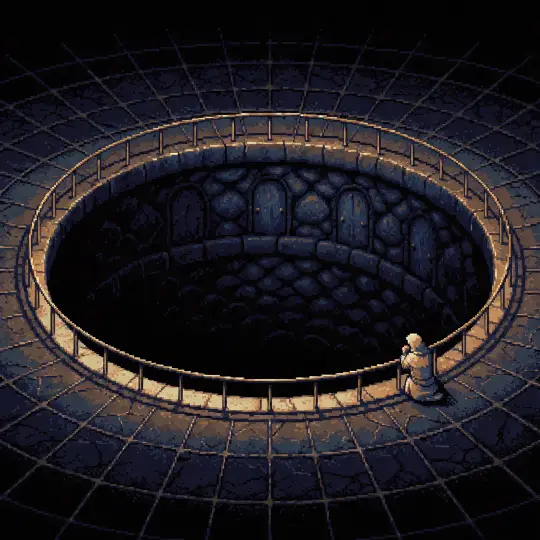
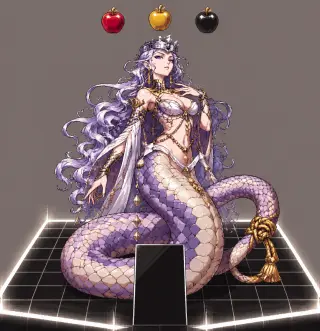
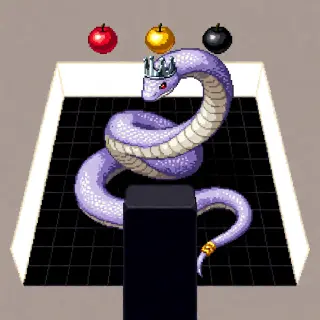
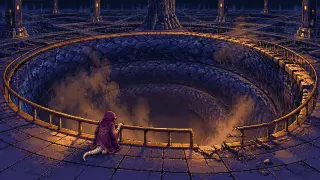
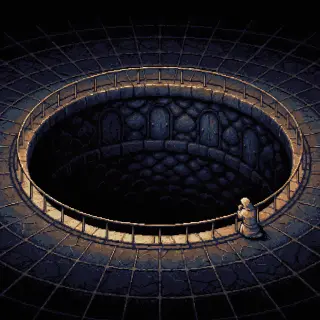
The same two briefs were run through GPT Image 2 and Krea 2. GPT Image 2 produced the structural frame: the scale rows of Vess, the chrome crown-plate, the three trophy fruits, the stone courses of the Coil Well, the tiny pilgrim at the railing. Krea 2 produced the emotional frame: the clean serpent silhouette, the knotted tail, the cold top-down spiral, the Grid fading into black. Both are legitimate key visuals. The useful conclusion is not that one model wins, but that a world set should specify which question each frame is answering before anyone presses generate.
The Six-Part Brief
A snake-world prompt works best as six ordered clauses. Order matters more than length because early clauses set the genre and the scale, while later clauses refine the subject. If you skip the scale object, the model gives you a character portrait with a grid background. If you skip the witness, you get a wallpaper. If you skip the light logic, you get generic teal-and-magenta arcade art.
Genre and medium
"1990s arcade fighting-game sprite illustration, character key visual." Lock the rendering system before anything else.
Scale object
The forty-by-forty lattice, the spiral pit, the four white walls. One enormous thing that explains the world.
Location grammar
Arena, vault, gate, scoreboard. Each has its own composition and social rule.
Subject
One serpent or one pilgrim, specified by role and silhouette: champion, heretic, herald, warden.
Light logic
Black lattice, cold white edge, warm amber dust. Two sources at most.
Exclusions
No text, no watermark, no logo, no UI. Keep the frame publishable without retouching.
Subject Casting: One Serpent Against Scale
The subject is not decoration; it is the measuring instrument. A lone champion coiled on a forty-by-forty Grid tells the viewer the board is a stage. A tiny hooded pilgrim at the rim of the Coil Well tells the viewer the pit is a cathedral. Cast by silhouette and role rather than by face: a chrome crown-plate, a knotted tail, a hooded robe, a ledger. The moment you specify a beautiful face, the model starts making a portrait and the scale collapses.
Location Grammar: Grid, Well, Edge, Gate
Four location types cover the genre, and each demands a different composition. The Grid is flat and legible: a black lattice, four glowing walls, a monolith at the south end. The Coil Well is deep and circular: a spiral throat, a railing, warm air rising. The Edge is wide and empty: white planes, black beyond, a serpent reduced to a mark. The Insertion Gate is vertical and ceremonial: a coin slot two serpents tall, chipped chrome, a new arrival tangled in her own segments. Choose the grammar before you write adjectives.
Lighting a Neon Arcade Afterlife
Arcade lighting is economic, not decorative. The Grid is lit by its own lattice — a faint cold glow from below, a white rim from the four walls, and a single warm key on the subject so the scales read. The Coil Well is lit from inside: warm dust and amber vapour rising out of a black throat, with the railing catching a hard rim. The Edge is lit by deletion: pure white planes with no falloff, so anything near them loses colour. If you light everything evenly, you lose the theology. If you light only the neon, you lose the bodies.
- Grid scenes: cold lattice glow from below, white wall rim, one warm key on the serpent.
- Well scenes: amber dust as the key, deep blue-black falloff, hard rim on the railing.
- Edge scenes: white planes, no bounce, subjects reduced to silhouettes.
- Scoreboard scenes: black glass, one column of pale light, names as thin bright marks.
A Reusable Prompt Template
1990s arcade fighting-game sprite illustration, [character / location] key visual. SCALE: [forty-by-forty lattice / spiral pit / four white walls]. PLACE: [the Grid / the Coil Well / the Edge / the Insertion Gate]. SUBJECT: [one champion with a knotted tail / one hooded pilgrim], small against the structure. LIGHT: [cold lattice glow + warm key / amber dust + hard rim]. EXCLUDE: no text, no lettering, no watermark, no UI.
Common Failure Modes
Four problems account for most failed generations. The fix is almost always a clause, not a new seed. If the image looks like a screensaver, add a subject with a body. If it looks like a character portrait, remove the face and add the scale object. If it looks like generic neon, replace one colour with a social signal: bone-white for the aristocracy, bruised violet for the heretics, amber for the priesthood. If it looks flat, name the two light sources explicitly.
- Screensaver syndrome: no subject. Add a silhouette in the lower third.
- Portrait drift: too much face. Describe role, crown and posture instead.
- Generic neon: no economic palette. Tie colour to who pays for the fruit.
- Flat spectacle: no light logic. Name one key and one rim, then stop.
Detail or Atmosphere: Choosing a Model
Choose GPT Image 2 when the frame must survive a crop: store pages, thumbnails, UI cards, anything where scale rows and crowd need to stay legible at 300 pixels wide. Choose Krea 2 when the frame must carry a feeling before it carries information: hero banners, title sequences, mood boards, pitch decks. For a world set, run both and publish both. The comparison is not indecision; it is a production asset that shows the range of the canon.
The End-to-End Workflow
Start from the world, not from a blank prompt box. Open The Serpent Circuit, read the atom you want to visualise, copy its nouns into the six-clause brief, generate with both models, and publish the frames back to the world as works. The world supplies consistency; the models supply variation; the published works supply proof. That loop is the whole method.
Open the world
Read the atoms: characters, locations, events, factions and rules.
Choose one beat
Not "the world", but "the night the Black Apple appeared" or "shift change at the Scoreboard".
Write the six clauses
Genre, scale, place, subject, light, exclusions. Keep it under 120 words.
Render both models
GPT Image 2 for structure, Krea 2 for atmosphere, identical brief.
Publish and compare
Attach both frames to the world as works, then let the next person fork it.
The world is public, the 26 atoms are editable, and the four key visuals are already published. You can fork it, change the price of a crossing, invent a fifth faction, or generate the frame that finally shows the other side of the Edge. The fastest way to learn this genre is to inherit a world that already has rules and then break one of them on purpose.
Start Creating
Four published key visuals, one world, two models — your turn to add the next frame.