Wordle Alternatives — 12 Free Games Like Wordle, Ranked and Playable
Make your own wordle alternatives
The best Wordle alternatives, ranked — each one playable free in your browser. Multi-board word games, maths puzzles, geography and more, no download.
Wordle is one five-letter board, six guesses, one puzzle a day. The best Wordle alternatives keep that loop and change exactly one variable: how many boards you are solving, what kind of feedback you get back, or what material you are guessing over. Every game on this page runs in a browser tab, needs no download, and puts nothing behind an app store.
This page ranks the field we could verify by playing. Each entry gets a one-line rule summary and where it runs. Our own games are in the list and marked as ours, because a ranking written by a studio that ships games has to say where its own products sit. Nothing here is ordered by traffic. We cannot see other publishers' analytics, and neither can anyone outside those dashboards.
How We Ranked These
Three criteria, applied in order. Playability in the browser comes first: we loaded each game in a clean profile with no cookies and no account, and measured the distance from page load to the first keystroke that registered on the board. A game that opens a full-screen newsletter modal before your first guess is a game you will not open twice.
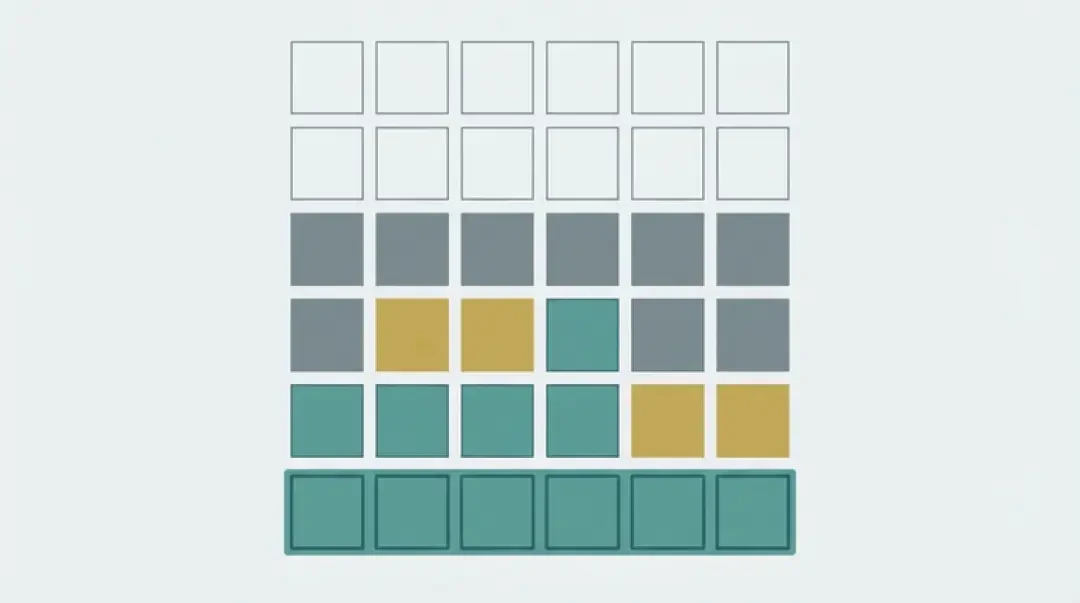
Second, the strength of the core loop. A good daily has three properties. A bounded board, so the whole state is visible at a glance: a 5x6 tile grid, four groups of four, one globe. Deterministic feedback, so the same guess always produces the same response and nothing hinges on a timer or an animation you might miss. And a cadence, one puzzle per day on a fixed reset, because the waiting is what turns a puzzle into something you talk about.
Third, account friction. A sign-in wall before the first guess is a demotion. A sign-in prompt after the puzzle, for streaks and history, is not. Local storage plus a copyable result string beats a profile page every time. And the disclosure: Neta Studio publishes some of the games below. They rank highly because they pass the same three checks, and every one of them is labelled as ours in the list. Where we could not verify a mechanic by playing it, we say so rather than filling the gap with an assumption.
- Playability in-browserLoads with no download, accepts a guess with no account, and stays legible at 360 pixels wide.
- Loop integrityBounded board, deterministic feedback, one puzzle per day on a fixed reset hour.
- Account frictionSign-in required to play demotes a game. Sign-in optional for stats does not.
The Best Wordle Alternatives (Playable)
The list alternates between games we make and games we do not, so the field stays visible instead of curated. Each entry is one rule summary plus where it runs. The top three are what we would hand to someone who finished today's Wordle and wants a second daily today.
Ranked is doing real work here. These are ordered by how likely we think you are to still have the tab open on day three, not by visits, installs or revenue.
1. Quordle — four boards, nine guesses
Four five-letter words solved at once. You type one guess and it is scored against all four boards, so a letter can come back green on one and grey on the other three. Nine guesses for the set, one puzzle a day, no account. Playable free in the browser on its own site.
2. The Cyclops' Island — ours, and not a word game
One of ours. There is no board and no guess: it is a small 3D island you move around in a browser tab, loading with no download and no account. It sits this high because it satisfies the same ritual as Wordle — open one fixed thing once a day, spend four minutes, close it — while changing the material completely. If what you liked was the habit rather than the letters, start here.
3. Connections — sixteen words, four groups, four mistakes
Sort sixteen words into four hidden groups of four, with four mistakes allowed. The feedback is coarser than letter tiles: a group is right or wrong, nothing in between, so you cannot triangulate a single letter. That coarseness is the difficulty, not a side effect of it. Published by The New York Times, playable without signing in, one puzzle a day.
4. Agent Sprite Forge — ours, a creation daily rather than a guessing daily
Also ours. You describe a character in a sentence and get a sprite plus its animation set, ready to place into a world. There is nothing to guess and no streak to protect. It is on this list because a large part of the pull of a daily is one bounded input and one concrete output, and this is the shortest path to that in our stack.
5. Globle — name countries, no guess limit
A globe with a hidden target country. Every country you name gets coloured by how close it is to the answer, running from dark red far away to pale yellow nearly there, and you keep guessing until you land on it. With no try budget, a wrong guess costs information instead of a life, which changes the tension entirely. One country a day, free in the browser.
6. Waffle — swap tiles, five words at once
A waffle-shaped grid of intersecting five-letter words. You do not type guesses; you swap tiles, with a fixed budget of swaps and bonus swaps for tiles that end up in the correct place. It is the only entry here where the board is spatial and lexical at the same time. One grid a day, in the browser.
7. Mini World — ours, a world you open rather than a puzzle you solve
The smallest of our world templates: a compact 3D scene you can walk around in a tab, generated from a written description by the 3D game builder. No daily answer, no six-guess ceiling. It is here for the reader who wants one fixed thing to open each day that is not a grid of tiles.
8. Worldle — a country silhouette, six guesses
You get the outline of a country and six attempts. Every wrong answer comes back with distance, direction and a proximity percentage, so the feedback is geometric rather than lexical. It is the entry here that plays better on a phone than on a laptop, because one image and six typed country names fit any screen.
Wordle Alternatives for a Harder Challenge
Difficulty in this genre is not a slider. Each game below changes one specific thing about the Wordle loop, and the difficulty comes from that change rather than from a timer, a score multiplier or a shrinking window.
Three families. Multi-board games multiply the constraints you have to satisfy while handing you less information per board. Semantic games replace a finite alphabet with a vector space, so a guess is no longer right or wrong, only near or far. Maths games keep the tile grid and swap the symbol set, which removes the common-letter instincts most players have already built.
Multi-board: Quordle and Octordle
Quordle is four boards and nine guesses. Octordle is eight boards and thirteen guesses. The arithmetic is the whole story: nine guesses across four words is 2.25 guesses per answer against Wordle's six, and thirteen across eight is closer to 1.6. Every guess has to earn its row in more than one place, which is why the fixed two-word opener that works fine on Wordle starts burning rows here. Who it is for: players who have stopped guessing and started executing a memorised opening.
Semantic distance: Semantle
You guess words and the game rates each one by how close it sits to a hidden target in a vector space, usually shown as a warmth score and a rank among the thousand nearest neighbours. No letter feedback, no length constraint, no try limit. The first ten guesses feel like noise, then the distances start clustering and the topic appears before the word does. It is the hardest daily on this page and the one that punishes a lazy opener hardest.
Adversarial: Absurdle
Absurdle keeps a set of every possible answer and, after each guess, prunes it to whichever remaining subset is least helpful to you. There is no fixed target and no six-guess ceiling; you play until the game runs out of room to be difficult. It is the best diagnostic for your own Wordle intuition, because it shows you which of your guesses only worked while the answer happened to be a common word.
Maths: Nerdle and Mathler
Both keep the coloured tile grid and swap the alphabet for digits and operators. Nerdle gives you eight tiles and six guesses for an equation that has to balance. Mathler gives you six tiles and six guesses for an equation that has to evaluate to a stated number. The symbol space is smaller than twenty-six letters, which makes the opening easier and the endgame tighter, and order plus operator precedence carry meaning, so letter-frequency habits do not transfer. Who it is for: players who like the deduction and are tired of English.
Wordle Competitors Compared
Every row was checked by playing the game in a clean browser profile, logged out, no extensions. The columns are the ones that change how a daily actually feels: what you are guessing over, how much board you have to fill, how many attempts you get, and whether anything stands between you and the first move.
Read the tries column per board rather than per day. Absurdle has no ceiling because it has no fixed target — you stop when the game is forced. Connections is the only row where feedback arrives per group instead of per tile, which is why four mistakes is a tighter budget than it looks. Our own titles are absent from the table on purpose: The Cyclops' Island, Mini World and Agent Sprite Forge are browser worlds and a sprite tool, with no board to count and no score state. None of the games listed asks you to create an account before your first guess; the ones that prompt at all prompt after the puzzle, for streaks.
| Game | Mechanic | Boards per day | Tries | Account needed | Playable in-browser |
|---|---|---|---|---|---|
| Wordle | 5-letter word, colour feedback | 1 | 6 guesses | No | Yes |
| Quordle | 4 words solved in parallel | 4 | 9 guesses | No | Yes |
| Dordle | 2 words, guesses shared | 2 | 7 guesses | No | Yes |
| Octordle | 8 words solved in parallel | 8 | 13 guesses | No | Yes |
| Waffle | Swap tiles on a 5-word grid | 1 grid | 15 swaps | No | Yes |
| Connections | Sort 16 words into 4 groups | 1 | 4 mistakes | No, optional for stats | Yes |
| Nerdle | 8-tile equation that balances | 1 | 6 guesses | No | Yes |
| Mathler | 6-tile equation equal to a target | 1 | 6 guesses | No | Yes |
| Semantle | Word similarity by vector distance | 1 target | Unlimited | No | Yes |
| Absurdle | Adversarial target that narrows against you | 1 | Until the game is forced | No | Yes |
| Globle | Country guess with proximity colouring | 1 | Unlimited | No | Yes |
| Worldle | Country from a silhouette, distance clues | 1 | 6 guesses | No | Yes |
Build Your Own Instead
The parts that fail in production are not the puzzle logic. They are the duplicate-letter evaluation, the timezone on the reset, and storage access throwing in a private window. Fix those three and your daily behaves like the ones above.
- Board and input systemStore the board as a 2D array of cells with four states: empty, absent, present, correct. Bind physical keys through KeyboardEvent.code rather than keyCode, so a non-QWERTY layout does not move your letters, and render an on-screen keyboard under the grid for phones.
- Daily seedHash a fixed date string into an index over your answer list. Use the UTC date, not the local one: on local time a player in Auckland gets tomorrow's puzzle while a player in Los Angeles is still on today's. On UTC, everyone rolls over together and you still need no server.
- Feedback evaluationEvaluate each guess in two passes. First mark exact matches and remove those letters from the pool, then mark present letters against what is left. A single pass lights up duplicates that are not in the answer: guess EERIE against THERE and the green and amber tiles will lie to you.
- Share string and statsSerialize the result as an emoji grid plus the puzzle number, and keep the streak under a versioned localStorage key such as daily.v1.streak. Handle storage being unavailable — private windows and full quotas throw — and fail to a plain result string instead of an error on the share button.
01
Write the prompt as a spec, not a wish: board size, answer list size, try count, feedback rules, reset hour, and what the share string contains.
02
Example prompt: Build a daily word puzzle on a 5x6 grid. Answers come from a fixed list of 500 five-letter words. Six tries. Green means right letter in the right position, amber means right letter in the wrong position, grey means the letter is not in the answer. Everyone gets the same word, resetting at 00:00 UTC. Show an on-screen keyboard under the grid. Keep the streak in local storage with no login. Add a share button that copies an emoji grid and the puzzle number.
03
Paste it into the 3D game builder and generate. You get a world you can play in the tab before you change a single setting.
04
Freeze the answer list and the seed function before you share the link. Change either mid-stream and the puzzle number stops meaning one word, so anyone who already played got a different answer from the person they sent it to.
05
Test the two cases that break first: a guess with a repeated letter, and the rollover at the reset hour. Then play a full round on a 360-pixel-wide viewport with the on-screen keyboard open.
06
Publish. If you want a scene around the puzzle rather than a bare grid, remix Mini World or The Cyclops' Island as the world the board sits inside, and use Agent Sprite Forge for a character that reacts to a win or a loss.
Walk into the world it belongs to
A sprite is a character with nowhere to stand. The last step is the one nobody else offers: take the sheet you just built and put it in a world someone can walk around in — a small island, a planet, a rainy street corner. Every world on this site was made from one written description and published as a page you can play.
FAQ
What is the best Wordle alternative? +
Quordle is the closest match: same six-guess deduction, same colour feedback, four boards instead of one and nine guesses instead of six. If you want the difficulty turned up rather than the board count, Semantle replaces letters with semantic distance and gives you no try limit at all.
Are Wordle clones free? +
The browser dailies listed here load and accept a guess without payment, download or account. Where a site prompts for sign-in, it is for streaks and history after the puzzle is finished, and play continues either way.
Why do Wordle clones look the same? +
The loop forces the layout. A 5x6 tile grid has to stay legible at 360 pixels wide, the on-screen keyboard eats roughly the bottom third of a phone viewport, and three feedback states have to be distinguishable without a legend. Everything else is decoration.
Is there a harder Wordle? +
Yes, and the difficulty comes from one change each time. Multi-board games like Quordle and Octordle give you fewer guesses per answer. Semantle gives you no letters and no limit, only similarity ranks. Absurdle prunes its answer set against you after every guess, so there is no fixed target to find.
Can I make my own Wordle-style daily? +
Yes. The 3D game builder in Neta Studio turns a written description into a playable Three.js world in the browser, and a single-player daily needs no server: the answer list and the date-to-index function can both live in the page. Write the board size, answer list, try count, reset hour and share format into the prompt before you generate.
Which Wordle alternatives work on a phone? +
All of them, because they are browser games rather than app installs. The practical limit is the on-screen keyboard and tile size: multi-board games like Quordle and Octordle shrink four or eight grids into one screen, which gets cramped at 360 pixels wide. Image-led games like Worldle and Globle are the easiest on a small screen.
Back to the 3D Game Builder
All 31 finished 3D worlds, games and scenes live on one page — every one of them playable.