Zelda Fan World Generator — Build a Playable Hyrule From 26 Atoms
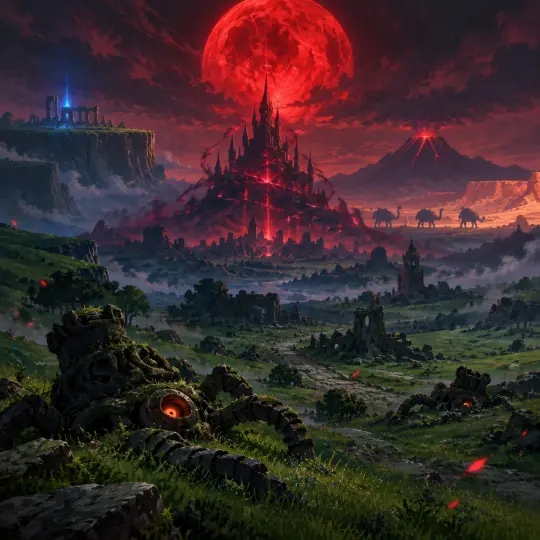
Build a playable Zelda fan world on Neta Studio: 26 editable atoms, a failing seal, six locations, four factions and four published key visuals generated with GPT Image 2 and Krea 2.
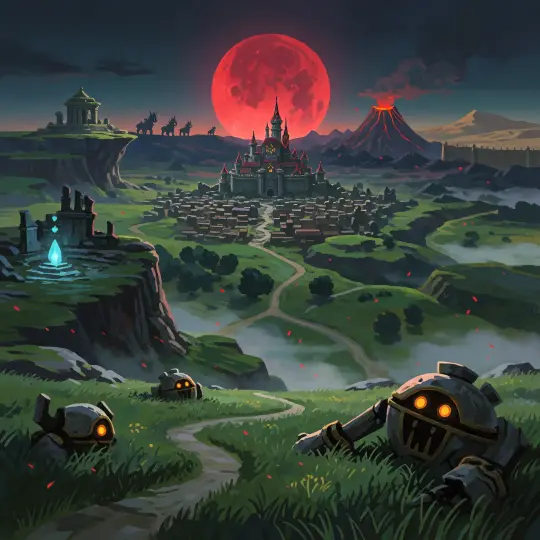
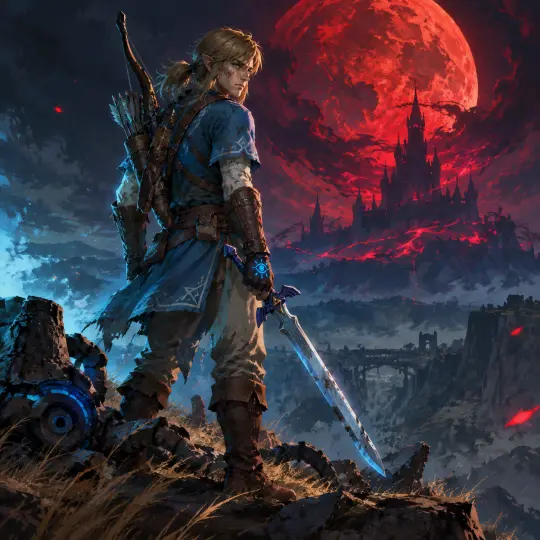
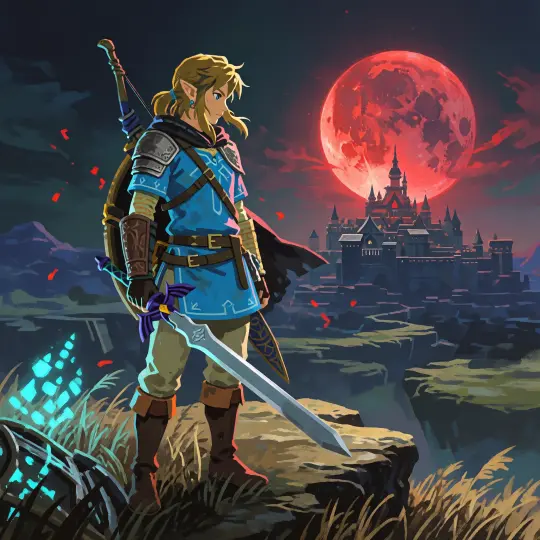
A Zelda fan world generator is not a random Hyrule name machine. It is a way to turn the parts of the setting you actually care about — the seal, the tribes, the buried machines, the knight who woke too late — into a world you can edit, illustrate and play. This page shows the one we built on Neta Studio: Hyrule: The Blood Moon Age, 26 atoms, four published key visuals, two image models.
The use case is specific: you have a fan idea that is bigger than a one-shot and smaller than a wiki. You want a playable world with canon you control, art that matches it, and pages you can share. The generator gives you a structured world — characters, locations, events, factions, relics — and a style contract that keeps every new image on-model. Everything below was generated from the same world on Neta Studio, with GPT Image 2 and Krea 2 working from identical prompts.
| Quick facts | |
|---|---|
| Use case | Build a playable Zelda fan world / campaign setting |
| Output | 26 editable atoms, a style contract, 4 key visuals, shareable pages |
| World | Hyrule: The Blood Moon Age |
| Time to first session | One sitting — the world arrives populated |
| Models | GPT Image 2 for depth and material; Krea 2 for posters and colour |
| Best for | Game masters, fan writers, roleplay tables, fan-art direction |
| Not for | Official Nintendo product, canon enforcement, wiki completeness |
What a Zelda Fan World Generator Actually Makes
It makes decisions. A fan world usually starts as a mood — 'Hyrule but darker', 'Zelda but the seal breaks' — and stalls there because a mood cannot answer a player's question. The generator forces the mood into objects: who is in the room, where the room is, what happened to the last person who tried, who disagrees, and what object everyone wants. Once those are objects, they can be edited, illustrated and argued with.
- A cast with positions Eight characters, each holding a different answer to the same problem — not a party, a government.
- A map with costs Six locations with weather, distance and a strategic reason to go there.
- A history that explains the present Five events that answer why the machines attack and why nobody is coming to save the princess.
- Four incompatible factions The engine of the campaign: every ally has an arithmetic you may not accept.
- Three relics that ask questions Objects that change what the party wants, not just what they can do.
- A style contract and four images Enough visual direction to keep every new generation on-model.
Start From the Seal, Not the Sword
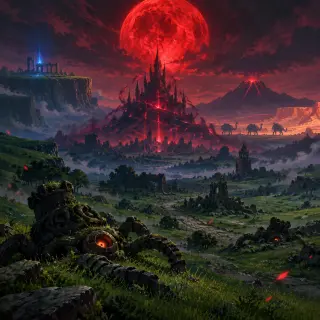
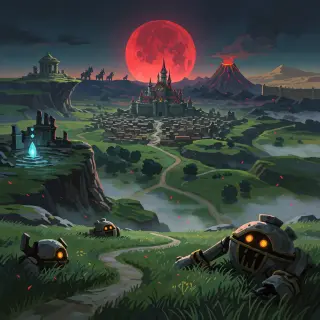
The mistake almost every Zelda fan world makes is starting with the hero. A hero is a solution; a world is a problem. Start with the one fact that makes the kingdom unstable and let the hero arrive late. In this world the fact is simple: Zelda's sealing power is the only thing holding Calamity Ganon inside the castle, and it is failing. Break the seal and you save her and loose the Calamity. Hold it and she burns as a lock.
The Four Pressures That Replace a Plot
You do not need a villain with a plan. You need four pressures that keep moving when the players do nothing. In Hyrule: The Blood Moon Age they are: the seal (a countdown), the tribes (a negotiation), the machines (a standing threat), and the knight (a question nobody can answer). Each pressure has its own clock and its own spokesperson. A session is what happens when two of them collide.
- The seal — thins every night; the only pressure that cannot be negotiated with.
- The tribes — Zora, Rito, Gerudo and Sheikah each have a price, and none of the prices are money.
- The machines — Divine Beasts and Guardians still patrol; the map is hostile without a villain.
- The knight — Link's missing memory is a resource, a liability and a mirror for every faction.
Build the Map From Six Places
Pick locations by the decision they force, not by how cool they look. A good location in this world answers one of the four pressures and refuses to answer the others. Six is enough for a campaign and small enough that travel still means something. Add a seventh only when the party has exhausted an argument, not when the map looks empty.
Cast the Table, Not the Party
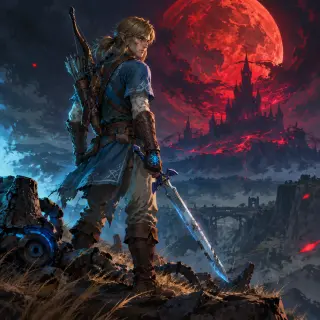
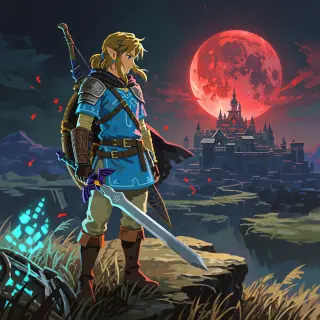
A fan world generator should give you a table of people who disagree, not a balanced party. The eight characters here are chosen so that any three of them in a room produce a scene. Zelda is the stake, Link is the question, Ganondorf is the weather, Impa is the instruction, Purah is the loophole, Rhoam is the guilt, Riju is the inherited debt, and Sidon is the friend who will not stop helping.
Pick a Century, Then Break It
History in a fan world is a set of explanations, not a timeline. Choose the events your players will trip over and write only those. Five is enough: the original war that built the weapons, the night the weapons turned, the century the princess held the door, the knight waking into a world that had written him off, and the night the seal cracks. Each one should answer a question the present asks.
Choose Who Is Arguing
Factions are where a fan world stops being a tribute and starts being a story. Give every faction a true diagnosis and an unacceptable cure. The New Champions are right that the seal will fail; their cure is to break it on purpose. The Sheikah are right that the seal is the only thing standing; their cure is to let one person keep paying. The Gerudo are right that Hyrule made this; their cure is to walk away. The Yiga are right that the seal is a cage; their cure is to worship the thing inside.
Make the Relic a Decision
A relic should ask a question that the party cannot answer without losing something. The Master Sword asks whether the knight is worthy; the interesting answer is that worthiness may be a category invented by the people who needed a volunteer. The Sheikah Slate asks whether the kingdom should be repaired or restarted. The Triforce asks what a person would wish for, and whether the world can survive being answered.
A Repeatable Workflow
Write the unstable fact
One sentence that makes the kingdom unable to stay as it is. For this world: the seal is failing.
Choose three pressures
A clock, a negotiation and a threat. Leave room for one question that has no answer.
Add six places
Each must force a decision the other five cannot. Give each a weather and a distance.
Cast eight positions
Not a party. A room where any three people produce a scene.
Write five explanations
Only the history the present actually asks about. Delete the rest.
Generate the style contract
Two prompts, two models, four images. Publish the comparison so the world has a visual canon.
Play a session → note the atom the table argued about → edit that atom → regenerate one image → update the world page → play again. The world grows by friction, not by accumulation.
Prompt Patterns That Work for Zelda Fan Worlds
Prompts for a fan world should describe a place and a problem, not a franchise. Name the world, state the style contract, then give the model a single frame with a foreground, a middle distance and a light source. The model does not need to know what a Zelda is; it needs to know what the seal looks like from the plateau.
- World frame A wide establishing landscape with no characters: the sealed castle, the shrine-lit plateau, four machine silhouettes on the horizon, dead Guardians in the grass.
- Character frame One figure, full body, three-quarter view, signature prop in hand, two competing light sources, a readable background that states the stakes.
- Comparison frame The same prompt, same size, two models. Publish both; the differences are the art direction.
- Avoid Franchise names, logo language, readable text, screenshots, 'official art' phrasing, and any prompt that asks for more than one scene.
Model Choice for a Fan World Pipeline
Use GPT Image 2 when the image has to carry a scene: depth, weather, material truth, several light sources, a background that reads as a place. Use Krea 2 when the image has to carry a shelf: a cover, a thumbnail, a faction crest, a colour story that survives being shrunk. The two are not rivals in a pipeline; they are a detail camera and a poster printer.
| Option | Best for | Notes |
|---|---|---|
| Need | Model | Why |
| World key visual with depth | GPT Image 2 | Resolves distance, atmosphere, machinery and ember light in one frame |
| Cover or thumbnail | Krea 2 | Flat colour and silhouette read at small sizes |
| Character poster with gear | GPT Image 2 | Materials, repairs, scars and props stay legible |
| Faction or mood board | Krea 2 | Fast, cheap, expressive variations |
| Consistent published set | Both | Same prompt, same size, no post-processing; publish the pair |
Generate your own Hyrule
Open the world, keep the seal and the Blood Moon, and replace everything else. Rename a tribe, move a location, give the knight a different failure. The generator is the structure; the canon is yours.
Zelda fan world generator on Neta Studio
One use case, one world, four published works — a fan world you can edit, illustrate and play.
Platform: Neta Studio · Type: Use case · Fan world generation · Example world: Hyrule: The Blood Moon Age · Works: Hyrule Under the Blood Moon (GPT Image 2 / Krea 2) · The Knight Who Should Have Died (GPT Image 2 / Krea 2)