Ezra (Limbus Company): The Fixer Who Handles Distortions

Ezra of the LCD: a Grade 3 Fixer from Distortion Detective who appears in Limbus to lock down a Monolith. Her role, her record, and what the wiki never says.



Who Ezra is, in the record
Ezra is a Grade 3 Fixer and a member of the LCD in Limbus Company’s City. Before that she worked under Moses’ Office, helping investigate Distortions, and she is a protagonist of The Distortion Detective, the Project Moon web novel — first appearing in its Chapter 2, “Self-Contradiction”. Her superior there, Moses, is the novel’s title character: a Grade 5 Fixer, formerly of the Seven Association, who ran an office that took Distortion cases when nobody else would. Ezra is the junior partner in that arrangement, and the difference in grade is worth keeping in mind, because in the City grade is a job description and a leash at the same time.
If you are here from Limbus Company rather than from the novel, the short version is this: Ezra is the person who turns up when a Distortion needs to be stopped without being killed. She is not a Sinner, she does not join the bus, and she does not explain herself at length. She arrives with a method, applies it, and leaves the people involved better off than she found them — which in the City is close to a miracle, and is the most characteristic thing about her.
| Rank | Grade 3 Fixer, member of the LCD |
| Before that | Worked under Moses’ Office on Distortion cases |
| First appeared | The Distortion Detective, Chapter 2: Self-Contradiction |
| In Limbus | Intervallo III: Yield My Flesh to Claim Their Bones; physically in Canto IX |
Open a case instead of a fight
The roleplay skill can put you in an office with a Distortion to identify and a client who is lying — the kind of scene Ezra actually works in.
What a Distortion is, and why she is the one called
Distortions are powerful, monstrous entities in the City — former humans overcome by their own emotions, typically after listening to a voice nobody else can hear. The process is called the Distortion Phenomenon, and the public knows almost nothing about it: there has been no official announcement, and the average City resident has only a vague idea of how any of it works. That gap is the entire reason Moses’ Office existed, and it is why Ezra’s job is closer to investigation than to combat. You cannot arrest a phenomenon. You have to work out what it wants, what it was, and which intervention will let the person underneath come back.
- Diagnosis before force — In Intervallo III she does not fight the Distortion. She explains how to lock down the Monolith so the Distortion cannot progress into an Abnormality — and that is what lets Bamboo-hatted Kim revert.
- The Monolith is the lever — A Distortion that reaches an Abnormality is a different order of problem. Stop the progression and the person can still be reached. That single mechanic is her whole method in the scene.
- She stays for the aftermath — After the reversion she argues the LCA into bringing Aeng-du along with Kim, so the woman is not left alone in the Backstreets. The case is not closed when the monster is gone.
- Grade is a measure of what you are allowed to do — Grade 3 is high enough to be trusted with a Distortion and low enough that she still has to persuade people to do the decent thing. Most of her screen time is persuasion.
What the record does not say
Here is the honest part, and it matters for anyone writing her: the wiki article on Ezra is explicitly marked as incomplete. Its Appearance and Personality sections are empty headings. What exists is a role, a history and one detailed scene in Limbus Company. Any page that describes her height, her clothes, her favourite food or her childhood is inventing those things, and there is a lot of that online. The design in the artwork above is an original interpretation for this page, not an official one, and it should be read that way.
What can be said from the record is behavioural. She explains rather than commands. She notices who is going to be left behind and does something about it. She works for an organisation — the LCD — rather than alone, and she came out of an office that took the cases nobody wanted. Those three facts are enough to write her consistently: a competent professional with a habit of advocacy, who treats a monster as a person in trouble and treats the paperwork as part of the rescue.
The Distortion Detective itself is worth knowing about for context. It is a mystery web novel published by Project Moon, and it was discontinued after 42 chapters, with the studio saying it preferred to develop the story as a game after Limbus Company. That means the character’s original arc is unfinished, and the Limbus appearances are the continuation. If you are building a scene with her, you are working in the gap between a discontinued novel and a live game, which is a more interesting place to write than a complete canon.
How to write her without turning her into a weapon
The temptation with a Fixer is to make every scene a fight. Ezra is more useful as a reader of situations: she arrives, asks what happened, and refuses the obvious answer. Put her in a room with three people who each have a reason to lie and let her work. The tension is not whether she can win — grade 3 means she probably can — but whether she can find the intervention that does not require winning. That is the specific pleasure of the Distortion Detective format, and it survives translation into a chat scene, because the player can be the client, the witness, or the person who is already half-distorted.


Six cases with the same shape
These are real works on Neta Studio, and they are useful as case structures: an investigator, a place with a rule, and someone who is not telling you everything.




Investigation as a format
Mara at Dusk puts you inside a city with a job to do, and River Pact turns a tampered cargo into a playable history — the case file as a scene rather than an exposition dump.
And the office around it
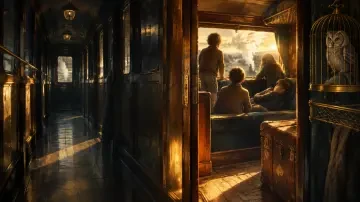
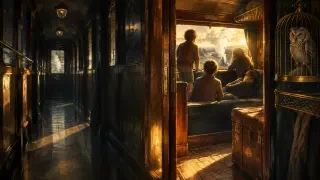
Platform 9¾, 1971 shows how a group scene works when everyone has their own errand, which is what an office with more than one fixer should feel like. First Light and The Ledger are the quieter register: people who say less than they know, and the consequences that follow.
Build the case in three moves
Write the phenomenon, not the monster
Decide what emotion made this person distort and what the Distortion is protecting. The visible shape follows from that, and so does the way to reach them.
Add the lever
Every case needs one thing that can be done in time — a Monolith to lock, a name to say, a door to open. Without a lever the scene becomes a fight by default.
Keep the aftermath
Decide who is left in the Backstreets when it ends. Ezra’s most characteristic act is not the intervention; it is the argument she makes afterwards.
The works, briefly










The City has more cases than fixers
A Distortion case is a conversation with a deadline. Open one and see whether you can talk someone back before the Monolith finishes its work.
Built with the roleplay skill
roleplay holds Ezra’s voice — brief, explanatory, insistent on the person rather than the monster — and its character-memory switch keeps the case file continuous across sessions; world-builder builds the district the case happens in, which is where a Distortion story gets its texture. This page is unofficial fan work: no official art, logo or text is reproduced.
Ezra FAQ
Is Ezra a Limbus Company Sinner?
No. She is an LCD member and a Fixer who appears in the story — she instructs the Sinners during Intervallo III and first appears physically in Canto IX — but she is not part of the bus’s playable cast.
What is her grade?
Grade 3 Fixer. Her former superior Moses, the Distortion Detective, is Grade 5 — the novel’s protagonist and the head of the office Ezra came out of.
Where did she first appear?
The Distortion Detective, Chapter 2: Self-Contradiction, a Project Moon web novel that ran for 42 chapters before being discontinued in favour of developing it as a game.
What exactly does she do in Intervallo III?
After the Sinners encounter Bamboo-hatted Kim’s Distortion, she explains how to lock down the Monolith so the Distortion cannot progress into an Abnormality, which lets Kim revert. She then persuades the LCA to bring Aeng-du along with him.
What does she look like?
The wiki’s Appearance section is empty, so there is no sourced description. The artwork on this page is an original interpretation, not official art. Anyone giving exact measurements or outfits is inventing them.
Can I roleplay as her?
Yes, as fan work. Keep to what the record supports — a methodical investigator who advocates for the people left over — and mark your world as unofficial. No official assets should be reproduced.
Keep reading
Platform: Neta Studio · Type: Character · Hub: neta.art/app/roleplay · Works: Mara at Dusk · River Pact · Platform 9¾, 1971 · First Light · The Ledger · Satin & Snow