Pokemon Card Generator: What You Actually Get

A Pokemon card generator that paints an environment, cuts the creature out and builds a card you can tilt — plus what it will not do: official cards or stats.

What a Pokemon card generator usually gives you
Most generators hand back a flat image with a Pokémon pasted into a frame — a template, a stock background and a name in a font that is almost the right font. It looks like a card in a screenshot and falls apart the moment you notice the creature has no shadow, the background belongs to no place, and the whole thing is one layer deep. It is a picture of a card, not a card.
The version that works starts from the creature and builds outward. It paints an environment for that creature, isolates it with real transparency, gives it movement, then assembles the card: frame, rarity line, edition number, card back. Then it publishes a page where you can drag the card and watch the artwork separate in space. That is what you are looking at on this page — and it is why the honest limits matter as much as the features.
| Output | Painted environment plus a cut-out creature |
| The card | Layered depth with a finish that follows tilt |
| On the face | Rarity line and edition number |
| Not | Official templates or legal play stats |
Name the creature, not the set
Give the builder a creature and a mood. It paints the environment, cuts the subject out with alpha, builds the card and sets the finish — then you tilt it.
What is actually on the card
A card is five decisions, and a generator either makes them or leaves them to you. Here is what gets decided when you hand over a name.
- The environment — Painted for that creature — a misty pine forest for a forest creature, not a generic gradient. It is the difference between a card and a sticker.
- The cut-out — The creature is isolated with real alpha and its own motion, so it sits above the scene instead of being baked into it. This is the layer that makes depth possible.
- The finish — A holographic or foil pass — rainbow, gold, silver or pearl — whose hue shifts with the angle you hold the card at. It is built from depth and angle, not a filter laid over a JPEG.
- The face — Frame, name, a rarity line such as RARE or SECRET, and an edition number. Enough to feel collected; not a rules text.
- The back — A designed card back with its own seal, so the object reads as a card from both sides.
A named Pokémon, or your own creature
You can ask for a Pokémon by name and get an original illustration of that character — a painted scene, a cut-out, a card. What you will not get is a copy of an existing card, its artwork, or its exact layout: the frame, the type symbols and the numbers are this builder’s own design, not a reproduction of a printed set. If you want something that is entirely yours, describe a fakemon instead. “A moss-green fawn with coral antlers and one amber eye” gives the painter more to work with than a name does, and nobody else has that card.


Cards built this way
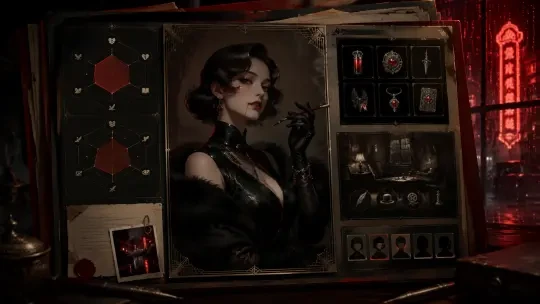
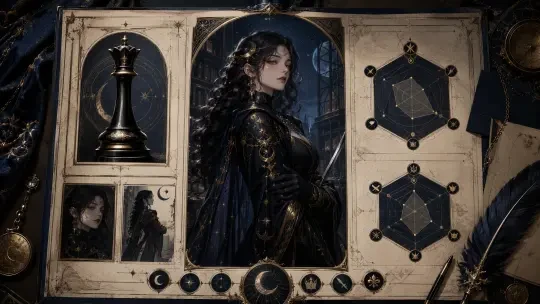
Real outputs, not mockups. Two character cards that show the stat-block layout, a quote card at the smallest size a character survives, an emblem for the corner, and the world atlas where a creature like this would live.




The creature needs a place to stand
The Pokémon world atlas is the context a card implies: nine regions, a habitat, a reason for the background to look the way it does. When you describe a creature, describe where it lives too — a volcanic salamander wants ash light, a paper crane wants a room with a window.
The same layout, a different subject
The Nyx profile card and the Evelyn dossier prove the layout is not creature-specific: portrait, name, rows of attributes, a rarity line. A quote card strips it down to one line and one face. Pick the format by how much text the subject can carry.
Three steps from a name to a card
Name it and place it
One creature, one habitat, one mood. “A moss-green fawn with coral antlers, misty pine forest, early light” beats “a cool Pokemon card” because it decides the painting.
Let the builder assemble it
Environment, alpha cut-out, layered depth, finish, rarity, edition number and card back arrive together. Check the cut-out first: if the silhouette is ragged, nothing downstream can save it.
Tilt it, then publish
Drag the card and watch the layers separate. If the sheen does not travel with the angle, you are looking at a filter, not a finish. When it holds, publish the page and keep the link.
Six cards and formats to open






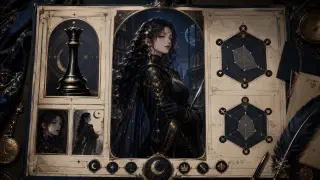




One sentence, one card
Open the builder, name a creature and let it paint the scene. If you want to see the same card system used for characters and sets, the tool list is one click away.
Built with the pokemon-card skill
Three named skills do the work on this page. pokemon-card runs the whole build: paints the habitat, cuts the creature out with alpha, lays the frame, the rarity line and the edition number, and designs the back. holo-card is the same builder tuned for a named character rather than a creature — portraits, deeper foil, a card that reads as a collectible for a person. character-sheet fixes the creature itself before any card exists: silhouettes, expressions, palette. Nothing here is a generic prompt wearing a tool’s name.
FAQ
Can I make an official-looking Pokémon card?
No. The frame, type marks and numbers are this builder’s own design, not a reproduction of a printed set, and it will not copy existing card art. You get an original illustration of the character you name, in a collectible card format.
Are the stats real?
No. The rarity line and edition number are design elements, not game data. Nothing here is legal for play, and nothing is checked against a ruleset — it is a card object, not a tournament card.
What does “3D” mean here?
Four layers held at different depths — subject, background, typography and finish — plus a foil pass whose hue follows the tilt. The subject also animates. It is depth and angle, not a drop shadow on a flat JPEG.
Can I make a fakemon instead?
Yes, and it usually looks better. A description gives the painter a habitat, a palette and a silhouette to work with; a name alone relies on recognition. Describe the creature and where it lives.
Is it free?
You can start building without paying — the builder is free to start in the browser. Larger sets and repeated renders are where any tool like this eventually asks for something.
Where do I share the card?
Every build gets a page with its own link, and the card can be tilted there. That page is the thing to send: a screenshot loses the part that made it worth building.
Keep reading
Platform: Neta Studio · Type: Tool · Pokemon card generator · Hub: neta.art/app/agent-skills · Works: Nyx · profile card · Evelyn · dossier · Marlowe · quote card · Abyss Freedom Alliance · Pokémon world atlas · Milk Frog postcard

