Solo Tabletop RPG: Play Alone, Keep the Dice

How solo tabletop RPGs work: an oracle instead of a GM, a journal instead of a table, and three systems to start with — plus where an AI scene fits.


Solo play is not a table with the seats empty
A solo tabletop RPG is a role-playing game played by one person, with no game master and no other players. The definition sounds like a compromise and is not: the solo scene has its own design language — oracles that answer yes-or-no questions, tables that generate complications, and journals that hold the record. You are not pretending a group is there. You are playing a different game with the same dice.
The reason it works is that the three jobs at a normal table — player, GM, character — get separated in time rather than in people. You frame the scene as the GM, you act as the character, then you ask the oracle what the world does back. A good solo session feels like reading a book that keeps asking you what happens next, and then charging you a die roll for the answer.
| What it is | A tabletop RPG played by one person, without a game master |
| Core tool | An oracle or random table that answers the world’s side |
| Record | A journal, a log, or a saved scene |
| Time per session | 20 minutes to a whole evening, resumable |
Let the scene take the GM’s chair
Write the situation, ask what happens, and let the roleplay skill answer in a character’s voice instead of a rulebook’s. You keep the dice; it keeps the cast.
The three jobs, and how solo play splits them
Every solo system is a way of handling the same handoff. Learn the handoff and you can play almost any of them.
- Frame — You describe the situation as a GM would: place, pressure, what is at stake this scene.
- Act — You speak and act as your character, in first person, without asking permission.
- Ask — You put a question to the oracle — yes/no, a table, a card — and accept the answer even when it is inconvenient.
- Record — You write one line of what changed. The log is what makes the next session possible.
- Escalate — Every few scenes, the oracle or the system throws a complication you did not choose.
Two systems worth starting with, and one habit
You do not need a shelf. These two cover the two moods of solo play — tactical and literary — and between them they teach the craft. The habit is the oracle: a deck or a table you trust enough to disagree with you.


Scenes that already run on one player
The browser scenes below are not tabletop systems, but they solve the same problem: a cast that answers back without a second person at the table. Read them as worked examples of the handoff above.



Ironsworn: the vow is the engine
Shawn Tomkin’s Ironsworn is an indie RPG set in the Ironlands, a rugged low-fantasy frontier, and it is designed so a single player can run it without a GM. The mechanism is the vow: you swear an oath, the fiction tests it, and progress is tracked against the vow rather than a hit-point total. For a solo player this is close to ideal, because the character’s motivation is also the session structure. If you want tactical play with real stakes, start here.
Thousand Year Old Vampire: the journal is the game
Tim Hutchings’s Thousand Year Old Vampire (2019) is a one-player RPG in which you describe the life of a vampire through a journal of memories. You roll, you lose something, you write the loss down, and the character’s history is literally the pages you have filled. It is the best argument that solo play is a writing form: there is no board, no map, and no combat — only a memory that will not stay put. Play it with a pen you like.
Three ways into a first session
Start with a question, not a campaign
One scene, one location, one thing your character wants before the scene ends. A campaign is what a series of answered questions turns into.
Roll before you decide
Ask the oracle first, then narrate. If you decide and roll afterwards, you will unconsciously make the roll agree with you and the world will stop surprising you.
Write the last line down
End every session by writing the one sentence you would tell someone else about it. That sentence is your save file.
Six one-player scenes to borrow from






One chair is enough
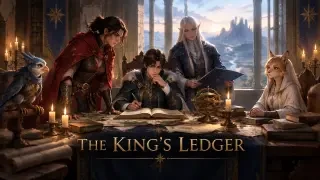
Open a scene, take the character’s side, and let the other voice be the world’s. If you want the full tabletop toolkit, the guides below go deeper into systems and oracles.
Made with the roleplay skill
roleplay plays the world’s side of the handoff: it holds the NPCs, remembers what your character swore, and answers in a voice rather than a rule. trading-card gives the same character a stat card when you want the tactical layer visible. What it will not do is roll for you — the dice stay on your side of the table, which is the part that makes it a game.
FAQ
Do I need a GM to play a solo RPG?
No. Solo systems replace the GM with an oracle, a set of tables, and a rule for when the world interrupts you. Some are built for it from the ground up, like Ironsworn; others are ordinary games played with an emulator.
What is an oracle, exactly?
A way of answering a question you cannot answer alone: a yes/no roll with a likelihood, a table of nouns, a deck of prompts. It is not a plot generator — it answers what the world does, and you decide what it means.
How long should a session be?
Twenty to forty minutes is a real session. Solo play rewards short, recorded sessions more than long ones, because the log is what carries the story between them.
Is solo play the same as writing a novel?
It shares a desk with it. The difference is that you do not control the world: the oracle can refuse your plan, and a good session includes at least one thing you did not want to happen.
Can an AI be the GM?
It can take the world’s side of the conversation — NPC voices, consequences, description — and it is genuinely useful for that. Keep the dice and the final call yourself; a scene that always agrees with you stops being a game.
Which system should a beginner buy first?
Ironsworn if you want fantasy and structure; Thousand Year Old Vampire if you want to write; a generic oracle deck if you already own a game you love and want to play it alone.
Keep reading
Platform: Neta Studio · Type: Solo RPG guide · Hub: neta.art/app/roleplay · Works: The Court Card · Casefile: You · Method · The King’s Ledger · Patty’s Oath · Gilded Succession
