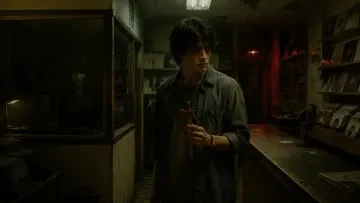
Alice FPE: Inside ∆lice’s Room in Paper School

Alice FPE is ∆lice, the Paper School antagonist who kills anyone who opens her door. Her three forms, her canon relationships, and how to play her in a scene.


Who ∆lice is
∆lice — usually written Alice, sometimes with the delta left on — is the overarching antagonist of Fundamental Paper Education, the hand-drawn web series by Kaaatie. She lives in a room somewhere inside Paper School, behind doors marked with warnings, and the series establishes her in the plainest possible way: everyone is afraid of her, including the teachers. In the closing minutes of Basics in Behavior, Claire runs from three teachers, mistakes ∆lice’s door for an exit, and finds out what the warnings were for.
What makes her more than a monster is the paperwork around her. She is Oliver’s childhood friend and girlfriend, and both of them studied at university — they are not students at Paper School, which the wiki notes alongside Kaaatie’s own uncertainty about their exact age. Her rhombus symbol also appears on Oliver’s shirt, on ∆iden’s name, and on a paper pinned near Miss Grace. She is a character with a history, not a jump-scare with a design.
| Series | Fundamental Paper Education, by Kaaatie |
| Role | Overarching antagonist |
| Based in | Her room in Paper School |
| Known for | The delta, the tiara, the door |
Play the door, not the monster
Set the rule first — do not knock, do not answer, do not say her name — and let the scene do the work. The roleplay skill keeps ∆lice’s voice and her patience, which is the part that makes the room frightening.
The three forms, in order
∆lice is designed as a progression, and the progression is the story. Each stage removes a piece of the polite schoolgirl and shows a little more of what is underneath.
- The girl at the door — Short messy brown hair with a pointed ahoge, a white tiara and a black bow on the left, a white-collared desaturated blue polo with sleeves torn at the edges, a black necklace with a bronze transparent triangle crossed by two lines, a black tea-length skirt with white semicircles, white socks and black Mary Janes. Reddish scars on both legs, dark shadows under the eyes.
- Partially transformed — The bow moves to the right, the white tiara becomes a black crown, a red rash spreads across the right side of her face, the top of her face falls into shadow so only one eye shows. A tattered capelet with a rhombus patch, bandaged sleeves, six small black spikes behind her, a black legcuff on the right ankle.
- The true form — Pitch black and silhouetted, bright red scleras with slit pupils, six large black spikes, three long tendrils, black claws and a tail — and taller than Oliver and Connor. This is the version at the end of Basics in Behavior, and it exists for about as long as it takes to end the episode.
The room is the character
Everything the series tells you about ∆lice is told through architecture. The room is locked from the outside, marked with warnings, and located somewhere a student could mistake for an exit — which means the school built it that way on purpose. The teachers are visibly afraid when Claire runs toward it. That is a better character introduction than any monologue: the building knows what is inside, and the building is not reassuring. When you write her, write the room first. The rule, the warnings and the two cups on the table will do more than a description of claws.


Scenes a character like this belongs in
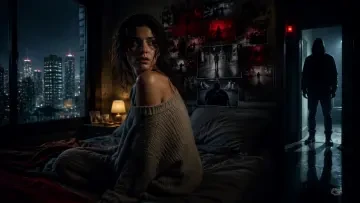
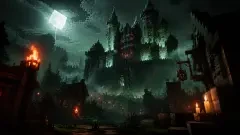
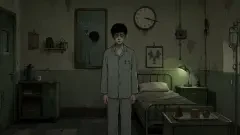
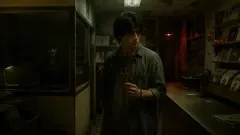
None of these is Fundamental Paper Education fan work. They are the same mechanics run elsewhere: a corridor with rules, a door that should stay shut, and a voice that is too calm about it.


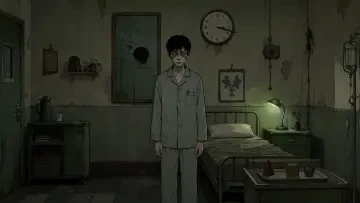
Lana is the other half of the same school
Lana is the student ∆lice kills without ever meeting: cheerful, bad at school, wearing sock puppets on both hands. Read the two pages together and the series’ logic becomes obvious — Paper School is a place where children are made of paper, and it is honest about what happens to paper. The contrast is also a writing tool: put a Lana in the room before you bring ∆lice in, and the scene has something to lose.
Why the web-animation antagonists travel well
Just Monika: First Club Day and Obsession both run on the same engine as ∆lice: a character who is polite, present, and impossible to remove from the story. That is why they work in interactive form — the reader keeps choosing to continue, which is exactly the mistake Claire makes.
Three scenes to open with her
The knock
You are in the corridor after the last bell and the door is already open. Play the rule, not the monster: what do you do before you look inside?
The second cup
The room is set for two. She is pleasant, the tea is warm, and she keeps asking a question you do not want to answer. Play the politeness and let it curdle.
Oliver at the door
The one person she is patient with is the one person who could talk you out of the room. Play the scene where he arrives and she does not change at all.
Six scenes to open




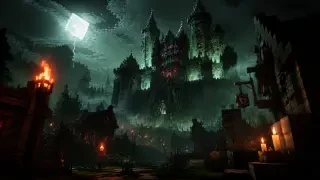

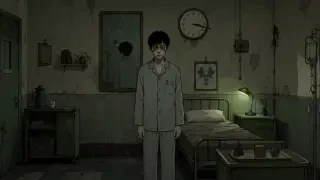
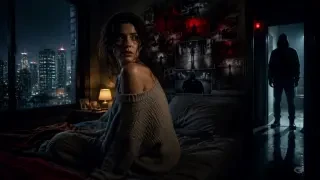
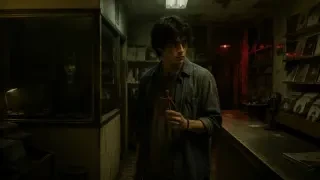
The door is open
Open the roleplay hub and describe the corridor, the rule and the knock. If you want to see the same mechanics in a longer story, the collection is one click away.
Built with the roleplay skill
Two named skills carry a character like this. roleplay holds her voice — patient, polite, entirely certain — and keeps the rule you set in force for the whole conversation, which is what keeps a corridor scene frightening past the first message. character-sheet fixes the three forms as separate states, so the scene can move from the girl at the door to the partially transformed version without the design drifting. When the room needs to be seen rather than described, image paints it in the series’ paper-flat logic.
FAQ
Who is Alice in FPE?
∆lice — written Alice — is the overarching antagonist of Fundamental Paper Education, the hand-drawn series by Kaaatie. She lives in a locked room in Paper School and is feared by every character, teachers included.
What is her true form?
At the end of Basics in Behavior she appears as a pitch-black silhouette with bright red scleras, slit pupils, six large black spikes, three long tendrils, claws and a tail, taller than Oliver and Connor. It is on screen briefly and it is the only time the series shows her without the schoolgirl design.
Is Alice a student at Paper School?
No. The wiki notes that she and Oliver studied at university and are not students of the school; Kaaatie has said she may be over nineteen or twenty, without confirming an exact age.
Who is Oliver to her?
Oliver is her childhood friend and canonically her romantic partner. He is also the person she is consistently patient with, and the only one besides Kevin who is not afraid of her.
Why does she kill Claire?
Claire runs from the teachers, mistakes the marked door for an exit and enters the room. ∆lice attacks anyone who comes in. The series plays it as a punishment for the wrong choice rather than a fight.
Can I write a scene with her?
Yes. Describe the corridor, one rule and where you are standing, and play from there. Keep the politeness — the character works because she is calm, not because she is loud.
Keep reading
Platform: Neta Studio · Type: Character · Alice (Fundamental Paper Education) · Hub: neta.art/app/roleplay · Works: O.S.F; Dead Road · The Haunted Castle · Just Monika: First Club Day · White Elm Sanatorium: Room 17 · Every Breath You Take · Obsession