
Dragon Ball Roleplay: Fight the Tournament

A Dragon Ball roleplay with a bracket and a budget: ki you have to train, a fighter who can lose, and a tournament that happens on the same day every year.

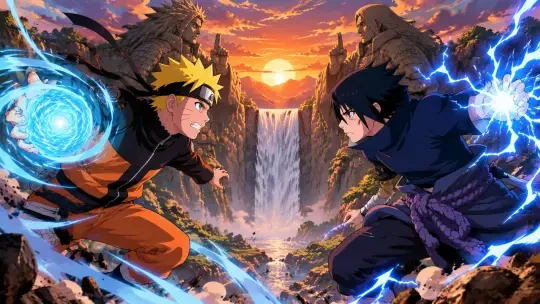

What a Dragon Ball roleplay has to get right
The single best structural idea in Dragon Ball is that the fight has a date. The World Martial Arts Tournament is held on May 7th, in front of a paying crowd, with rules, brackets and a ring-out — which means the story has a deadline, a referee, and an audience. That is a far better engine than “two strong people meet in a wasteland”, because a fighter who has to keep their strength inside a rulebook is a fighter with problems the reader understands.
Underneath it, the powers are refreshingly physical. Ki is life-force energy, gathered and released — a punch that travels, a blast you have to charge. Saiyans are a warrior race, aggressive by nature and capable of a transformation that arrives on its own when rage or grief outruns control. That is the detail worth protecting: the Super Saiyan is not a power-up you switch on, it is a thing that happens to a person at the worst possible moment, and the Great Ape is worse — a full moon, a tail, and no memory of the night afterwards.
| Source | Dragon Ball manga — rules checked against the Dragon Ball wiki |
| Energy | Ki: life-force, gathered and released through the body |
| Calendar | The World Martial Arts Tournament is held every 7 May |
| Trap | Saiyan rage can trigger a transformation you cannot yet control |
Put your fighter in a bracket
A name, a style, one technique that is not finished yet. The roleplay skill holds the bracket, the crowd and your training log while you play the tournament.
The rules that keep a fight readable
Dragon Ball fights become wallpaper when nobody can lose. These are the constraints the series actually runs on, and each one gives a scene a shape.
- Everything is physical — Ki is gathered in a body and released through movement. A charge takes time, a blast travels, and a fighter who is out of breath is out of options.
- Rules keep the ceiling low — The tournament forbids weapons, counts ring-outs, and has a referee. Constraints are what make a strong fighter interesting instead of inevitable.
- Transformation is involuntary — Super Saiyan arrives with rage or grief, not with a training montage. Great Ape needs a full moon and a tail. Both cost control, and both should scare the person they happen to.
- A fighter needs a rival, not a villain — The best arcs are people who will be in the bracket next year. Give your fighter a peer who improves at the same rate and the stakes renew themselves.
- The dragon balls are a story device, not a reset — Seven balls, one summon, one wish. Whoever holds them is holding somebody else’s grief, and that is a scene about people, not a mechanic.
Three openings you can copy
1. The draw for the first round.
The bracket is up on the board and your name is next to somebody who has been in the tournament three times. You have four minutes, a rulebook that forbids weapons, and a technique you have never used in front of a crowd. The stands are already full.
2. The full moon over the camp.
You wake up because the ground is shaking and someone is screaming your name. You are standing outside the tent with no memory of leaving it, and the moon is very bright. There is a tail where your belt should be, and your hands are wrong.
3. The wish, and who gets it.
Seven balls, one summon, one sentence. Somebody in the group has been waiting years for this and has told nobody what they want. The dragon is already forming, and it is asking you first.
Why the bracket beats the wasteland
A tournament is a calendar, a crowd and a rulebook — three things a roleplay can use immediately. The calendar forces training scenes. The crowd makes reputation matter and gives every fight a witness. The rulebook turns strength into judgement: do you knock them out, ring them out, or take the hit to make a point. When your campaign eventually leaves the ring for a desert, keep all three: a date, an audience, and a rule somebody is breaking. That is what makes a big fight feel like an event rather than an interruption.


Play the parts this page is talking about
Real stories on Neta Studio, not summaries. They open in the browser, keep what you chose, and end differently depending on how you play them.
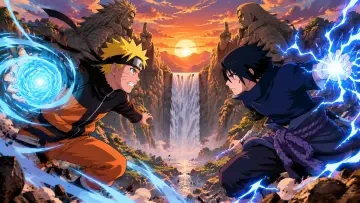


A bracket that resolves
Naruto vs Sasuke: Duel is the closest thing here to a tournament in play: two fighters, rounds, one outcome each, and a rival worth a rematch. Ball of Light runs the older, gentler version of the same DNA — a chosen hero, a map, and a party that has to grow before the last fight.
What to borrow from the neighbours
Shibuya Eve shows how a technique choice echoes through a story; Final Selection: Night of Wisteria is the trial-by-night structure with worse odds than any bracket; Naruto Interactive Map is the reminder that a fighter who travels needs a world with places in it.
How to set up a tournament in three moves
Write the style before the power
Boxing, grappling, a staff, a charge-and-release blast. Style decides what a fight looks like when the ki runs out, which is when it gets interesting.
Give the technique a failure mode
A move that takes four seconds to charge is a move that loses to anyone who closes the distance. The failure is the drama.
Stack the bracket against you
Round one against a veteran, round two against your rival, and a friend on the other side of the draw. The bracket is a plot outline you can draw on a whiteboard.
The worlds, briefly




A date makes a fight mean something
Seven May, a paying crowd, a referee and a bracket — a roleplay with a calendar writes itself. The roleplay hub keeps your fighter, your record and your rival between sessions.
Built with two skills
roleplay runs the bracket and remembers your record, your rival and how much ki you had left in the last round; character-sheet writes the fighter down — style, technique and its failure mode, transformation and what it costs, and the one person they cannot beat yet. Every image on this page is original work. Nothing here reproduces official art, and this page is not affiliated with the rights holders.
Dragon Ball roleplay FAQ
Is this canon or fanon?
The rules are canon — ki as life energy, Saiyans as a warrior race, the Super Saiyan and Great Ape transformations and what triggers them, the 7 May tournament. Your fighter is yours. No official artwork appears on this page.
Can I play an existing character?
Yes, as a rival, a master or a returning champion. The page is written for an original fighter because a bracket only matters if you can lose in it.
Do I have to be a Saiyan?
No. Half the best fighters in the story are human, and a human with a good style and a hard training regime is a better underdog than a transformation waiting to happen.
How much does it spoil?
It references the tournament calendar, ki, Saiyan transformations and the dragon balls as a wish mechanic. No late-arc outcomes are described.
Is this an official Dragon Ball product?
No. It is a fan-made page on Neta Studio, unaffiliated with the rights holders, using original illustrations rather than manga panels.
How long does one tournament run?
A tournament is three or four sessions: preliminaries, bracket, final, aftermath. Campaigns continue because your record and your rival persist.
Keep reading
Platform: Neta Studio · Type: Dragon Ball Roleplay · Hub: neta.art/use-cases/en/dragon-ball-quiz · Works: Naruto vs Sasuke: Duel · Ball of Light · Shibuya Eve · Final Selection: Night of Wisteria · Naruto Interactive Map