Freaky AI: Unhinged Characters, Not Just Explicit Ones

“Freaky” usually means one of three things. Here is how a shameless, unhinged character is written — and where the line sits between unnerving and out of bounds.


What the word is actually pointing at
“Freaky” is slang with a wide net. Some people mean explicit adult scenes. Some mean a character who is unhinged in a way that is fun to be near — the one who says the thing nobody says, keeps a knife in the cutlery drawer, and is unfailingly polite about it. And some are typing the word because they are eighteen and curious, which is fine. If a page treats all three as one thing, it ends up promising porn and delivering either nothing or something worse.
This page is mostly about the middle one, because it is the one that is hard to build and the one people stay for. A shameless character is a writing problem: how do you make someone unnerving without making them a nuisance, and how do you keep the reader complicit rather than repelled? The answer, reliably, is restraint plus one wrong detail — a polite voice and a fact that does not fit.
| What it is | Adult roleplay with characters who are shameless, strange or unsettling |
| What you need | One wrong detail and a voice that stays polite for one beat too long |
| What you get | Written scenes in a consistent voice, with two suggested replies each turn |
| What it is not | A no-limits service, or a generator for explicit images |
Build the one wrong detail
Describe the character in a sentence, then add the thing that does not fit: the polite voice with the wrong hobby, the smile at the wrong moment. The roleplay skill keeps that detail alive across the scene.
How to write a character who is wrong in the right way
Freakiness is contrast. A character who is strange in a strange room is set dressing; the same character in a kitchen, doing the washing up and explaining calmly why the door is locked, is a scene you cannot look away from. The technique is old and cheap: establish normality precisely, then let one detail refuse to fit. Do it with an object, a verb, a small misremembering of your name. Never with a speech about how dangerous they are.
- Polite, then wrong — Manners are the pressure plate. A voice that never rises makes a single unpleasant sentence land like a door closing.
- One detail, repeated — A cleaned knife, a returned book with a note inside, the same phrase twice. Repetition is what turns a detail into a threat.
- No monologue — Characters who explain their evil are explaining it to you, which kills the scene. Let them answer a different question than the one you asked.
- Keep the stakes domestic — Who has the keys, who knows, who is coming home at six. Small stakes make strange behaviour readable.
- Say where the line is — Before the scene: adults, no real people, no coercion as romance. Deciding it early is what lets the middle run uninterrupted.
| Unhinged | A character with no brakes and no shame: the vampire who says the quiet part, the painter who describes your death as a compliment. |
| Kinky | Explicit adult scenes with negotiated rules. Not the same thing — and the negotiation is what keeps it a scene rather than a rant. |
| Wrong | The category that includes minors, real people and coercion played as romance. That is not a taste; it is out of bounds, everywhere on this platform. |
The line, in plain words
Dark is allowed. Cruel characters are allowed, and so are adult scenes between adults, including ones with negotiated power in them. What is not allowed is not a matter of taste: no minors, no real people, no coercion written as romance, and no explicit images — the product is prose, and the covers are atmosphere. “Does not flinch” is a description of the writing, not a promise that nothing is refused. A character can be monstrous and the platform can still have a door policy; those two things are not in conflict.


Six characters who are wrong on purpose
Read these for the technique rather than the content: in each case there is one polite voice and one detail that will not sit still.


The calm ones
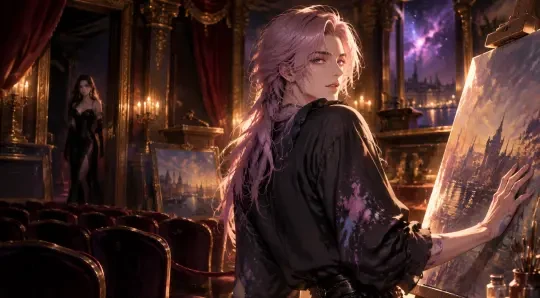
Gilded Omen is a painter who describes how you die as though he were complimenting your coat. Casefile: You puts you in an interrogation room where the narrator’s version of events keeps changing under you. Open Throat is a vampire whose entire menace is a refusal — three centuries of not doing the thing he wants to do.
The friendly ones, which are worse
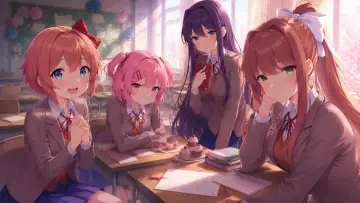
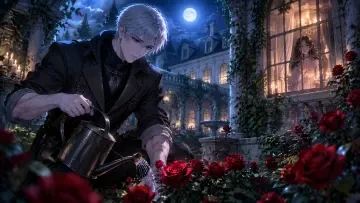
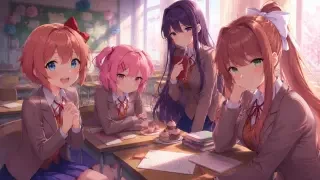
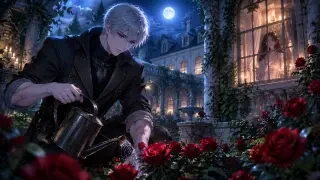
Just Monika: First Club Day is the template: affection that never drops its smile, and a club room you cannot leave. Second Life · Rose Manor dresses appetite as hospitality in a house with too many corridors. The Moonlit Archives is charming, competent and loyal to three different parties at once, which is its own kind of unsettling.
Three scenes to try tonight
The returned object
A neighbour returns something you lent them, cleaner than you left it, with a note you did not write. Start the scene there.
The reasonable request
Someone asks for something completely reasonable in a way that makes it impossible to refuse. Watch how fast a polite scene becomes a trap.
The wrong name
A character calls you by the wrong name, corrects themselves, and does it again later. Nothing else needs to happen for the scene to work.
Six stories with one wrong detail
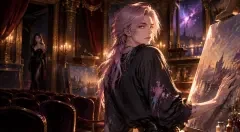


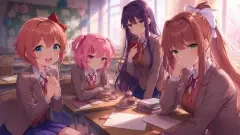
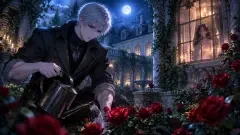

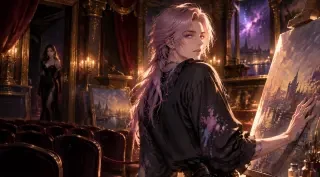



Open one, or find a stranger one
The roleplay hub opens these in the browser with continuity between sessions. The explore shelf is where the quieter, stranger stories tend to sit.
Built with the roleplay skill
roleplay holds the contrast: it keeps the voice level, remembers the detail you planted, and lets it come back two scenes later instead of explaining itself. character-sheet is the companion call — the fixed physical details that make a character recognisable even when their behaviour stops being predictable.
FAQ
Does freaky AI just mean explicit content?
Not here. It covers unhinged or shameless characters, which is a writing category, plus adult scenes between adults. The most unsettling stories in this catalogue are barely explicit at all — they are just very composed.
How dark can a character get?
A character can be cruel, obsessive, or openly monstrous in a scene. What is fixed is the frame: adults, no real people, no coercion sold as romance. Reframing the same request does not change the answer.
Are there explicit images?
No. The product writes prose; the covers are mood, not content. If you want generated pictures, that is a different tool with its own limits.
Why do polite characters feel creepier?
Because contrast is the mechanism. Manners set a baseline the reader trusts, and one detail that violates it does more than any amount of gore. That is why the writing avoids speeches about how dangerous anyone is.
Can I keep playing the same character?
Yes. Continuity is stored with the story, so the detail you planted in the first scene can resurface in the fourth. That is what makes the strangeness feel like a person rather than a gimmick.
Is this suitable for younger users?
No. Adult scenes and adult characters require an adult account. Content involving minors is prohibited outright, in any framing.
Keep reading
Platform: Neta Studio · Type: Adult character roleplay · 18+ · Hub: neta.art/app/roleplay · Works: Gilded Omen · Casefile: You · Open Throat · Just Monika: First Club Day · Second Life · Rose Manor · The Moonlit Archives
