Call AI: What a Voice Call With a Character Can Do

AI phone calls promise a voice on the other end. What they are actually good for, what they cannot do, and how to write a call scene that sounds like one.



What people actually want from an AI call
The query is short and the wish behind it is not: call AI. What people want is not a phone tree. They want a voice that answers, remembers the last conversation, and stays in character for an hour. That is a specific and fairly narrow thing — closer to a late-night phone call than to a voice assistant — and it is worth separating from the marketing, because the experience breaks in predictable places.
The technology behind it is two separate problems pretending to be one. Speech recognition turns your voice into text; a language model answers; speech synthesis turns the answer back into a voice. Each part is good now. The seam between them is where a call stops feeling like a call: latency, interruptions, the fact that a model cannot hear you sigh. A call scene is easier to build than a call product, and honestly more satisfying: you write the silence, and the silence is what makes it intimate.
| What it is | A spoken conversation with an AI character, usually presented as a phone call |
| Built from | Speech-to-text, a language model, and text-to-speech — three systems with seams |
| Best for | Short, emotional, in-character conversations — not logistics or research |
| What this site does | Writes the call as a scene; can voice the lines with the speech skill |
Write the call, not the chatbot
Start with the reason the phone rang. The roleplay skill will hold the other person’s voice, their pauses and what they are not saying — and you can voice the lines afterwards with the speech skill.
The three seams that break a call
Every AI call problem is a seam problem. Understanding what breaks makes both the products and the scenes easier to judge — and it tells you which parts of the experience to write around.
- Latency — A pause of two seconds reads as hesitation, and hesitation reads as emotion — which is why a slow call can feel more real than a fast one, until the pause lands in the wrong place.
- Interruption — Humans talk over each other. Systems mostly do not. Write overlapping lines into a scene and you get the texture a real call has.
- Memory — A model that forgets the last call is a stranger with the same voice. Continuity is what turns a demo into a relationship.
What this site does — and what it does not
Neta Studio does not give you a phone number and a live dialler. What it gives you is the part that actually carries the experience: a character who stays in voice across a long scene, remembers what was said, and can be written as a call — one side of a conversation, with the pauses left in. Lines can then be turned into audio with the speech skill, which is how a written call becomes something you can listen to.
That distinction matters if you are deciding where to spend a night. If you want to test whether a voice model can handle being interrupted, an AI call app is the right tool. If you want a conversation that goes somewhere — a confession, an argument, a goodbye — the scene is the better instrument, and the voice is the finishing touch rather than the whole product.
How to write a call that sounds like one
A phone call has rules a chat window does not. Neither person can see the other, so every emotional beat has to arrive through sound: a breath, a change in volume, a room behind the speaker. Write the environment before the dialogue — a corridor, a car, a kitchen at 2am — and then let the other person hear it. Keep the sentences short. Real calls are full of half-finished ones. And decide early whether the call is a beginning or an ending, because calls that try to be both tend to become neither.


Stories that already sound like a call
These are real stories on Neta Studio that live in the register a call needs: two people, one conversation, and the thing neither of them says.





The late-shift conversation
Night Call is built out of overnight shifts and the things people only admit at four in the morning — the exact emotional bandwidth a call has. After the Nocturne runs the same intimacy through a slow-burn route instead.
Or a voice you cannot see
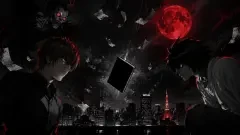
Night Over the Isles makes every conversation a negotiation with someone whose face you cannot read, and Death Note: First Judgment is a story about a voice with no body attached.
From one line to a scene you can hear
Give the call a reason and a room
“She calls from a hospital corridor” does more work than three paragraphs of backstory: it sets the stakes, the acoustics and the hour.
Leave the silences in
Write the pause as a beat, not a gap. A character who stops mid-sentence is telling you more than one who finishes.
Voice it after it works on the page
Generate the lines with the speech skill once the scene reads well. Audio fixes nothing that the writing did not already earn.
The cast, briefly










Make the call, then make it audible
Write the scene first, then decide whether it needs a voice. The roleplay hub opens the conversation; the speech skill turns the lines into audio you can listen back to.
Built with the roleplay skill
roleplay holds one side of a conversation steady across a long scene — the character’s pauses, evasions and the thing they keep almost saying. speech turns the finished lines into audio, so the call can be listened to instead of only read.
Call AI FAQ
Can I actually phone an AI here?
No — there is no phone number or live dialler. You can write a call as a scene with a character who stays in voice, and generate the spoken lines with the speech skill.
What is an AI call good for?
Short, emotional, in-character conversations: a confession, a check-in, a goodbye. It is a poor fit for anything that needs accurate facts or real-time logistics.
Why do AI calls feel unnatural?
Three seams: latency, the inability to interrupt naturally, and memory loss between calls. Each one breaks the illusion in a different place.
How do I make a written call feel real?
Give it a room, keep the sentences short, and write the pauses. Most of a call’s intimacy is in what is not said out loud.
Can I hear the character’s voice?
Yes. Once the scene reads well, the speech skill can turn the lines into audio — design a voice or clone one from a reference clip.
Is this only for romance?
No. The strongest call scenes are often not romantic: a parent calling about a bill, a friend calling because something happened, a stranger dialling a wrong number.
Keep reading
Platform: Neta Studio · Type: Use Case · Hub: neta.art/app/roleplay · Works: Night Call · After the Nocturne · Night Over the Isles · Death Note: First Judgment · Final Selection: Night of Wisteria · Jujutsu Kaisen World Portal
