Danganronpa Simulator: Build Your Own Killing Game

A Danganronpa simulator needs a closed school, a full cast, a rulebook and a trial that can execute the wrong person. How to build one with AI.



What a Danganronpa simulator actually is
A Danganronpa simulator is not a visual novel with a bear in it. It is a machine with four parts: a closed location nobody can leave, a cast large enough that anyone could be the killer, a trial format that turns evidence into a vote, and a punishment for getting the vote wrong. Remove any one and the tension collapses. That structure — not the pink blood — is what makes the series work, and it is what you have to rebuild if you want to run your own killing game.
In the games the bear runs it: Monokuma, a stuffed robotic bear who calls himself the headmaster of Hope’s Peak Academy and instigates the Killing School Life. The rules are stated plainly and then enforced without mercy. Students investigate a murder, argue it out in a courtroom beneath the school, and vote. The culprit — the Blackened — is executed if the class is right. If the class is wrong, everyone else is executed and the Blackened graduates. That is the whole engine: a deduction game where losing is not a retry screen.
| What it is | A closed-circle killing game with investigation, trial and a fatal vote |
| Source rules | Danganronpa: Trigger Happy Havoc — Hope’s Peak, Monokuma, Class Trials |
| Core loop | Motive → murder → investigation → Class Trial → execution |
| What you build here | A playable version with AI-run suspects and a trial you can actually lose |
Write the motive before the murder
A killing game is only as good as the reason someone cracks. The roleplay skill will run a cast of suspects who lie, panic and accuse each other, and it will not protect you from a wrong verdict.
The four parts you have to build
The wiki’s Class Trials page lays out the loop with unusual clarity: investigation phase, debate, evidence presented as Truth Bullets, a Closing Argument that reconstructs the crime, then a vote. Monokuma’s rules define what happens on each outcome. If you are building a simulator, those four things are the specification.
- A cast that can kill — The main games run to fifteen or sixteen students, and the number is not arbitrary: enough people that alibis overlap, few enough that everyone gets a chapter. Each one needs a want, a secret and a limit.
- A motive with teeth — Money does not move a locked room. A secret, a family member, a memory — the motive has to make one specific person do the unthinkable tonight.
- Evidence that can be interpreted — Clues have to be argued over. A bloodstain that could be either person’s is worth more than a confession in a drawer.
- A trial that can go wrong — The vote has to be real. If the game quietly steers you to the right answer, you have written a cutscene, not a killing game.
The in-site tools that actually build this
There is no single “Danganronpa maker” product here, so the honest answer is a combination. These are live tool pages on Neta Studio, and what each one actually produces is taken from the page itself, not from marketing.
- AI Mystery / Detective Game Maker — case files, clue systems, interrogation scenes, red herrings, and suspects that think, lie and confess in real time. This is the trial engine, and the closest match to the Danganronpa loop.
- AI Visual Novel Creator — a playable visual novel from one sentence: character sprites, backgrounds, branching story, real-time dialogue. This is the presentation layer for the investigation chapters.
- AI Otome / Dating Sim Maker — bachelors and bachelorettes, affection meters, date routes, LLM dialogue. Borrow the affection meter and you have a trust stat the trial can burn.
What none of them do: reproduce the official Danganronpa characters, the Monokuma design, or the pink blood. You are building a game in that shape with your own cast. If you want the aesthetic reference while you write, the atlas and portal pages on this site are the same principle applied to other series.
Why the class trial is the hardest part to fake
Most AI mystery games fail at the trial, because a language model wants to be helpful: ask it who did it and it will tell you. A Danganronpa trial requires the opposite — suspects with something to protect, evidence that supports two readings, and a narrator who will let you present the wrong Truth Bullet and watch the room turn on you. Design the trial as a set of conflicting incentives rather than a question with an answer. The black-and-white bear is optional. The wrong verdict is not.


Stories that already run the loop
These are real stories on Neta Studio where a cast is trapped, a rule is enforced, and somebody has to be blamed.


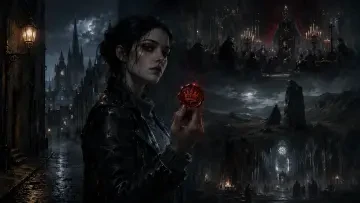


A room full of people who need a culprit
The Gentle Blade Tip is the closest thing on the site to a killing-school roleplay, and it keeps the cruelty: the kindest character is usually the one the group sacrifices. Night Over the Isles traps a gothic cast in one house and lets suspicion do the work.
Or a rule that does the killing
Death Note: First Judgment makes murder administrative, which is the tonal opposite of a class trial and the same fascination. Final Selection: Night of Wisteria runs a survival exam where the rule is explained badly on purpose.
Build it in four passes
Write the cast before the crime
Sixteen characters, one secret each, one relationship that would survive a trial and one that would not. The murder should be the logical output of those pressures.
Plant three clues, one of them a lie
One clue points at the killer, one points at the wrong person, one is true but unreadable until the Closing Argument. That ratio gives the trial somewhere to go.
Run the trial without a safety net
Let the vote happen. If the class accuses the wrong student, the execution should land on the wrong student — that is the moment people remember.
The cast, briefly







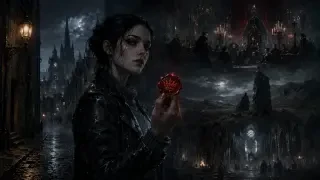



Build the room, then lock it
The roleplay hub is where the cast lives; the mystery game maker is where the case file lives. Start with one scene — a body, a motive, sixteen alibis — and let the trial grow out of it.
Built with the roleplay skill
roleplay runs the cast and the trial: suspects hold their own secrets, remember what they said in the investigation, and will lie under pressure. character-sheet writes the sixteen files — want, secret, limit — that the trial is built to crack. The visual novel and mystery tools handle the case file and the sprites.
Danganronpa simulator FAQ
Can I make an actual Danganronpa game here?
You can build a killing game with the same structure — closed location, large cast, investigation, trial, fatal vote. You cannot use the official characters, Monokuma’s design or the series’ branding; the cast and the case are yours.
What are the real rules of a Class Trial?
Students investigate a murder, debate using evidence (Truth Bullets in the games), reconstruct the crime in a Closing Argument, then vote. If they name the Blackened, that student is executed; if they are wrong, everyone else is executed and the Blackened graduates.
Do I need to code?
No. The mystery game maker and the visual novel creator both take a written description and return something playable in the browser.
How many characters should the cast have?
The main Danganronpa games run to fifteen or sixteen students. That range gives you enough overlapping alibis for a trial and few enough that each character gets a chapter. Fewer than ten and the culprit is obvious.
Can the trial go wrong?
It should. If your setup always produces the right answer, the tension is gone — design evidence that supports two readings and let the vote land where it lands.
Is this suitable for a fan project?
As a fan project with original characters and your own case, yes. Keep it clearly unofficial and do not reproduce copyrighted art or character designs.
Keep reading
Platform: Neta Studio · Type: Game Tool · Hub: neta.art/explore/tool/ai-mystery-detective-game-maker · Works: The Gentle Blade Tip · Death Note: First Judgment · Night Over the Isles · Jujutsu Kaisen World Portal · After the Nocturne · Final Selection: Night of Wisteria
