Riddle Solver: How to Crack a Riddle, Not Guess It

A riddle solver is a method, not a lookup table. Classify the riddle, list its nouns, name the answer class, then test every clause — with worked examples.

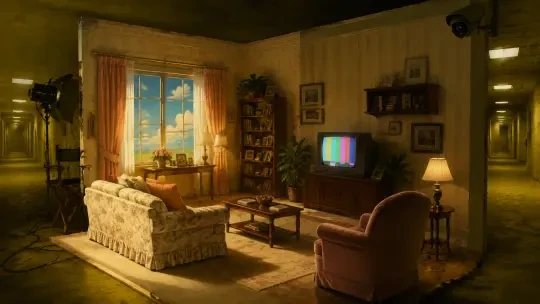

A riddle solver is a method, not an answer key
Search “riddle solver” and you get answer keys: a list of riddles with the answers next to them. That works exactly once. The skill underneath the answer is a short procedure — classify, list, name, test — and it is what lets you solve a riddle you have never seen before, which is the only version of the problem that is actually interesting.
The word itself is precise. A riddle is a statement or question with a double or veiled meaning, put forward as a puzzle; the two families are enigmas, which work by metaphor, and conundrums, which work by punning. That distinction comes straight from the dictionary definition, and it is the first fork in the road. Everything below is built on it.
| What it is | A procedure: classify, list nouns, name the class, test every clause |
| Two families | Enigmas (metaphor) and conundrums (puns) |
| Best for | Riddles you have not seen before, escape rooms, puzzle nights |
| Not this | An answer key — that solves one riddle, once |
Turn a solved riddle into a room
Once you can solve one, the next step is building one for somebody else. The game skill takes a clue, a locked door and a reason to open it, and turns them into a playable room in the browser.
The five steps, in order
This is the whole method. It is short on purpose: a procedure you can hold in your head beats a checklist you have to look up, and every step exists because a specific kind of riddle breaks without it.
- Classify before you guess — Enigma or conundrum. Metaphor riddles need substitution; pun riddles need sound. Mixing the two is the most common way to get stuck.
- Every noun is evidence — List them. The answer must account for all of them, including the boring ones — the bed, the bank, the needle.
- Guess the class, not the answer — Object, place, phenomenon, creature or word. Naming the class cuts the search space by an order of magnitude before you spend a single guess.
- Substitute and re-read — A candidate that fits line one and breaks line four is wrong. Riddles are contracts, not clues.
- Write down the wrong answers — A failed candidate still tells you which nouns are load-bearing. That is how a second attempt gets faster than the first.
The method, applied
Step 1 — classify it.
Riddles come in two families. An enigma is a metaphor: the answer is described as if it were something else. A conundrum is a pun: the answer turns on a double meaning or a sound. Decide which one you are holding before you try anything else, because the two need opposite methods.
Step 2 — list the nouns.
Write down every concrete noun in the riddle. In an enigma, each one is a stand-in, and the answer has to explain all of them. “It has a bed but never sleeps” is only solvable if you keep both bed and sleep on the list and find one thing that satisfies both.
Step 3 — name the answer class.
Most answers are one of five things: an object, a place, a natural phenomenon, a living thing, or a word. Guess the class early. If the riddle mentions seasons, the class is probably a natural phenomenon; if it mentions letters, it is a word.
Step 4 — test every clause.
A wrong answer usually satisfies the first line and fails the fourth. Read the whole riddle again with your candidate substituted in. The riddle is a contract: all of it, or none of it.
Step 5 — for conundrums, go by ear.
Say it out loud. Puns live in sound and die on the page: “a bank that never holds money” is a riverbank, and you will hear it before you see it.
Worked example: the oldest riddle in the room
The Sphinx’s question — what walks on four legs in the morning, two at midday and three in the evening — is an enigma, and it fails every shortcut. The nouns are legs and times of day. The answer class is a living thing. Substitute the obvious reading and it breaks: nobody grows a third leg at dusk. The turn is the metaphor: morning, midday and evening are stages of a life, and the third leg is a stick. That is why the riddle survives — not because the answer is hidden, but because the reader insists on reading the clock literally. The same trap is waiting in every good escape-room clue: a word that looks like a measurement and is actually a lifespan.


Play riddles that are built as rooms
These are real works on Neta Studio. Each one hides its answer in structure rather than in a text box, which is what makes them worth solving twice.





Loops and schedules
The Backlot is a loop-mystery where the only way forward is noticing what changed between repetitions — a riddle written as a day. Twilight 6:17 does the same thing with a town that rewinds at 6:17, so the timetable itself is the clue.
Archives and locked rooms
The Yugashima Incident makes the town’s records the evidence, and Casefile: You makes you the file being investigated. Never Stop is a locked-room problem with better lighting: a train that will not stop.
How to build a riddle room
Write the answer first
Pick one object or place and list five true things about it that sound like something else. Those five are your clues; the sixth is the red herring.
Make one wrong answer plausible
A room with one obvious wrong turn is more satisfying than a room with none. Plant a candidate that satisfies three clauses and fails the fourth.
Put the reasoning in the room
Scatter the nouns across objects the player can pick up — a bed, a bank, a needle. The room should teach the method without ever explaining it.
The worlds, briefly










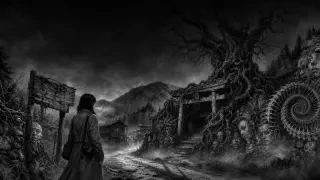
Solving is one skill; building is the next
A riddle you solved is a memory. A riddle you built is a room somebody else has to think their way out of. Neta builds the second kind in the browser, from a prompt.
Built with the game skill
game turns a clue set into a playable room with interactions and a win condition; world-builder keeps the room consistent — the same door, the same six o’clock, every time it is opened. Neta does not ship a riddle answer database, and this page does not pretend to be one: it teaches the method instead.
Riddle solver FAQ
Is there a riddle solver tool on this site?
No. There is a daily word puzzle and a Wordle builder, but nothing that stores riddle answers. This page is a method page: it teaches the procedure rather than selling a lookup.
What is the difference between an enigma and a conundrum?
An enigma describes its answer through metaphor and needs ingenuity to unpack; a conundrum turns on punning in the question or the answer. Different families, different methods.
Why do I keep getting the first line right and the last line wrong?
Because you stopped testing at the clause that felt good. Substitute your candidate into every line, including the boring ones. The riddle is a contract.
Does this work for escape-room puzzles?
Yes — the classify/list/class/test loop is the same one escape rooms are built on. The difference is that a room gives you the nouns as objects you can pick up.
Can I build my own riddle room?
Yes. The game skill builds a playable browser room from a prompt: the answer, three clues and one convincing wrong turn is enough to start.
Where does the Sphinx riddle come from?
Greek myth — Oedipus answers it. It is useful here because it is old enough that everyone half-remembers it and still gets the metaphor wrong.
Keep reading
Platform: Neta Studio · Type: Riddle Solver · Hub: neta.art/app/agent-skills · Works: The Backlot · Twilight 6:17 · The Yugashima Incident · Casefile: You · Never Stop · Yuan Village Chronicles