Who Is This Character? How to Identify One

A practical method for naming a character you half-remember: the five traits that matter, where to look, and how to rebuild them once you know.

The five traits that actually identify a character
Most “who is this character” searches fail because the description is full of the wrong information. People describe mood — cool, sad, mysterious — when identification runs on specifics. A character can be redesigned, recoloured or re-voiced between instalments; what survives is the silhouette and the franchise’s own shorthand. So start with the five things a wiki editor would write in an infobox: hair, eyes, uniform or outfit, one distinguishing mark, and one object they carry.
Then strip the adjectives. “A girl with sad eyes and silver hair in a school uniform” fits a few hundred characters. “A girl with waist-length silver hair, one red eye covered by a medical eyepatch, a black sailor uniform and a spear” fits one. The rule is simple: every trait you add should eliminate most of the cast. If a detail would not survive a colour-blind reader, it is not a clue — it is atmosphere.
| This page | A method for identifying a character from a description, screenshot or memory |
| What helps | Hair, eyes, outfit, one mark, one prop — in that order |
| What does not | Mood words, vague art style, “the main character” |
| Then what | Rebuild the character as a sheet so you can find them again |
Turn the answer into a file
Once you have a name, the useful next step is a character sheet: one page with the traits, the outfit and the prop that made them findable. The character-sheet skill writes it, and the portrait maker draws the face.
Where to look, in order
There is no reverse-image search on this site, and no magic recogniser. What works is the boring research order, which is fast once you get used to it. The method below assumes you have an image, a screenshot, or a memory — all three are workable.
- Start with the franchise, not the face — If you know the show or game, go straight to its character list page. Wikis index by series and almost always include a gallery of faces.
- Use the fandom wiki search, not a general search — Search the series wiki for the two rarest traits together — “eyepatch spear” beats “silver hair anime girl”. Wiki search ranks by title match, so try the object first.
- Verify with the infobox — A wiki page’s infobox is the fact-check: name, aliases, species, affiliation, first appearance. If two candidates match the look, first appearance decides.
- Check the alias problem — Many characters are known by a title, a nickname or two transliterations. Search the alias too, and note both spellings on your sheet.
What you can build once you know the name
Identification is only useful if it turns into something. These are live tool pages on Neta Studio, and the capabilities are quoted from the pages themselves rather than guessed at.
- AI Anime Avatar / Portrait Maker — bust shots, expression sheets, chibi and distinctive line art from one description. The right tool for “I have the name, I want the face in my style”.
- AI Visual Novel Character Maker — sprites, personalities, romance routes and affection systems that grow into a playable visual novel. The right tool for “I have the character, I want them in a story”.
What neither does: identify a character from a photo for you, or reproduce official artwork. They generate an original interpretation from your description — which is also the honest way to use a reference: take the traits, not the asset.
Why “I know the face” is not enough
The hardest cases are not obscure characters; they are famous ones seen out of context. A character in a different outfit, a timeskip design, an anime-only scene, a fan redesign — all of these break the visual match that your memory is relying on. The fix is to identify by structure rather than by image: who they are in the story, who they are related to, what they do for a living. “The one who is the brother of the protagonist and dies in the second arc” narrows a cast faster than any description of hair. Wikis are organised around exactly that structure, which is why the infobox beats the gallery.


Archives that do this properly
These are real works on Neta Studio built around character files, turns and dossiers — the format that makes a cast findable again.
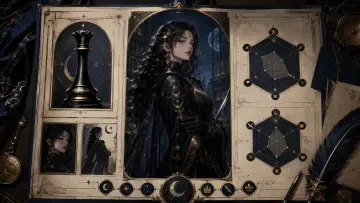



A file per face
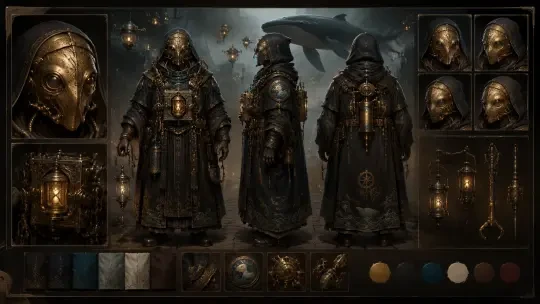
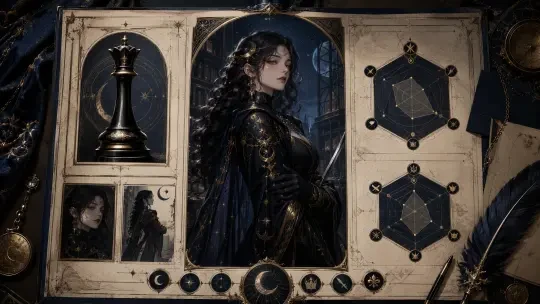
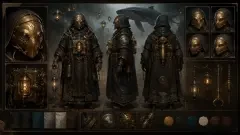
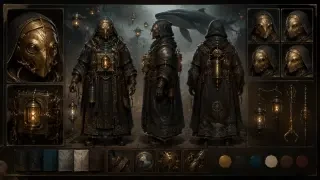
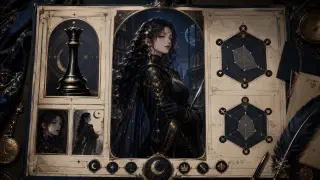
Character Design Sheet / Turnaround Views is a turnaround sheet: one character, several angles, every design decision visible. Character Profile Card is the shorter form — a profile card you could hand to someone and say “this is who I meant”.
Or a cast you have to navigate
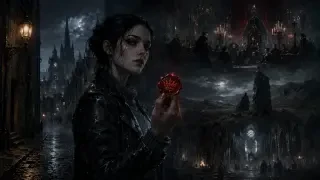
Jujutsu Kaisen World Portal indexes a large cast one page at a time, which is the structure you want when the name is on the tip of your tongue. Final Selection: Night of Wisteria shows how far uniform design alone can carry identification.
The five-minute version
Write five traits, no adjectives
Hair, eyes, outfit, mark, prop. If you cannot fill five, you do not have enough to identify anyone yet — find one more specific detail first.
Search the franchise wiki with the rarest two
Object plus mark beats colour plus mood every time. If the wiki search fails, try the fandom-wide search with the same pair.
Confirm and record
Check the infobox, note both name spellings, then write the sheet. The next time you forget, your own file is faster than the search.
The cast, briefly






Name them, then draw them
Once the name is settled, the portrait maker gives you a face and the character maker gives you a scene. Both work from a description, so the sheet you just wrote becomes the prompt.
Built with the character-sheet skill
character-sheet turns five traits into a usable file: appearance, aliases, affiliation, first appearance, and the one prop that identifies them. roleplay then puts that character in a scene, so the file stops being a note and starts being a voice. The portrait maker handles the face.
Character identification FAQ
Can this site identify a character from a screenshot?
No. There is no reverse-image search or image-recognition feature here. The page gives you a research method and the tools to rebuild the character once you have a name.
What details should I describe first?
Hair, eyes, outfit, one distinguishing mark, one object they carry. Specific props and marks eliminate far more candidates than colours or mood.
Why do I keep finding the wrong character?
Usually because the description relies on mood words or on a design that changes between instalments. Identify by role in the story — family, job, arc — rather than by appearance alone.
What if the character has several names?
Common for translated works: a title, a nickname, and two transliterations. Search the alias and record both spellings on your sheet.
Can I recreate the character’s look?
You can generate an original interpretation from a description — portraits, expression sheets, sprites. You cannot reproduce official artwork.
Where do I start if I only remember a scene?
Describe the scene’s structure: who was present, what happened, who died. Wikis are organised by arc and relationship, and that will get you further than any visual detail.
Keep reading
Platform: Neta Studio · Type: Tool · Hub: neta.art/explore/tool/ai-anime-avatar-portrait-maker · Works: Character Design Sheet / Turnaround Views · Character Profile Card · Jujutsu Kaisen World Portal · Final Selection: Night of Wisteria · After the Nocturne · Night Over the Isles