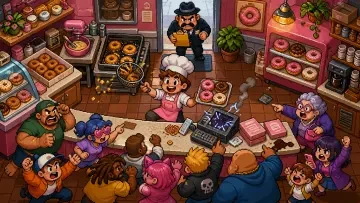
Fun Bot: AI Chat That Stays Fun Past Ten Lines

What a “fun bot” is, why most chatbot jokes die after ten messages, and how to build a character with a want, a limit and a world that keeps answering back.


Two different things are called a fun bot
Search the phrase and you land in two places. The first is the plain wish: a chatbot that is entertaining to talk to, in the way a good party guest is — quick, a little impossible, never quite predictable. The second is a name. “Funbot” turns up as a character on the big character-chat platforms, and there it is not a product but a user-made persona: a cartoonish, joke-forward bot that different people have built separately, with no canon behind it. If you are looking for that specific bot, you are looking for one user’s creation on one platform, and any page claiming to document its backstory is inventing one.
The more useful reading is the first. “Fun” in a chatbot is a design property, not a tone of voice. It comes from three things: a character who wants something in the scene, a world that pushes back, and a cost to getting what you want. Take any of those away and you get the same failure — the bot agrees with you enthusiastically for ten messages, then has nothing left to say, because nothing was ever at risk. The rest of this page is about putting those three things back.
| What it is | A character-driven chat, not a joke generator |
| The failure mode | Agreeable, funny once, empty by message ten |
| What fixes it | A want, a refusal, a world with rules |
| Where it runs | In the browser; free to start, credits for generation |
Give the bot something to want
The roleplay skill builds a character with a goal, a line they will not cross and a room around them — which is where jokes come from.
Why the jokes stop landing
A language model is trained to be helpful, and helpfulness is the enemy of comedy. Ask a chatbot to be funny and it will produce jokes; talk to it for a while and it will keep producing jokes in the same register, at the same distance, with the same willingness to lose the argument. Comedy needs friction, and friction is exactly what an agreeable assistant is built to remove.
- Agreement kills the scene — If every absurd thing you say is accepted, there is no scene — there is a mirror. A character who doubts you, mishears you or insists on their own version of events creates the gap a joke can live in.
- A joke needs a person to fail — Funny lines are cheap. Funny situations need someone with a plan that is going slightly wrong. Give the bot an objective and let the world interfere with it.
- Repetition is the real tell — By message eight most bots are recycling their own cadence: same exclamation, same teasing nickname, same three topics. A written character brief with fixed habits and fixed blind spots exhausts much more slowly.
- The pause is a feature — A character who refuses to answer, changes the subject, or leaves the room is more entertaining than one who answers everything. Refusal is the cheapest comic engine available.
The three-part brief that makes a bot fun
Write three sentences before you write a single line of dialogue. First, what does this character want in this scene, right now, from you? Second, what will they never do — the line that makes them a person rather than a servant? Third, what is the room: where are you, what time is it, and what can go wrong in the next ten minutes? Those three answers do more for entertainment value than any instruction about being witty. A bot told to be funny produces puns; a bot that wants your last slice of pizza and will not admit it produces a scene.
The second thing worth doing is picking a comedy register and staying in it. Deadpan, chaotic, smug, earnest-to-a-fault — these are not moods, they are constraints on sentence length and punctuation. Deadpan means short lines and no exclamation marks. Chaotic means interruptions and non sequiturs. Once the register is fixed, the model stops drifting toward the default cheerful assistant voice, which is the thing that makes most bots sound identical after five minutes.
The third is a scene clock. Give the conversation a deadline — the quiz starts in twenty minutes, the shop closes at nine, the last train leaves at midnight. A clock turns a chat into a story, and a story is what people describe when they say a bot was fun. Without one, you are just two entities being pleasant at each other indefinitely, which is a description of a waiting room.
What “fun” is not
It is not cruelty. A roast bot works because everybody in the room has agreed to the game; a bot that finds the one thing you did not consent to being teased about is not fun, it is a bad evening. It is also not volume: more jokes per message reads as desperation, and the fastest way to make a character tedious is to have them perform. The most reliable fun in chat is a character who takes a silly premise completely seriously. Sincerity plus an absurd premise is a comedy engine that does not wear out, because the premise keeps generating consequences while the character keeps refusing to acknowledge them.


Six works where the fun is structural
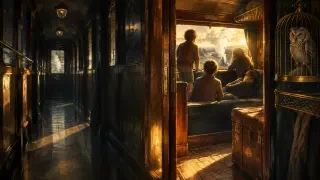
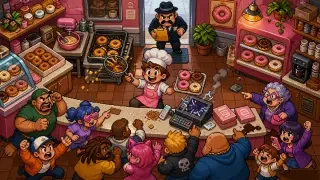
These are real, playable works on Neta Studio. Look at how each one sets a constraint rather than a mood — a kitchen someone keeps coming back to, a train compartment, a one-button arcade loop.




Constraint first
River Pact works because the premise is absurd and the telling is not — total sincerity about a feline history is the joke and the engine at once. Teto Baguette Bounce does the same in a single mechanic: charge, release, bounce, until the timing itself is funny.
Then company
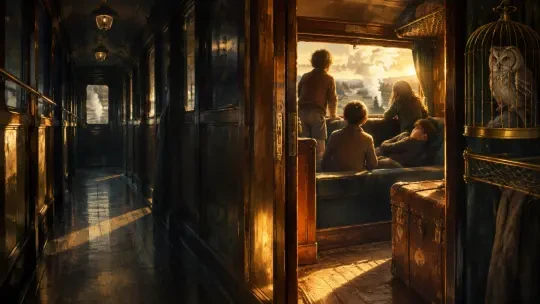
Sweet on You and Mara at Dusk put warmth inside a place rather than inside a tone of voice; Platform 9¾, 1971 shows the other reliable engine — a group of characters with their own business, who only partly have business with you.
Build one this evening
Pick the want
One sentence: what does this character want from the player in the first five minutes? If the answer is “to be helpful”, go back and choose again.
Write the refusal
One thing they will not do, no matter how nicely asked. This single line prevents the agreeable collapse that kills most bots.
Set the room and the clock
A place, a time, a thing that will happen whether or not you are ready. Then let the character react inside it instead of narrating the scene for you.
The works, briefly









The fun is in the character, not the prompt
Start with a persona that has a stake in the scene, then let a live model write the next beat. The roleplay hub is where the characters already built this way live.
Built with the roleplay skill
roleplay turns the three-part brief into a character who can hold a scene, with a fixed voice and a memory of what has already happened; world-builder supplies the room — the quiz night, the shop, the train — so the comedy has somewhere to happen. Character memory is a real switch in the app: turn it on and the character keeps what happened last session instead of starting over.
Fun bot FAQ
Is “funbot” a specific character?
Not one character — the name appears as separate user-made personas on character-chat platforms, each built by a different person. There is no official canon, so any page describing its backstory is inventing one.
Why do chatbots get boring so fast?
Because they are trained to agree. Agreement removes friction, and friction is where humour lives. A character with a want and a refusal keeps producing friction long after a “funny” assistant has run out.
Do I need to write a long character card?
No. Three sentences — want, refusal, room — outperform a page of adjectives. Length helps only when it adds constraints, not compliments.
Can I make a bot that is funny without being mean?
Yes, and it is easier. Take a silly premise seriously and let the character be earnest inside it. Cruelty is a shortcut that stops being funny the moment it lands on something real.
Is it free?
Opening a story and playing the first turns is free in the browser. Generation features such as images and video use credits.
Where do the characters live?
In a world you own: a cast, a place, and a story that continues between sessions. That is also what makes a running joke possible — the bot has to remember the joke.
Keep reading
Platform: Neta Studio · Type: Use Case · Hub: neta.art/app/roleplay · Works: Sweet on You · Platform 9¾, 1971 · Mara at Dusk · River Pact · Teto Baguette Bounce · FRY HARD — Donut Shop Panic