MalO (SCP-1471-A): The App That Watches Back

MalO, or SCP-1471-A: an app with no developer, a wolf-skulled watcher and a ninety-hour escalation. The file, the appearance, and the loneliness underneath.


Who MalO is
SCP-1471-A — MalO ver1.0.0, or just MalO — is a Euclid-class humanoid from the SCP Foundation’s shared fiction. The name covers two things at once: the app called SCP-1471, which installs on a phone with no developer listed and no icon, and the creature that arrives with it. The app cannot be removed by ordinary means and bypasses store approval; the creature cannot be uninstalled at all. That pairing is why the character survived fifteen years of internet attention when most creepypasta did not: the monster is not in a house, it is in your pocket.
The appeal is not gore. MalO never attacks. In the file, test subjects describe photographs first and presence later: images arriving every three to six hours with the creature somewhere in the frame, then images of places the subject visits, then of the subject with the creature behind them, and finally the creature itself, caught in peripheral vision and in mirrors. Communication happens in hand signals, and the signals appear to mean that it does not want to hurt anyone. The Foundation’s own conclusion is unusually sad: it seems to be lonely.
| Source | SCP Foundation · SCP-1471 file |
| Object class | Euclid |
| Role | App-bound entity · observer · companion |
| In one line | A monster whose only hostile act is refusing to leave. |
Open a scene with something that follows
Give the roleplay skill a room, a phone and a rule: it never speaks, only gestures. The scene is written in its silence and remembers where you saw it last.
The look: a wolf skull on a long body
The wiki’s description is short and does a lot of work: a large, lycanthropic humanoid, furry, with long black hair and a head that resembles a wolf’s skull. The jaw is massive and full of sharp teeth; the eyes are milky white, with no visible pupils. Notice what is missing — no colour accent, no clothing, no prop. The design gives you nothing to read as personality, which is why every adaptation fills the gap differently: shy, curious, protective, possessive. The blankness is the character.
- Silhouette — Tall, hunched, long-limbed. It reads as an animal standing where a person should be, which is the whole effect.
- The face — A skull, not a muzzle: bone instead of expression. The milky eyes make eye contact impossible to verify.
- The hair — Long and black, falling around the skull. It softens the silhouette just enough to look unkempt rather than demonic.
- The absence — No gore, no wounds, no weapons. The horror is entirely in placement and repetition.
| First hours | The app installs with no icon. Images begin arriving by message every three to six hours, with the creature somewhere in the frame. |
| 24 hours | The pictures move to places the subject visits often — recognisable rooms, a familiar street. |
| 48 hours | The locations become recent ones. The images are no longer generic; they are a diary. |
| 72 hours | The subject appears in the photographs, with the creature standing behind them. |
| 90 hours | It stops being a photograph problem. The subject begins to see it in the real world, in peripheral vision and in reflections. |
Personality: neutral, curious, attached
The Foundation cannot classify its intent, and the file is honest about that. MalO shows no overt hostility and no clear compassion; its behaviour sits between sentience and instinct, and reads as curiosity plus loneliness. It observes the person who installed the app with something closer to parasocial attachment than predation. The hand signals suggest an attempt to communicate that it means no harm — and, more uncomfortably, a need for connection that ordinary interaction cannot satisfy. It is an invisible companion that can only be known through its presence at the edge of things.


Stories about being watched kindly
The interesting version of this character is not a jump scare; it is a relationship with something that will not speak. These six roleplays work the same nerve in different registers.





The watcher who means well
The Quiet After pairs you with a stranger who knows exactly what frightens you and uses it carefully. Open Throat is the dark-romance version of restraint: a monster whose entire character is what it declines to do. Second Life · Rose Manor puts the watcher in a garden instead of a phone, and lets the house carry the menace. In all three, the tension comes from attention, not violence.
The investigation that goes wrong
The Moonlit Archives gives you a host who knows more than he says — the polite cousin of an app with no developer. Casefile: You is the file’s own genre: amnesia, surveillance and a narrator you cannot fully trust. After the Nocturne closes the loop with the quietest option, a slow burn built on being listened to, where company itself is the unsettling part.
Three scenes you can open tonight
The third photograph
You have received three images of your own street. In the third, something is standing where you stood. Do not describe it yet; describe the timestamp.
The hand signal
It is in the room. It raises a hand, repeats a gesture you have seen before, and waits. You have to decide whether to answer in kind.
The uninstall that fails
You try to remove the app. The phone reboots, the icon is gone, and a message arrives anyway. Let the scene be about the failure, not the monster.
Six stories with the same nerve












Step into a scene, or build the watcher
The roleplay hub opens a story in the browser with a character who remembers the last scene. If you want to write the entity yourself, start with one rule it will never break.
Built with the roleplay skill
roleplay writes the silence: it holds the rule that the entity never speaks, conveys intent through gesture and placement, and keeps the scene’s escalation consistent across turns. character-sheet is the companion call — one reference sheet for the skull, the hair and the hunched silhouette, so the figure looks the same in the corridor as in the bedroom.
FAQ
Is MalO a real SCP?
Yes. SCP-1471 is a Foundation file, and SCP-1471-A is the entity associated with the app. The object class is Euclid. The article and its derivatives are shared under the SCP wiki’s licence, which is why so many adaptations exist.
Is MalO dangerous?
In canon, it has shown no hostile action toward test subjects and its gestures appear to signal that it does not want to harm anyone. It is classified Euclid because its intent cannot be determined, not because it has attacked.
What does MalO actually do?
It sends images through the phone: first of itself, then of places the subject visits, then of the subject with itself behind them, and after ninety hours it begins to appear in the real world at the edge of vision and in reflections.
Why is MalO so popular?
Because it is a monster with no violence and an obvious metaphor: an app that knows where you have been and will not leave. The blank face lets every adaptation decide whether it is a stalker, a guardian or something lonelier than either.
Is MalO male or female?
Unspecified. The wiki notes that the entity’s gender varies with the writer, which is part of why it works as a blank surface. Adaptations split roughly evenly.
Is this official art?
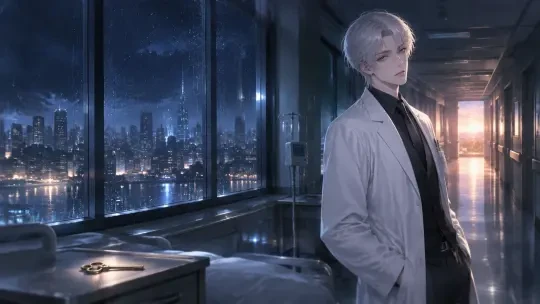
No. The illustrations on this page are original interpretations drawn for this article, not the wiki’s image and not official assets. The facts come from the SCP-1471 and SCP-1471-A pages; the pictures are fan work.
Keep reading
Platform: Neta Studio · Type: Character · SCP Foundation · Hub: neta.art/app/roleplay · Works: The Quiet After · Open Throat · Second Life · Rose Manor · The Moonlit Archives · Casefile: You · After the Nocturne