Random Pokémon Maker: Roll a Fakemon, Then Build the Card

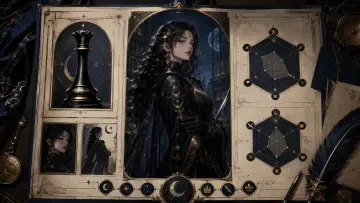
A random Pokémon maker without the slot machine: roll a fakemon from four tables, then turn it into a real 3D card — artwork, alpha cutout and rarity line.


A randomizer is a table, not a slot machine
When people search for a random Pokémon maker they usually want one thing: a creature they did not think of. A black-box generator gives you that once and then gives you the same flavour forever, because you cannot see which axis to reroll. A table is better. Roll a body plan, an element, an ability and a drawback, and if the result is boring you reroll exactly one of them.
The tables below are the whole randomizer — four dice, twenty-eight options, no login. What Neta adds is the second half: the same creature can be turned into a real card. The card maker paints an environment for it, cuts the creature out with real alpha, builds the card in 3D and lays a rarity line and edition number on the frame.
| What you roll | Body plan, element, ability, drawback |
| What you need | Four dice, or a random number picker |
| What you get next | A card with environment, cut-out, rarity and finish |
| Not | A licensed Pokémon generator or an official Pokédex entry |
Roll a fakemon, then build the card
Bring the four rolled traits as one sentence. The pokemon-card skill paints an environment for the creature, cuts it out with alpha, and assembles the card with a rarity line and edition number.
The four tables
Each column answers a different question. Body plan decides silhouette, and silhouette is what makes a creature recognisable at thumbnail size. Element decides palette and habitat, which is also what the card’s background will be painted from. Ability is the one surprising fact — the thing that makes the creature worth catching. Drawback is what stops it from being invincible, and it is usually the most memorable line on the card.
- Body plan first — Silhouette before colour. If you cannot recognise it as a black shape, no amount of rendering will save it.
- Element sets the habitat — A frost creature implies a specific landscape, which is exactly what the card maker paints behind it.
- Ability is the hook — One strange verb — stores, mimics, digests, dreams — does more than three stat points.
- Drawback is the story — A creature that overheats or forgets a name has a personality. A creature with no cost is a stat block.
- Reroll one axis, not all four — If the result is close but wrong, change the element or the body plan. Rerolling everything loses the idea you liked.
Roll one from each column. Reroll anything that sounds like a pun.
Why the card is the real test
A creature design only proves itself when it has to sit in a frame with a name, a rarity and a stat block. That is the moment you discover whether the silhouette reads, whether the palette survives a border, and whether the ability can be written in six words. The card maker forces those decisions early: it paints a background that belongs to the creature, isolates the creature with alpha so it sits above the scene, and prints a rarity line and edition number on the frame.


Creatures and worlds already built here
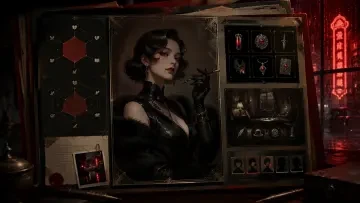
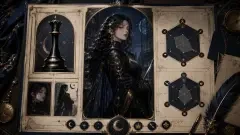
These are real works on the site: a Pokémon atlas, a monster-collector game, a mascot designed to survive small sizes, and two card formats that show what a finished frame looks like. Use them as scale references before you roll.


A creature needs a map — the Pokémon world atlas
The Pokémon world atlas puts nine regions on one living map, and it is useful before you roll: pick the region your fakemon would live in and the element column suddenly has a reason. A frost quadruped in a volcanic region is a better design prompt than a frost quadruped in nothing. Fazbear Monsters does the same for a roster — every entry needs a habitat before it needs a stat line.
Creature first, card second — Fazbear Monsters and Milk Frog
Fazbear Monsters is a collector RPG built on a roster, and the roster works because each entry has one readable silhouette and one joke. Milk Frog goes further: a mascot designed at 64 pixels, then printed on a postcard. That is the order to work in — silhouette, then colour, then frame.
Three steps from dice to card
Roll the four columns
Body, element, ability, drawback. Write the result as one sentence, in that order — “an armoured frost quadruped that grows crystals but overheats”.
Sketch it badly, once
Thirty seconds on paper. You are checking the silhouette, not the art. If the shape does not read, change the body plan before you generate anything.
Build the card
Send the sentence to the card maker. It paints an environment, isolates the creature with alpha, assembles the 3D card and adds the rarity line — then you drag, flip and adjust the depth.
Six places to start




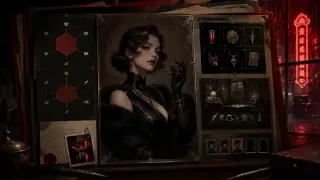
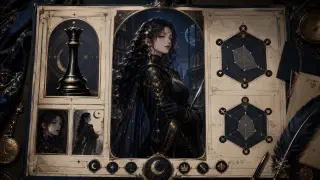
Roll first, generate second
The tables above are free and offline. When you have a sentence you like, the card maker turns it into an environment, a cut-out and a finished frame — and the Pokémon atlases show you where the creature would live.
Made with the pokemon-card skill
pokemon-card is the skill behind the card: it paints an original environment for the creature, cuts it out with real alpha, gives it motion, and assembles the frame — seal, rarity line and edition number — in 3D. image handles the flat art when you only need a drawing, and holo-card is the variant that adds layered foil and parallax when the same character should feel like a collectible.
FAQ
Is there a real random Pokémon generator here?
There is a real card maker, and there are the four tables on this page, which are the randomizer. We did not build a slot machine that hides its logic: a table lets you reroll one axis and keep the idea you liked.
Do I need to be able to draw?
No. The sketch step is thirty seconds and exists to test the silhouette, not to produce art. The card maker paints the environment and cuts the creature out from your description.
Can I use real Pokémon names?
You can describe a creature in the genre, but the card is not a licensed product and we do not reproduce official artwork or present it as a Pokédex entry. Original creatures and fakemon are the point.
Is the card actually 3D?
Yes. The card maker builds the frame in 3D: you can drag it, flip it, adjust depth, and the creature sits above the painted background because it is cut out with real alpha.
Can I print the card?
You can export and print the artwork, but the 3D version lives on its page, where it can be dragged and turned. If you need a physical card, print the flat frame at card size and keep the 3D version as the shareable one.
What if my fakemon looks bad?
Change one axis, not four. Most weak results come from a silhouette that does not read, not from a bad paint job: reroll the body plan, keep the element and the ability.
Keep reading
Platform: Neta Studio · Type: Random creature maker · Hub: neta.art/app/agent-skills · Works: Pokémon World Atlas · Fazbear Monsters · Milk Frog Desk Pet · Travel Milk Frog · Nyx — profile card · Evelyn — dossier