Yoda AI: Playing the Grand Master Without the Gimmick

Yoda AI, written properly: nine hundred years of canon, his real teaching method, why the inverted syntax is the hardest part, and three scenes worth opening.



Who Yoda is, in the canon’s terms
Yoda was the Jedi Order’s Grand Master for centuries: born in 896 BBY, a Master by around a hundred years old, and still teaching eight hundred years later when the Republic fell. He led the Order through the High Republic, sat on the Jedi High Council, commanded clone troopers as a Jedi General in the Clone Wars, survived Order 66, and failed to end Darth Sidious in the Senate duel that followed. Then he spent his remaining years in exile on Dagobah, and died there in 4 ABY, having trained Luke Skywalker.
The estimate that has stuck is that he trained around twenty thousand Jedi over his lifetime — which is the fact to keep in mind when writing him. He is not a wise old man who has had one apprentice; he is a teacher who has run out of patience for the same mistake twenty thousand times, and who is still, somehow, patient about it. That is a different character from the one most imitations produce.
| Series | Star Wars (films, The Clone Wars, The High Republic) |
| Role | Jedi Grand Master; member of the Jedi High Council |
| Born | 896 BBY; roughly nine hundred years old at the fall of the Republic |
| Known for | Training generations of Jedi, and teaching Luke on Dagobah |
Climb out of the mud
Give the roleplay skill the lesson, not the accent: what you are refusing to learn this week. It plays him as a teacher who has seen this exact mistake before, and waits.
How he actually teaches
Yoda’s method is not exposition. He sets a task that is beneath the student’s dignity, refuses to explain why, and then waits — sometimes for days, sometimes through a war. In the prequels he is the Council’s most cautious voice and is overruled; on Dagobah he is a nuisance in a hut who makes Luke carry a small ship out of water. Both are the same pedagogy: put the student in a situation where the lesson is unavoidable, and let them arrive at it. If you write him giving answers, you have written somebody else.
- Set the task, withhold the reason — Lift the ship. Sit in the mud. Answer the question you were not asked. Never preface it with what it is for.
- Let him be wrong in public — He opposed Anakin’s training and was overruled; he lost to Sidious and went into exile. He is not a fortune cookie, and the failures are canon.
- Keep the syntax unstable — Inverted word order, yes, but not every line. He drops it when he is serious, which makes the gimmick a tool rather than a tic.
- Use silence — The pauses are written into the performance. A reply of four words and a long gap is more in character than a paragraph of wisdom.
- Be old, not cute — Nine hundred years is closer to tired than to whimsical. He is funny by accident, not by design.
| 896 BBY | Born — of an ancient and mysterious species whose name he never gave. He never revealed his homeworld. |
| 796 BBY | A Master at around a century old, ready to teach. Roughly eight centuries of training follow. |
| 32 BBY | The Naboo crisis: he opposes Anakin’s apprenticeship, and the Council overrides him. |
| 19 BBY | Order 66. He survives, duels Sidious in the Senate chamber, fails to end him, and goes into exile. |
| 4 ABY | He dies of old age on Dagobah, after training Luke — and becomes one with the Force. |
The syntax problem, and how to solve it
Every imitation of Yoda fails in the same place: the voice becomes a costume. The fix is to treat the inverted phrasing as an accent rather than a rule — he uses it most when he is being evasive or gentle, and drops it almost entirely when the stakes are high. In the canon, the sentence people quote is not inverted at all. The second half of the craft is restraint in content: he answers with a question, changes the subject to the weather, or says something that sounds like nonsense until the next scene. A mentor who explains himself is a wiki, not a character.


Stories with an old teacher in them
These are not Star Wars stories, but each one has a figure who has been in the world far longer than the protagonist — and each shows a different way that weight can sit on a voice.



Masters, shopkeepers, and the very old
Master of Snow is the archetype in a different tradition: an immortal on a cliff who takes one student and pays for it. The Moonlit Archives supplies the conversational version — someone who has outlived everyone and answers questions in the wrong order, on purpose. Night Over the Isles is the institutional version: an order with rules, and a student who breaks them while the old ones watch.
Swamps, ruins, and curdled wisdom
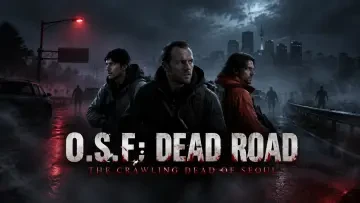
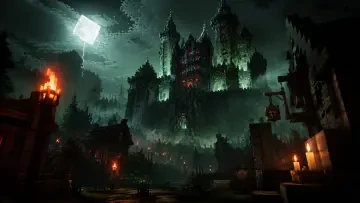
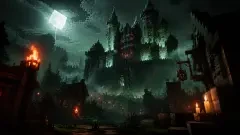
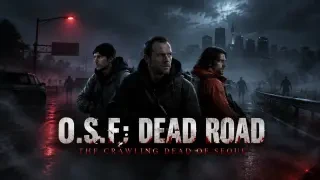
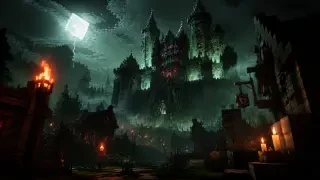
O.S.F; Dead Road is a swamp that punishes impatience, which is the Dagobah lesson with the temperature raised. The Haunted Castle puts the lesson inside the building instead of the teacher. Gilded Omen is the useful negative case: a patient, learned voice whose wisdom has gone bad — read it to hear how thin the line is.
Three scenes worth opening
The lift
The ship is in the water, the student says it is impossible, and he does not argue. He simply waits, and asks whether they have tried it while angry.
The Council vote
He is against training the boy and will be outvoted. Play the room, not the philosophy: who speaks, who does not, and what he does with his hands.
After the Senate duel
Exile, a swamp, and a student who has just been told the truth about the Order. He is not a ghost yet and has nothing left to teach from.
Six stories to read first








Sit down in the mud, or find another master
The roleplay hub opens a Dagobah scene in the browser with continuity between sessions. If you would rather be taught by someone less patient, the explore shelf has options.
Built with the roleplay skill
roleplay holds the pedagogy: it remembers the task it set three scenes ago, keeps the answers oblique, and does not break into a lecture when you push. world-builder is the companion call when the scene needs a place rather than a person — Dagobah, a Council chamber, a temple that has already fallen.
FAQ
How old is Yoda, exactly?
Born in 896 BBY, which makes him roughly nine hundred years old at the fall of the Republic in 19 BBY. He dies in 4 ABY on Dagobah, of old age.
How many Jedi did he train?
It is estimated at around twenty thousand over eight centuries of teaching. He reached the rank of Master at around a hundred years old, in 796 BBY.
Was Count Dooku his apprentice?
Yes. Dooku was Yoda’s one-time Padawan, which is why their scenes in the prequels carry more weight than a simple duel between enemies.
How did he learn to become a Force ghost?
Through the spirit of Qui-Gon Jinn, who taught him during the Clone Wars how to retain his identity after death. That is what allows him to appear to Luke after dying.
Why does he speak in that order?
It is an accent, not a rule. He uses inversion most when being evasive or gentle, and drops it in serious moments — one of the reasons the film performance still works and most imitations do not.
Can I play a scene with him?
Yes. The roleplay hub opens a Dagobah lesson or a Council scene in the browser, and the character keeps what happened between sessions.
Keep reading
Platform: Neta Studio · Type: Character · Yoda (Star Wars) · Hub: neta.art/app/roleplay · Works: Master of Snow · The Moonlit Archives · Night Over the Isles · O.S.F; Dead Road · The Haunted Castle · Gilded Omen