12 Types of RPGs (JRPG, Skyrim-Like, Roguelike, Tactical) — With Playable Examples
Make your own rpg game like skyrim
JRPG, action RPG, open-world, roguelike, tactical, text-based — the RPG types, each illustrated with a real browser 3D world you can walk into.
If you want an RPG game like Skyrim, decide first which part of Skyrim you actually want. The walking-and-finding part, the real-time fighting part, and the 'what I did last session is still true' part are three different engineering problems, and they cost very different amounts to build. This page sorts role-playing games into twelve types along one axis: how much of the world the player controls at runtime, versus how much of it you author in advance. Each type gets a concrete description and a browser world from Neta Studio you can walk into before you commit to building anything.
The axis runs from scripted to simulated. Scripted types — JRPG, visual novel, dungeon crawler — spend your budget on authored content: scenes, dialogue, encounter placement, art per location. Simulated types — roguelike, sandbox, open-world — spend it on rules: generation, spawn tables, damage formulas, and the tooling that lets you tune them. Neither end is better. The scripted end gives you exact control over pacing and is predictable to test. The simulated end gives you more playtime per asset and is much harder to balance, because you cannot see every state the game can reach.
Quick Answer
Twelve types, one axis: how much of the world the player generates by playing, and how much you write down in advance. Everything else — camera, combat timing, party size, save system — is downstream of that single choice.
The table below places each type on the axis. Read the second column as a budget line: it tells you where the hours go.
Two of these are usually named directly rather than described by category. People ask for a JRPG, or they ask for an RPG game like Skyrim. Both are covered below with the cost attached, because they sit at opposite ends of the axis and they fail in opposite ways.
| Type | What you author vs. what the player generates |
|---|---|
| Turn-based JRPG | You author the cast, the arc and the encounter curve; the battle system generates the moment-to-moment decisions. |
| Action JRPG | Same authored spine, but combat runs in real time, so you also author wind-up and recovery frames. |
| Action RPG | Rules-heavy combat with authored encounters; readability of the enemy carries the whole experience. |
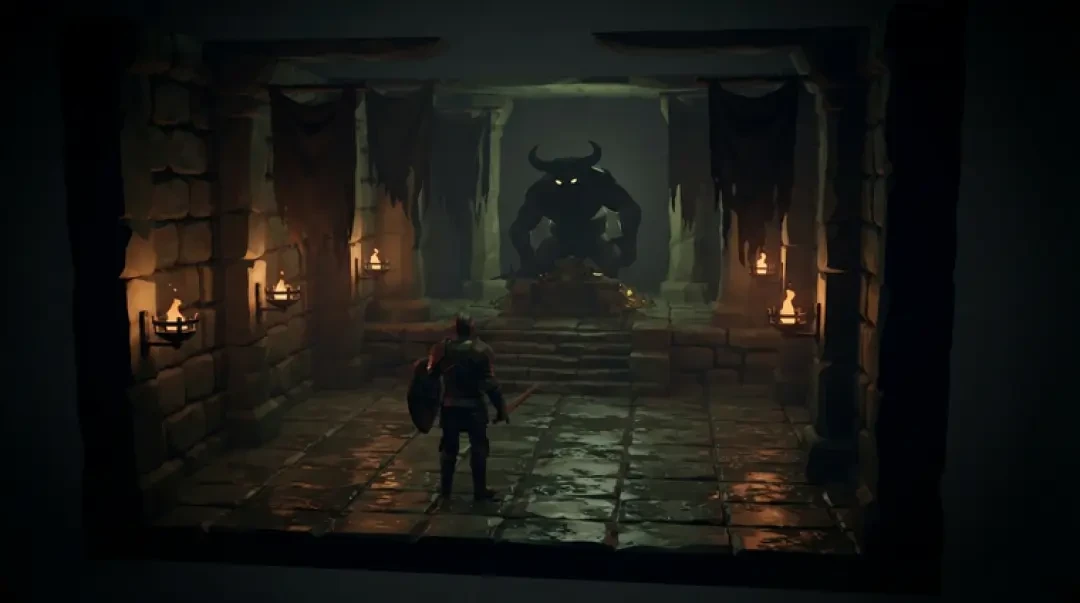
| Soulslike | Action RPG plus commitment: stamina, long recovery, and no cancel once a swing commits. |
| Open-world RPG (Skyrim-like) | You author landmarks and a quest graph; the player generates their own route between them. |
| Survival / sandbox RPG | You author resources and recipes; the player generates the entire progression order. |
| Roguelike | You author the rule set; the generator produces the dungeon, and death is permanent. |
| Roguelite | Same generator, but a persistent currency carries power between runs. |
| Tactical RPG (SRPG) | You author the map and the roster; the player generates the solution inside a grid. |
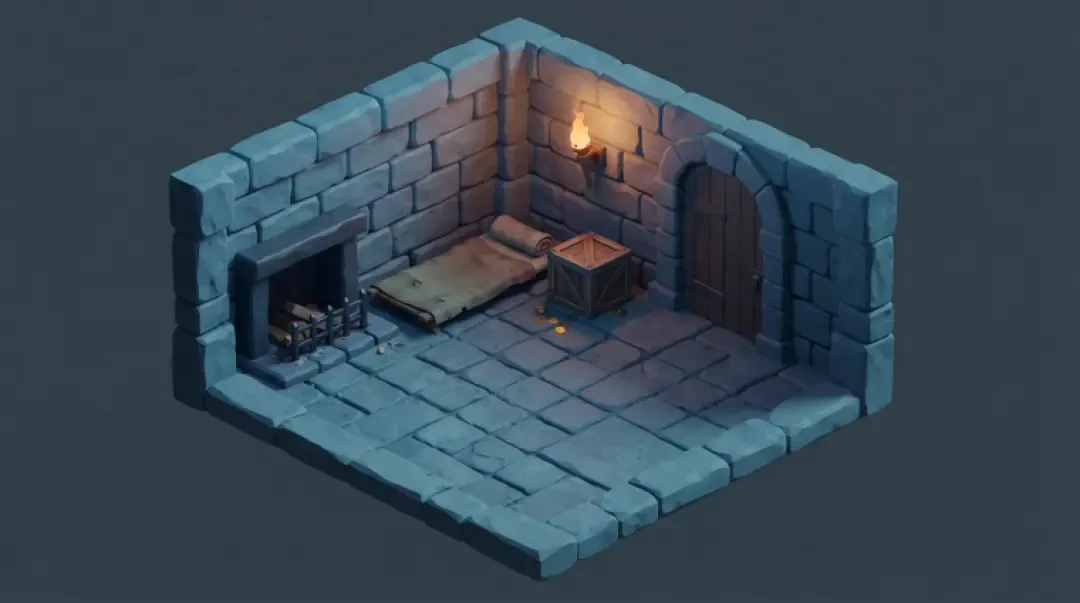
| Dungeon crawler | One authored dungeon, party-based, built around resource attrition over a long descent. |
| Text-based / interactive fiction | You author the prose and the state machine; the player generates nothing but choices. |
| Visual-novel RPG | You author scenes and dialogue; light stats decide which scenes open. |
JRPG
A JRPG is defined by three things, and you need all three: a fixed cast the player does not create, a main arc the player does not reorder, and party combat where the player commands several characters at once. The combat is usually menu-driven — either strictly turn-based or an active-time bar that fills while the player picks a command. Dungeons are linear; towns are hubs. The player chooses tactics, not itinerary.
What it is good at is narrative control. Because you decide when the party reaches the next town, you also decide what the player knows at that moment, which lets you stage a reveal instead of hoping they stumble into it. Difficulty is tunable with numbers instead of reflexes: a boss can be hard because it punishes the wrong target order rather than because it demands fast input. That makes the type unusually testable. A spreadsheet and a few hundred automated battles will tell you more about your balance curve than a playtest session will.
What it costs is content volume. Every hour of JRPG play needs authored towns, NPC dialogue, shop inventories, and encounter tables, and almost none of that is reusable across locations. Battle balance also scales worse than people expect with party size, because status effects multiply: four characters, six abilities each, and four status conditions is a test matrix in the thousands of combinations. Name the cast early. If the party changes in act two, every line of dialogue written before that point is now conditional.
- Fixed castThe player picks which party member attacks, not who exists. Removes character creation and all its branching.
- Linear main arcOne spine with optional side content. Cheap to write, cheap to test, easy to pace.
- Party combatCommand menus plus a turn or ATB order. Tune with numbers, not frame windows.
- Sprite budgetDirectional walk and attack poses for a large cast is the task that stalls solo builds. Agent Sprite Forge exists to take that off the critical path.
Action RPG
Real-time combat introduces a timing contract. The player has to be able to read an attack before it lands, and you own every frame between 'the enemy decided to attack' and 'the player got hit'. In a turn-based game those frames do not exist. In an action RPG they are the entire game.
Readability of the enemy is the hardest part, and it is a rendering problem as much as an animation one. A telegraph works when it changes the silhouette, not when it is a subtle arm movement. At 60 fps your frame budget is 16.6 ms, and a 0.4-second wind-up is 24 frames — but players reliably react to roughly the last third of that window, so the readable portion is closer to eight frames. Give the attack an anticipation pose, an emissive or color change, and an audio cue. Give the hit an unmistakable reaction. Three signals for one event is not excessive; one signal is usually not enough.
The common failure modes, in order of frequency: hitboxes larger than the visual, invulnerability frames set to zero so trading hits is always the correct play, and multiple enemies attacking on the same frame with no spacing rule. That last one is a design bug disguised as difficulty. Cap how many enemies can commit to an attack at once and the fight stays readable at any crowd size, because the player only ever has to track one or two incoming telegraphs.
- Wind-up0.3–0.5 seconds where the attack is announced and cannot hurt you. The bigger the damage, the longer this should be.
- Active framesThe window where the hitbox exists. Keep it inside the visual or players will call the game unfair.
- RecoveryThe cost of a miss. This is the value that makes spacing matter. Set it to zero and positioning stops existing.
- Cancel windowWhen recovery can be interrupted. Leaving it open makes the game forgiving; closing it turns it into a commitment game.
- HitstopTwo to six frames of frozen motion on connect. The cheapest way to make a hit land when you have no particle budget.
Open-World RPG (Skyrim-Like)
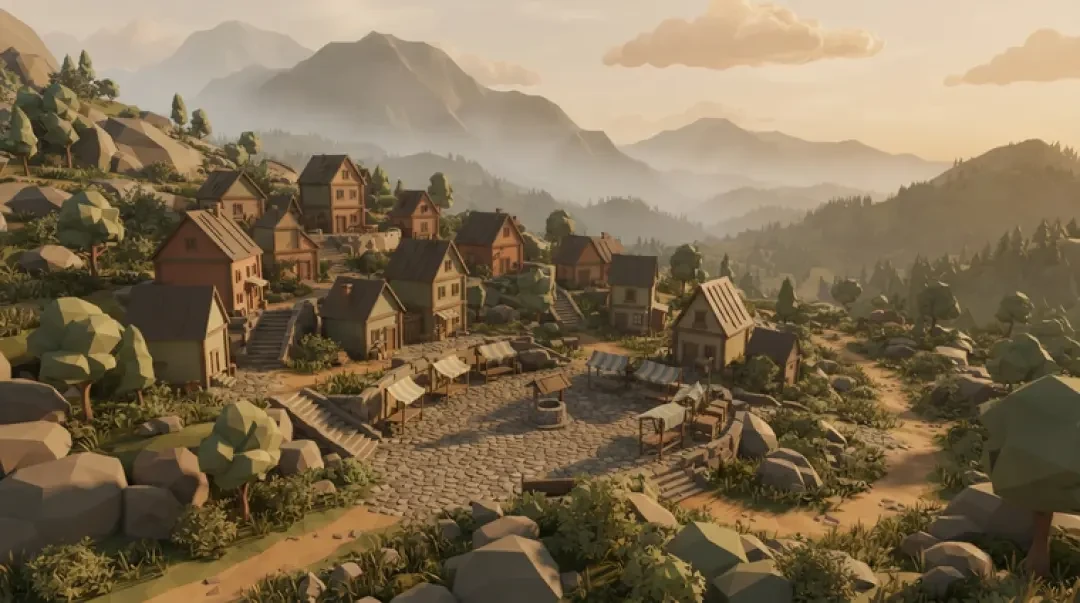
An RPG game like Skyrim feels open because of landmarks, not because of area. Size is the thing you ship last and the thing players consciously notice least. The intent behind the search is almost always 'I want to pick a direction and find something', not 'I want a big number on the map screen'.
Landmarks, not square kilometers
The test is concrete: from the player's spawn point, can they see three things they want to walk to, and are those three things different from each other? If a player runs for 45 seconds without seeing something they could name, the world reads as empty regardless of how much terrain is loaded. Density of interesting things at a walkable distance is the real variable. A mountain visible from everywhere that visibly gets closer as you walk toward it does more work than ten times the terrain.
What seamless streaming actually costs
A seamless world means you cannot hold everything in memory. Terrain gets chunked — 64-metre tiles are a common working size — with the ring of tiles around the player resident and the rest discarded. Each chunk needs a lower-detail version for distance rendering, a navigation mesh for AI, and a spawn table for whatever lives there. You also have to handle the seams: an actor walking from one chunk to the next must not fall through the join, and a quest target must still resolve when its chunk is unloaded and reloaded.
Budget for the pipeline, not the game. The terrain generation, the LOD swap distances, the navmesh bake and the spawn tooling are all work you do before the first quest exists.
Why most first projects should not attempt one
The type has the worst ratio of hours-played to hours-built on this list, and its failures are quiet. Performance degrades gradually, so you do not notice until frame time is already bad and the fix requires restructuring how the world loads. If you want to try it anyway, build one valley with three landmarks, one town, and no loading screens between them. Walk Mini World and The Cyclops' Island at that scale before you start drawing a map — both will calibrate what a single person can actually fill.
Roguelike & Roguelite
A roguelike generates its dungeon from a rule set, kills you permanently, and expects the next attempt to be a different layout. A roguelite keeps the generation and the death but adds meta-progression: a currency that survives the run and buys permanent upgrades. The distinction is not cosmetic. Permadeath alone demands a large content pool because every run has to feel new. Meta-progression covers a thin content set by giving the player a reason to repeat runs they have already seen.
Run length is the design decision that matters most. A 20-to-40-minute run is the comfortable current range for a roguelite — long enough for a build to come together and for the player to feel the cost of a mistake, short enough that losing does not feel like losing an evening. Classic roguelikes run much longer because they let you save and quit mid-descent. Pick one and hold it, because room count, difficulty curve and the save system all follow from this number.
Why the small run is friendly to a first build: your content budget is per-run, not per-hour. Eight to twelve room layouts, twelve enemies and a small item pool can produce a lot of distinct play, because the generator and the player do the combinatorics for you. Seed the generator and store the seed with the save. When someone reports a broken room, the seed is the entire bug report and you can reproduce it in one command. The failure mode is uncurated generation — rooms that are trivial, rooms that are unwinnable, and difficulty spikes caused by an item synergy you never saw because you never tested that combination.
| Decision | Effect on the build |
|---|---|
| Run length | Sets the content budget. A 30-minute run needs roughly 8–12 room types before it starts repeating. |
| Seeded or free generation | Seeded makes bugs reproducible and enables daily-run modes. Free generation feels less samey and is much harder to debug. |
| Permadeath alone vs. meta-progression | Permadeath alone demands high variety. A persistent currency will carry a thin content set. |
| Item pool size | Every item multiplies the synergy states you have to test. Start under twenty. |
Tactical RPG
A tactical RPG moves combat onto a grid and makes positioning a resource. Turns are discrete, either round-based, side-based or driven by an initiative queue, and the fight is decided by distance, cover, elevation and facing more than by raw stats. The player usually sees the whole battlefield at once, from an isometric or high three-quarter camera.
The grid is what buys you readability. It gives you a countable, displayable space, so you can highlight every tile a unit can reach and every tile it can hit before the player commits. Cover, elevation and flanking all become legible instead of approximate. This is the structural advantage over an action RPG: the player can compute the outcome of a decision before making it, which means a loss is attributable to their plan rather than to their reflexes.
What it costs is the AI. A tactical enemy has to evaluate candidate moves, and shallow evaluation gets exploited within one session — the player finds the chokepoint, the kiting pattern, or the focus-fire order and never loses again. Turn order display is the other hidden cost: with eight units on the field, the player needs to know who acts next and why, or the fight reads as arbitrary.
Where to look first
The isometric example in Neta Studio is the right thing to walk before you write any AI. It shows how much information a single tile highlight carries, and how quickly the screen becomes unreadable once range indicators for four units overlap.
| Turn model | What it changes |
|---|---|
| Round-based | Every unit acts once per round in a fixed order. Easiest to balance and easiest to display. |
| Side-based | One side moves entirely, then the other. Rewards alpha strikes and can snowball badly. |
| Initiative queue | A speed stat decides order. More expressive, and considerably harder to balance. |
| Interrupt / overwatch | Units act outside their own turn. The highest-complexity option and the most satisfying when it works. |
Text-Based & Interactive Fiction
A text-based RPG or interactive fiction game is the cheapest RPG to ship. There is no art, no animation, no pathfinding, no physics and no camera. You need a text box, a state machine, and a way to save. A working vertical slice is a weekend of work rather than a quarter of one.
It is also the hardest to make memorable, because the words have to carry everything art would have carried. Choice-based systems converge on the same problem: branching multiplies. Ten binary choices is over a thousand states, and you will not test them. The fix is to have choices set flags rather than fork the story, then let the flags recombine at a small number of convergence points. A parser-driven system has the opposite failure — players type things you did not anticipate, and 'guess the verb' turns a puzzle into a vocabulary test.
Where text still wins: internal states. A character lying to themselves is trivial to write and nearly impossible to animate, and an unreliable narrator only works in prose. It is also the fastest way to prototype a system — you can find out whether an economy or a reputation loop is interesting before anyone models a mesh. Budget in words, not minutes. A 30-minute play session needs several thousand words of prose, and players read faster than you write.
- Flags, not forksChoices set state. A small number of convergence points read the state. Keeps the state count linear instead of exponential.
- Always offer a way backUnwinnable states are the most common bug in choice-based games. Test for them explicitly.
- Show the stateIf a flag matters, surface it in the interface. Hidden reputation systems read to players as randomness.
Visual-Novel RPG
A visual-novel RPG is dialogue-driven progression with light systems bolted on: one or two stats, an affinity value, sometimes a small management or combat loop. The scenes are authored. The systems decide which scenes open. The player's agency is in who they spend time with and what their character becomes, not in where they walk.
It is the shortest path from an idea to something playable. The first buildable version is a background, a character portrait, a text box, two choices, and a stat that changes when you pick one. You can have that running in an afternoon, and it will already tell you whether the writing and pacing hold up. Because the systems are small, the failure modes are visible early. If the second scene is boring, you find out before you have built twelve of them.
The trap is branching without convergence. A tree where every choice forks and never rejoins doubles your writing each time it branches, and most of those branches never get seen. Gate instead of fork: an affinity or skill value decides which of a small number of scenes plays, and those scenes rejoin the main line afterward. Save per node rather than per scene, or players will replay dialogue they have already read to get back to where they were.
Pick a Type, Build It
For each type, here is the smallest version that is genuinely playable — not a tech demo, but the first slice you could hand to someone and watch them play without explaining it.
Build the slice in the browser
Every one of these slices is buildable in the 3D game builder at Neta Studio. You describe the world and the rules in text, it produces a Three.js scene you can walk into and edit, and you iterate from there without a local engine install or an asset pipeline. Start with the smallest vertical slice above, get it running end to end, and only then add the second system. The order matters more than which type you picked.
01
Turn-based JRPG: a command menu, a turn order, three stats, and one enemy type with three distinct attacks.
02
Action JRPG: one controllable character, one attack, one dodge with real invulnerability frames, and one enemy with a readable telegraph.
03
Action RPG: lock-on, hitboxes drawn as debug capsules so you can see them, 0.35-second wind-ups, and hitstop on connect.
04
Soulslike: a stamina bar, no cancel once an attack commits, and a checkpoint the player respawns at.
05
Open-world RPG (Skyrim-like): one valley, three landmarks visible from the spawn point, one town, and no loading screen between them.
06
Survival / sandbox RPG: two resources, three recipes, and one threat that only appears at night.
07
Roguelike: a seeded generator, eight room types, permadeath, and a full run under 30 minutes.
08
Roguelite: the same generator plus one persistent currency and three unlocks that change how a run plays.
09
Tactical RPG: a 12x12 grid, four units per side, cover and elevation, and a visible initiative queue.
10
Dungeon crawler: five floors, a party of four, and one resource that depletes and does not refill.
11
Text-based / interactive fiction: a state machine with twelve nodes, one flag, one ending, and a measured word count per minute of play.
12
Visual-novel RPG: three characters, one stat, four scenes, and one gate that only opens above a threshold.
Walk into the world it belongs to
The type list only becomes useful when one of them is under your cursor. Pick the type closest to your idea, then open a finished example of it — because the fastest way to choose a genre is to feel the difference between two of them.
FAQ
What type is easiest for a beginner? +
Text-based or visual novel. Both need a text box and a state machine rather than an animation pipeline, and both tell you whether the content is interesting within a day. If you want something 3D, a tactical RPG on a small grid removes most of the physics, collision and camera problems.
What is the difference between JRPG and RPG? +
JRPG is a subgenre, not a separate category. RPG describes the progression layer — stats, levels, equipment, persistent choices. JRPG adds a fixed cast, a linear main arc and party combat on top of that, where Western RPGs usually give you a created character and a free order of objectives.
What makes an RPG open-world? +
Not map size. It is whether the player chooses the order of their objectives and can see the next thing worth doing from where they stand. If quest markers are the only thing leading anywhere, it is a linear game with a large map.
Are roguelikes RPGs? +
Usually, if there is progression inside the run — stats, items or levels that change how the character plays. Procedural generation and permadeath are what make something a roguelike; the RPG systems are separate.
What is a tactics RPG? +
A turn-based RPG where movement happens on a grid and positioning is a resource. Cover, elevation, facing and range decide fights more than raw stats, and the player can calculate a move's outcome before committing. The enemy AI is the expensive part to build.
Which type should I make first? +
The one whose failure modes you can see fastest. Visual novel and text-based surface boring content immediately, tactical surfaces bad AI immediately, and open-world hides its problems until performance has already degraded. Build where the feedback arrives soonest.
Back to the 3D Game Builder
All 31 finished 3D worlds, games and scenes live on one page — every one of them playable.