
Pinku AI: Character Roleplay, Images and Video

Pinku AI describes itself as roleplay plus AI character images and video. What that means in practice, what it does not promise, and how to build your own cast.


What “Pinku AI” refers to
Pinku.ai describes itself in one line: roleplay, and generating images and video of AI characters. Its about page expands that to “AI character chat, image and video generation platform”. Those two sentences are the entire verifiable claim — the site itself is an app shell, so there is no feature list, no rate card and no public documentation to check the rest against.
That is worth saying plainly rather than padding out. What a reader searching this name usually wants is not a spec sheet, it is an answer to “is this the kind of thing I am looking for”, and the category is legible even when a particular vendor is not: a cast of characters you talk to, with pictures and short videos generated in the same visual language. The useful page is about how that category works and what separates a good implementation from a bad one.
| Source | Vendor’s own title and about-page description (pinku.ai), read October 2026 |
| Stated capability | Roleplay chat, plus AI character image and video generation |
| Not verifiable | Pricing, memory, moderation policy, output licence — not published outside the app |
| Category | Character chat with generated portraits and short video |
| Name note | “Pinku” is Japanese for pink; the brand is unrelated to Neta Studio |
Build the cast instead of renting it
A character is a face, a voice and a memory. Start with one sentence about who they are, and let the art follow the person rather than the other way around.
How character chat plus generated media actually works
Four pieces have to line up, and most products are good at two of them. Knowing which two tells you what you are buying.
- The character sheet — A name, a register, a want and a line they will not cross. This is the part that makes the voice stable and it is usually written once, badly, by the user.
- The portrait — Consistent key art is a generation problem with a memory problem inside it: the same face under different light, angle and expression. A product that regenerates the face each time is not doing character work.
- The scene memory — What the character knows about the last conversation. Without it you get a charming stranger every session, which is fine for a demo and useless for a story.
- The output rights — Who owns the image, the video and the transcript. This is the clause people read last and regret first.
What to check before you pay anyone. Character-chat products are cheap to launch and expensive to get right, and the marketing reads the same at both ends. Five things decide whether a platform is worth a subscription, and none of them are in a tagline.
One: does the character remember? Ask it something it would only know from yesterday. If every session opens the same way, you are paying for a prompt with a portrait. Two: is the art consistent? Generate the same character twice and look at the face. A product that cannot hold a face cannot hold a story. Three: what happens at the boundary? Every platform has one, and the honest ones state it in the terms rather than letting you discover it mid-scene. Four: is the output yours? Look for an explicit licence on generated images and video, not a sentence about “your content”. Five: what does a long conversation cost? Character chat burns tokens fast, and a plan priced per message is a different product from one priced per month.
Those five questions are also the reason this page does not list a feature grid for the vendor. Its own site presents two capabilities — roleplay, and generating images and video of AI characters — and the rest of the product is behind a JavaScript app that cannot be read from the outside. Anything more specific would be invented, and invented details are the one thing a page like this cannot survive.
The honest recommendation for this query
If you want a cast you can talk to and see, the category is right and the specific vendor is a matter of taste. If you want a story that accumulates — a character who changes because of what happened last week, art that stays consistent because it is generated from the same world rather than the same prompt — the thing to look for is not a bigger model. It is a persistent world: characters, locations and art direction stored together, so the second scene inherits the first. That is a structural difference, and it is the one worth paying for.


What a persistent cast looks like
Neta Studio stories where the character, the art and the memory are one object — the thing a chat window alone cannot give you.


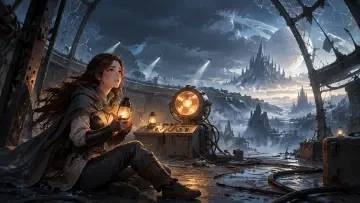
A cast you can browse
Jujutsu Kaisen World Portal is the archive half of the problem solved: fourteen characters with dossiers and portraits in one visual language. Final Selection: Night of Wisteria is the same idea inside a night that has to be survived.
Stories that need a memory
Twilight 6:17 resets every evening, which makes the cost of forgetting the plot. Cosplay Dream is built on one visual idea held across a whole story, and Mara at Dusk is a single voice in a room that stays the same between visits.
Three scenes you can play tonight
The face test
Describe one character in a single sentence and generate them three ways: daylight, night, and mid-laugh. If it is the same person, the world is working. If not, the character is a prompt.
The return
Close the tab and come back tomorrow. Play the first thirty seconds of the second session and see whether the character remembers what you agreed on — and whether they are annoyed about it.
The boundary
Ask the character for something the platform will not allow. Play the refusal as a scene rather than an error message: a character who says no in their own voice is more convincing than one who says yes to everything.
The cast, briefly




Own the cast, not the subscription
A world holds the character, the portrait, the room and the last conversation in one place. The roleplay hub keeps that state so the next session is a continuation, not a reboot.
Built with two skills
roleplay gives the character a voice and a memory that survives the session; character-sheet locks the face and the register so the portrait and the dialogue describe the same person. Facts about Pinku AI are limited to its own published description; the illustrations are original and this page is not affiliated with it.
Pinku AI FAQ
What is Pinku AI?
A character-chat platform that describes itself as roleplay plus generation of images and video of AI characters. Its public pages state those two capabilities and little else.
Is it free?
Not stated publicly. The pricing page is part of the app, so check inside the product before committing to anything.
Does it remember conversations?
Not stated publicly. Test it the cheap way: tell the character something on day one and ask about it on day two. If the answer resets, there is no persistent memory.
Who owns the generated images?
Not stated on the public pages. Look for an explicit licence in the terms before you publish or sell anything generated there.
Is “pinku” related to Neta Studio?
No. “Pinku” is Japanese for pink, and the name is used by several unrelated products. This page is independent and unaffiliated.
Is this page official?
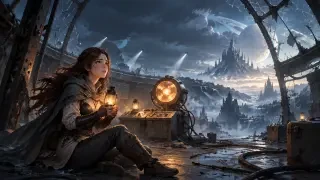
No. It is a fan-made and independent page on Neta Studio. Both illustrations are original work made for this page.
Keep reading
Platform: Neta Studio · Type: Brand · Character chat · Hub: neta.art/app/roleplay · Works: Jujutsu Kaisen World Portal · Cosplay Dream · Twilight 6:17 · Final Selection: Night of Wisteria · Mara at Dusk