My Hero Academia Quirk Generator, Done Right

A My Hero Academia quirk generator that starts with the cost: pick a type, a trigger and a drawback, then build the hero card. Canon rules and four roll tables.


Most quirk generators stop too early
Type “quirk generator” and you get a noun and a verb: fire hands, shadow wings, a punch that punches harder. That is a power, not a quirk. In the series, a quirk is one ability per person, sorted into a broad type, trained like a muscle — and when it is overused it produces a specific drawback. The drawback is not a balance patch; it is the character.
So this page is built as a method rather than a slot machine. Four tables give you a type, an effect, a trigger and a cost; a fifth rule — the limit — is what stops the quirk from solving every scene. The series’ own proportions are a useful calibration: roughly 80% of the population has a quirk, and the story’s tension comes from what each one cannot do.
| Canon frame | One quirk per person; about 80% of the population has one |
| Broad types | Emitter, Transformation, Mutant |
| The rule that matters | Overuse produces a specific drawback |
| Not | A canon character creator or a source of franchise artwork |
Build a quirk that costs something
Write the effect, the type and the drawback in one sentence. The character-sheet skill turns it into a hero with a biography, a costume logic and a weakness the story can actually use.
The canon rules that make it feel real
Four rules do most of the work. A person has one quirk, not a toolkit — so every scene is a puzzle about using one tool well. Quirks sit in broad types, which decides whether the power is projected, embodied or permanent. They can be trained, which means a weak quirk can become strong and a strong one can be worn out. And overuse causes a drawback specific to that quirk: dry skin, nausea, something worse. That last rule is what turns a power into a person.
- One quirk, one user — No secondary powers for convenience. If the plot needs something else, another character brings it.
- Type shapes the scene — An Emitter needs space and a target; a Transformation needs a body and a timer; a Mutant cannot hide what they are.
- Training is visible — A quirk is like a muscle: it can be pushed, and it can be exhausted. Show the exhaustion, not just the growth.
- Every quirk has a cost — A specific, physical, repeatable drawback. Not “it is tiring” — a tremor, a dulled sense, a burn.
- A limit the story can use — One target, ten seconds, line of sight, both hands, only at night. The limit is the scene’s difficulty setting.
Pick one effect first. Everything else is there to give it a shape.
The cost is the character
Two heroes with the same effect and different costs are two different people. “Hardens air” is a utility; “hardens air but only while holding their breath” is a hero who has to plan every fight around a lungful. The cost dictates the costume — a mask with a reserve, a timer on the wrist — and it dictates the drama: the moment the hero has to choose between breathing and saving someone. Write the cost before the costume and the design writes itself.


Heroes and cards built here
The works below show the two halves of this method: a scene that puts a power under pressure, and the card formats that give a character a face. None of them are canon characters — they are the shape a quirk takes once it belongs to someone.


A scene that tests the quirk — U.S.J. Incident
The U.S.J. Incident visual novel drops you into the League of Villains attack on the Unforeseen Simulation Joint during rescue training. It is a good test bench for quirk design because the space is wrong for everyone: too many civilians, too little room, a power that was built for open ground. If your quirk has a limit, this is the scene where the limit shows.
From quirk to card — three formats
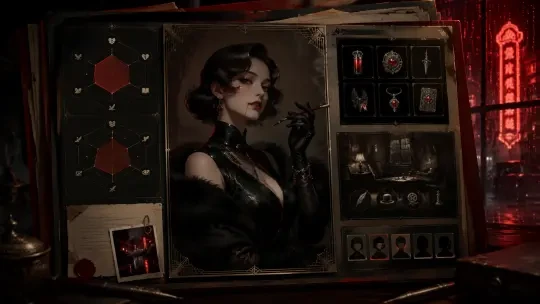
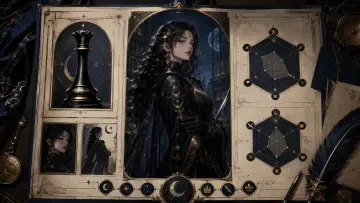
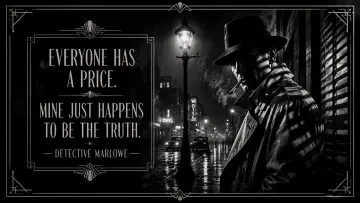
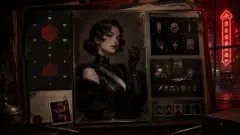
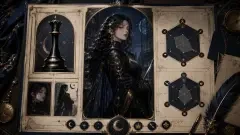
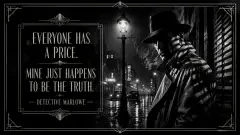
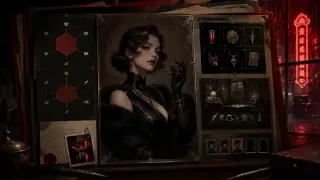
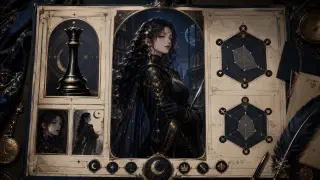
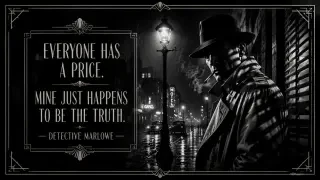
The Nyx profile card carries portrait, name and stats; the Evelyn dossier reads like a case file; the Marlowe quote card reduces the character to one line of dialogue. For a quirk, the card should carry the effect and the cost in the same frame — the stat block is the least interesting part.
Three steps from rule to hero
Pick the type and the effect
Emitter, Transformation or Mutant first, because the type decides how the hero stands in a room. Then one verb: hardens, redirects, stores, grows, swaps.
Write the cost in the same sentence
“Hardens air, but only while holding breath” is a quirk. “Hardens air” is a wish. The cost should be physical, repeatable and visible to the audience.
Build the card
Give the hero a name, a silhouette and one costume element that answers the drawback — a reserve tank, a timer, a brace. Then put the effect and the cost on the card.
Six starting points





One sentence, one quirk, one cost
The tables on this page are free and work offline. When you have a sentence you like, the character sheet turns it into a hero with a biography and a weakness — and the card gives them a face.
Built with the character-sheet skill
character-sheet turns the one-sentence quirk into a biography, a costume logic and a weakness the story can use. trading-card builds the flat card — art, rarity border, stat block, card back — and holo-card adds depth and foil when the card should feel like a collectible. The visual novel on this page was assembled by roleplay, which is also how you test whether the quirk survives a scene.
FAQ
Is this an official quirk generator?
No. It is an unofficial design method built on the series’ published rules: one quirk per person, broad types, training, and a specific drawback from overuse. It does not reproduce franchise artwork or claim to be canon.
What are the three quirk types?
Emitter quirks project or manipulate something outside the body, Transformation quirks change the body and change back, and Mutant quirks are permanent physical traits. The type decides what the hero can do in a room and what they cannot hide.
How many quirks can one person have?
One. In the series a person develops a single power or set of powers and cannot gain others naturally. That constraint is what makes quirk design interesting: every scene is a puzzle about using one tool well.
What is a quirk drawback?
A specific harm caused by overuse — dry skin, nausea, a tremor, something worse depending on the quirk. It is not “it is tiring”: it is a repeatable, physical cost that the story can force the hero to pay.
Can I use canon characters?
You can write fan scenes with them, but this page is built for original heroes. If you publish, do not present franchise characters or artwork as your own or as official material.
Can I make a hero card for my quirk?
Yes. The card formats on this page carry a portrait, a name and a stat block, and the 3D variant adds depth and foil. Put the effect and the cost on the frame — those are the two lines that make the card readable.
Keep reading
Platform: Neta Studio · Type: Quirk generator · Hub: neta.art/app/agent-skills · Works: U.S.J. Incident · Nyx — profile card · Evelyn — dossier · Marlowe — quote card · Method · Milk Frog Desk Pet
