Shin Tsukimi: The Boy Who Became Sou Hiyori

Shin Tsukimi is Your Turn To Die’s hacker candidate, the man wearing another person’s name and a 0.0% survival rate. His full file, sourced.

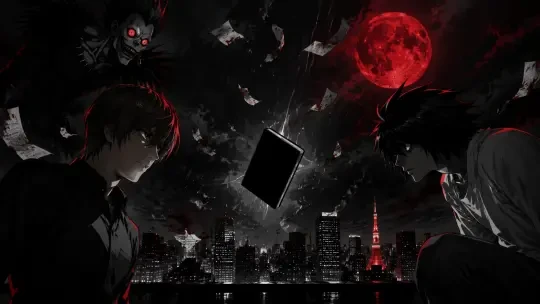
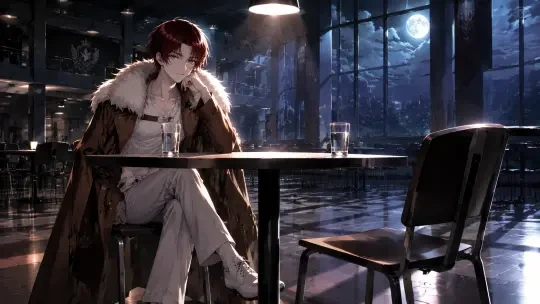
Who Shin Tsukimi actually is
Shin Tsukimi is one of the twenty people brought to the Death Game in Your Turn To Die, and on paper he is the least likely to leave it: the roster of sixteen candidates gives him a survival chance of 0.0%. He introduces himself as a job-hopper, keeps a green beanie on his head and a pink-orange polka-dot scarf around his neck, and says almost nothing true about himself for the first two chapters. The name he gives everyone is not his own.
That is the hinge of the character. In high school he met a boy called Sou Hiyori — the person later known as Midori — and the friendship was unequal from the start. When the Death Game published each candidate’s odds, Shin read 0.0% next to his own name and did what a survival instinct tells you to do: he put on the persona of the person he had admired, took his name, and started treating every conversation as a fight he could win. The man you meet in Chapter 1 is not a liar by nature. He is a shy, spoiled boy wearing a braver person’s clothes.
| Source | Your Turn To Die — Death Game roster and character files |
| Role | Candidate 16 of 16, self-described job-hopper, skilled hacker |
| Survival odds | 0.0% — the lowest figure on the published roster |
| First appears | Chapter 1, Part One — the participants’ first meeting |
Sit across from him and don’t blink
Shin reads people for a living and lies about himself as a reflex. Open a scene in the Death Game and the roleplay skill will keep his odds, his scarf and his grudge intact.
The outfit is the argument
Your Turn To Die designs its cast so that a single silhouette tells you what a person is hiding, and Shin is the clearest case. The wiki description is almost a checklist: sickly pale, unhealthy skinny, permanently slouching, light teal hair, a green beanie, a pale brown shirt tucked into khaki trousers, a purple jacket, dark brown dress shoes — and the scarf, pink-orange with tassels, previously owned by Midori. Under it sits a gold key-shaped necklace and, like every participant, a collar.
- The scarf — It belonged to the boy whose name he borrowed. Wearing it is not sentiment; it is a costume he puts on before he speaks.
- The beanie — Pulled low, always. It hides the top of a face that gives away fear faster than his voice does.
- The slouch — He is described as clean and well-groomed and yet physically collapsing: a person who takes care of the shell and not the person inside it.
- The collar — The one piece he cannot style away. The scarf covers it, which is the most honest image the game has of him.
The AI that shows you who he used to be
Midori built an artificial intelligence on Shin’s personality, sampled two and a half years before the Death Game and never updated, and installed it in the security office. That Shin AI wears a blue scarf and a green beanie, has turquoise hair and aquamarine eyes, is easily embarrassed, polite, and desperate to help — and it is the closest thing the game gives you to the original boy. It helps the survivors read the Dummies Control System, quietly repairs the elevator, and points them at the charging room, all without Midori’s permission.
Then it glitches out, promising not to tell anyone, and is deleted — a punishment, Ranmaru suspects, for giving away too much. Midori later reinstalls it inside the reborn Maple, where it begs the survivors and “Hiyori-kun” for help as the body falls apart. The point of the subplot is cruel and precise: the trusting version of Shin exists, is helpful, and is destroyed twice.
What he is actually good at
Shin is a hacker, and the game respects that skill instead of treating it as flavour text. He gets into the facility’s systems, reads files he should not have, and reconstructs the shape of the Death Game before most of the cast has accepted that it is real. His intelligence is also his flaw: he jumps to negative conclusions quickly, especially about Sara Chidouin, whose ability to make people trust her he cannot parse and resents. He is canny in a room and wrong about people, which is a very specific kind of loneliness. The one relationship that breaks the pattern is Kanna Kizuchi, who is assigned to watch him during the Trust-Barter game, ends up sleeping in the same room to keep an eye on him, and becomes the only person who trusts him without a calculation attached.


Stories with the same wound
If what you want is the specific pressure of a death game — a rulebook, a collar, and a cast that has to decide who is expendable — these are real stories on Neta Studio that run on it.


A name you can put on and take off
Death Note: First Judgment is the cleanest version of the same idea: a rule that makes killing administrative, and a protagonist who has to keep lying to stay alive. The Gentle Blade Tip takes the school setting and makes kindness the liability, which is closer to what Shin does with his own personality.
Or a cast that is already lying
Night Over the Isles puts you in a room where every character is concealing exactly one thing, and the scene waits for you to press on it. Jujutsu Kaisen World Portal is the archive version — one technique, one loyalty, one death per fighter.
How to write him without flattening him
Play the odds, not the swagger
He is not confident. He is a frightened person performing confidence, and the performance slips when someone is kind to him. Let a compliment land badly and watch him change the subject.
Give him something to hack
A terminal, a keycard, a monitor, a locked door. Shin is at his most readable with a problem in front of him and no people to manage.
Keep Kanna in the room
The one relationship where his calculation fails is Kanna Kizuchi. Put her in the scene and his logic starts producing answers he did not want.
The cast, briefly










Take the collar off, or don’t
The Death Game only works because leaving is not an option. The roleplay hub lets you take a seat in the room, argue for someone’s life, and live with the arithmetic afterwards.
Built with the roleplay skill
roleplay holds the character’s memory across a scene — the borrowed name, the survival odds, the scarf — so he stays the same person when you push him. character-sheet writes the file behind him if you want to build a candidate of your own: odds, tells, one skill, one person he cannot lie to.
Shin Tsukimi FAQ
Is Shin Tsukimi the same person as Sou Hiyori?
No. Sou Hiyori is the name he borrows — originally the name of Midori, the boy he met in high school. Shin Tsukimi is the real name, and the roster lists him under it as candidate 16.
Why is his survival rate 0.0%?
The Death Game publishes calculated odds for all sixteen candidates, and Shin’s is the lowest on the list. It is the number that pushes him into the Sou Hiyori persona in the first place.
What is the Shin AI?
An artificial intelligence Midori built from Shin’s personality as it was two and a half years before the Death Game, so it is kinder, more trusting and more helpful than the man you meet. It appears on a monitor in the security office and later gets reinstalled in Maple 2.0.
What does he actually do in the game?
He hacks. He gets into facility systems, uncovers records and mechanics before the rest of the cast, and helps move the group through the Dummies Control System and the charging-room sequence.
Who is Kanna Kizuchi to him?
The person assigned to watch him during Trust-Barter, and the only participant who comes to trust him without calculating first. Their pairing is the emotional core of his route.
Can I play a scene with him?
Yes — the roleplay hub opens a scene with a character who keeps his odds, his tells and his borrowed name, and lets you decide what happens when the second Main Game arrives.
Keep reading
Platform: Neta Studio · Type: Character · Hub: neta.art/app/roleplay · Works: Death Note: First Judgment · The Gentle Blade Tip · Night Over the Isles · Jujutsu Kaisen World Portal · After the Nocturne · Final Selection: Night of Wisteria
