Yu-Gi-Oh Card Generator: Build a Duel Card

Make a duel-monster card of your own: art window, four foil finishes, rarity and edition number, a designed back. No official template, no copied art.


What you can actually make here
A duel-monster card is a small piece of graphic design pretending to be a game piece: an art window, a typed line, a level or rank marker, an effect box, and a border that changes finish depending on how rare the card is meant to be. If you want to build one of those for a character of your own — a friend, an OC, a mascot, a creature from a story you are writing — this page is about doing it honestly, with tools that exist.
The card builder on Neta Studio makes a real card, not a flat picture: the artwork is painted, the card is built in layers that separate as it turns, the finish follows the angle you hold it at, and the face carries a rarity and a printed edition number over a designed back. Four finishes are available — laser rainbow, gold foil, silver foil and pearl. What it does not do is reproduce the official Yu-Gi-Oh frame or any official artwork, and it is not affiliated with the rights holders. You are building a card in that shape, with your own monster on it.
| What it makes | A layered card that turns in 3D, with art, effect line, rarity and edition number |
| Finishes | Laser rainbow, gold foil, silver foil, pearl |
| Also on the face | Rarity tier, edition number, a designed card back |
| What it is not | An official Yu-Gi-Oh product, template or art library |
Name the monster, not the stats
Start with one sentence: what the creature is and what it does to people. The holo-card skill paints the art, builds the frame in layers and lays the foil; you decide the finish and the rarity after.
How a duel card is built, layer by layer
The reason a homemade card looks homemade is almost never the artwork — it is the flatness. A real card has a border that sits above the art, a text box with its own shadow, a foil layer between them, and a back that is a different design entirely. Build those as separate layers and the card survives being turned over in the hand.
- Art window first — One creature, one environment, one light source. The art should read at thumbnail size, because that is how it will be seen in a gallery or a phone screen.
- Frame with a job — The border carries the rarity information: colour, trim, and where the foil sits. Change the finish and the card’s status changes with it.
- Stats that fit the story — A level, an attribute, an effect line. Keep the effect to one sentence with one cost — the same rule the source material uses for its better cards.
- A back that is not an afterthought — A seal, an edition number, a repeat of the border motif. This is what makes a card feel like part of a set instead of a printed image.
The three real tools, and what each one does
There are several card makers on this site and they are not interchangeable. Before you pick one, here is what each actually produces — checked on the live pages, not from marketing copy.
- TCG Card Maker — the general one: layered artwork, 3D parallax, four finishes (laser rainbow, gold foil, silver foil, pearl), rarity tiers (Legendary, Secret, Rare) and a printed edition number. This is the closest match for a duel-monster card.
- Holo Card Maker — the same build tuned for a single character portrait: a holographic collectible that turns, with rainbow foil and an animated subject. Better for a character card than a creature card.
- 3D Trading Card Maker — the version that leans hardest on the turn: parallax depth, angle-driven foil, and a card back you design yourself.
What none of them do: print and ship a physical card, import the official Yu-Gi-Oh layout, or use artwork from the anime. They publish a page you can drag and turn, plus the layered art and the prompt to repeat the recipe for the rest of the set.
Making it read like a duel card, not a sticker
The difference between a card that looks like it belongs in a game and one that looks like a phone wallpaper is almost entirely text discipline. Write the effect as one clause and one cost — “once per turn, discard one card: this monster cannot be destroyed by battle” style — and keep the numbers small. Give the creature a type and an attribute that mean something to the art (a fish is water; a lantern fish that eats memories is water and dark at once). Then set the rarity honestly: if the effect is ordinary, a common card with a silver foil will read better than a legendary one with three effects crammed into the box. The card back is where you can be generous — a seal, a set mark, an edition number — because nobody is reading it at a glance.


Where the characters come from
The best card sets have a world behind them, otherwise you are making one card and stopping. These are real stories on Neta Studio with casts worth turning into a set.


A cast with rules already attached
Shibuya Eve hands you technique selection as character creation — the same design problem as writing an effect line. Final Selection: Night of Wisteria gives you breathing styles: five forms, one element, one owner, which is a card set with a hierarchy built in.
Or a duel that already exists
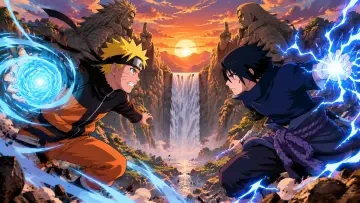
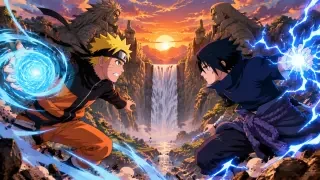
Naruto vs Sasuke: Duel is a straight matchup in game form: two characters, one round, one outcome. If you want a card that reads as a game piece rather than a portrait, start there and build the pair instead of the single.
From sentence to finished card
One sentence for the creature
“A lantern fish that eats memories” is enough: it gives the painter a subject, a light source and a mood — and it gives you the effect line for free.
Choose finish and rarity together
Pick the finish after the art is in, not before. Gold foil on a warm painting, silver on cold, pearl on pale, laser rainbow only when the card is meant to be the one everybody wants.
Turn it before you publish
Drag the card and watch the layers separate. If it looks flat at an angle, the depth is wrong — that is the check that separates a real 3D build from a JPEG with a shine.
The worlds, briefly




Make the card, then make the set
One card is a test; ten cards is a collection. The one-sentence prompt that produced your first card is also the recipe for the rest of the set — same frame, same finish, different creature. If you would rather hear the creature talk, the roleplay hub opens in the browser.
Built with the holo-card skill
holo-card paints the artwork and assembles the card in layers — art window, border, foil, text box, back — so it turns in space instead of tilting as a flat image. trading-card is the flatter illustration pass if you only need the face, and character-sheet writes the effect line so the card has rules instead of vibes. The card back, seal and edition number are part of the build, not a template you have to fight.
Yu-Gi-Oh card generator FAQ
Can I make an actual Yu-Gi-Oh card with this?
You can make a duel-monster-style card with your own creature, effect line, rarity and card back. You cannot import the official frame or official artwork — the builder uses its own layout, and it is not affiliated with the rights holders.
Does it print and ship the card?
No. It publishes a page you can drag and turn, and gives you the layered artwork and the prompt to repeat the design. Printing is up to you, from the exported image.
What finishes are available?
Four: laser rainbow, gold foil, silver foil and pearl. The finish is a separate layer, so it follows the angle you hold the card at rather than sitting on top like a filter.
Can I put real stats and effects on it?
Yes — the face carries a rarity tier and an edition number, and the text layer is yours. Keep the effect to one clause and one cost; cards that try to do three things read as stickers.
Is it free?
The card maker runs in the browser and free to start. Generation features cost credits depending on how many cards you make.
Can I build a whole set, not just one card?
That is the intended use: the same prompt plus a different creature per card, with the frame, finish and back held constant so the set reads as a collection.
Keep reading
Platform: Neta Studio · Type: Card Tool · Hub: neta.art/explore/tool/tcg-card-maker · Works: Shibuya Eve · Final Selection: Night of Wisteria · First Night Under Makima · U.S.J. Incident · Jujutsu Kaisen World Portal · Naruto vs Sasuke: Duel